
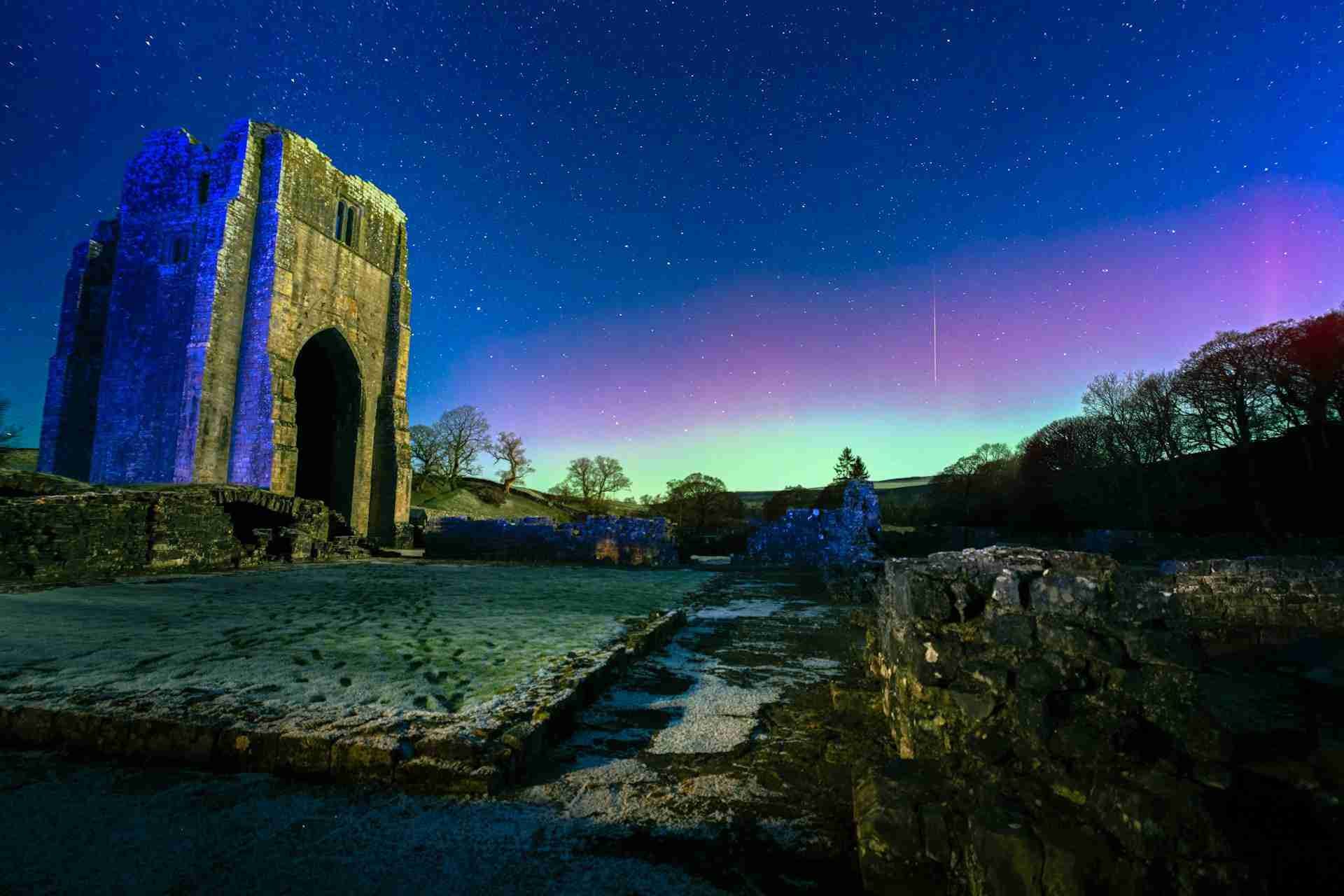
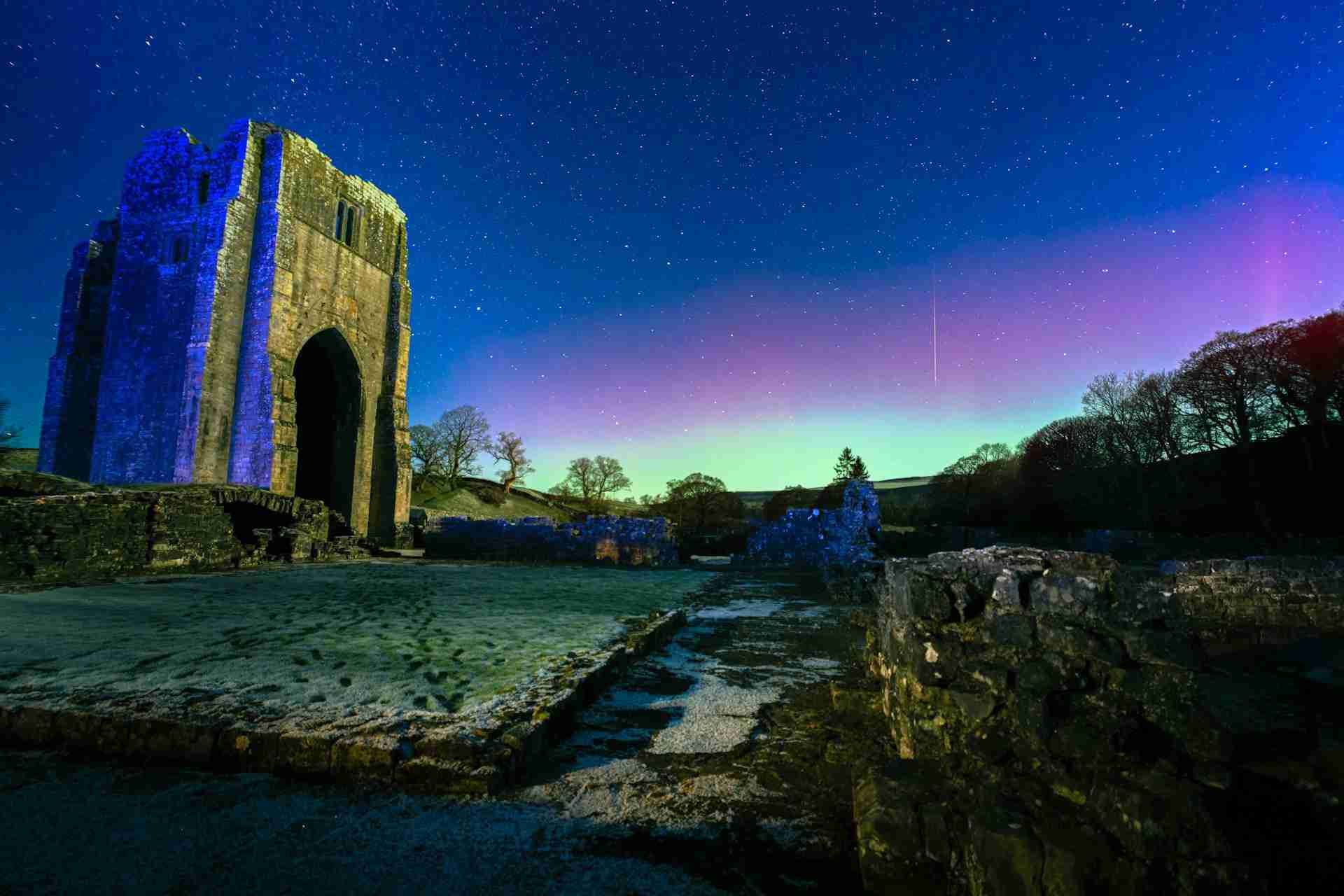
Tucked into a quiet fold of Cumbria's Eden Valley, Shap Abbey is a hauntingly beautiful relic of England's monastic past. Located near the village of Shap, this atmospheric ruin sits beside the River Lowther, surrounded by rolling pastureland, mossy dry stone walls, and grazing sheep that complete the quintessentially British scene. Shap Abbey was the last abbey to be founded in England and one of the last to be dissolved by Henry VIII—an end befitting its isolated majesty. For photographers, it's a location of subtle drama, where soft northern light plays across weathered sandstone and solitude amplifies the echoes of history. Shap Abbey isn't about grand spectacle; it's about texture, tone, and timeless landscape.
Best Photography Opportunities
• Central Tower and West Range Framing
The most commanding visual anchor at Shap Abbey is the 15th-century central tower, which rises above the fragmented remains of the cloister and church. From multiple angles, particularly facing east from the remains of the west range, you can create natural frames using collapsed archways and partial walls. This type of framing works beautifully in the late afternoon when the soft light highlights both the texture of the stone and the rhythm of repeating verticals. Using a medium telephoto lens allows you to compress the foreground ruins into the composition, while a wide-angle lens captures the full sweep of decay and structure in one shot. At eye level, subtle lines lead toward the tower, helping create strong visual depth and guiding the viewer into the scene.
• Vaulted Arches and Subtle Interior Light
Within the remaining sections of the nave and cloister, low arches, buttresses, and wall fragments offer pockets of shade and indirect light that can be used creatively. These subdued spaces, often overlooked, are perfect for working with gentle contrast—ideal conditions for shooting in RAW and post-processing to extract hidden detail. Shadows falling across broken masonry produce excellent opportunities for monochrome compositions. Look for early morning or overcast conditions, which reduce glare and bring out the subtleties in stone grain and layering.
• Reflections in the River Lowther
Running quietly along the edge of the abbey grounds, the River Lowther provides one of the most tranquil and compositionally rich opportunities at the site. In the early morning, especially in spring and autumn, the river's surface reflects both the ruins and the rising mist. When the water is still, the tower's reflection can be captured nearly symmetrically, while flowing water during wetter months lends itself to long exposures with a neutral density filter, producing smooth, glasslike effects that contrast with the rough texture of the stonework. The riverbank also offers a low-angle perspective that elevates the abbey's profile against sky and water, making it ideal for creating serene, painterly landscapes.
• Architectural Fragments and Textural Detail
While the abbey's full form has not survived, the remnants scattered across the site provide endless options for tight compositions and macro detail. Weathered tracery, broken windows, carved moldings, and even old drainage channels contain narrative depth—each one tells of erosion, craftsmanship, and centuries of abandonment. Moss and lichen cling to the edges of these features, offering a mix of greens, golds, and rusts that change with season and humidity. A 100mm macro or a fast 50mm prime can isolate these details with creamy backgrounds, ideal for creating portfolio pieces that highlight texture and patina over time.
• Paths, Walls, and Human Scale
The surrounding dry stone walls, the rough pastureland, and the footpaths leading toward the abbey all provide valuable context for wider landscape photography. Including a figure—especially a walker or lone visitor—in these compositions provides a sense of scale and evokes narrative imagery of pilgrimage and solitude. Backlighting during golden hour creates rim light on grasses and figures, enhancing visual mood and separating subjects from the background. Wide compositions taken from the northern approach also include sky drama, which frequently shifts from clear to brooding over Cumbria in a single hour.
• Twilight Silhouettes and Blue Hour Studies
As the sun sets behind the hills to the west, the ruins shift from golden tones to silhouetted masses. The central tower, in particular, stands out sharply against the indigo sky, especially during the blue hour. Long exposures of 10–30 seconds using a tripod can capture this ambient light with subtle gradations and bring out sky color as stars begin to emerge. The absence of artificial light pollution near Shap makes this a great location for early-night astrophotography or minimalist compositions with delicate ambient light. Composing with the tower slightly off-center and incorporating leading lines from the landscape can result in moody, emotionally resonant frames.
Best Time to Visit
Shap Abbey is photogenic in all seasons, but each time of year offers unique atmospheric qualities. Spring brings fresh greens to the surrounding pastures, scattered wildflowers, and long, clear golden hours. The low sun from March through May often strikes the central tower at a gentle diagonal, giving soft contrast and balanced tones perfect for wide dynamic range exposures. Early mornings are especially productive, often delivering rising mist along the river and dew on the grass, creating layered compositions with mood and detail.
Summer provides the longest days, ideal for exploring every angle of the ruins under a range of lighting conditions. Cloud patterns frequently sweep through Cumbria, casting shifting shadows over the stone and giving even mid-day photography a chance at dynamic texture. This is also the season of fullest foliage, making the riverside scenes more lush and framing opportunities more abundant. However, sheep and walkers may be more present—early or late visits are better for uninterrupted work.
Autumn transforms the landscape into a subtle tapestry of golds, browns, and fading greens. The surrounding trees along the Lowther show warm color, and fallen leaves on the riverbank or strewn through the ruins make for excellent compositional accents. The light at this time of year is lower and softer throughout the day, meaning you can shoot longer without harsh contrast. Rain and mist are more common, which can enhance mood but demand quick adaptation and protection for your gear.
Winter offers the starkest, most minimal images. When frost settles over the stones or a dusting of snow covers the site, the visual contrast is exquisite. The abbey stands in sharp relief against bare trees and pale skies, and low sun angles all day make shadows longer and compositions moodier. Although access can be slippery, especially near the river, the solitude and drama of winter make it a compelling time to shoot for those willing to brave the cold.
How to Get There
Shap Abbey is located at the end of a narrow lane off Keld Lane near the village of Shap, in Cumbria, England. If driving, take the M6 and exit at Junction 39, then follow signs toward Shap village. Once in the village, head west on Keld Lane, continuing for approximately 2.5 miles until you reach a small parking area near the abbey. The road narrows considerably in the final stretch, and passing places are limited, so proceed slowly and be prepared for oncoming traffic, particularly farm vehicles.
From the parking area, it's a short walk—less than 5 minutes—down a gently sloping gravel path to the ruins. Access is free and open year-round during daylight hours, though it's advisable to avoid visiting after heavy rains, as the riverside can become muddy and waterlogged. There are no visitor facilities or restrooms at the site, so prepare accordingly. Tripods are allowed, and the open nature of the ruins makes it easy to photograph at your own pace, without barriers or crowds.
Recommended Photography Gear
Shap Abbey rewards a versatile kit focused on weather flexibility and precision. A full-frame or APS-C DSLR or mirrorless body with good dynamic range and low-light capability will help you manage Cumbria's frequently changing lighting conditions. A sturdy wide-angle zoom, such as a 16–35mm or 10–22mm, is essential for capturing the scale and intimacy of the ruins, particularly when working in tight spaces or incorporating foreground textures.
For mid-range work, a 24–70mm or 24–105mm lens offers the flexibility to switch quickly between context and detail shots. It's especially useful when working along the riverbank or from the nearby pastures, where you'll want to quickly adjust framing without changing lenses in damp conditions. A fast prime lens (f/1.8 or faster) is useful for low-light architectural detail, especially in overcast or twilight conditions, and produces clean, noise-free images when ISO must be raised.
A tripod is indispensable here—not just for low-light or blue hour compositions, but also for bracketing exposures and working deliberately with reflections along the river. Look for a lightweight but stable option with spiked feet or a wide base, as the terrain near the abbey can be uneven and soft. Filters should include a polarizer to cut water glare and enhance clouds, as well as a graduated ND filter to control sky exposure when shooting at sunrise or sunset.
A weather-sealed backpack is strongly recommended, with microfiber cloths and rain covers on hand to manage the damp Cumbrian climate. Extra batteries and a lens hood will also serve you well, especially during long sessions. Finally, if you shoot at twilight or beyond, bring a headlamp for navigating back to the car safely while keeping hands free for gear.
Nearby Photography Locations
Located about 20 minutes northeast of Shap Abbey, Haweswater offers dramatic landscapes with brooding fells, rocky shorelines, and often glassy water perfect for reflections. Early morning visits can yield mist rising from the surface and golden light catching the far ridges, while a long lens can isolate the play of light on the surrounding slopes. It's especially striking in autumn when surrounding trees glow with seasonal color.
A 25-minute drive north, Lowther Castle combines grand romantic ruins with formal gardens and woodland walks. Its elaborate Gothic revival architecture is partially roofless and backlit dramatically in late afternoon. The manicured grounds offer symmetry and contrast, while foggy mornings create a perfect balance of natural and constructed beauty for evocative wide shots or lens-compressed detail studies.
To the east, Sunbiggin Tarn and the limestone plateau of Orton Scar present stark, wide-open moorland photography opportunities. This is a landscape of minimalism and ancient geology—limestone pavements, erratic boulders, and sweeping skies. It's ideal for black-and-white work or contemplative long exposures under shifting weather fronts.
• Tebay Gorge and River Lune
A short drive west brings you to the lesser-known Tebay Gorge, where the River Lune winds through wooded banks and steep cliffs. Here you'll find rushing water, fallen trees, and moss-covered rocks ideal for woodland and stream compositions. In autumn, the colors explode with intensity, while winter frost adds fine detail to every leaf and branch.
Shap Abbey rewards patience, quiet observation, and a sensitivity to subtle detail. It's a place where light moves slowly and history lingers in every stone. For photographers drawn to narrative landscapes, contemplative ruins, and atmospheric solitude, this secluded corner of Cumbria offers a canvas rich with timeless possibility.
Comments
Loading comments…