
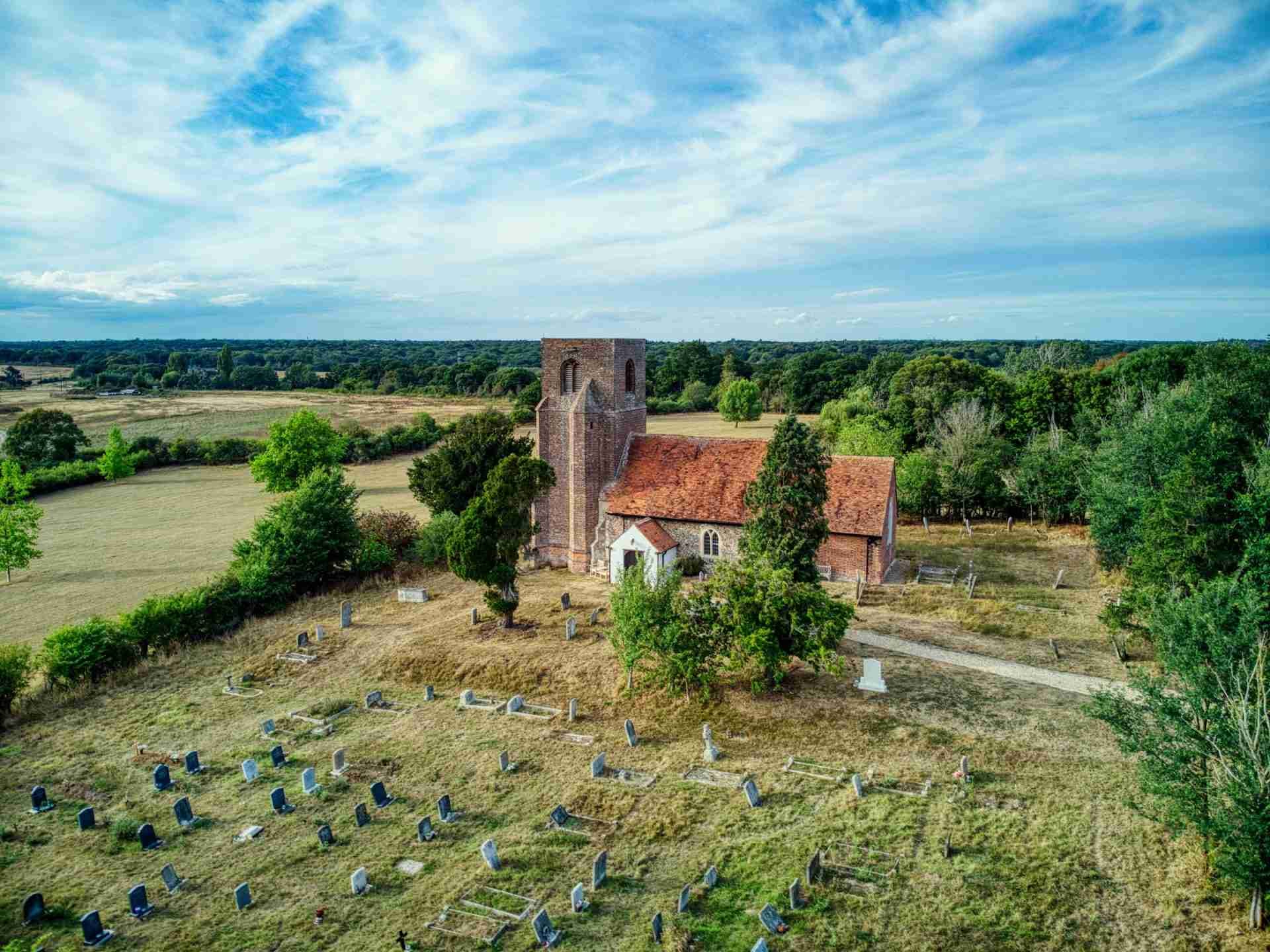
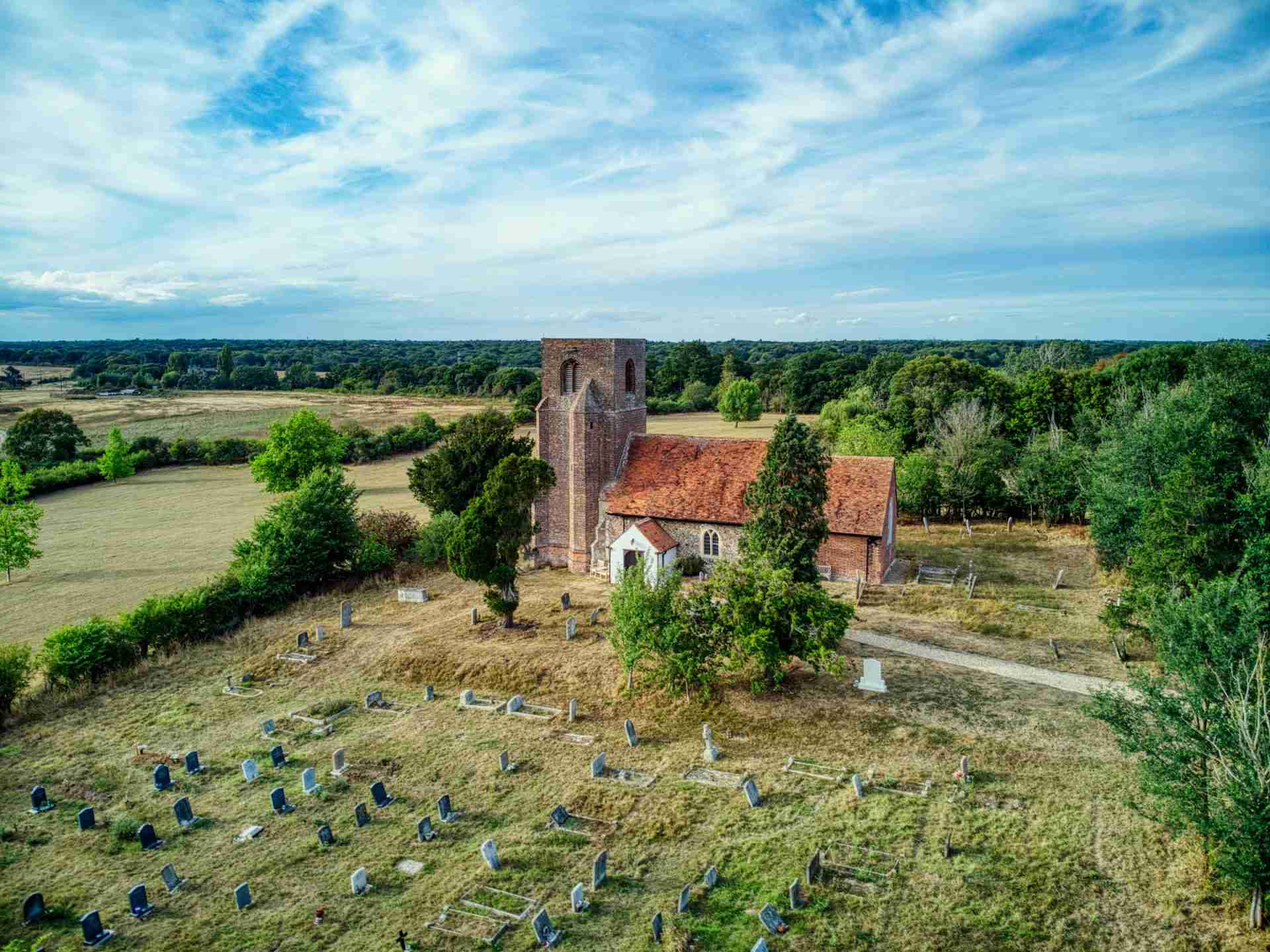
St Andrew's Church sits on slightly elevated ground near Abberton Reservoir in rural Essex. Surrounded by open fields and low hedgerows, the church stands apart from dense village development, giving it a sense of space that is increasingly rare in southern England. Its flint and stone walls, square tower, and simple nave create a compact and balanced structure that photographs well from multiple angles. The modest scale makes it approachable, while the exposed setting allows for clean compositions without heavy background distraction. For photographers, the appeal lies in restraint. The church does not overwhelm the landscape, but instead sits comfortably within it, offering opportunities for thoughtful framing and subtle light.
Best Photography Opportunities
• Classic Churchyard View With Tower Emphasis
From within the churchyard, the square tower can be framed clearly above the surrounding grass and gravestones. Positioning slightly off center often produces a more natural composition than standing directly in front. The flint and stone texture responds well to soft side light, which reveals subtle surface variation. Including a portion of the churchyard wall in the lower frame adds grounding without clutter. These images are strongest when the sky is calm and uncluttered.
• Open Field Perspective With Wide Sky
Stepping back beyond the immediate churchyard allows the building to sit within open countryside. This wider approach emphasizes the church's relationship to farmland and horizon rather than isolating it as a standalone structure. A moderate focal length helps maintain natural proportions while preserving negative space. Low shooting positions increase the presence of the sky and give the church a stronger silhouette. This perspective works particularly well during changing weather when clouds add depth.
• Detail Studies of Flintwork and Windows
Closer framing reveals the textured flint walls and simple window openings that define the building's character. Even light conditions preserve detail in the stone and prevent harsh shadow from obscuring surface variation. A short telephoto lens is useful for isolating architectural elements without distortion. These tighter compositions offer contrast to wider rural scenes. They highlight craftsmanship and material rather than overall form.
• Seasonal Framing With Hedgerows and Grass
Depending on the time of year, surrounding grass and hedgerows provide subtle framing. Spring and summer bring fuller greenery that softens the edges of the churchyard. Autumn introduces muted tones that contrast gently with pale stone. Careful positioning ensures vegetation supports rather than obscures the structure. This approach adds context and depth without overwhelming the subject.
• Evening Silhouette and Minimal Composition
As light fades, the church can be photographed as a simple shape against the sky. The square tower reads clearly in silhouette when separated from nearby trees. A tripod helps maintain precision as light levels drop. Waiting for a moment when the sky transitions evenly in tone can produce calm, balanced frames. These compositions rely on simplicity and spacing rather than detail.
Best Time to Visit
Early morning and late afternoon provide the most favorable light for photographing St Andrew's Church. Morning light can gently illuminate one side of the tower, adding dimension without harsh contrast. Late afternoon often brings warmer tones that complement the natural color of flint and stone. Midday light may flatten texture, particularly under clear skies. Overcast conditions are well suited to detail work and maintaining even tonal range across the walls. Seasonal changes influence surrounding vegetation more than the structure itself, with autumn often providing the most visually balanced combination of light and color. Because the site is open and exposed, wind conditions can also influence comfort and tripod stability.
How to Get There
St Andrew's Church is located in the village of Abberton in Essex, near Abberton Reservoir. It is accessible by local roads, with limited parking typically available nearby. The churchyard is reached on foot from the surrounding lanes. There is no fee to photograph the exterior from public areas. As with many rural churches, visitors should be mindful of services or private events. The terrain is mostly flat, though grass can become damp or uneven after rain.
Recommended Photography Gear
A standard zoom lens covers most needs, from wider rural compositions to tighter architectural details. A short telephoto lens is useful for isolating window shapes and stone texture. A tripod is recommended for early morning, late afternoon, and blue hour sessions. A polarizer can help deepen sky tones and manage glare in brighter conditions. Because the site is compact and easy to walk around, a streamlined kit allows flexibility in adjusting angles quickly. Stable footwear is advisable when moving across grass in damp conditions.
Nearby Photography Locations
This large reservoir offers open water views, birdlife, and expansive skies. It provides a broader landscape contrast to the small scale of the church.
A short drive away, this Tudor gatehouse introduces a taller and more elaborate architectural subject. It pairs well with St Andrew's for a regional historic theme.
This Norman keep offers a much more substantial defensive structure. It expands architectural options within the area.
Coastal views and wide estuary landscapes provide variety beyond inland farmland. It offers open horizon compositions in changing light.
Known for its rural scenery, Dedham Vale provides rolling countryside and river views. It complements the quiet setting around Abberton.
Comments
Loading comments…