
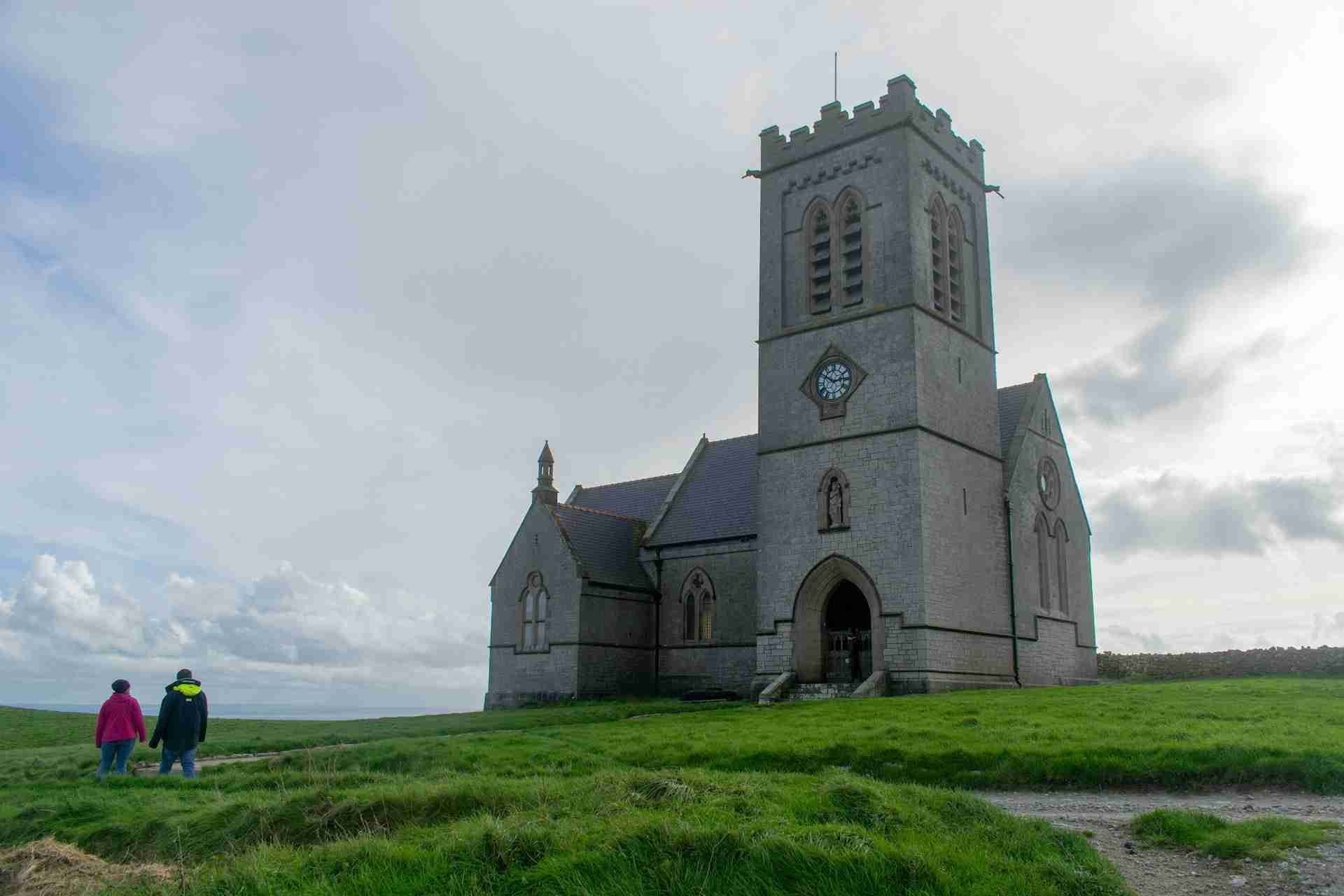
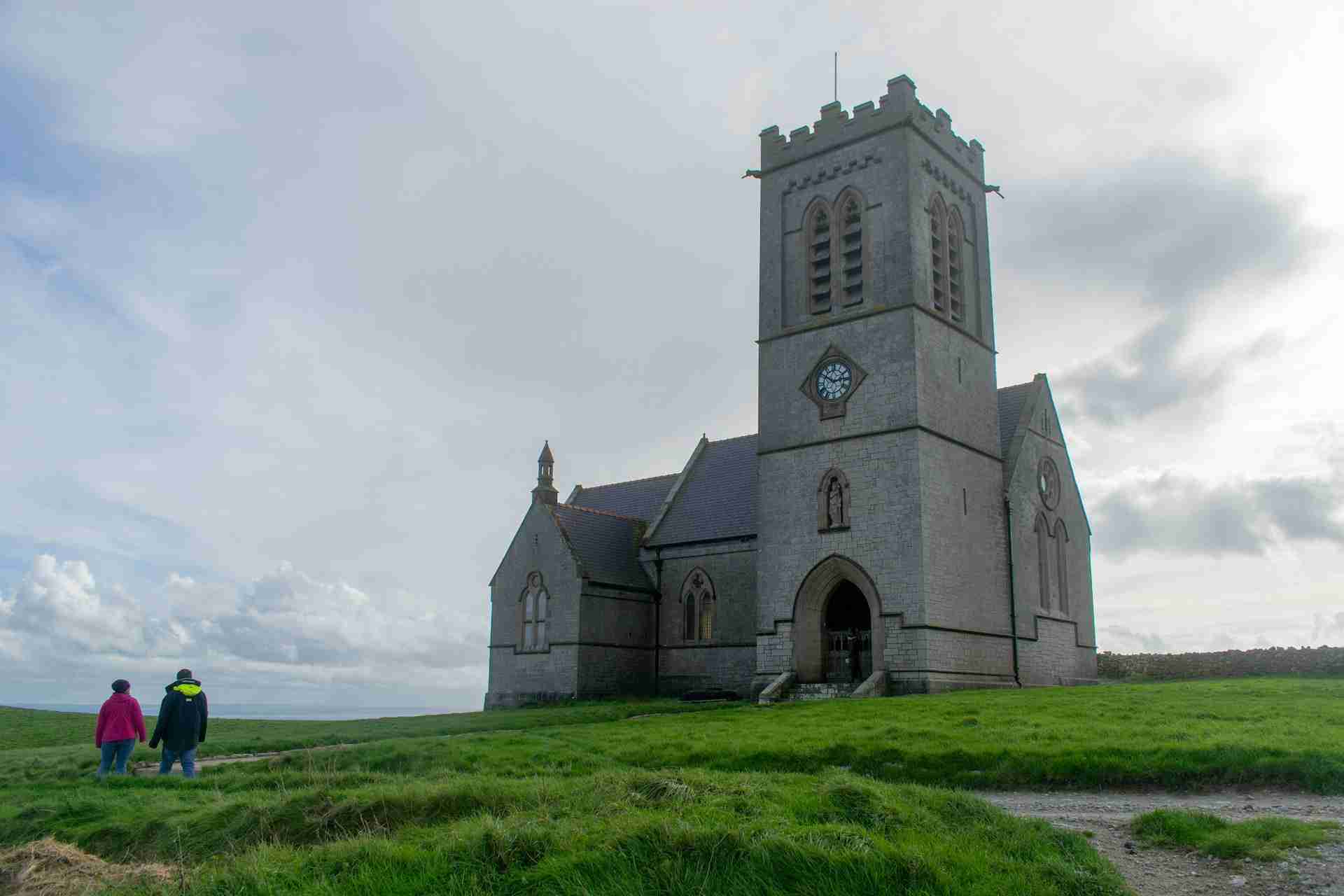
Standing prominently on the windswept clifftops of Lundy Island in the Bristol Channel, St Helen's Church is both a spiritual landmark and a striking subject for photographers. Built in the late 19th century by the island's owner, the church replaced an earlier medieval chapel and has since become the island's most recognizable building. Its tall spire rises above the rugged landscape, visible from sea and shore, making it a navigational point as well as a place of worship. For photographers, the church offers compositions that balance Gothic revival architecture with the raw beauty of Lundy's cliffs, fields, and sea. The changing light of the island, with dramatic skies, sudden storms, and long summer sunsets, adds constant variety to this already compelling subject.
Best Photography Opportunities
• Church framed against the sea
: From the western clifftops or fields nearby, you can frame St Helen's Church with the Bristol Channel as its backdrop. This perspective emphasizes the church's role as both a spiritual and navigational beacon. A wide-angle lens captures the spire rising above rolling grassland and the endless sea beyond, while a telephoto lens isolates the church against the horizon. Sunset from this angle creates warm tones on the stone walls, contrasting with the deepening blues of the water. Overcast conditions provide a more dramatic, moody character, well suited to black-and-white compositions.
• Architectural studies of the exterior
: The granite construction and Gothic details of St Helen's Church are best explored up close. Arched windows, buttresses, and the tall spire all lend themselves to detail photography. Shooting with a mid-range zoom or prime lens allows you to isolate these elements, especially when side-lit in the morning or evening. Close studies of stone textures reveal the weathering effects of sea air and wind, while ivy and lichen provide natural accents. Early morning light is particularly effective here, creating soft contrast across the church's surfaces.
• Interior atmosphere
: The interior of St Helen's is simple but atmospheric, with wooden pews, stained glass, and a modest chancel that reflects both devotion and the island's isolation. Low light conditions inside make fast lenses essential. A 35 or 50 millimeter prime works well for capturing symmetry down the nave, while wide angles can emphasize the intimacy of the space. Overcast skies create soft, diffused window light, while direct sunlight projects colorful patterns of stained glass onto stone walls and wooden floors. Tripods may be restricted inside, so a steady hand or image stabilization is useful.
• Context within the village
: From Lundy's small settlement, the spire of St Helen's rises above cottages, stone walls, and fields, giving compositions that combine human-scale structures with the larger landmark. This view works best in afternoon light, when the western side of the church glows warmly. A mid-range zoom helps frame cottages in the foreground with the spire rising above, adding layers to the composition. Including paths and stone fences provides leading lines that guide the viewer's eye toward the church.
• Night and storm photography
: With little light pollution on Lundy Island, St Helen's Church is an excellent foreground for astrophotography. The spire makes a strong silhouette beneath the Milky Way in summer or against star trails in winter. Long exposures on windy nights capture the movement of clouds over the static structure, adding drama to the scene. Stormy conditions during the day are equally rewarding, with dark skies and rough seas providing a dramatic stage for the church's steady presence. A tripod and weather-sealed gear are essential for working in these challenging conditions.
Best Time to Visit
St Helen's Church is photogenic throughout the year, though the mood shifts dramatically with the seasons. Spring brings fresh greenery and wildflowers around the churchyard, softening the rugged environment. Summer provides long evenings, making it possible to photograph both sunset light on the church and twilight skies beyond. Autumn offers golden tones in the grasses and hedgerows, contrasting with the cool gray stone. Winter is perhaps the most atmospheric, with dramatic storms, low sun angles, and clear skies for night photography.
Time of day is equally important. Sunrise lights the eastern face of the church, making it ideal for capturing soft glow on the spire and walls. Sunset is especially rewarding from the west, as golden tones flood the surrounding grassland and cliffs. Midday light can be harsh, but it works well for close studies of stone textures and interior compositions. Overcast skies suit both architectural detail and moody landscapes, while clear nights open opportunities for astrophotography.
How to Get There
Lundy Island lies in the Bristol Channel, about 12 miles off the coast of North Devon. Access is via ferry from Bideford or Ilfracombe during the summer months, or by helicopter in winter. The crossing typically takes under two hours by boat, though conditions vary. Once on the island, St Helen's Church is a short walk from the village, located near the island's central plateau. Footpaths lead directly to the site, with easy access across fields and stone tracks. Entry to the church is free, and the building is open to visitors most days. As with the rest of Lundy, weather can shift quickly, so appropriate clothing and waterproof protection for camera gear are highly recommended.
Recommended Photography Gear
A wide-angle zoom in the 16 to 35 millimeter range is ideal for capturing the church in its landscape, particularly when framing it against the cliffs or sea. A mid-range zoom such as a 24 to 70 millimeter provides flexibility for architectural studies, both exterior and interior. A fast prime lens, like a 35 or 50 millimeter f/1.8, is useful inside the church, where light is limited. A telephoto lens up to 200 millimeters helps isolate the spire or compress perspectives with the surrounding countryside and sea.
A sturdy tripod is essential for night photography, long exposures, and interior low-light shots if permitted. A polarizing filter reduces glare on stone surfaces and enhances the contrast between the church and sky. Neutral density filters are useful for long exposures of moving clouds or stormy seas in the background. Protective covers for gear are strongly recommended, given the island's salt spray, rain, and frequent wind. Comfortable footwear is essential, as you will be walking across uneven ground and potentially wet grass.
Nearby Photography Locations
: The island's 19th century lighthouse stands dramatically on the cliffs to the west, offering panoramic views of sea and island. Its stark white tower contrasts beautifully with stormy skies and sunsets.
: At the southern tip of Lundy, this fortification overlooks the sea and provides moody compositions with its stone walls and rugged setting. The cliffside location is particularly photogenic at sunrise.
: Abandoned 19th century gun emplacements cling to the cliffs on the island's west coast. Weathered ruins and sweeping sea views make this a rewarding subject in evening light.
: At the far end of Lundy, the north lighthouse provides compositions against some of the island's wildest coastal scenery, including steep cliffs and seabird colonies.
: A dramatic viewpoint for seabird photography, including puffins in season. This site combines wildlife opportunities with expansive seascapes that contrast nicely with the built heritage of St Helen's.
St Helen's Church is more than just an architectural landmark. It is the heart of Lundy Island, rising above cliffs, fields, and sea as a steady presence amid the changing weather of the Bristol Channel. For photographers, it offers a rare combination of historical architecture, wild landscape, and atmospheric light, ensuring every visit brings new opportunities to capture its enduring character.
Comments
Loading comments…