
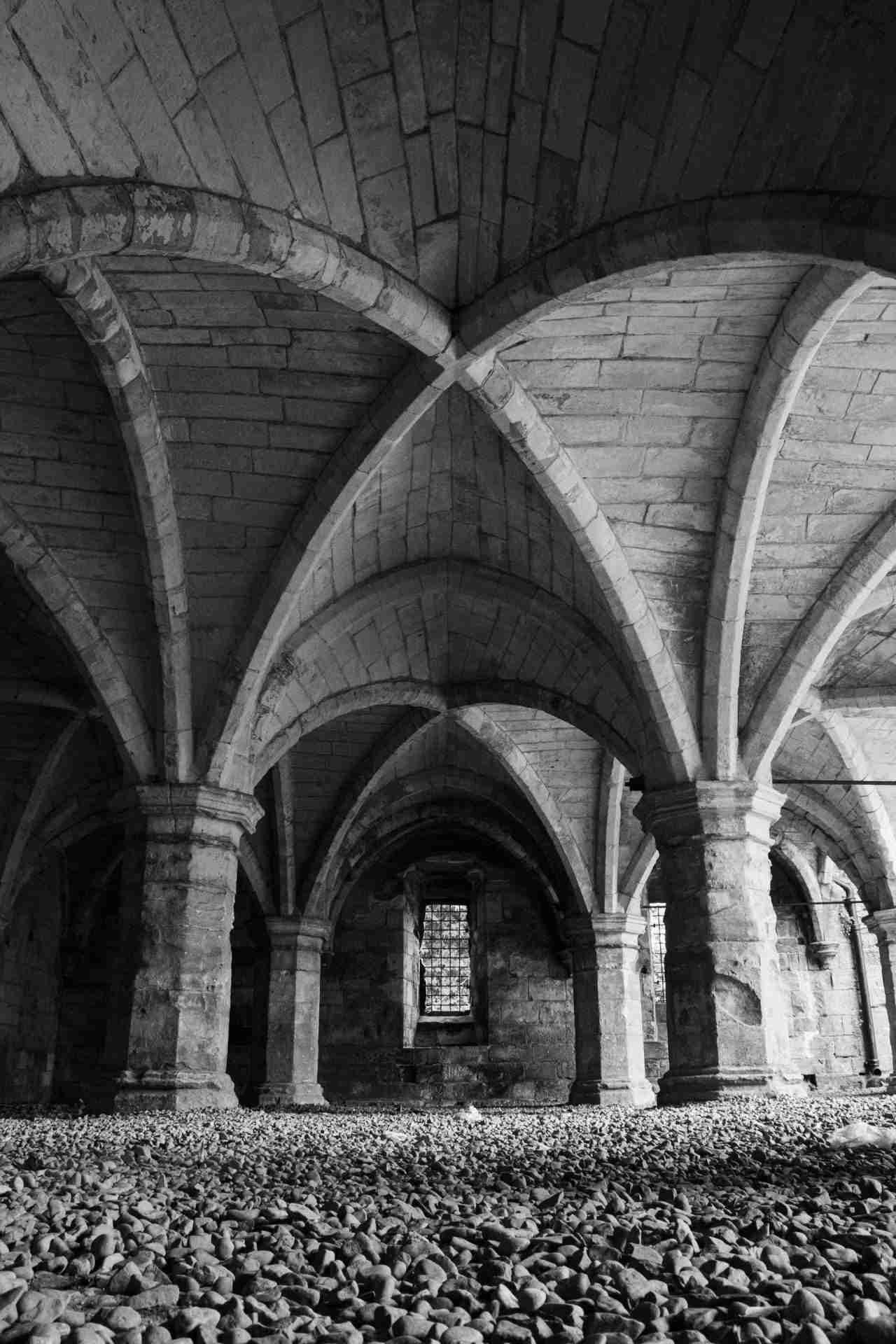
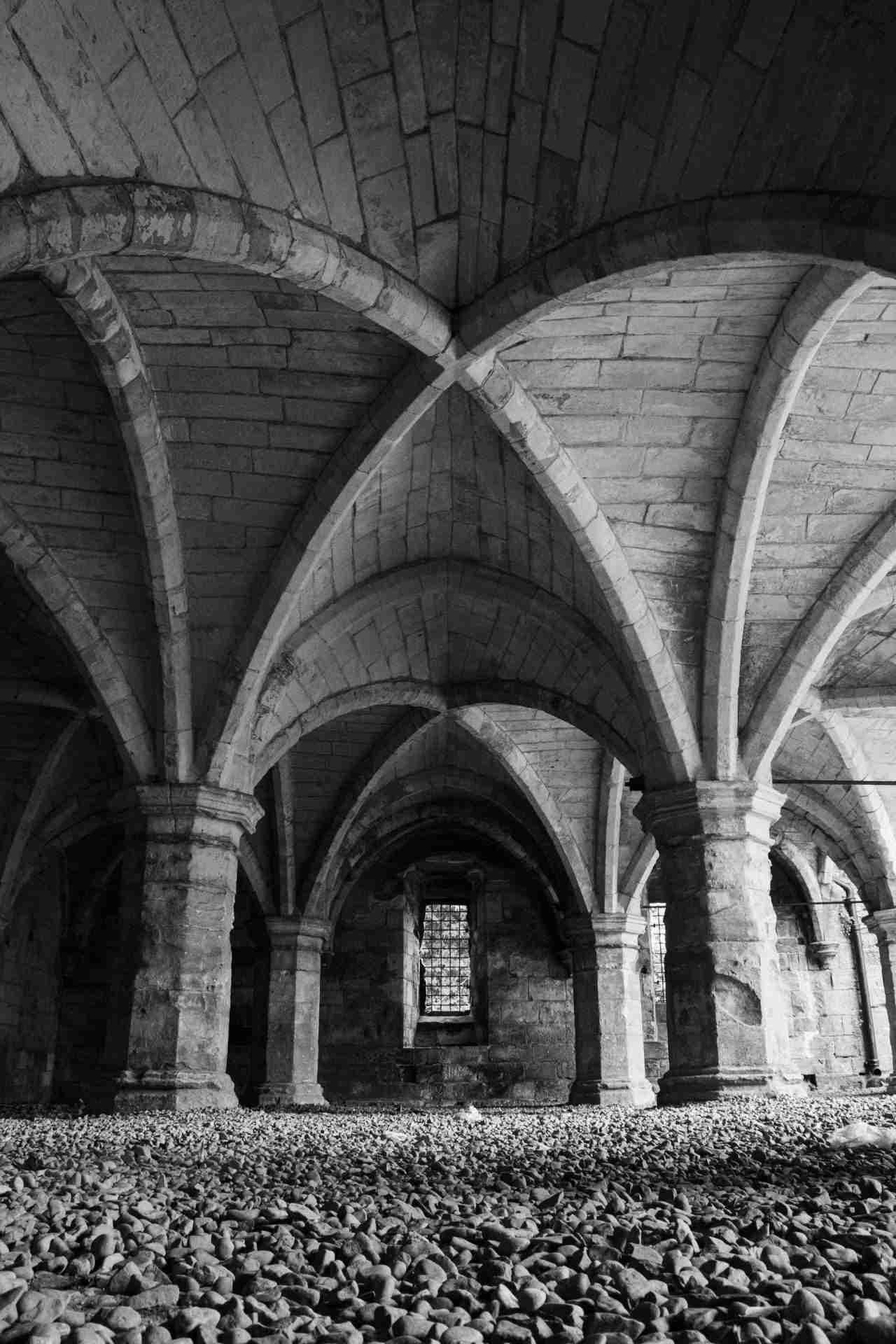
Tucked between York Museum Gardens and the medieval city walls, the remains of St. Leonard's Hospital offer a quiet, textured space for architectural and historical photography. Originally built in the 12th century, this partial ruin once formed part of one of the largest medieval hospitals in England. What remains today are tall stone arches, vaulted walls, and open-air corridors surrounded by grass and trees, creating a strong contrast between built structure and natural elements. The site's irregular layout and changing light make it ideal for exploring shadow patterns, aged textures, and compositions that highlight the passage of time. While smaller in scale than York Minster or the city walls, St. Leonard's Hospital is often quieter and allows more creative freedom with angles and timing.
Best Photography Opportunities
• Vaulted stone arches from the central walkway
The main walkway through the ruins gives a strong perspective of the remaining gothic arches that frame one another in repeating lines. Shooting from a low position emphasizes the height of the structure while revealing the uneven stone floor, which adds texture and contrast to the composition. In the morning, side light filters in through the trees, producing gentle shadows across the walls and columns. A standard zoom lens gives you enough flexibility to work with both tight and wide compositions as the angles shift. Including a person at the far end of the walkway can help show scale without dominating the frame.
• Wall details with light and decay
The old walls at St. Leonard's Hospital show layers of stone and weathering that work well for close, texture-driven photography. Afternoon light brings out fine detail in the stone surface, while patches of moss and soft erosion add visual interest. Using a short telephoto lens allows you to isolate small scenes such as carved patterns, lichen-covered corners, or crumbling mortar lines. These images are especially effective in overcast light, which keeps contrast low and color even. Working handheld is usually fine here, as most details can be captured from standing or crouching height.
• Contrast between structure and nature
One of the most interesting elements of the site is the way the remaining stone arches are surrounded by grass, vines, and trees. Framing compositions that include both built and natural elements creates contrast between time and environment. In spring and summer, green foliage wraps around parts of the ruin, softening the sharp lines of the stone. Early morning or late afternoon are best for this kind of work, when the light rakes across the scene and defines the edges of each surface. A wide angle lens helps include more of the setting while keeping the subject grounded in place.
• Side compositions with shadow patterns
On clear days, light moves across the open corridors and casts shadows of the arches and columns onto the stone floor. These patterns are short lived and shift quickly, but they can add movement and depth to an otherwise static scene. Use a mid range focal length to keep the background simple and emphasize shape over texture. These types of photos benefit from patience and multiple attempts throughout the day, especially in spring or autumn when the sun sits lower in the sky. A polarizing filter can help reduce glare and boost midtone contrast without overprocessing.
• Twilight and soft evening color
Though there is no artificial lighting at the ruins, the space remains accessible during twilight, and the open sky above allows for color to settle in gradually after sunset. During blue hour, the stone takes on cooler tones that contrast well with the warm color left in the sky. A tripod is necessary for longer exposures, and a wide angle lens allows you to build compositions that place the structure against an expansive backdrop. This is a quiet time to shoot, with very few people around and the possibility of including nearby lamps or the walls of the Museum Gardens as secondary elements.
Best Time to Visit
Light changes quickly at St. Leonard's Hospital because of its partial enclosure and the surrounding trees. Early morning brings soft, directional light from the east, which casts long shadows across the open floor and brings out detail in the stone surfaces. Late afternoon is equally productive, particularly when working from the western edge of the ruins. These times of day offer enough contrast to define form without flattening textures.
Spring and autumn are especially good for photographing this location. In spring, the nearby trees begin to bloom and new growth adds color to the scene, while in autumn, fallen leaves and soft golden light introduce more tonal variety. Overcast weather works well for close-up compositions and detail work, as the light stays even and reduces blown highlights on the stone. Winter can be productive too, especially after frost or light snow, which adds visual contrast and emphasizes surface texture.
The ruins are busiest in the middle of the day during warmer months, particularly on weekends. For more flexibility with composition and fewer interruptions, visit during weekday mornings or near sunset.
How to Get There
St. Leonard's Hospital is located within the York Museum Gardens, just outside the city walls and steps from the River Ouse. The entrance to the gardens is on Museum Street, across from Lendal Bridge, and the ruins are less than a five minute walk from the entrance gate. The location is flat, paved, and easily accessible by foot from anywhere within York's city center.
If arriving by train, York Station is about ten minutes away on foot. Public parking is available throughout the city, though it is limited and often busy. There is no entry fee to access the gardens or the ruins, and photography is allowed without restriction. Tripods can be used, though it is best to avoid blocking walkways or paths during busy hours. The site is open during daylight hours, and there is no artificial lighting installed at the ruins.
Recommended Photography Gear
A standard zoom lens between 24 and 70 millimeters will cover most angles at the site, from full views of the arches to more focused compositions of interior walls and floor details. A wide angle lens can be useful for shooting upward through the arches or for fitting the ruins into the surrounding environment. A mid range telephoto lens is helpful for detail work, particularly when isolating carved elements or areas of weathered stone.
A tripod is recommended if you plan to photograph during blue hour or want to work with slow shutter speeds in low light. A polarizing filter is useful in mid-day light to control reflections from the stone and help deepen color contrast. Because the area is level and compact, you can carry a full kit without difficulty. A remote shutter or two second timer is helpful for longer exposures, especially if you are aligning symmetrical shots or shooting in the evening when light is low.
Bring a lens cloth to manage condensation or dust, particularly on damp mornings. There is no need for hiking gear or weather protection beyond the usual, as the site is in a maintained city park and sheltered by trees.
Nearby Photography Locations
Surrounding the ruins, these gardens offer a wide range of compositions, from tree-lined paths to formal planting beds and benches. Seasonal color adds interest throughout the year, and the garden's layout allows for layered depth in landscape images.
Just a few minutes away on foot, York Minster provides endless architectural opportunities with its detailed stonework, stained glass, and gothic structure. The eastern end of the cathedral is especially photogenic in early morning when the rising sun lights the stone from behind.
Walking the nearby city walls gives an elevated view over rooftops and gardens. This stretch near Bootham Bar includes curves, gate towers, and long views that change character depending on light and season.
Also located within Museum Gardens, this Roman era structure contrasts sharply with the medieval ruins nearby. Its tight stonework and rounded form are best photographed in soft light or at twilight when the shadows settle evenly.
• River Ouse Embankment
Just beyond Lendal Bridge, the path along the River Ouse offers calm reflections and wide compositions of the bridge, city skyline, and moored boats. This location works well at sunrise and also during blue hour when nearby buildings are lit.
St. Leonard's Hospital is a quiet and adaptable site that rewards a slower pace and a careful eye. The textures, natural light, and scale of the ruins make it ideal for building a varied set of images within a short space and time. Whether you're stopping for a quick study or spending a few hours exploring the area's shifting light and weather, the ruins offer subtle and rewarding possibilities.
Comments
Loading comments…