
Tewkesbury Abbey rises prominently above the small market town of Tewkesbury in Gloucestershire, England. Founded in the early 12th century, the abbey is one of the finest examples of Norman architecture in the country and has remained remarkably intact for nearly nine centuries. Its massive central tower, built from warm colored stone, dominates the surrounding skyline and can be seen from several points around town. Unlike many historic monasteries in England that survive only as ruins, Tewkesbury Abbey continues to function as an active parish church, allowing visitors to explore both its exterior and interior spaces. For photographers, the abbey offers a wide range of compositions, from the powerful symmetry of the western façade to the dramatic height of the interior nave. The surrounding churchyard, nearby streets, and open green spaces also provide several viewpoints where the scale of the building becomes especially impressive.
Best Photography Opportunities
• The West Front and Norman Tower –
The west front of Tewkesbury Abbey provides one of the most recognizable views of the building. From the open lawn in front of the church, the massive central tower rises directly above the entrance façade, creating a powerful vertical composition. The warm colored stone and rounded Norman arches give the building a distinctive character that photographs beautifully in soft light. A wide lens works well here because it allows you to capture the entire façade together with the tower above. Stepping slightly back across the grass helps keep the perspective balanced while showing the full scale of the structure. Early morning often produces the cleanest light on this side of the abbey and fewer visitors in the foreground.
• Interior Nave and Repeating Arches –
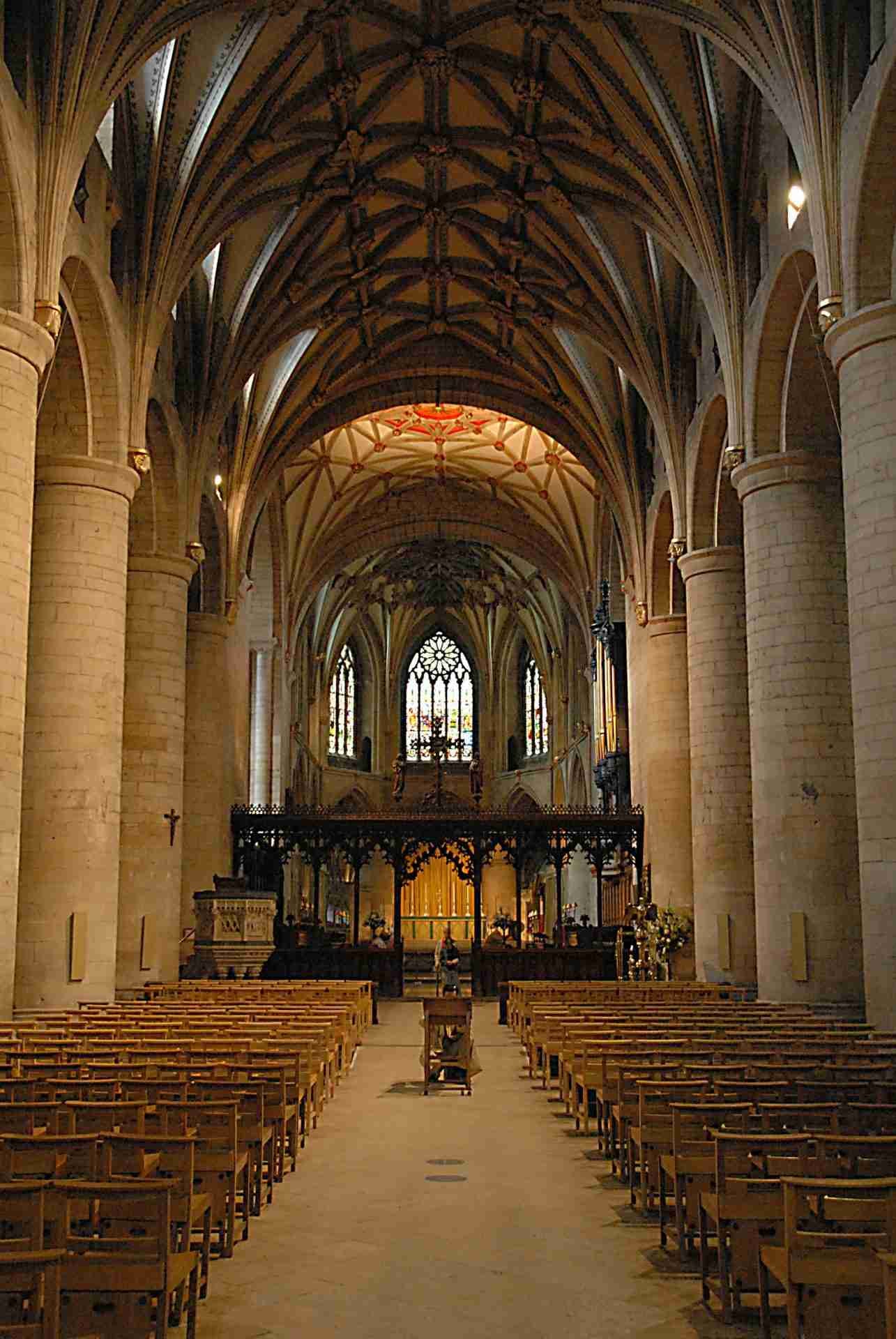
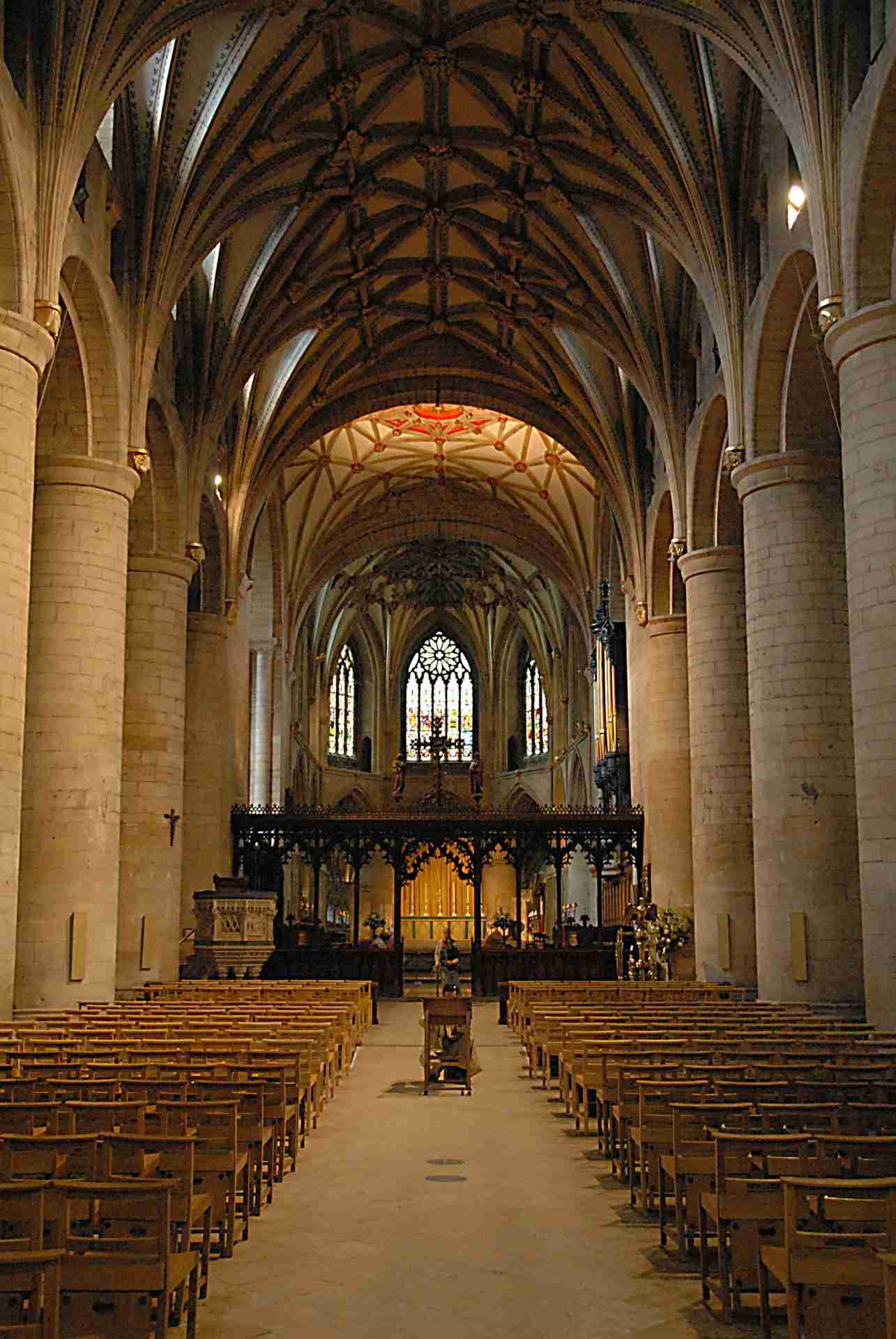
Inside the abbey, the long nave creates one of the most impressive interior spaces in English church architecture. Massive stone columns support a sequence of rounded Romanesque arches that stretch toward the altar. Photographing from the center aisle creates strong symmetry as the arches repeat into the distance. A wide lens is useful here because it captures both the height and depth of the interior. Keeping the camera level helps preserve the vertical lines of the columns and arches. The soft natural light filtering through the stained glass windows adds subtle color and atmosphere to the stone interior.
• The Cloister and Abbey Grounds –
Although much of the original monastery complex no longer survives, the grounds surrounding the abbey still offer several attractive viewpoints. Walking through the churchyard reveals angles where the building rises above rows of gravestones and trees. These elements can add depth and context to the composition while emphasizing the historic setting of the abbey. A moderate wide lens works well for balancing the building with the surrounding landscape. Soft light often highlights the texture of the stone walls and the aged surfaces of the monuments.
• Side View of the Tower and Transept –
Moving around the sides of the abbey reveals a different perspective where the massive tower stands above the transepts and lower sections of the building. From this angle, the layered structure of the architecture becomes more apparent. A mid range zoom helps isolate the tower and surrounding stonework without including too much of the surrounding town. This viewpoint also highlights the thick Norman walls and the smaller windows typical of Romanesque design. Side lighting later in the day often brings out the texture of the stone blocks.
• Evening Light on the Abbey Stone –
Late afternoon and evening light can transform the appearance of Tewkesbury Abbey. As the sun lowers, the warm colored stone begins to glow while shadows deepen along the arches and tower edges. Photographing from the open grass areas nearby allows the building to stand clearly against the sky. A mid range lens can help refine the composition while keeping the tower dominant in the frame. If the sky contains scattered clouds, the light and shadow across the abbey can create a particularly dramatic scene.
Best Time to Visit
Early morning is often the best time to photograph Tewkesbury Abbey. The surrounding streets and churchyard are quieter, making it easier to capture clean compositions of the exterior architecture. Soft morning light also helps reveal the texture of the stone without creating harsh shadows.
Late afternoon and evening can also produce beautiful lighting conditions. The warm tones of the setting sun often highlight the stone walls and tower. Overcast conditions work well for interior photography because the light entering through the windows remains soft and evenly distributed throughout the nave.
How to Get There
Tewkesbury Abbey is located in the center of the town of Tewkesbury in Gloucestershire, England. The abbey sits within walking distance of most of the town's historic streets and landmarks.
Visitors arriving by car will find several public parking areas within the town center, from which the abbey can be reached with a short walk. The town is also accessible by bus from nearby cities such as Gloucester and Cheltenham. Entry to the abbey itself is free, though donations are welcomed to help maintain the historic building.
Recommended Photography Gear
A wide lens is particularly useful at Tewkesbury Abbey because it allows you to capture the full scale of the building and the height of the interior nave. A mid range zoom provides flexibility when framing architectural details or isolating sections of the tower.
A tripod can be helpful inside the abbey where light levels are lower, though photographers should always be mindful of visitor rules and services taking place. A polarizer can help deepen the color of the sky when photographing the exterior and reduce glare on stone surfaces.
Nearby Photography Locations
sits beside the River Avon just a short walk from the abbey itself. The unusual timber framed structure stands partly over the water and often reflects beautifully in calm conditions. It is one of the most photographed buildings in the town.
is a historic medieval bridge crossing the River Severn. The stone arches and small chapel built directly into the bridge make it a unique architectural subject. Reflections in the river can add strong compositional elements.
is a large riverside meadow where the River Severn and River Avon meet. From here you can photograph wide open views of the rivers and surrounding countryside. Early morning mist can create particularly atmospheric scenes.
offers wide lakes and views across open countryside. The calm water often produces strong reflections of the sky and surrounding landscape. Sunrise and sunset can be especially rewarding here.
• Bredon Hill
rises above the surrounding farmland and provides sweeping views across the Severn Valley. The small tower and church near the summit create strong foreground elements for landscape photography. The hilltop is particularly dramatic at sunrise or sunset.
Comments
Loading comments…