
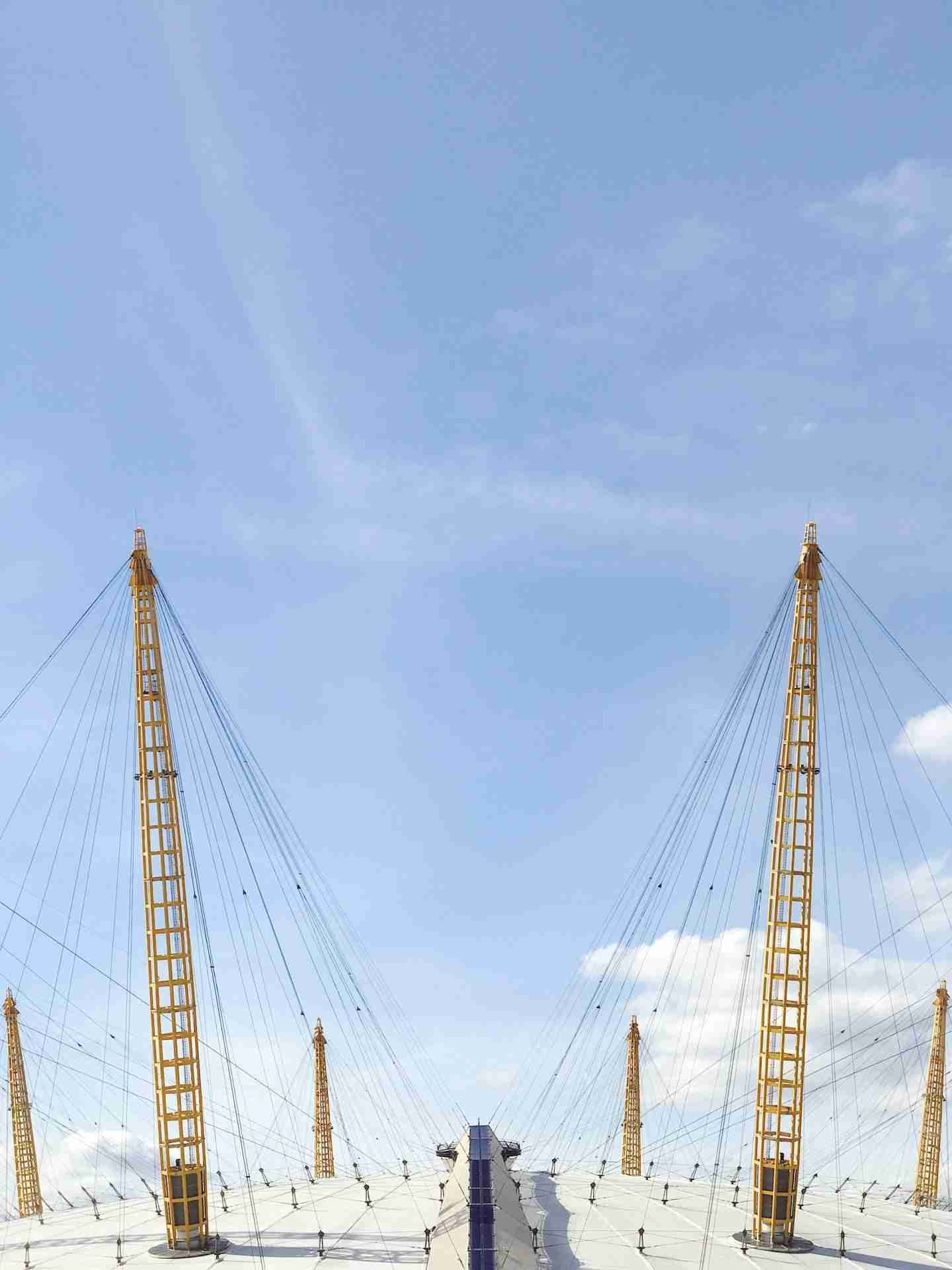
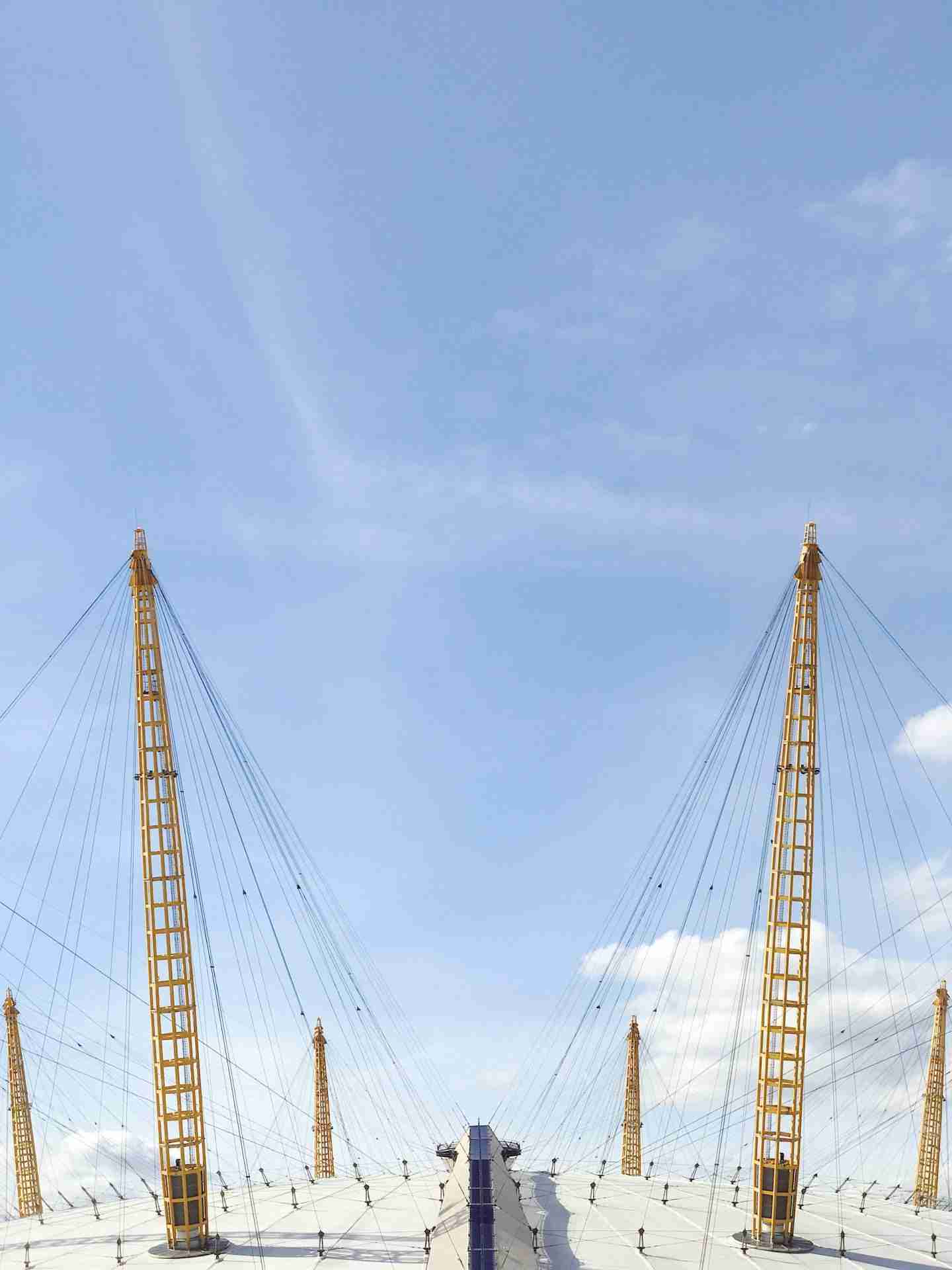
Set along the banks of the River Thames in southeast London, the O2 Arena is far more than a world-class entertainment venue—it's also one of the city's most striking architectural landmarks. Formerly known as the Millennium Dome, the arena's vast white canopy and steel masts dominate the Greenwich Peninsula skyline, offering a variety of opportunities for photographers drawn to symmetry, urban abstraction, and dynamic lighting. Whether captured under the glow of twilight or against the backdrop of the Canary Wharf skyline, the O2 Arena brings structure and tension to both wide vistas and detail-focused compositions.
Best Photography Opportunities
• Panoramic River Views with the Arena
Position yourself on the northern side of the Thames for expansive shots of the O2's circular form contrasted against the high-rise skyline of Canary Wharf. A wide-angle lens will let you include sweeping clouds or river traffic, while a telephoto lens compresses distance for dramatic juxtapositions. The river acts as a natural mirror at twilight, adding reflection and softening the arena's bold geometry. Try long exposures at blue hour to capture trails of passing boats and aircraft above. For added compositional interest, look for passing pedestrians, moored boats, or weather elements like fog to frame the arena differently with each visit. Low tide also reveals the muddy shoreline, offering grittier foregrounds and unique texture beneath your compositions.
• Close-Up Architectural Geometry
Stand beneath the O2's soaring masts and fabric canopy to explore the sweeping curves and structural symmetry from a close-up perspective. Use a 24–70mm lens to isolate lines, anchor cables, and junctions where steel meets canvas. Shadows shift dramatically throughout the day—especially when sunlight streams through gaps between the tensile structures—so return at different times to study how natural light interacts with its engineered forms. Black-and-white processing enhances the stark geometry and interplay of light and shadow. Don't hesitate to shoot upward with a wide lens to exaggerate the convergence of lines overhead or get in tight on bolt patterns, cable junctions, and texture to abstract the architecture into something near-sculptural.
• Night Photography with Color and Motion
After dark, the O2 lights up in saturated blues, purples, and rotating accent colors that change for events and seasons. A tripod is essential here—set up across the river for long exposures that combine arena lighting, bridge motion, and the ambient glow from nearby skyscrapers. Include the water for reflections, or wait for a passing ferry to create streaks of movement across your frame. Incorporate nearby pedestrian bridges for leading lines that direct the eye toward the dome. Try bracketed exposures to capture both highlight detail from bright LED signage and subtle ambient tones. You can also photograph from the elevated walkway by the InterContinental Hotel, which provides unique night compositions that merge architectural lighting with human silhouettes.
• Cable Car Views from the Emirates Air Line
Hop aboard the Emirates Air Line cable car just east of the arena for elevated shots looking directly down on the dome. These bird's-eye views are great for abstract compositions that emphasize radial symmetry, the placement of yellow masts, and the sprawl of London around the perimeter. Use a zoom lens through the glass to frame details while minimizing glare. Sunset rides are particularly striking as the sky lights up over the city and the arena begins to glow. Tilt your camera downward for dramatic geometry or wait until you're mid-span to frame the dome with the winding Thames as a leading line. If you have multiple passes, vary your exposures to experiment with motion blur or deep depth of field.
• Environmental Portraits and Crowd Energy
During concerts or weekend events, the exterior plazas become a hive of activity. This is the perfect setting for environmental portraits where human expression and architectural backdrop interact. Use a fast 35mm or 50mm lens with a wide aperture to isolate subjects against the arena, capturing motion blur, light streaks, or dynamic lighting on people's faces. These shots work especially well during golden hour or under artificial lighting at night. Candid street-style portraits of buskers, vendors, or tightly framed groups queuing beneath the mast-lit canopies can convey a real sense of atmosphere. Even slow shutter panning can highlight the contrast between the static dome and the kinetic energy of eventgoers flowing through the forecourt. During concerts or weekend events, the exterior plazas become a hive of activity. This is the perfect setting for environmental portraits where human expression and architectural backdrop interact. Use a fast 35mm or 50mm lens with a wide aperture to isolate subjects against the arena, capturing motion blur, light streaks, or dynamic lighting on people's faces. These shots work especially well during golden hour or under artificial lighting at night.
Best Time to Visit
The O2 Arena is visually engaging throughout the year, with each season presenting its own photographic rewards. Winter offers elongated twilight hours, giving photographers ample time to capture dramatic blue-hour exposures, crisp air, and moody skies that enhance the arena's LED lighting displays. Snowfall, though rare, adds an extra element of contrast and minimalism to the arena's sweeping form. Spring brings bursts of new life to the nearby riverbanks, with changing weather that introduces atmospheric fog, reflections, and vivid post-rain skies.
Late spring through early autumn is ideal for sunset compositions, especially when the golden light rakes across the arena's tensile canopy and reflects in the river. During these months, the light remains softer for longer in the evenings, allowing for a wider shooting window and less reliance on post-processing. Summer sunsets viewed from across the river offer bold silhouettes and deep color contrast, while cloudy summer days can lend the arena a neutral palette ideal for minimalist architectural studies.
Autumn brings warm, amber light and fewer crowds, especially during weekday evenings. You'll also benefit from cleaner lines in the surrounding plaza areas as trees shed their foliage, removing visual clutter. Avoid harsh midday hours unless the goal is to capture shadow geometry—otherwise, the intense sun can create glare and diminish surface detail. Monitor weather forecasts closely, as fog rolling in from the Thames can transform the entire atmosphere and deliver some of the most compelling frames.
How to Get There
The O2 Arena is easily accessible via the Jubilee Line on the London Underground, with North Greenwich station just a few steps away. Numerous bus lines also stop at the arena complex, and river boat services along the Thames Clippers line include a docking point at North Greenwich Pier. Cyclists can use nearby paths that connect the Thames Path with Greenwich and Canary Wharf.
If arriving by car, paid parking is available on-site, though it can be limited or more expensive during major events. Photographers arriving during quieter hours should have no trouble setting up near the waterfront or at elevated vantage points along the riverside paths. There is no fee to walk around or photograph the exterior areas of the O2.
Suggested Equipment for Photographing the O2 Arena
Bring a wide-angle lens (16–35mm) to capture the full arc of the arena and its surroundings—this is especially useful for foreground-to-background compositions when working from the river's edge. A 24–70mm midrange zoom is ideal for versatility, helping you isolate compositional elements like the suspension cables, lighting rigs, and human figures in context. For tighter urban contrasts and skyline compressions, a 70–200mm telephoto lens will allow you to frame Canary Wharf and the O2 together in powerful juxtaposition.
Tripods are essential for night photography, long exposures, and bracketed HDR shots. Look for one with firm leg locks and wide stance if shooting on concrete or near the river's edge where surfaces can be uneven. A circular polarizer is helpful for enhancing sky contrast and cutting glare from glass buildings and river surfaces. Bring a variable ND filter for creative motion blur, particularly during daytime scenes with fast-moving clouds, passing boats, or crowds. A graduated ND filter can help when dealing with bright skies and dark water foregrounds.
Pack extra batteries, especially during winter sessions when temperatures drop quickly along the Thames. A microfiber cloth and weatherproof camera cover are also essential given the area's frequent mist and unpredictable showers. For night scenes, a remote shutter release or intervalometer improves sharpness and expands your creative options. Lastly, don't forget lens cleaning tools—spray from the river or evening condensation can affect your optics within minutes.
Nearby Photography Locations
: Just across the Thames, the glass and steel towers of Canary Wharf provide a dramatic, futuristic counterpoint to the arena's dome. Shoot at night for reflections in the river or during golden hour for backlit high-rises. The reflective glass and strong verticals make it a superb subject for architectural abstraction or mirrored compositions in wet conditions.
: A short trip west takes you to one of London's classic high viewpoints, offering sweeping vistas over the Thames, the O2, and the city skyline. The symmetry of the Queen's House adds a neoclassical touch. Sunrise works especially well from this angle, casting soft light over the dome and creating long, cinematic shadows across the park.
• Thames Barrier Park
: Located a short way east, this riverside park offers angular landscaping, minimalist paths, and views of the massive flood barrier—ideal for modernist compositions and environmental geometry. In spring and summer, flowering borders and carefully shaped hedges provide contrasting organic forms for more layered shots.
A quirky creative enclave near East India Docks, it features art installations, industrial architecture, and great views back toward the O2 from an unusual angle. The area's weathered textures and repurposed maritime objects are perfect for storytelling and fine art style imagery.
: Head a bit north from the arena and shoot toward the water's edge, where historic cranes and reflections of modern development create a compelling visual tension. The pedestrian bridges and wide open docks make it ideal for long exposures, especially when clouds move across the skyline.
Comments
Loading comments…