
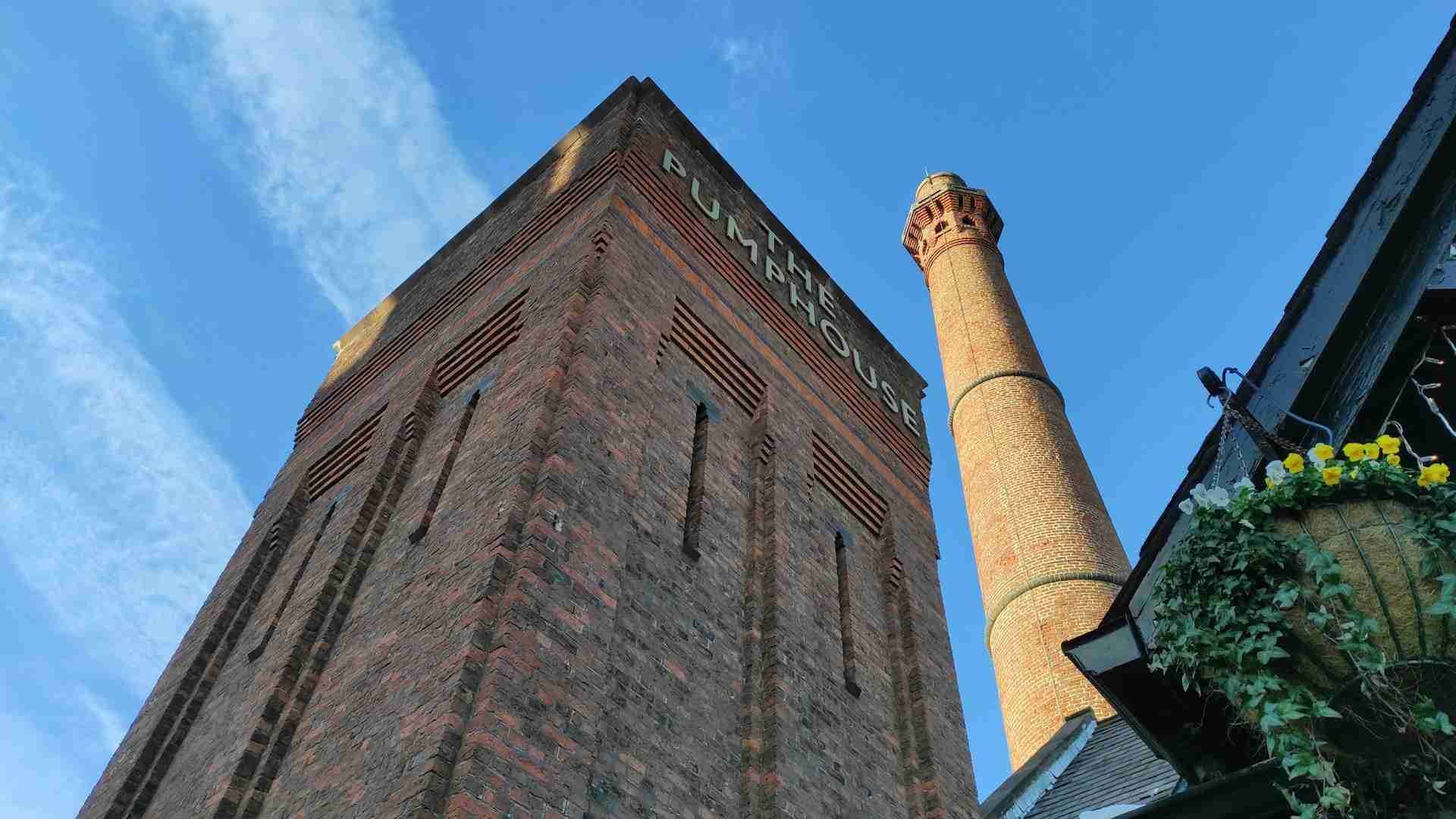
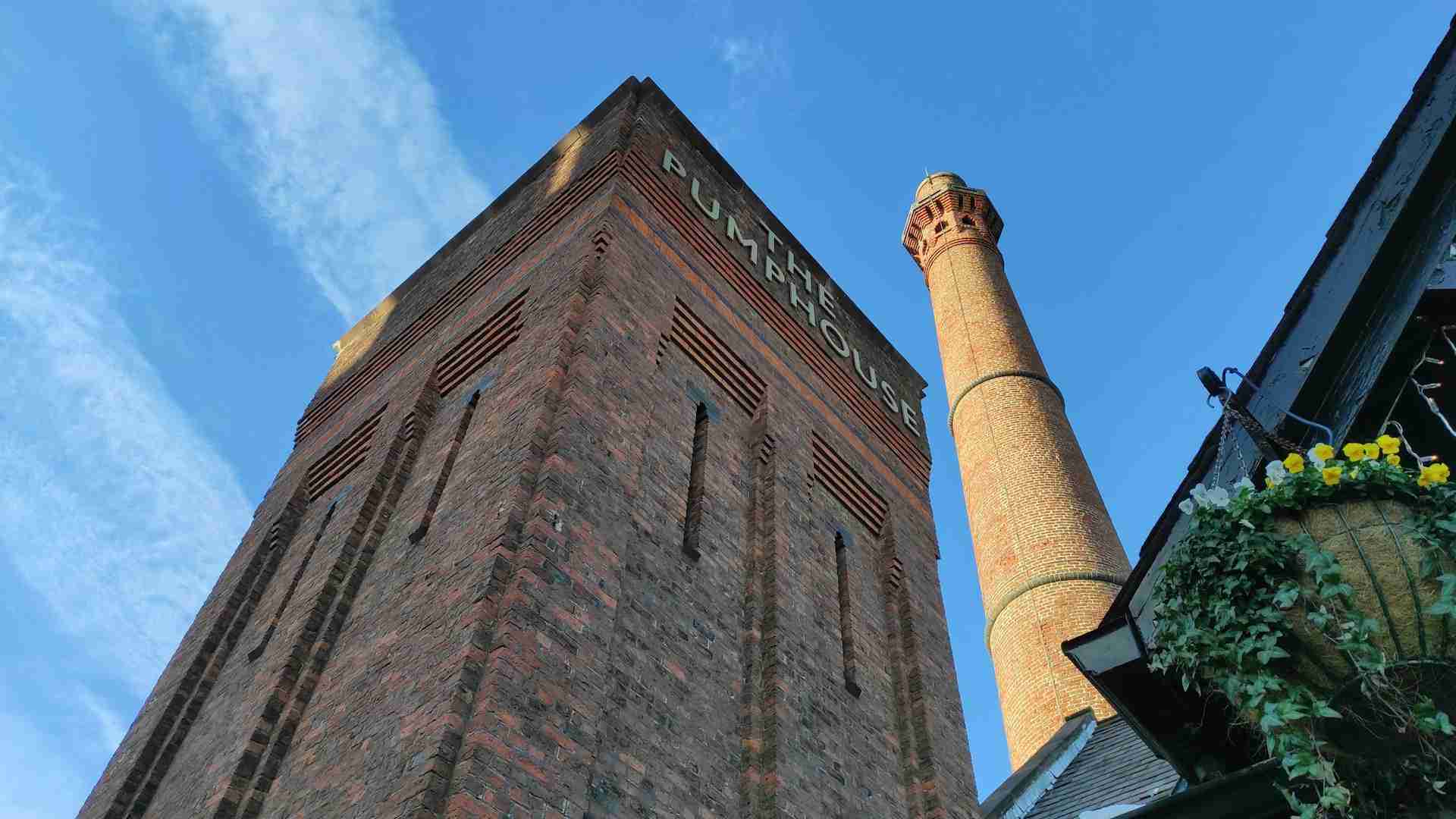
The Pump House, located in Liverpool's historic Royal Albert Dock area, is a striking mix of industrial design and urban waterscape. With its redbrick walls, soaring chimney, and position along the dock basin, this preserved Victorian building gives photographers a chance to work with symmetry, reflection, and warm architectural textures all within a small footprint. As part of a larger network of dockside structures, The Pump House connects visually to bridges, canal boats, modern museums, and moody Mersey skies. Whether you're capturing it in soft morning light or using night exposures to pull out the glow of the city, the building holds up as a focal point or a structural element within a larger scene. It's ideal for photographers who enjoy blending architectural detail with waterfront atmosphere.
Best Photography Opportunities
• Front-Facing Reflections from Across the Dock
Standing on the opposite side of the dock, you can frame the entire front of The Pump House with its full reflection stretching toward the camera. Calm mornings work best, especially just after sunrise when the water is still and warm light hits the brick facade. Use a wide-angle lens to include the reflection without crowding the frame, or switch to a longer focal length to compress the view and draw more attention to the building's textures. The large chimney acts as a vertical anchor, balancing the scene and offering contrast with the lower horizontal structures. In overcast conditions, switch to black and white to highlight the lines and tonal range in the brickwork and water.
• Side Angles with the Tower Framed Against the Sky
Shooting along the edge of the canal gives a clean side view of the building and its tall chimney, especially effective when the sky carries texture or evening color. This angle highlights the building's shape and gives you opportunities to include people walking along the dock, adding scale and a human element. Use a mid-range zoom to adjust for traffic and composition as the scene changes. If the light is strong, the side of the building will cast deep shadows that add mood and structure to the image. Shooting here at blue hour can be especially rewarding as interior lights begin to glow and reflect in the canal.
• Detail Work Around the Brick and Metal Fixtures
The Pump House includes a number of well-preserved fixtures: wrought iron railings, heavy wooden doors, and old industrial signage that all lend themselves to texture-driven photography. Bring a short telephoto or macro lens to isolate these elements and work with strong surfaces and patterns. These images are especially effective when paired with directional light that casts shadows across the brick or picks out rust on the metal. Look for repeated shapes or interplay between original materials and restored sections. This is also a good area for slow-paced handheld shooting, letting you react to details as you move through the scene.
• Bridge Views with Leading Lines into the Pump House
Nearby footbridges offer raised views that use dock lines, railings, and walkways as leading elements that draw the eye back to the building. These compositions work well in both wide and cropped formats, and benefit from golden hour light that adds warmth to the metal and brick surfaces. Waiting for a boat or pedestrian to move into the foreground can help complete the frame and give it life. These setups are also good for experimenting with layered depth, shooting through fencing or using reflections in puddles or railings. A polarizer can help manage glare and boost the contrast in sky and water elements.
• Night Photography with Lit Windows and Water Glow
After dark, The Pump House becomes a quiet, well-lit subject with warm lights inside casting color into the surrounding water. Using a tripod and a low ISO setting, you can stretch exposures to pull in deep color from the sky and subtle detail in the stonework. The chimney and its reflection become a strong vertical line, and even on cloudy nights, the glow from nearby city lights provides a soft backdrop. A wide aperture can be used creatively here to create starburst effects from lamps or highlight light trails from passing boats. Working from several sides will give you different balances between structure and reflection.
Best Time to Visit
Morning is ideal for calm reflections and warm sidelight that highlights the texture in the red brick. Early in the day, the dockside tends to be quiet, offering more space and fewer distractions while composing. Overcast skies can still work well, especially if you're focusing on texture and contrast rather than bright color. Late afternoon brings strong directional light from the west, which hits the side of the building and chimney with golden tones and long shadows. Evening blue hour is especially rewarding for capturing the light from within the Pump House and the surrounding area as it reflects in the dark water.
During colder months, early sunsets allow for long exposure night work without staying out too late, and seasonal decorations around the docks can add visual interest. Rainy conditions can work to your advantage here too, with wet bricks darkening in tone and dock lights reflecting on the ground and water. Avoid midday if possible, as light tends to be flat and busy foot traffic can crowd the walkways.
How to Get There
The Pump House is located in the Royal Albert Dock area of Liverpool, easily accessible by foot from the city center. For those arriving by train, Liverpool James Street Station is a short ten-minute walk away. Several bus lines also serve the waterfront area, and bike lanes connect nearby neighborhoods with the dockside promenade. Parking is available at paid public lots nearby, though it can fill up quickly on weekends or during special events.
There are no entrance fees required to photograph around The Pump House or the docks. Tripods are permitted, though using one during busy hours may require some patience and courtesy to other visitors. The site is open to the public year-round, and most of the best compositions can be accessed from public walkways or bridges.
Recommended Photography Gear
A 24–70mm lens is the most versatile tool for this location, giving you flexibility to frame the full building, street-level detail, or layered views from nearby bridges. A wide-angle lens such as a 16–35mm is also useful for capturing reflections across the dock and maximizing depth when working close to the waterline. For those interested in isolating textures or architectural elements, a short telephoto or macro lens helps capture detail without needing to step back.
A tripod is recommended for low-light and night photography, particularly when working with long exposures or tight compositions along the water. Bring a circular polarizer to reduce glare on the canal and enhance sky color during golden hour. A microfiber cloth or rain sleeve can be helpful during wet weather, especially if you're shooting close to the waterline. Consider a small, weather-resistant backpack that allows for hands-free movement around bridges and narrow walkways.
Nearby Photography Locations
Just steps from The Pump House, this wider dock area offers a mix of brick warehouses, docked ships, and modern museum architecture. It's especially photogenic in the early morning or late afternoon when light moves through the colonnades and reflects off the water.
A short walk north brings you to the iconic Liver Building, Cunard Building, and Port of Liverpool Building. This area is strong for wide-angle cityscapes, long exposure waterfront shots, and architectural symmetry.
Known for its street art and converted industrial spaces, the Baltic Triangle gives photographers a more urban, modern contrast to the historic dock area. Best explored on foot with a standard zoom or prime lens for street-level shooting.
• St. George's Hall and Lime Street Station
Located slightly inland, this neoclassical building and historic railway terminal offer strong structural lines, wide staircases, and statues framed by light and shadow. Great for both daytime and night photography.
A short drive or transit ride from the city center, this Victorian glasshouse sits within a landscaped park and provides floral and architectural opportunities in one location. Strong natural light filters through the glass and works well in both color and black-and-white images.
The Pump House is one of those compact but rewarding locations that blends historical architecture with flexible composition options. Whether you're shooting reflections, details, or light and shadow, it gives you plenty to work with in every season and time of day. The surrounding area only adds to the appeal, offering photographers an easy way to build out a varied dockside series without having to travel far.
Comments
Loading comments…