
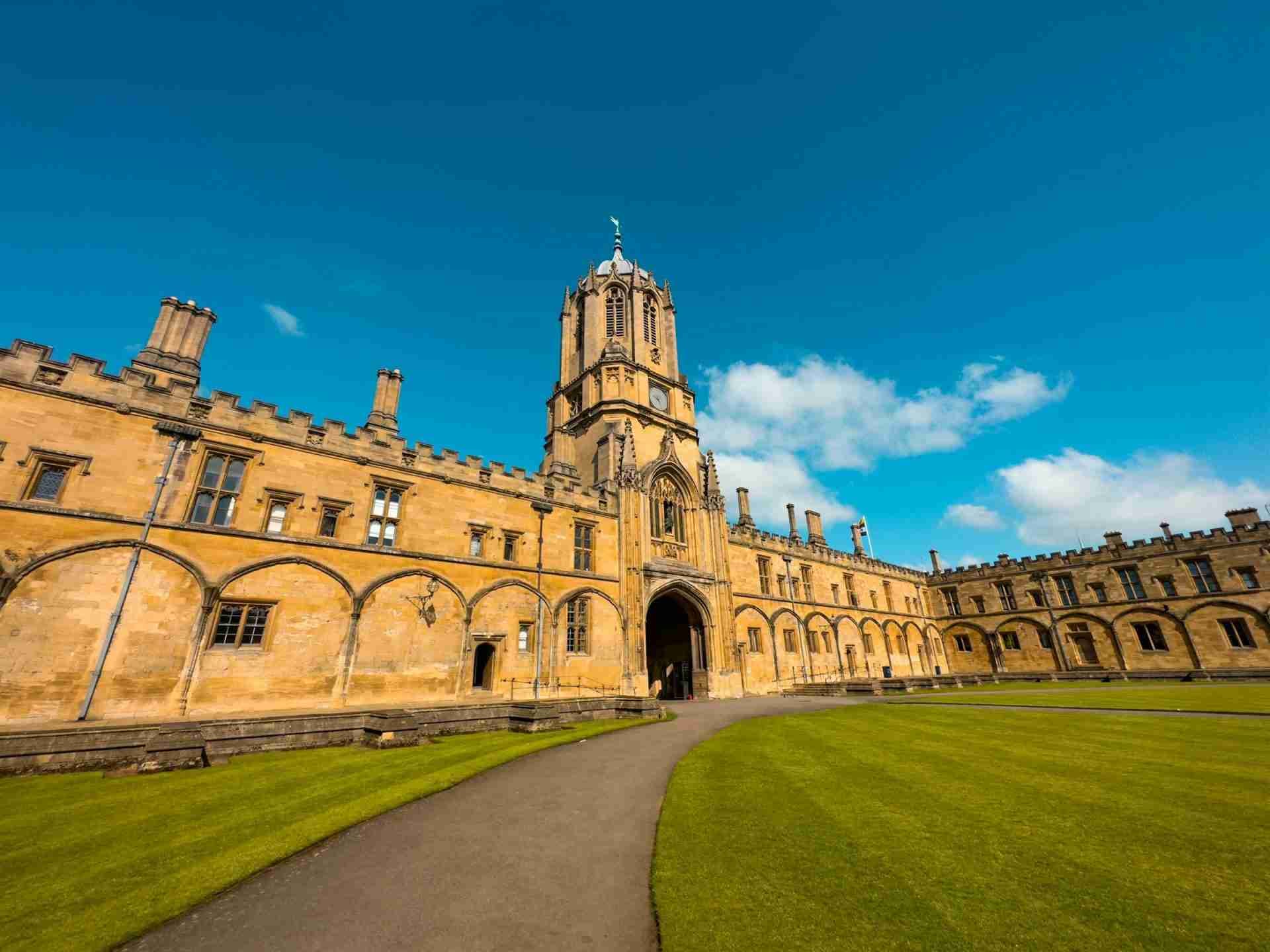
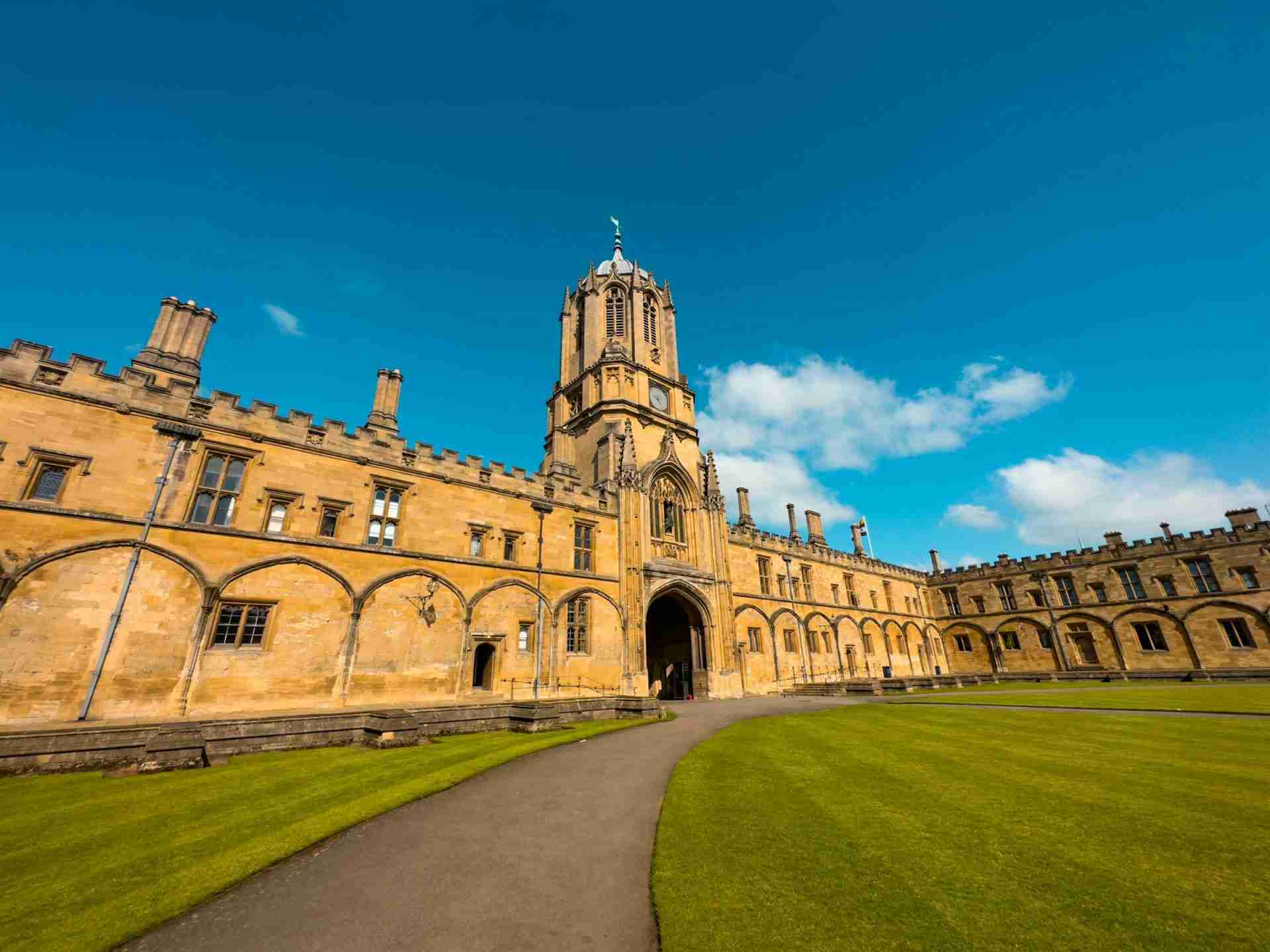
Standing over the grand entrance of Christ Church, Tom Tower is one of Oxford's most recognized architectural features and a rewarding subject for photographers drawn to English collegiate architecture. Designed by Sir Christopher Wren in the late seventeenth century, the tower blends Gothic structure with Baroque detailing, topped by a distinctive octagonal lantern. It marks the threshold between the busy street life of St Aldate's and the quiet formality of the college's inner quads. With its rich surface textures, bold symmetry, and layered historical presence, Tom Tower offers a wide range of creative approaches from street level storytelling to precise architectural framing.
Best Photography Opportunities
• Head On Symmetry from St Aldate's
One of the most effective compositions is from directly across St Aldate's, where you can capture the full height and balance of the tower in relation to its entrance arch and flanking wings. A standard or wide lens in the 24 to 35mm range works well for a frontal view without distortion. Morning light from the east adds soft warmth to the stone, while afternoon shadowing creates deeper contrast. Including passing figures or a cyclist can introduce human scale and energy to an otherwise static composition. Watch for red double decker buses to introduce bold color into the scene.
• Framing the Lantern with Nearby Details
To focus attention on the lantern that crowns the tower, try shooting from a distance and incorporating street elements as foreground framing. Arches, windows, or even hanging signs on the east side of St Aldate's help create natural frames that guide the viewer's eye upward. This method works well with a medium telephoto lens in the 85 to 135mm range. Soft overcast light is ideal for maintaining balanced exposure across the building's carvings and the darker street elements.
• Low Light and Night Compositions
After dark, the tower is lit from below with soft floodlights that emphasize its architectural lines and texture. Blue hour is the most effective time to shoot, when ambient light still lingers in the sky. From across the street, you can use a tripod to create long exposures that balance the illuminated stone with passing traffic or glowing windows in the college behind. A narrow aperture also allows for starburst effects from the streetlights nearby, adding a clean highlight to the frame.
• Close Up Textures and Details
The lower sections of the tower, especially around the main gate, feature carvings, crests, and weathered ironwork that work well for tight, texture-rich images. Get close with a 50mm or short telephoto lens to isolate details like the carved stone moldings or the decorative lantern iron. These images are most successful under diffuse light from cloud cover or in late afternoon shade, when the risk of blown highlights is lowest. A shallow depth of field allows for background separation while emphasizing the weathered surfaces.
• Higher Perspectives for Lantern Studies
If you have access to an upper floor or window across the street, such as from a café or shop, you can photograph the tower's lantern from near eye level. This angle flattens the vertical stretch and brings attention to the tower's proportions against the skyline. Use a longer lens to compress the perspective and isolate the lantern structure above the street. These rare viewpoints offer a more analytical perspective, especially in flat midday light when direct shadow is minimal.
Best Time to Visit
The lighting and street activity around Tom Tower change noticeably throughout the day and by season. Morning light from the east is ideal for full frontal compositions, bathing the stone in soft tones and creating clean exposures across the entire structure. In winter, mist and low light create moodier frames, while in summer the golden hour light extends longer into the evening. For night photography, visit shortly after sunset during blue hour while the sky retains some color. Weekday mornings before 9 AM are the quietest, allowing you to work without heavy pedestrian traffic or parked delivery vehicles blocking the view. Overcast skies are ideal for details and close ups, while sunny days provide dynamic shadows for wider scenes.
How to Get There
Tom Tower is located at the main entrance of Christ Church along St Aldate's, right in the heart of Oxford. It is a short ten-minute walk from Oxford railway station and is easily reached by foot from anywhere in the city center. The tower is fully visible from the public pavement outside the college, and no entrance fee is required to photograph it from the street. Access inside Christ Church does require a visitor ticket during open hours, but that does not affect your ability to photograph the tower's exterior. Tripods are permitted on public sidewalks, but be mindful of pedestrians and cyclists on this active stretch of road. Early arrivals will have the most freedom to work without interruption.
Recommended Photography Gear
Bring a camera with a wide to standard zoom, such as a 24 to 70mm lens, to cover both full tower views and environmental portraits. A telephoto lens in the 70 to 200mm range is useful for compressing the frame and isolating the lantern or ornamental stonework. A tripod is essential for night and blue hour exposures, especially across the street where long shutter speeds are needed. A lens hood helps reduce stray light from nearby lamps, and a microfiber cloth is useful for removing mist or rain droplets if you shoot during the colder months. Keep your setup light and mobile so you can move between framing points along the street quickly.
Nearby Photography Locations
A short walk northeast of Christ Church, the Radcliffe Camera is Oxford's most photographed structure. Its circular shape and balanced proportions make it ideal for both wide compositions and tight architectural studies. Morning and twilight are best for clean shots without foot traffic.
Accessible through nearby paths, this open green space offers quiet views back toward Christ Church's spires and towers. In spring and summer, the meadow provides natural framing elements for long lens shots or landscape scenes during golden hour.
Oxford's historic market building is filled with color, motion, and texture. It is an excellent spot for candid street photography, storefront studies, or detailed interior frames in soft ambient light. It provides a useful contrast to the formal exterior of Christ Church.
To the east along High Street, Magdalen Tower offers another vertical focal point, with Gothic styling and a surrounding mix of architectural eras. It works well in sunrise light and pairs nicely with street level activity on the bridge nearby.
Just behind Christ Church, this quiet lane offers classic Oxford stonework, curving alleyways, and strong shadows during early morning and late afternoon. It is ideal for atmospheric framing and works well in all seasons.
Comments
Loading comments…