
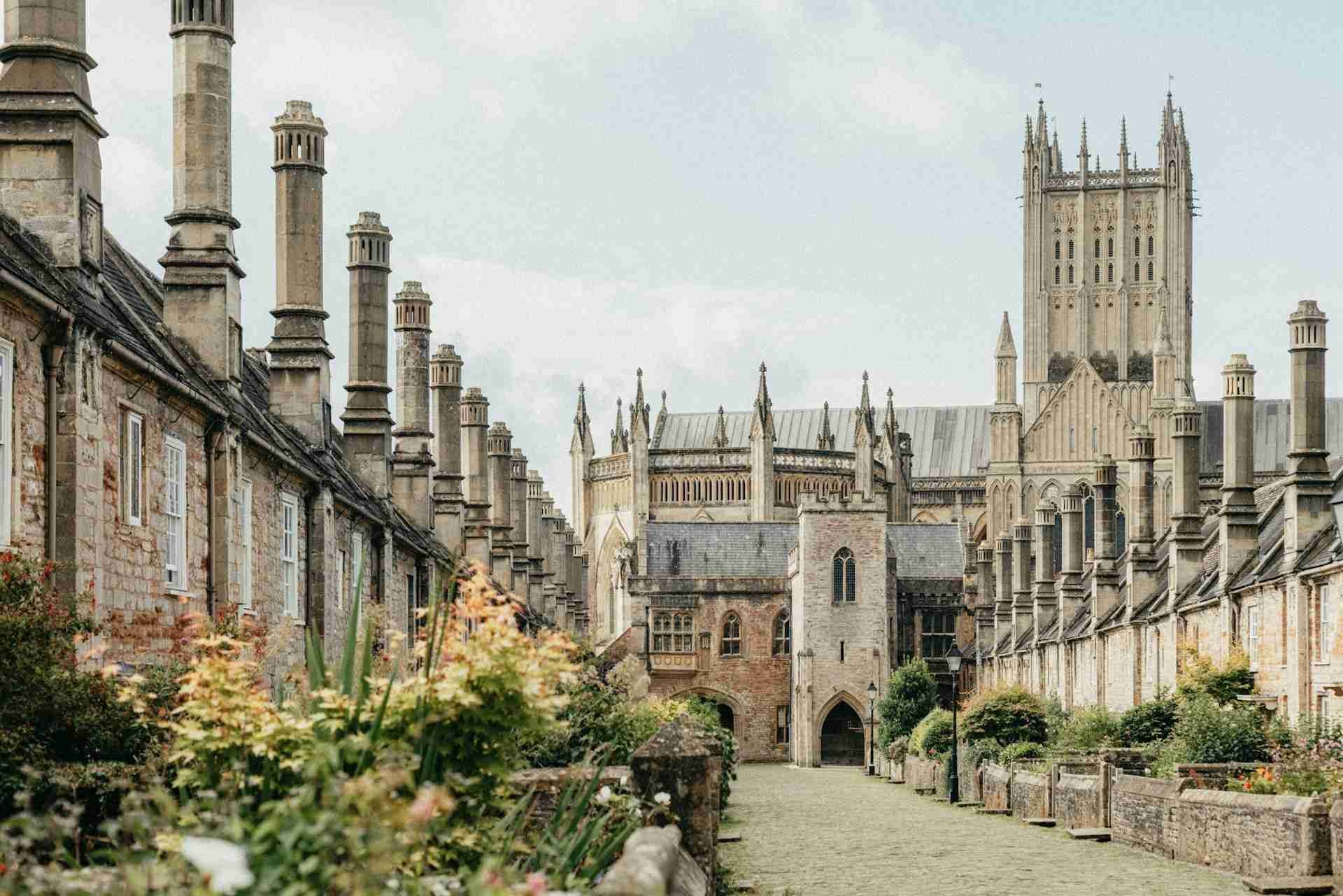
Vicar's Close in Wells, Somerset, is often described as the oldest continuously inhabited residential street in Europe—and for photographers, it is a near-perfect study in historical symmetry. With its uniform row of 14th-century stone houses, cobbled lane, and uninterrupted view of Wells Cathedral's towers at the southern end, the Close offers a masterclass in perspective, balance, and architectural cohesion. Preserved in exceptional condition, it's one of those rare locations where every frame feels timeless, whether composed with strict geometric precision or explored for texture and intimate detail. The simplicity of the scene belies its complexity—light, weather, and angle change everything. For those interested in capturing historical stillness within a living setting, Vicar's Close is both elegant and deceptively rich.
Best Photography Opportunities
• Symmetrical perspective from the north entrance
The most iconic view of Vicar's Close is captured from the north end of the street, looking south toward the cathedral's tower, perfectly centered between the tapering rows of chimneys. This composition is a classic exercise in one-point perspective. A wide-angle lens exaggerates the convergence of lines and draws the eye directly to the cathedral. For best results, shoot at golden hour or just after rainfall, when the cobblestones are wet and reflective. Including a low foreground—such as a puddle or single fallen leaf—adds depth without disrupting symmetry. Overcast days work especially well here, muting contrast and emphasizing architectural detail.
• Oblique angles from halfway down the lane
Midway down the Close, standing just off-center allows for diagonal compositions that highlight the textures of the houses: grey stone, mullioned windows, and tall, individually shaped chimneys. Use a standard or short telephoto lens to compress the perspective, letting the rows of rooftops create rhythm and repetition. These shots are ideal for storytelling imagery—framing a passerby, a bicycle against a wall, or ivy climbing across stone. Golden hour adds side light that rakes across the facades, bringing out detail in doorframes and window surrounds. Autumn is particularly effective when fallen leaves gather at the street edge, adding a warm tonal contrast.
• Evening blue hour and lamp-lit quiet
After sunset, Vicar's Close transforms into a quiet, softly lit corridor. The historic street lamps cast pools of warm light on the cobbles and create strong shadow patterns on the walls. A tripod and long exposure are essential to retain detail in the shadows while capturing the ambient glow. Blue hour offers a deep cobalt sky that balances beautifully with the warm sodium lights. Shooting from the southern end looking north allows for compositions with silhouetted chimney lines against the sky. This time of day is best for contemplative, atmospheric imagery that emphasizes the street's age and silence.
• Close-up architectural studies and door details
Every house on Vicar's Close includes subtle variations—carved lintels, arched doorways, antique knockers, and worn stone steps. These details invite slower, more intimate photography. Use a fast prime lens (35mm or 50mm) to isolate these elements with shallow depth of field. Early morning or diffused light works best to avoid harsh shadows on small surfaces. For more graphic work, frame symmetries in doorways or repeating patterns in window panes. These compositions are ideal for black-and-white conversions that bring out texture and tonal depth in the weathered surfaces.
• Vertical compositions with chimneys and sky
The chimneys along Vicar's Close are unusually tall and ornately capped, making them excellent subjects for vertical or portrait-oriented compositions. Tilt the camera upward to exaggerate their height and align them rhythmically along the roofline. Shoot during moments of dramatic cloud cover or break in weather to add atmosphere behind the silhouettes. A telephoto lens from the southern end can compress the rows of chimneys into strong geometric forms—especially effective during sunrise or sunset when directional light defines their contours. Foggy mornings also work well, reducing contrast and letting the chimneys fade gradually into a soft sky.
Best Time to Visit
Vicar's Close is photogenic year-round, but its character shifts subtly with the seasons and time of day.
Spring offers clean air, soft light, and fresh ivy beginning to climb the stonework. Early morning is best for capturing long shadows and cool tones that complement the grey stone. This season often yields clear skies and crisp architectural lines—ideal for documentary-style frames.
Summer brings increased foot traffic but also golden light that lingers late into the evening. The surrounding gardens and small planters occasionally bloom, adding touches of color. Mornings remain quiet and productive, particularly for close-up work on doors and windows before the light becomes too harsh.
Autumn is particularly strong for both mood and texture. Fallen leaves line the street, and climbing vines shift into gold and crimson. Side light during late afternoon creates deep contrast across the stone facades, and misty mornings sometimes soften the scene into a painterly quiet. This is the season for both color and monochrome work, with depth in every shadow.
Winter strips the vegetation and adds starkness to the composition. Overcast skies provide clean, flat light ideal for black-and-white geometry, while rare snowfalls create a uniform palette that enhances symmetry. Blue hour and twilight sessions in winter are often especially peaceful and free of foot traffic.
How to Get There
Vicar's Close is located just north of Wells Cathedral, forming a straight approach to the cathedral's north transept. It is easily accessed on foot from anywhere within the center of Wells.
By car, the nearest parking is at Union Street Car Park or Waitrose, both a short walk away. For visitors arriving by public transport, regular buses connect Wells to Bath, Bristol, and Glastonbury. The nearest train stations are in Castle Cary and Bath Spa, both requiring a transfer by bus or taxi to reach Wells.
The Close itself is a public pedestrian lane and open at all hours, with no entrance fee or photography restrictions for personal use. Tripods can be used with care, especially early or late in the day when pedestrian traffic is minimal. As it is a residential area, quiet and discretion are expected—avoid blocking doorways or lingering near occupied homes.
Recommended Photography Gear
Vicar's Close is compact, so a lightweight, agile kit works best. A wide-angle lens (16–35mm) is essential for symmetrical full-street compositions and upward chimney shots. Use it to exaggerate perspective and fit architectural elements into tight frames. A mid-range zoom (24–70mm) adds versatility for tighter street scenes, angled compositions, and hand-held work in changing light.
A fast prime lens (35mm or 50mm) is ideal for detail work—ornate knockers, weathered stone, or lamplight textures—and allows for clean results in low light. A small, travel-friendly tripod supports long exposures during blue hour or evening shoots without being obtrusive.
A circular polarizer can reduce glare on windows and help deepen sky color when shooting at angles. For long exposure work in fading light, a 3-stop ND filter allows for subtle motion blur in passing clouds or soft lighting effects around lamps.
Wear quiet shoes to avoid echoing footsteps on the cobbles and bring gloves for dawn and dusk shoots during the colder months. A weather-resistant bag and microfiber cloth are also helpful, as the stone and street surfaces can collect fine dust and moisture.
Nearby Photography Locations
Just steps away, the cathedral offers vast architectural interiors, the intricate west front, and the famous scissor arches—perfect for combining sacred architecture with historical residential context.
A moated complex with Gothic towers, formal gardens, and reflective water features. Great for soft light photography and classical symmetry, especially at sunrise or after rain.
• The Market Square and Penniless Porch
For street photography or urban detail work, the medieval market square provides authentic textures and old-world charm. Penniless Porch, with its archway and stone steps, is especially evocative in moody light.
Just a 15-minute drive west, this wooded limestone gorge offers filtered light, forest textures, and misty trails—a strong natural contrast to the structured forms of Vicar's Close.
Roughly 25 minutes south, the Tor adds open landscape drama, fog inversions, and timeless silhouettes. Ideal for wide-angle landscapes or moody, narrative frames to complement architectural stillness.
Vicar's Close is a living artifact—a place where structure, symmetry, and silence still speak in the language of stone. For photographers, it offers more than postcard-perfect perspective. It invites careful study, considered framing, and the kind of slow, observational work that turns a well-composed street into a frame of time itself.
Comments
Loading comments…