
Waverley Abbey sits in a wide meadow beside the River Wey just outside Farnham in Surrey, England. Founded in 1128, it was the first Cistercian abbey established in England and remained active until the monasteries were dissolved during the reign of Henry VIII. Today the site survives as scattered stone ruins standing in an open field surrounded by woodland. Portions of tall walls, arched openings, and foundations still give a sense of the scale the abbey once had. What makes the location appealing for photography is the simplicity of the landscape around it. The ruins rise directly from the grass with very little modern development nearby, allowing the scene to feel quiet and historic. Because the surrounding meadow is open, photographers can move freely around the site and find angles that show both the architecture and the peaceful countryside setting.
Best Photography Opportunities
• The Tall Refectory Wall –
The most recognizable structure at Waverley Abbey is the tall section of wall that remains from the refectory building. Standing alone in the meadow, the wall rises dramatically with large arched openings cut through the stone. Photographing from several meters away allows the entire structure to fill the frame while still showing the surrounding grassland. A wide lens works well because it captures the height of the wall and the empty space around it. Moving slightly to one side can help prevent the wall from appearing too flat and allows the edges of the structure to create stronger lines in the composition. Soft morning or evening light often reveals the texture of the stone and the uneven edges of the ruins.
• Stone Window Openings Framing the Landscape –
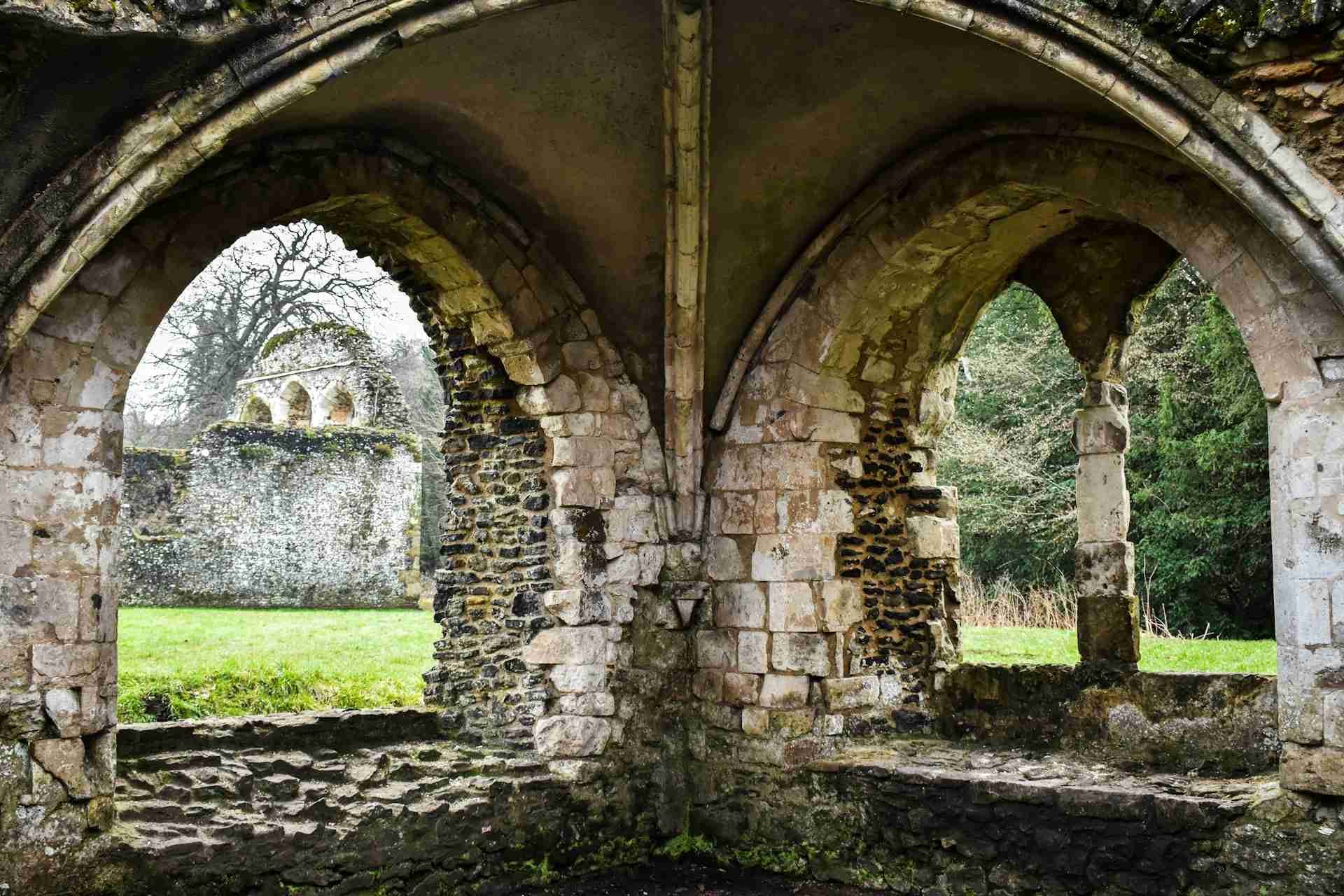
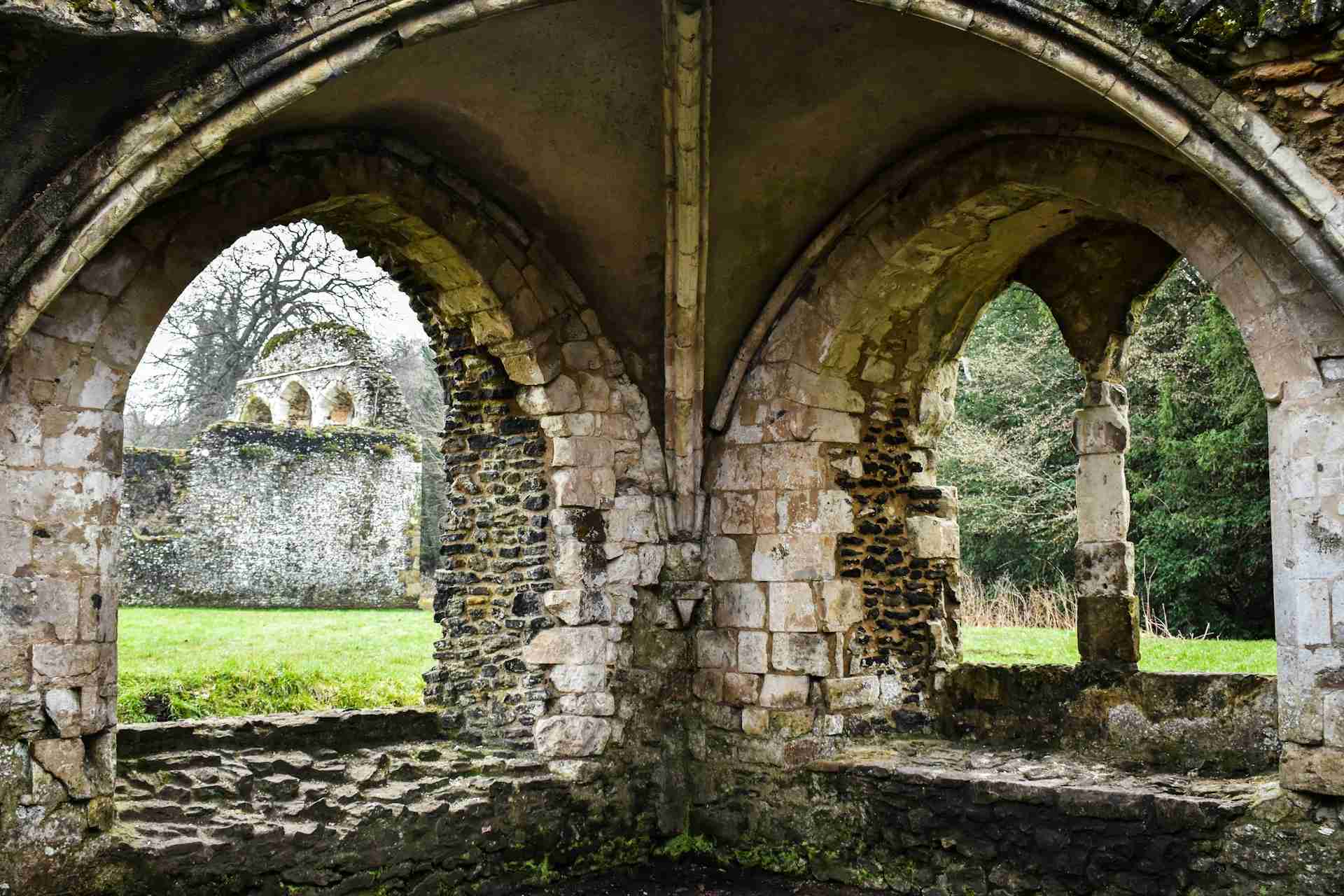
Several sections of the remaining walls contain large arched openings that once held windows. These openings can be used as natural frames for the surrounding meadow and distant tree line. By positioning yourself carefully, you can photograph the landscape through the arch while keeping the stone edges sharp in the foreground. A mid range lens allows you to control how much of the outside landscape appears inside the frame. This technique creates layered images that connect the architecture with the surrounding countryside. It also helps draw attention to the thickness and age of the stone walls.
• Wide View Showing the Abbey in the Valley Landscape –
Stepping farther back into the meadow reveals how the ruins sit within a gentle valley surrounded by trees. From this distance, the remaining walls appear smaller but more connected to the landscape that once supported the abbey. A wide lens helps capture both the ruins and the open field stretching around them. Including a portion of the meadow in the foreground adds depth and emphasizes the quiet rural setting. This perspective works well when the sky contains interesting cloud formations above the ruins. It is also one of the best ways to show the full atmosphere of the site.
• Low Angle Perspective Emphasizing the Height of the Ruins –
Shooting from a lower position near the ground can make the remaining walls appear more imposing. From this perspective, the arches and upper stone edges rise strongly against the sky. A wide lens exaggerates the height of the structure and creates a more dramatic viewpoint. Placing grass or small plants in the foreground can add texture and depth to the image. This technique works especially well when the sky has some cloud detail that adds contrast behind the stonework.
• Evening Light Across the Stone Walls –
Late afternoon and evening light can add warmth to the pale stone surfaces of the abbey ruins. As the sun lowers, shadows form along the broken edges of the walls and inside the arch openings. A mid range zoom helps isolate the most interesting sections of the ruins while still showing the shape of the structure. If clouds catch the light near sunset, they can add subtle color above the ruins. These moments often create the most atmospheric images of the site.
Best Time to Visit
Early morning is often the best time to photograph Waverley Abbey. The surrounding meadow is quiet and the softer light reveals the texture of the stone walls without harsh shadows. Morning mist occasionally settles in the valley after cool nights, adding atmosphere to wider landscape compositions.
Spring and summer bring lush green grass around the ruins, which contrasts nicely with the pale stone. Autumn can also be rewarding when nearby trees begin to change color. Overcast conditions often work well here because the even light keeps the stone surfaces balanced and easy to photograph.
How to Get There
Waverley Abbey is located just south of Farnham in Surrey, England. The ruins sit in open fields a short distance from Waverley Lane and are easily reached from Farnham town center by car or bicycle.
Visitors usually park near the entrance along Waverley Lane where a small parking area is available. From there, a short footpath leads across the meadow to the ruins. The site is managed as a historic monument and access to the abbey grounds requires no admission fee. Once inside, visitors are free to walk around the ruins and explore the meadow from different angles.
Recommended Photography Gear
A wide lens is especially useful for capturing the ruins together with the surrounding meadow and sky. A mid range zoom provides flexibility when framing window openings or isolating sections of the stone walls. A telephoto lens can help compress the layers of meadow and trees behind the ruins.
A tripod can be useful during early morning or evening sessions when light levels are lower. A polarizer can help deepen the sky and reduce glare on the grass. Because the site involves walking across open fields, a lightweight camera kit makes it easier to move around and explore different viewpoints.
Nearby Photography Locations
sits on a hill overlooking the town and provides sweeping views across the surrounding countryside. The historic stone keep and castle walls make strong architectural subjects. The elevated position also allows wide landscape photographs across Surrey.
is a large body of water surrounded by sandy shoreline and heathland. The calm water often produces reflections of the surrounding trees and sky. Sunrise and sunset both work well at this location.
stands in the center of Farnham and features historic stone architecture and a tall tower. The churchyard and surrounding streets provide several strong compositions. Early morning light often highlights the western side of the building.
is a large natural hollow carved into the Surrey hills. From the surrounding viewpoints you can photograph sweeping views across woodland and heathland. Changing weather conditions can produce very atmospheric landscape scenes.
offers dense woodland trails, tall trees, and seasonal color throughout the year. Forest paths create strong leading lines through the trees. Autumn is particularly photogenic when leaves cover the forest floor.
Comments
Loading comments…