
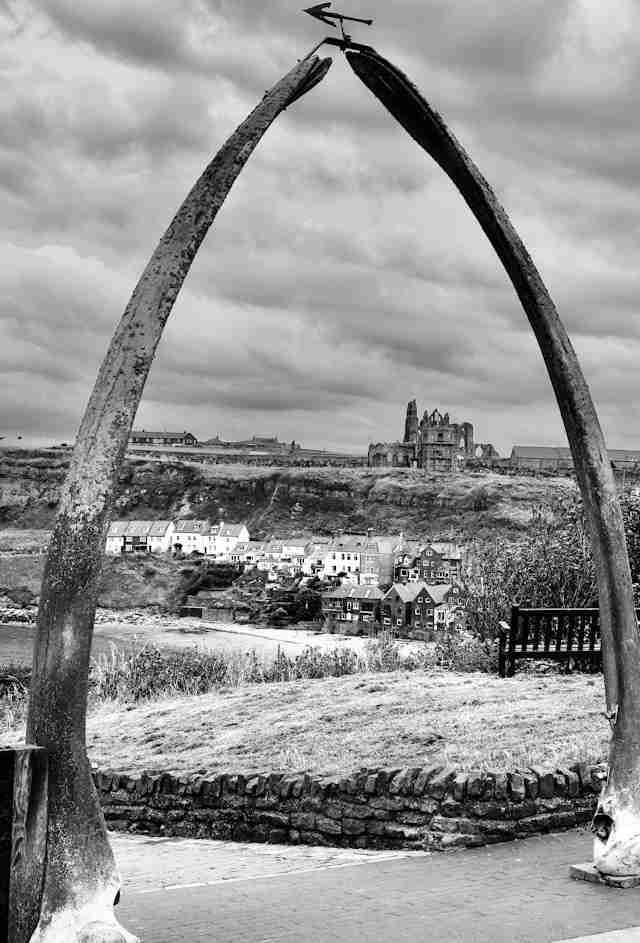
Set high above the North Sea atop Whitby's West Cliff, the Whalebone Arch is one of Yorkshire's most compelling seafront landmarks. Framing the ruins of Whitby Abbey across the River Esk, this sculptural arch of jawbones stands not just as a nod to the town's 18th- and 19th-century whaling heritage, but as a perfectly placed compositional device for photographers. With expansive coastal skies, a dramatic abbey silhouette, and the layered rooftops of Whitby town cascading toward the harbor, the scene around the Whalebone Arch offers rich possibilities for atmospheric, story-driven photography in all seasons
Best Photography Opportunities
• Framing Whitby Abbey Through the Arch
: The defining shot from this location features the ruins of Whitby Abbey perfectly framed between the upward-curving bones of the arch. This is one of England's most iconic compositional pairings, and it's made for both wide and mid-range focal lengths. A wide-angle lens will let you include the pathway leading up to the arch, the Victorian-style railings, and even elements of the cliffside below for added depth. For a more intimate composition, a 50mm or 70mm focal length compresses the elements and makes the abbey appear closer and more dominant. Shooting at golden hour adds warmth to the stonework and casts long shadows across the clifftop for a painterly effect.
• Dramatic Sky and Silhouette Work at Sunset
: West Cliff is an ideal place to capture the full drama of a North Sea sunset, especially when the sky is heavy with shifting clouds. The Whalebone Arch works beautifully as a silhouette against the deepening gradient of evening sky, particularly in winter and early spring when the sun sets directly out to sea. By exposing for the sky, you can reduce the arch to a graphic black outline and highlight its sweeping form. Positioning the Abbey in silhouette as well creates a Gothic mood that evokes the dark romanticism of Bram Stoker's Dracula, whose fictional narrative was inspired by this very town.
• Long Exposure Seascapes with the Arch in Foreground
: By positioning the Whalebone Arch in the foreground and looking north along the coastline, photographers can create wide compositions that contrast the still, sculptural form of the arch with the flowing, blurred textures of sea and sky. Using a tripod and neutral density filter, aim for exposures of 15 to 30 seconds to soften the wave movement below and add motion to the clouds. This technique works particularly well on blustery or overcast days when the sea is active and the clouds streak dramatically overhead. A polarizing filter can also help define cloud edges and bring out structure in the stone paths.
• Seasonal Events and Festive Lighting
: Throughout the year, Whitby hosts several festivals and maritime celebrations that occasionally include temporary lighting installations or decorative wreaths placed on the arch. During events like the Whitby Goth Weekend, the entire clifftop transforms into a theatrical setting, offering unique opportunities to photograph costumed subjects or unexpected interactions between the arch and atmospheric lighting. These moments add a documentary layer to your images while highlighting Whitby's quirky and creative personality. Nighttime shooting during these events often benefits from high ISO and fast primes to preserve detail and texture.
• Architectural Contrast Between Town and Clifftop
: Looking east through the Whalebone Arch, you can incorporate the contrast between the organized rooftops of Whitby below and the ancient, crumbling silhouette of the abbey in the distance. This alignment gives the viewer a sense of the town's layered history, from maritime industry to medieval monasticism. Including both the man-made stone benches and the Victorian lampposts nearby adds period character to your composition. This setup works best in early morning when light from the southeast catches on the rooftops and reveals texture in the abbey's façade, while the arch itself remains a stately frame for the entire scene.
Best Time to Visit
The Whalebone Arch is accessible and photogenic year-round, but each season brings its own distinctive qualities to the scene. Spring and autumn are perhaps the most visually dynamic times to visit, with a combination of crisp air, dramatic skies, and variable lighting conditions that give both the abbey and coastline added texture and atmosphere. Early mornings in spring offer calm conditions and a soft, pink-toned sky that lights the east-facing ruins gently. In autumn, mist sometimes drifts up from the River Esk, creating layered light and occasional sea fog that softens contrast.
Summer offers long evenings and reliable golden hour lighting, but the area around the arch is often busier with tourists. Still, late evening sessions can yield rich orange skies and long silhouettes when the sun sets over the sea to the northwest. Winter, though colder and often wind-whipped, is ideal for moody black-and-white work and for capturing stormy seascapes with brooding clouds moving quickly through the frame.
Sunset is especially rewarding from this clifftop location, with direct western exposure and few obstructions. The best skies often come just after the sun dips below the horizon, when reflected light fills the clouds above the sea. Plan for twilight shots during this time, and stay a little longer to capture the last ambient light in the sky as it plays against the arch's skeletal form and the abbey's haunting remains.
How to Get There
The Whalebone Arch is located on Whitby's West Cliff promenade, directly opposite the Captain Cook Monument. If you're arriving by car, parking is available along North Terrace and in the West Cliff pay-and-display lots nearby. From the town center or Whitby Harbour, the arch is a 10- to 15-minute uphill walk, best approached from the swing bridge and past the Whale Bone Café and Crescent Gardens.
Photographers will find the arch on an open plaza with sweeping views across the town and out to sea. There are multiple vantage points within a few meters of the arch, each offering a different alignment with the abbey ruins, the horizon, and the coastal cliffs. Tripods are permitted, and the wide, flat area allows plenty of space to work even when others are present. There are no access fees, and the site is open at all hours, making it ideal for dawn and twilight sessions when crowds are minimal.
Recommended Photography Gear
A wide-angle lens (16–35mm) is essential for capturing the full arch in context, especially when trying to include Whitby Abbey or dramatic skies. This focal range also helps create immersive foreground-to-background depth, particularly useful when shooting near the arch's base.
A mid-range zoom (24–70mm) offers the most versatility in composing both architectural studies and tighter frames with the abbey. This lens is excellent for hand-held twilight sessions or walking the promenade while exploring new angles without the need to constantly switch lenses.
A telephoto lens (70–200mm) is helpful for isolating the abbey or compressing layers between the arch, rooftops, and sky. It's particularly useful when clouds roll over the headland and you want to frame the abbey in dramatic light or pull distant seagulls or cliff detail into focus.
A tripod is necessary for blue hour and long exposures, especially for seascapes or silhouette work. A circular polarizer can help enhance sky contrast and manage reflections off wet stone paths. Neutral density filters are useful for blurring the sea or slowing sky movement during long exposures. Don't forget a lens cloth—North Sea winds often carry salt spray and moisture that quickly coat your front element.
Nearby Photography Locations
: A short walk or drive across the River Esk, the Gothic ruins of the abbey stand atop East Cliff with panoramic views and powerful architectural compositions. Best photographed at sunrise or under moody skies to emphasize its dramatic presence.
: This historic stairway leads from the harbor to the abbey and offers strong leading lines, layered rooftops, and dramatic views down to the town below. Golden hour light often spills across the steps, adding warmth and depth.
• Whitby Harbour and Piers
: A classic maritime setting perfect for long exposures, especially at twilight. The west and east piers provide symmetrical lines, lighthouses, and reflections of moored boats under colorful skies.
: Just north of Whitby, this beach offers open coastal views, minimalism, and leading lines created by groynes and tidal patterns. Ideal for sunrise shoots or minimalist long exposures with dramatic sky movement.
: A charming fishing village located a short drive south, filled with narrow alleys, old stone cottages, and sea cliffs that look out over the bay. Wonderful for texture-rich compositions and heritage documentary-style photography.
Whether you're capturing a storm rolling in from the North Sea, a blood-red sunset behind ancient stone, or the quiet mood of twilight across the cliffs, the Whalebone Arch offers more than a symbolic landmark—it offers a naturally elegant frame for one of England's most visually layered coastal towns. With careful timing and a willingness to work the shifting weather, it becomes the perfect starting point for a photographic narrative that spans centuries.
Comments
Loading comments…