
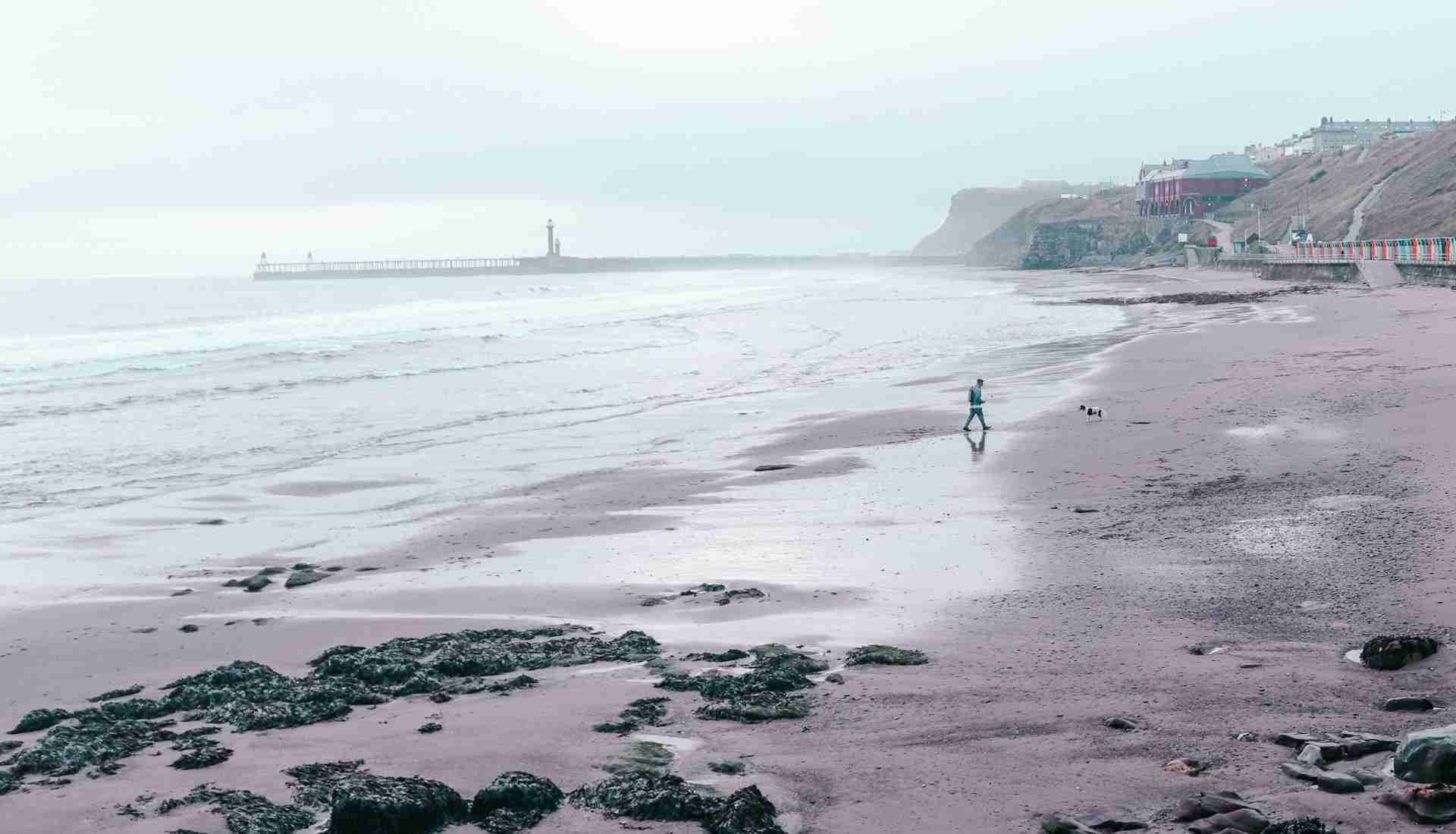
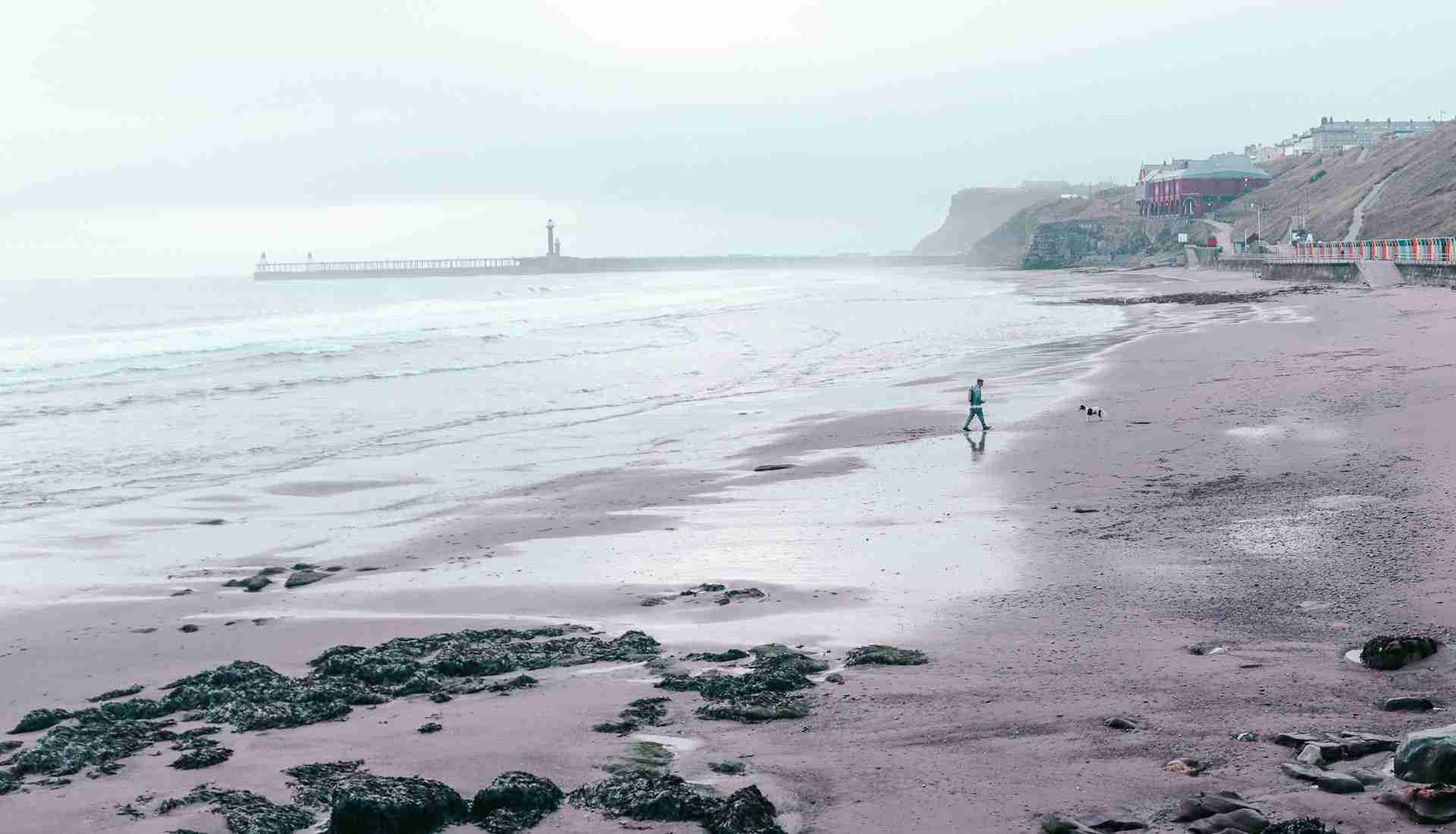
Whitby Beach stretches beneath the dramatic cliffs of this historic Yorkshire town, offering a rich blend of maritime scenery, shifting coastal light, and textured landscapes shaped by centuries of sea and wind. With its wide tidal range, colorful beach huts, and views of the iconic Whitby Abbey rising above the town, this beach is more than a seaside destination. It is a dynamic canvas for photographers interested in coastal mood, layered compositions, and long exposure work. The beach changes character throughout the day and across the seasons, making it a location that rewards repeat visits and varied creative approaches. Whether you are chasing golden light across the sand or capturing stormy skies over the North Sea, Whitby Beach provides both beauty and grit in equal measure.
Best Photography Opportunities
• Low Tide Reflections and Rock Formations
: During low tide, Whitby Beach reveals a wide expanse of wet sand that acts like a mirror, reflecting the sky and cliffs with a painterly softness. Rock pools and outcrops become accessible, allowing for foreground elements that add interest and scale to wide-angle compositions. Long exposures here can soften the motion of the waves and enhance the dreamlike quality of the beach at dusk. As the water recedes, sand patterns appear, perfect for abstract detail shots or minimalist framing. Timing your visit with the tide charts allows for better planning and ensures safe access to lower sections of the beach.
• West Pier and Harbour Entrance
: The long pier on the west side of Whitby Beach is a strong visual anchor, particularly during early morning when the light from the east illuminates its full length. The pier's angular shape leads the eye directly into the frame and works well in both color and monochrome. Shooting from the beach toward the entrance creates a balanced composition with the lighthouse standing tall at the far end. In rougher weather, waves crashing against the stone structure provide drama and movement for action-based coastal photography. The harbor walls also offer a high vantage point for looking back toward the beach and the town beyond.
• Whitby Abbey and Clifftop Overlooks
: While not directly on the beach, the ruins of Whitby Abbey sit prominently on the cliff above and form an unmistakable silhouette against the sky. From the northern edge of the beach, you can frame the abbey with the sea in the background or include beachgoers in the frame for a contrast between modern life and medieval architecture. At sunset, the abbey glows with warm backlight, and its shadow stretches across the cliffs, adding depth to wide compositions. Using a telephoto lens from the beach compresses distance and brings the abbey closer into the frame, especially effective when combined with atmospheric conditions such as sea mist or haze.
• Beach Huts and Color Blocks
: The line of brightly painted beach huts on the northern end of the beach offers bold color against the softer tones of sand and sky. These structures are excellent for graphic compositions, especially when framed with symmetry or used in repetition. Close-ups of peeling paint and weathered textures also work well for detail studies. When photographing people or activity, the huts provide a sense of place and scale, anchoring candid scenes in the character of the town. Overcast days enhance the saturation of their colors and reduce harsh shadows.
• Stormy Skies and North Sea Swell
: Whitby Beach is one of the best places along this stretch of coast to capture the power and energy of incoming weather systems. When storms roll in, dark clouds build over the sea and create dramatic contrast between the sky and the sand. The shape of the bay helps funnel waves toward the shore, and longer lenses can capture the detail of the swell crashing against the harbor or retreating across the sand. This is an ideal time to work in black and white, focusing on contrast, texture, and the raw motion of the elements. Waterproof gear and weather protection are essential during these sessions.
Best Time to Visit
Whitby Beach offers photographic potential throughout the year, but timing your visit carefully can significantly improve your results. The most consistent and rewarding lighting conditions occur during the shoulder seasons of spring and autumn, when the sun sits lower in the sky and the beach tends to be quieter. In spring, you will find softer pastels in both sky and sea, along with new vegetation along the cliffs and drier weather that is ideal for long walks along the shore. Mornings during this time often bring still air and crisp reflections on the wet sand. Autumn introduces warmer, richer tones in both the landscape and light, particularly in late afternoon as the sun sets over the North York Moors behind you. The shift in light quality during these months makes golden hour linger a little longer, especially in the evening when low-angle sunlight warms the cliffs and buildings overlooking the beach.
In summer, the long days allow for extended golden and blue hour sessions, but you will need to work around crowds, especially near the piers and beach huts. Early morning shoots are especially productive in summer, when the beach is nearly empty and the first light from the northeast gives a delicate, sidelong wash across the sand. Midday light is harsh and often results in flattened contrast, though it can still be useful for capturing high-key scenes of beach activity or experimenting with monochrome.
Winter is a less predictable but highly rewarding time to photograph Whitby Beach. Storm fronts from the North Sea bring dramatic skies, rough surf, and deep shadows that suit high-contrast black and white work. Snow occasionally dusts the clifftops and rooftops of the town, providing rare but powerful contrast with the dark sands below. During winter, sunrises are more accessible given the later hour, and the low trajectory of the sun creates long shadows throughout the day. However, short daylight hours and sudden changes in weather mean you must plan tightly and arrive early to secure your compositions. Tidal planning is essential year-round, but especially in winter when high tides can quickly eliminate walking space on the lower beach.
How to Get There
Whitby is located on the North Yorkshire coast and is accessible by car, train, or bus. Drivers can take the A171 from Scarborough or Middlesbrough, both of which connect easily to major road networks. Parking is available in several pay-and-display lots around the town center, with the West Cliff car park offering convenient access to the beach via steps or ramps. The train station is centrally located and served by Northern Rail from Middlesbrough, with scenic connections along the Esk Valley Line. Local buses also operate regularly from nearby towns. There is no fee to access Whitby Beach itself, though some surrounding attractions such as Whitby Abbey do charge for entry. Tripods and other gear are permitted without restriction, but care should be taken on slippery rocks and wet sand during tidal shifts.
Recommended Photography Gear
Photographing Whitby Beach requires a flexible and well-prepared kit to make the most of the wide range of conditions, subjects, and access points. A full-frame camera body with good low-light performance will allow you to take advantage of early morning and late evening light, as well as handle the wide tonal range often found in coastal scenes. A wide-angle lens, ideally in the 16 to 35 millimeter range, is indispensable for capturing the full sweep of the beach, pier, and sky. Use it during low tide when the sand creates a natural reflective surface, or when the clouds build up dramatically over the sea.
A mid-range zoom such as a 24 to 70 millimeter lens will be your workhorse for most compositions, especially when balancing foreground interest with background landmarks like Whitby Abbey or the West Pier. For tighter compositions or compressing the distance between beach details and distant structures, a 70 to 200 millimeter telephoto lens is especially useful. This lens is also excellent for isolating human elements within the landscape, capturing wave detail, or framing the abbey above the rooftops of the town. If you plan to include birds or distant boats, consider packing a longer telephoto if weight allows.
A sturdy tripod is essential, particularly for long exposure work and shooting during low light. The beach surface is often soft or uneven, so adjustable legs with spiked feet can help maintain stability. A set of neutral density filters, including a six-stop and a ten-stop, will allow you to smooth wave motion during the day and capture extended exposures during changing light. A circular polarizer is valuable for reducing reflections off the wet sand and enhancing detail in clouds and water. In stormy conditions, weather-sealed gear and rain covers for your camera are necessary, as sea spray and strong winds are frequent. Carry microfiber cloths and lens cleaning tools, as salt deposits build up quickly during windy shoots.
Footwear and outerwear also deserve careful consideration. Waterproof hiking boots are the best choice for safely navigating rocky sections and wet tide zones. Layered clothing helps you adapt to rapid shifts in temperature, especially in spring and autumn when conditions can go from sun to wind-driven rain within minutes. A weather-resistant backpack with quick side-access will help you move between compositions without slowing down. Lastly, if you intend to photograph after dark or before dawn, a headlamp with a red-light setting will allow you to work without losing your night vision.
Nearby Photography Locations
: Just a short drive south along the coast, this historic fishing village sits tucked into a steep bay and features narrow alleys, stacked rooftops, and a dramatic shoreline. The beach here is rockier than Whitby's and works well for long exposures and studies of coastal erosion, especially at sunrise when the light hits the eastern edge of the cliffs.
: Located just east of Whitby, this hidden cove is known for its black shale beach, sea stacks, and shipwreck remnants. The walk down to the bay is steep but manageable, and the compositions at low tide are some of the most unique in the area. Early morning or late evening light brings out the texture of the rocks and highlights the layers in the cliff face.
• Staithes
: North of Whitby, this charming village is set in a narrow valley with colorful houses packed tightly along the harbor. The mix of human scale and natural framing makes it a favorite for street photography and environmental portraits. The harbor wall and surrounding cliffs offer excellent vantage points for looking back at the village with dramatic lighting.
: This quiet curve of coastline is less trafficked than Whitby but equally photogenic. Its gently sloping beach, traditional cottages, and grassy headlands are perfect for slow, contemplative shooting. The light here is clean and open, and the bay often stays calm enough for reflection work.
: Inland from the coast, the moors offer a complete change of pace with wide open landscapes, heather-covered hills, and isolated ruins. Sunrise fog is common in the cooler months and adds a soft quality to panoramic views. This area pairs well with a coastal itinerary for photographers seeking variety in subject and mood.
Spending time on Whitby Beach is about reading the light and responding to the constant movement of water and weather. It is a place where the details change by the hour but the character of the location always holds strong. Whether you are working with long exposures, handheld studies, or aerial perspectives, Whitby offers a mix of challenge and reward that makes it one of the most compelling coastal photography locations in England.
Comments
Loading comments…