
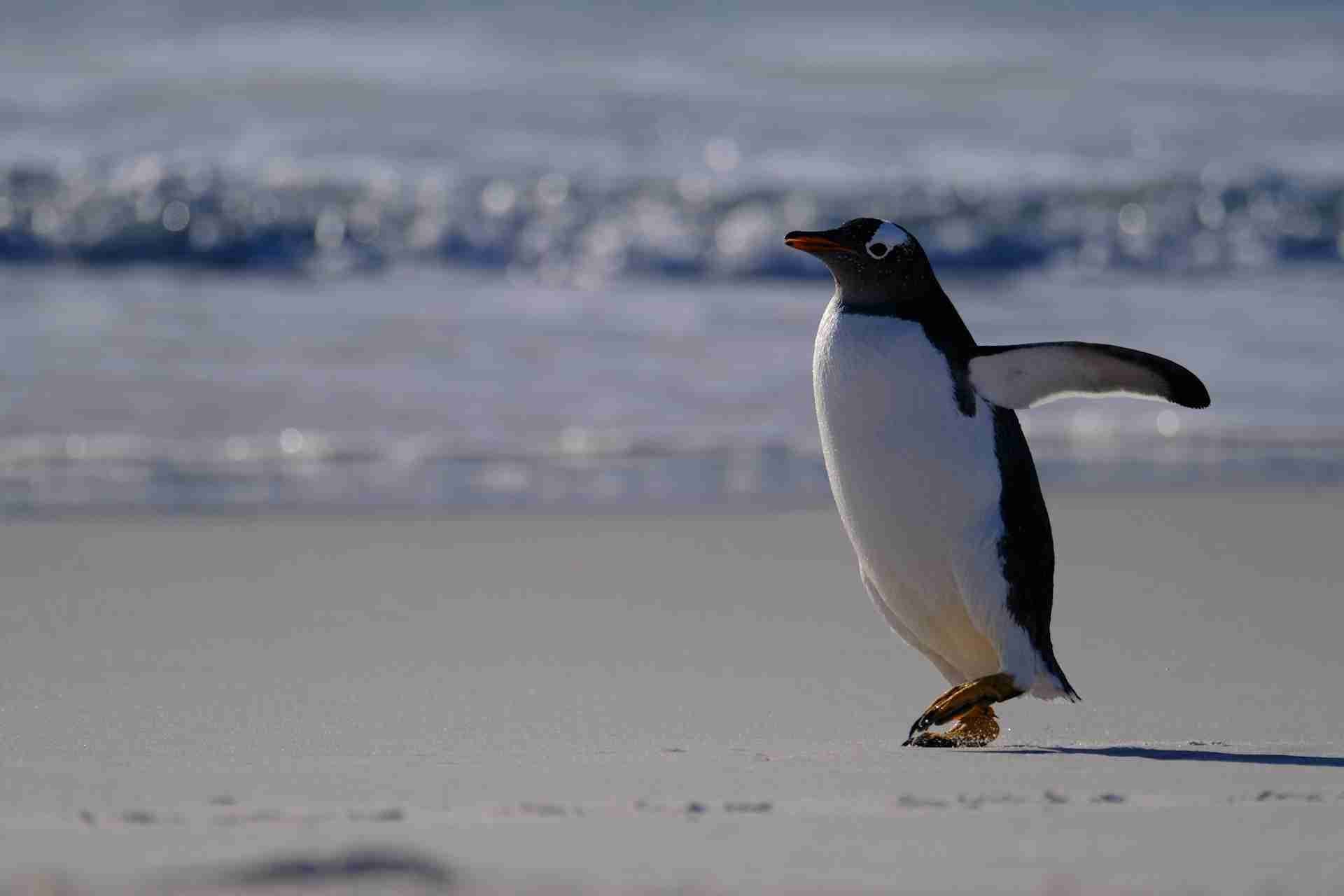
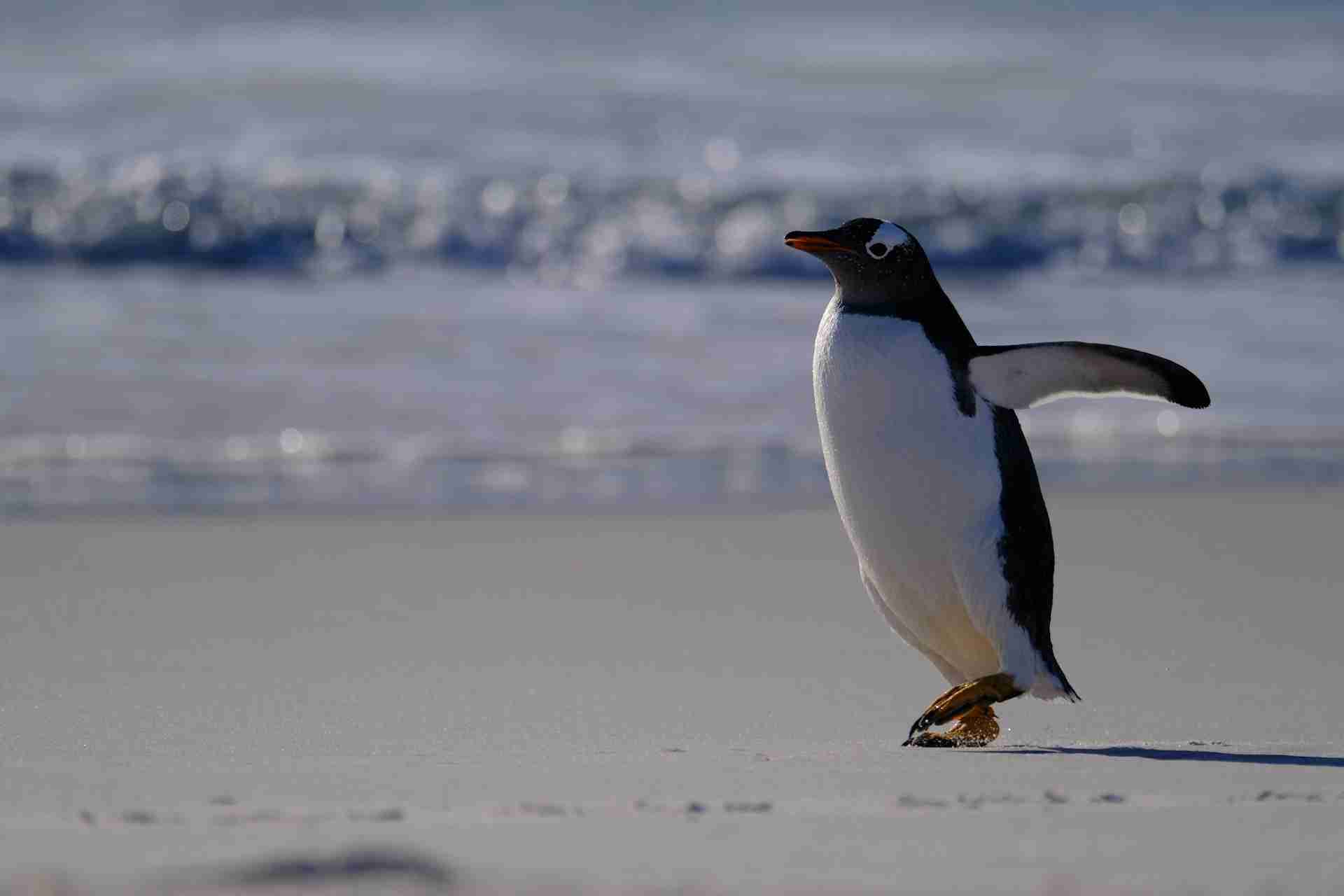
Yorke Bay delivers one of the most visually surprising wildlife experiences in the South Atlantic. Just a short drive from Stanley in the Falkland Islands, this stretch of soft white sand is home to a large and active gentoo penguin colony. The pale dunes and turquoise shoreline feel more like a tropical beach than a sub-Antarctic habitat, making it a striking location where color, texture, and behavior intersect naturally. With minimal development and open sightlines, the area provides incredible access for photographers interested in wildlife, movement, and landscape in equal measure. Whether you're tracking individual penguins or composing broader environmental scenes, Yorke Bay offers a rare combination of accessibility and wild character.
Best Photography Opportunities
Penguin Behavior in Morning and Evening Light
Gentoo penguins are active throughout the day, but early morning and late afternoon bring the most dynamic behavior. These are the times when groups travel between the ocean and the colony, creating opportunities to photograph entry and exit from the surf, flipper flapping, and bursts of motion as they leap from the water. These moments are perfect for freezing action or creating sequences of movement. The light at these times also adds warmth and directional contrast, helping feathers pop against the pale sand and blue water. Side angles often produce the most natural results, especially when working at eye level or just above the birds.
Clean Portraits in Open Space
The openness of Yorke Bay allows for clean, uncluttered portraits that highlight individual penguins in a minimal environment. With patience and a respectful approach, you can photograph at close distances without disturbing their behavior. A shallow depth of field helps isolate subjects while still showing enough background to establish the setting. Overcast days are ideal for this kind of work because the soft light avoids harsh contrast and reveals subtle texture in the penguins' feathers. Shooting from a low position lets you frame the bird against distant dunes or sky, emphasizing the feeling of space.
Group Dynamics and Movement Patterns
Small groups often move together in loosely spaced lines or clusters, especially along the waterline or between the nest areas and the sea. These formations create strong visual rhythms that work well in both horizontal and vertical formats. Photographing from a slight rise, such as the edge of a dune, can flatten the terrain and bring out pattern and repetition. These moments are ideal for experimenting with different focal lengths, from wide shots that place the group in the broader landscape to telephoto images that compress spacing and highlight the motion of feet and flippers.
Interaction and Communication
Yorke Bay's colony is large and socially active, with constant vocalizing, head movements, and pairing behavior throughout the breeding season. These natural interactions provide opportunities to photograph moments of bonding, confrontation, and parenting. Using a midrange to long lens allows you to stay at a distance while capturing these scenes with clear detail and minimal intrusion. Sequences of interaction are especially effective when composed with neutral backgrounds like sand or sky, helping focus attention on gesture and expression.
Environmental Compositions With the Coastline
The wide beach and low dune system at Yorke Bay let you build compositions that place the penguins firmly within their habitat. Including ocean, sky, and shoreline together gives context to the colony and emphasizes the scale and isolation of the environment. These broader images work well during calm weather when the sea is a soft blue, or in heavier conditions when wind lifts sand or shapes dramatic skies. Look for leading lines created by footpaths or low vegetation to guide the viewer's eye toward the birds and into the frame.
Best Time to Visit
The best time to photograph gentoo penguins at Yorke Bay is during the breeding and chick-rearing season, which spans from late October through early March. During this time, the colony is most active, and the full range of behavior—from courtship to chick feeding—is visible. November and December are particularly rewarding for photographers focused on interaction and display behavior, while January and February offer strong chances to photograph penguins tending to chicks or making repeated foraging trips between the nests and the ocean.
The quality of light changes dramatically with the time of day. Early mornings provide long, soft side light that enhances textures and minimizes contrast, while late afternoons produce a golden tone that can be used to highlight movement along the water's edge. Midday conditions can be harsh under full sun, so overcast skies are preferable for portrait or detail work. Because the beach faces east, the light at sunrise is especially well aligned with typical penguin movement patterns. Calm days bring out rich blues in the water and help preserve detail in reflections and wet feathers, while windier conditions can add energy and motion to both the animals and the landscape.
How to Get There
Yorke Bay is located northeast of Stanley, the capital of the Falkland Islands, and is one of the most accessible penguin colonies on East Falkland. The site was closed for many years due to landmine contamination following the 1982 conflict, but it was officially declared safe and reopened in 2020 after a successful clearance effort. Today, the area is open to the public and can be reached by car or tour vehicle via the airport road and surrounding tracks.
Travelers arriving by air typically fly into Mount Pleasant Airport, about a one hour drive from Stanley. From Stanley, Yorke Bay is only a short drive, though conditions may require a high clearance vehicle depending on weather and road maintenance. Several local tour operators include Yorke Bay in their day trip offerings and can arrange guided access with photographic stops. There are no entry fees, and access to the beach is unrestricted, though visitors should always follow wildlife viewing guidelines to avoid disturbing the colony. The beach is open year round, but peak activity and best photographic conditions are seasonal.
Recommended Photography Gear
Photographing gentoo penguins at Yorke Bay requires a blend of reach, flexibility, and stability to adapt to the mix of action, portraiture, and wide scenes. A telephoto zoom in the 100 to 400 millimeter range allows you to capture behavior from a distance while maintaining strong image quality. This range works well for both individual subjects and group dynamics. A standard zoom such as a 24 to 70 millimeter lens is ideal for environmental portraits and broader compositions that include ocean and sky. For the widest landscapes or overhead cloud scenes, a 16 to 35 millimeter lens provides useful coverage and strong foreground perspective.
A sturdy tripod or monopod helps with long lens stability, especially during low light or extended waiting periods. A beanbag can also be useful when shooting low to the ground or from natural cover. Polarizing filters help reduce glare off wet feathers and enhance contrast in the sky, while neutral density filters are useful for smoothing wave motion or working with longer exposures during daylight hours. A fast memory card and backup battery are essential given the frequent action and extended sessions common in this type of wildlife photography.
Weather protection is highly recommended. The wind at Yorke Bay can be strong and unpredictable, so a rain cover or sealed camera bag is essential for keeping gear safe. A lens cloth and blower will help remove sand or salt spray. Footwear with good grip is helpful for walking the dunes or working from sloped positions near the surf line. Dress in layers, as conditions can change quickly even within a single shoot. With a prepared kit and patient approach, the range of subjects at Yorke Bay supports everything from documentary-style storytelling to minimalist wildlife portraiture.
Nearby Photography Locations
Located just south of Yorke Bay, Gypsy Cove offers additional opportunities to photograph gentoo and magellanic penguins among dramatic rock formations and sheltered beaches. Elevated viewpoints allow for compositions that look down on wildlife behavior with the sea in the background. The light here is especially good in the morning, and the area is easily walkable from Yorke Bay.
East of Stanley, this historic lighthouse sits at the easternmost point of East Falkland and offers panoramic views of the surrounding ocean. The structure itself makes for a strong vertical anchor in wide compositions, and the open terrain is ideal for capturing long shadows during early or late light. Wildlife is also frequently spotted nearby.
The harbor area provides a completely different style of photography, with docked ships, maritime textures, and daily life in the Falklands' capital. It is an ideal place for street scenes, documentary work, and capturing the interaction between people, weather, and the remote environment. Sunrise and early evening are the best times to photograph the harbor with low light skimming across the water.
Though farther from Stanley and requiring a longer trip over rough terrain, Volunteer Point offers one of the largest king penguin colonies in the region. For those interested in photographing multiple species in varied settings, this destination complements Yorke Bay well. The combination of white sand, grassy plains, and dense colonies makes it one of the most productive wildlife photography locations in the islands.
Surf Bay
Not far from Yorke Bay, Surf Bay is another open beach location known for its windswept dunes and occasional penguin sightings. It is a good backup location with fewer visitors and a slightly different visual character. The beach is wide and clean, with soft light and strong ocean movement during windy days.
Yorke Bay is one of the most photogenic and accessible wildlife photography spots in the Falkland Islands. Its combination of gentle terrain, engaging wildlife, and striking natural light makes it ideal for photographers working across genres, from action and portraiture to landscape and environmental storytelling. With respectful practice and a flexible approach, the gentoo penguin colony at Yorke Bay delivers a memorable and creatively rich experience on every visit.
Comments
Loading comments…