

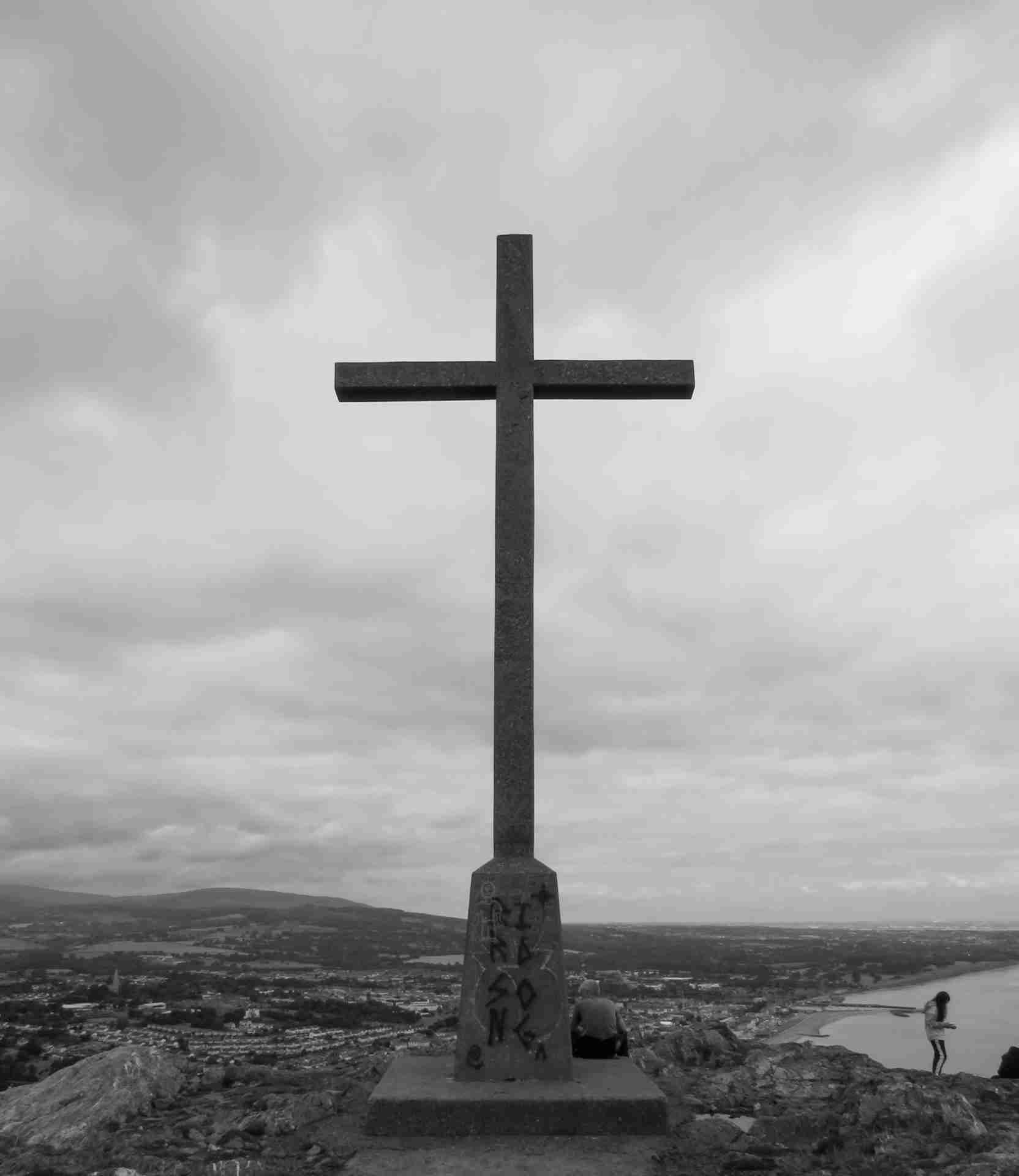
The Bray Head Cross stands high above the seaside town of Bray, marking one of the most photogenic viewpoints along the County Wicklow coastline. Positioned on the rocky summit of Bray Head, the tall stone cross rises from a simple concrete base and looks out across the Irish Sea. The open setting allows photographers to capture sweeping coastal views where the town, beach, and water stretch across the landscape below. Rocky ground surrounds the cross, providing natural foreground elements that add texture and depth to compositions. With the Wicklow Mountains visible inland and the curved shoreline of Bray beneath the headland, the summit offers a rewarding mix of landscape and landmark photography.
Best Photography Opportunities
• Cross Against the Open Sky – Photographing the cross itself from the summit is one of the most direct and striking compositions available on Bray Head. The tall stone structure stands clearly against the sky, making it easy to isolate as a strong focal point. Moving around the rocky summit allows photographers to position the cross with different backgrounds, including the sea, sky, or distant hills. Lower shooting angles can help emphasize the height of the cross while also including the surrounding rocks as foreground texture. Changing weather conditions often add interest to these compositions, especially when clouds move across the sky behind the monument.
• Views Over the Curved Beach Below – From the summit, photographers can look south toward the town of Bray and its long crescent shaped beach. The curve of the shoreline naturally leads the viewer's eye through the frame, creating a strong compositional line from the foreground cliffs toward the distant horizon. Including the cross within the frame while capturing the town below can help connect the landmark with the wider landscape. Clear days often reveal detailed views of buildings, roads, and waves along the shoreline. This perspective also works well with slightly longer lenses that compress the town and coastline into layered scenes.
• Rocky Foreground Compositions – The rocky ground around the cross provides excellent foreground elements that can add depth to landscape photographs. Stones, uneven ground, and small patches of grass help break up the open space around the monument. Photographers can place these elements in the lower portion of the frame while allowing the cross and horizon to dominate the upper section. Working with these textures often creates stronger compositions than simply photographing the cross alone. Overcast light is particularly helpful because it preserves detail in the rocks without producing harsh shadows.
• Views from the Hiking Trail – The walking trail that climbs Bray Head offers several viewpoints before reaching the summit. These sections of the path can be photographed as leading lines that guide the viewer's eye toward the cross or the surrounding coastline. Including hikers on the trail can help add scale to the landscape and show the height of the headland. The path also provides changing angles of the coastline as it gradually rises above the town. Taking time to photograph along the trail often reveals compositions that are just as interesting as those from the summit itself.
• Looking North Along the Coastline – From the summit, photographers can also look north along the coastline where the land meets the Irish Sea. The cliffs and shoreline stretch toward Greystones, creating long coastal lines that work well for wide landscape compositions. Waves moving toward the shore add subtle motion within the scene, while changing weather over the water can produce dramatic skies. Photographers who shift their attention away from the cross will often discover equally compelling coastal landscapes in this direction. These views are especially effective when clouds move across the sky and create shifting light across the water.
Best Time to Visit
Clear days offer the widest views from Bray Head, allowing photographers to capture the full sweep of the coastline, the town below, and the Irish Sea stretching toward the horizon. However, changing weather often produces more interesting images than perfectly clear skies. Passing clouds, shifting light, and occasional mist can add mood and contrast to the open landscape.
Sunrise provides soft light across the Irish Sea and the eastern horizon, while late afternoon and sunset often bring warmer tones across the coastline and town below. Autumn and spring can offer particularly good conditions when the air is clear and the light sits lower in the sky. Wind is common along the summit, so photographers should be prepared for changing conditions during their visit.
How to Get There
Bray Head Cross is located above the town of Bray in County Wicklow, just south of Dublin. The hike to the summit begins near the Bray Promenade along the seafront. The main trail starts near the southern end of the promenade and climbs steadily toward the summit of Bray Head. The hike typically takes between thirty and forty five minutes depending on pace and weather conditions. The path is well used but can become uneven or muddy in places, particularly after rain.
Parking is available in Bray town near the seafront, and the area can also be reached easily by public transport from Dublin. Trains on the DART line stop at Bray Station, which is within walking distance of the promenade and the trailhead. Access to the headland and summit viewpoint is free, though visitors should always follow local trail guidelines and respect the natural environment.
Recommended Photography Gear
Because Bray Head offers wide coastal landscapes, a wide lens is extremely useful for capturing the cross along with the surrounding sea and coastline. This type of lens helps emphasize the scale of the landscape while still including foreground textures such as rocks or the hiking trail. A mid range zoom lens can also be valuable for isolating sections of the coastline or capturing tighter views of Bray town below.
A tripod is helpful for sunrise or sunset photography when light levels drop and longer exposures become necessary. A circular polarizing filter can reduce glare from the sea and deepen the color of the sky on clearer days. Since the summit is exposed to wind and weather, photographers should bring protective gear for both themselves and their equipment.
Nearby Photography Locations
runs along the seafront below Bray Head and provides a long walkway overlooking the beach and Irish Sea. Photographers can capture wide coastal scenes with waves rolling onto the shoreline and the headland rising above the town. The promenade is especially appealing during sunrise and sunset when light reflects across the water.
• Bray to Greystones Cliff Walk
follows the cliffs north of Bray and offers continuous views across the Irish Sea. Photographers can capture dramatic cliffs, rocky shorelines, and passing trains along the coastal railway line below. The changing elevation along the trail provides a variety of perspectives across the coastline.
• Killruddery House and Gardens
offers formal gardens, historic buildings, and tree lined avenues that provide a different style of photography compared to the coastal landscapes nearby. The carefully designed gardens create symmetrical compositions and seasonal color throughout the year. Early morning light often highlights the structure and surrounding grounds.
lies inland within the Wicklow Mountains and is one of the tallest waterfalls in Ireland. The water cascades down a steep rock face surrounded by forested slopes, creating strong vertical compositions. Seasonal changes in the surrounding trees can transform the scene throughout the year.
is one of the most distinctive peaks in County Wicklow and rises sharply above the surrounding countryside. A short but steep hike leads to the summit where photographers can capture wide views across the Wicklow Mountains and the Irish Sea. The mountain's isolated shape also makes it a strong subject when photographed from surrounding viewpoints.
Comments
Loading comments…