
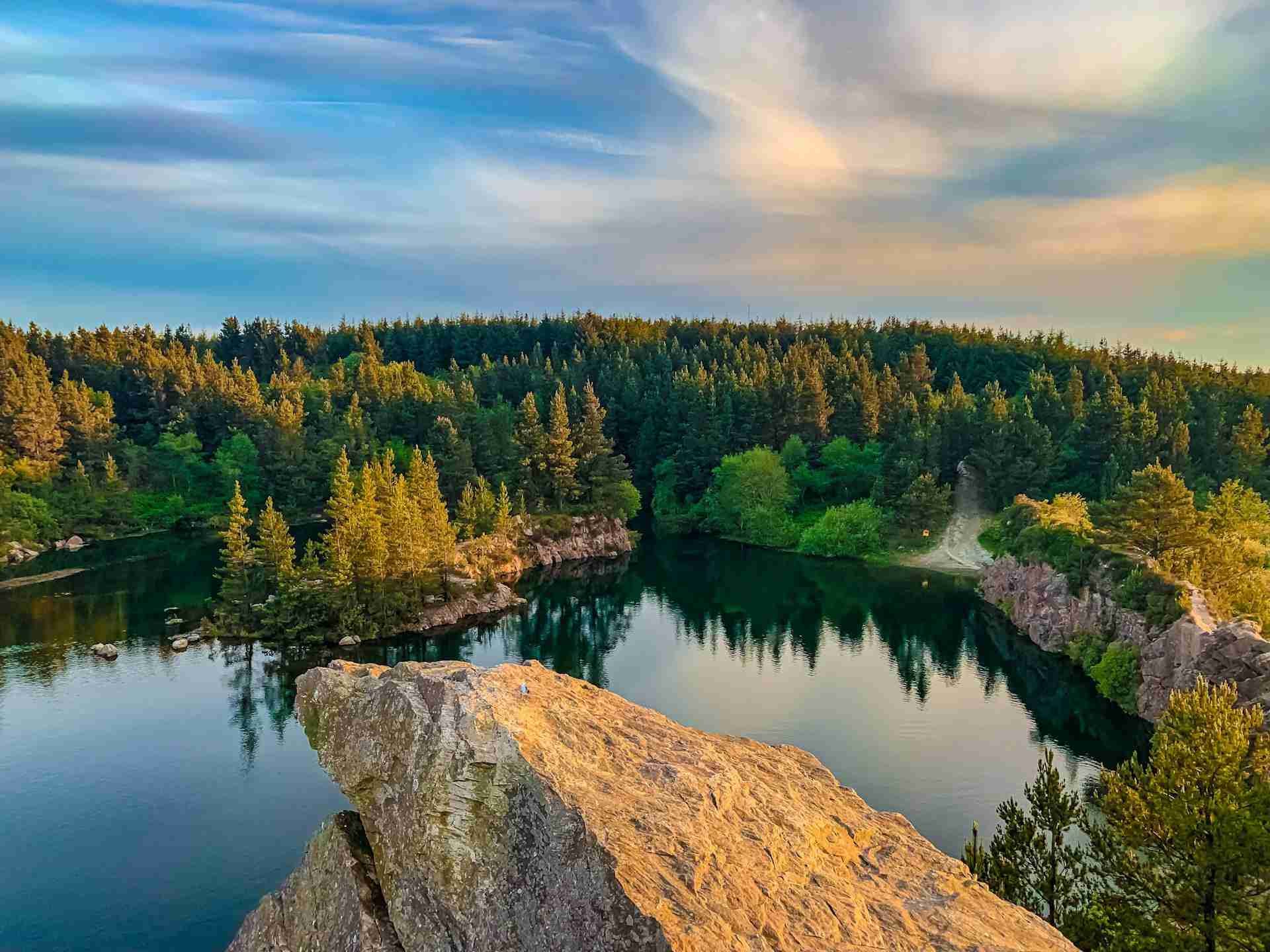
Nestled within the rolling hills and forested ridges of Shelmaliere Commons, Carrigfoyle Lake is one of County Wexford's most peaceful yet visually engaging natural spaces. Located just west of Wexford town, this freshwater lake sits at the center of a landscape shaped by gentle elevation, woodland paths, and open sky. What makes Carrigfoyle Lake such a rewarding location for photographers is its quiet variety—the changing weather, the texture of the reed beds, the interplay of sun and mist on the water, and the surrounding forest that frames the scene in every season. At dawn or dusk, the lake often becomes a mirror, holding the color of the clouds or the first light of morning. For those interested in working with mood, reflection, and understated beauty, this site offers a place of visual calm that unfolds slowly with time and attention.
Best Photography Opportunities
• Reflections from the Wooden Viewing Deck
One of the most accessible and photogenic points along the lake is the wooden platform near the eastern shore, built for walkers and birdwatchers. From here, the water opens up to the west, allowing for wide, unobstructed views across the surface. On still mornings, the lake reflects both the sky and the treeline with near-perfect symmetry. These conditions are ideal for wide-angle compositions, particularly with the horizon placed low in the frame to emphasize cloud movement or golden hour light. A lens in the 16 to 35 millimeter range works well, and a polarizer can help you control the surface reflection to reveal submerged reeds and aquatic detail.
• Layered Landscapes from the Hill Above the Western Shore
Carrigfoyle Hill rises gently above the lake, and a trail leads upward through trees to a higher vantage point overlooking the water and surrounding countryside. From here, photographers can frame the lake as part of a larger landscape, using the lines of hedgerows and the changing light over the commons to build depth into their compositions. This view works particularly well in the early morning or late afternoon when the low sun grazes the surface of the lake and long shadows create structure across the land. A mid-range zoom lens between 24 and 105 millimeters helps balance foreground and distance, especially when including the winding paths or forest textures.
• Moody Forest Frames and Reflected Canopy
Along the southern edge of the lake, a thick band of woodland stretches up to the shoreline. This area is full of soft forest light, mossy trunks, and gentle reflections where the trees lean over the water. On overcast days or in fog, the lake surface becomes almost featureless, turning these trees and their mirrored shapes into minimalist compositions. Close-focus compositions can isolate clusters of reeds, fallen branches, or leaf patterns reflected in still water. A 50 to 85 millimeter lens allows for quiet detail work, and a tripod will help when shooting in dim morning conditions beneath the canopy.
• Evening Glow from the Northern Path
In late spring and summer, the northern trail provides an excellent vantage point for capturing the lake under the golden light of evening. With the sun descending behind the western hills, the sky takes on rich color that reflects across the lake's calm surface. This is an ideal moment for long exposure work, where shutter speeds of five to thirty seconds soften the water and allow cloud movement to become part of the scene. The curve of the trail and line of vegetation along the shore act as gentle compositional guides, especially when shooting with a wide or ultra-wide lens.
• Wildlife and Birdlife in Reed Beds and Open Water
Carrigfoyle Lake is also a haven for birds and other small wildlife, especially during early morning hours. Herons, ducks, and swans can often be seen along the shoreline or gliding through the shallows, particularly in quieter corners of the lake where human presence is minimal. A telephoto lens in the 100 to 400 millimeter range allows you to work with these subjects without disturbing them. Consider focusing on the interaction between the birds and their environment, using reflections, ripples, or low sunlight to build narrative and texture into the frame.
Best Time to Visit
Carrigfoyle Lake responds well to subtle light, and the most productive times for photography are during the early morning and just before sunset. In the morning, mist often clings to the surface, especially in spring and autumn, creating diffused light and a quiet, moody atmosphere that suits both wide and detail-oriented work. As the sun rises, it gradually touches the tops of the trees and moves down across the lake, adding warmth and clarity. These transitions in light are gradual, giving photographers time to move between locations and compositions.
Evening light is softer still, especially in summer when the sun sets to the northwest and casts long reflections across the water. The golden hour here can last for forty-five minutes or more, allowing for a wide range of lighting effects from direct warmth to blue hour coolness. Cloudy or overcast days are excellent for photographing in the forested southern areas, as the diffused light brings out greens and browns in the bark and moss without overwhelming contrast.
Seasonally, spring and autumn are the most photographically rich. Spring brings new leaves, misty mornings, and migrating birds. Autumn introduces warm colors in the woodland and more dramatic sky reflections in the lake. Winter is quieter and colder, with occasional frost and low light that invites minimalist compositions of bare branches and frozen reeds. Summer, while brighter and more crowded, provides long shooting hours and a full canopy of green that transforms the forest path into a tunnel of color.
How to Get There
Carrigfoyle Lake is located just off the R733 between Wexford town and Forth Mountain. From Wexford town center, the drive takes approximately fifteen minutes. Follow signs for Forth Mountain, then continue west along minor local roads until you reach the car park at Carrigfoyle Trailhead, which serves both the lake and surrounding woodland walking routes. From the car park, several well-maintained gravel and forest trails lead to the lake in under ten minutes on foot.
There is no entrance fee to access the lake, and the trails remain open year-round. The area is popular with walkers, birdwatchers, and families, especially on weekends, so photographers seeking solitude should consider arriving at sunrise or visiting during weekdays. The paths around the lake are mostly flat and well-kept, though some may become muddy in winter or after heavy rain. Facilities such as restrooms are limited, so it is advisable to plan accordingly before arriving.
Recommended Photography Gear
Carrigfoyle Lake is a location that encourages flexibility and creative interpretation. A wide-angle lens, such as a 16 to 35 millimeter zoom, is ideal for capturing sweeping views across the lake or for framing the forest canopy above reflected water. A mid-range zoom, such as a 24 to 105 millimeter lens, allows you to move between landscape and detail work without constantly switching lenses. For wildlife and distant subjects, a 100 to 400 millimeter telephoto lens provides reach and versatility, especially when shooting birds on the water or in the reeds.
A tripod is essential for low-light and long-exposure work, particularly during early morning and evening sessions. Look for a lightweight model with adjustable legs for uneven ground near the shore. A polarizing filter is highly recommended for managing reflections and increasing contrast in the sky or foliage. If you plan to do long exposures of the lake surface or sky, bring a set of neutral density filters to control shutter speed.
Additional gear includes a rain cover or weather-sealed backpack, especially in Ireland's frequently shifting weather. A lens cloth is helpful for managing moisture or mist, and waterproof shoes or boots are useful when exploring the muddy or grassy banks of the lake. In colder months, gloves with tactile fingertips and layered clothing will keep you comfortable without interfering with camera control.
Nearby Photography Locations
• Forth Mountain Trails and Viewpoints
Just a few minutes' drive from the lake, Forth Mountain offers elevated views of the Wexford coastline and surrounding lowlands. Short trails lead to scenic overlooks where you can photograph the sun rising over Wexford Harbour or capture the patchwork of farmland below. Early morning and late evening light give these ridges a golden glow that contrasts beautifully with the green fields below.
Located to the northeast of Carrigfoyle, this coastal reserve combines forest trails, dunes, and long open beaches. It is a fantastic place for sunrise photography over the Irish Sea or for minimalist compositions using sand, water, and sky. Wildlife photographers will also find activity among the dunes and along the shoreline.
Just southeast of Wexford town, Johnstown Castle provides a very different kind of photographic subject, with gothic revival architecture, reflective ponds, and landscaped gardens. The grounds offer both wide compositions and detail-rich studies of stonework, statues, and water features, especially in the golden light of late afternoon.
• Lady's Island Lake and Sandspit
About thirty minutes south of Carrigfoyle, this large coastal lagoon is separated from the sea by a narrow strip of sand and gravel. The contrast between freshwater lake and open ocean creates a compelling subject for long-lens landscapes and wide seascapes. The area is particularly rich in birdlife and has strong photographic potential at both sunrise and sunset.
Carrigfoyle Lake is a quiet location, but one that invites a thoughtful and rewarding kind of photography. Its beauty is not in spectacle but in the fine transitions of light, the details of texture and reflection, and the way the land holds the sky in its still water. For photographers seeking a place of quiet variation and natural rhythm, this small lake in the heart of Wexford offers a space to explore, to slow down, and to see deeply.
Comments
Loading comments…