
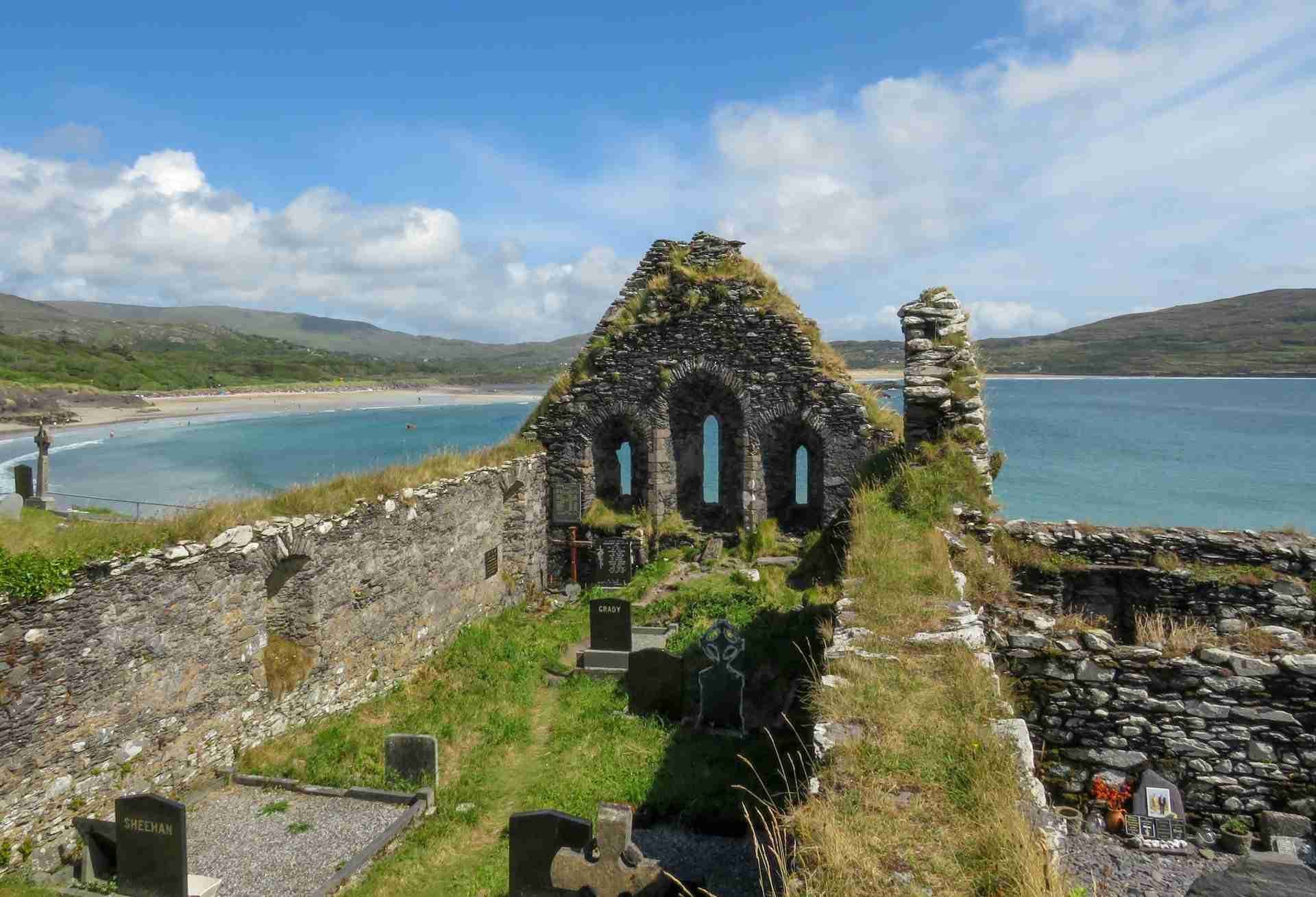
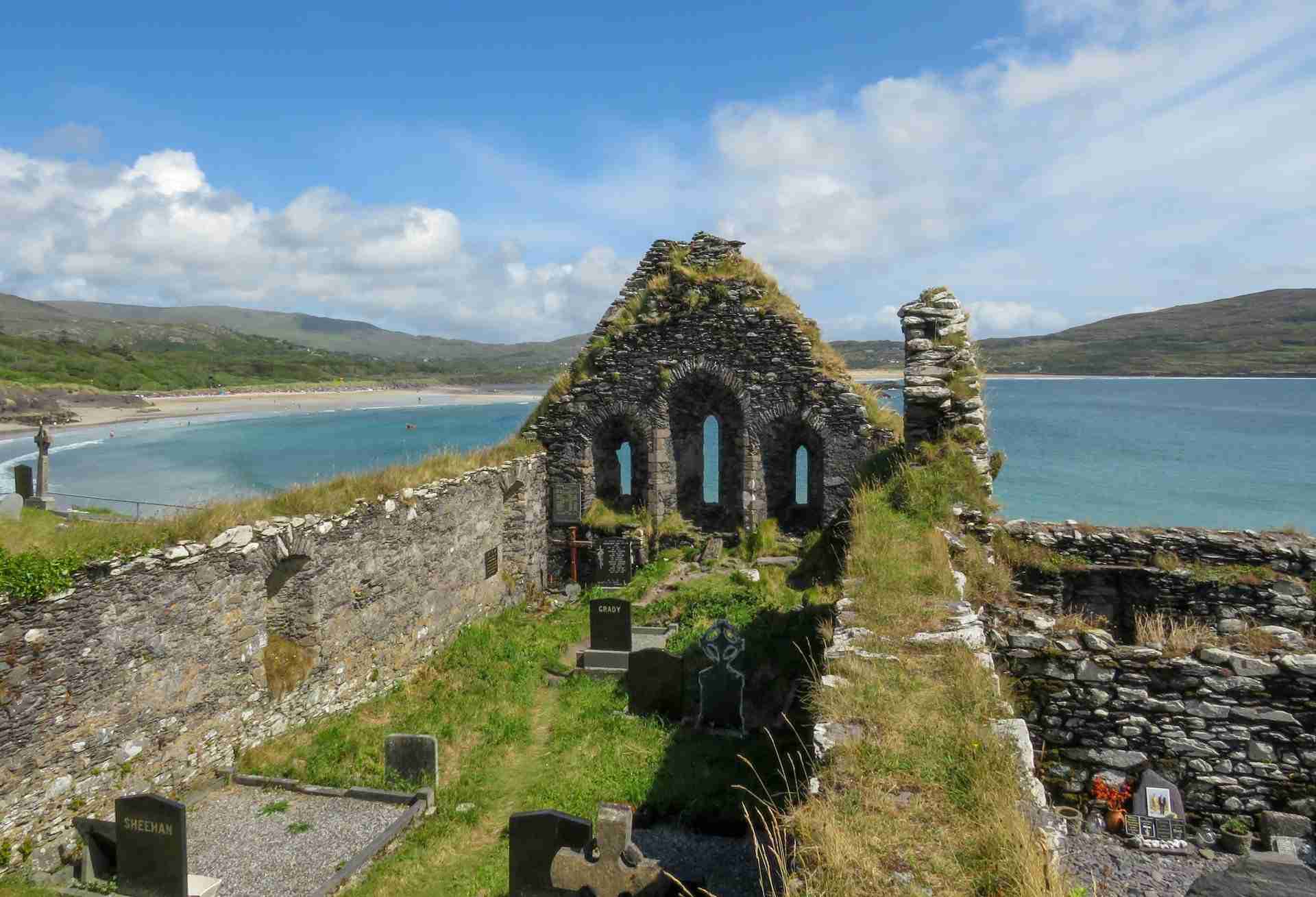
Set on a low, wind-swept promontory overlooking the Atlantic Ocean, Derrynane Abbey—also known by its Irish name, Tigh Mór Dhoire Fhíonáin—is a hauntingly beautiful monastic ruin on Ireland's southwest coast. Just a short walk from Derrynane Beach in County Kerry, the abbey sits among ancient graves and crumbling stone walls, framed by dunes, sea grass, and the ever-changing sky. Surrounded by both tidal flats and rugged coastline, it's a location steeped in atmosphere and history. For photographers, Derrynane Abbey offers a striking contrast between sacred ruin and natural wilderness—making it a must-visit site for those interested in moody landscapes, coastal light, and heritage storytelling.
Best Photography Opportunities
• Wide-Angle Seascapes with the Abbey in Foreground
From the sand dunes above Derrynane Beach, you can frame the abbey ruins in the lower third of a wide composition with the Atlantic stretching into the background. Use a wide-angle lens to include sky, sea, and the curve of the beach, especially during golden hour or when dramatic clouds build over the ocean.
• Silhouettes at Sunset
As the sun dips low over the Atlantic, the abbey's skeletal outline becomes a stark silhouette against the warm sky. From the western edge of the site, position the abbey between the sun and your lens, using a small aperture to create starburst effects through the broken windows or archways.
• Interior Light and Shadow Play
Inside the abbey's roofless nave, light filters through lancet windows and gaps in the walls, casting strong shadows on ancient stone. Early morning or late afternoon light enhances contrast and depth, especially when shooting low and allowing shafts of sunlight to rake across the uneven floor or moss-covered stones.
• Gravestone Textures and Detail Shots
The graveyard surrounding the abbey contains headstones in various states of decay—some leaning, others covered in lichen, with inscriptions softened by centuries of wind and salt. Macro lenses or tight compositions can highlight these textures, carvings, and the gentle tilt of timeworn crosses, especially under overcast skies that reduce glare.
• Long Exposure of Coastal Elements
The rocky tidal pools and beach nearby offer opportunities for long exposure seascapes with the abbey rising in the background. Use an ND filter and tripod to smooth out wave motion and create a dreamlike mood, especially during high tide or when low clouds roll in over the coast.
Best Time to Visit
Derrynane Abbey is a year-round photography location, though the character of the site changes dramatically with the seasons and weather. Summer brings long evenings, wildflowers among the dunes, and more consistent golden-hour conditions. Sunrise and sunset sessions are especially rewarding, as the angle of light casts warm tones on the stonework and silhouettes the abbey against glowing skies.
Autumn and winter add mood and drama—storms coming in from the Atlantic, cloud-streaked skies, and a brooding, weathered palette that suits black-and-white or desaturated editing styles. In these months, the abbey feels more remote and windswept, and fewer visitors mean you can often shoot uninterrupted.
Fog and mist often drift in from the sea in spring and autumn, softening the landscape and isolating the abbey from its background—perfect for atmospheric, minimalist compositions. Overcast days, common in Ireland, offer flat light ideal for shooting textures in stone and grass without harsh contrast.
Low tide opens up more shoreline foregrounds for compositions, while high tide allows for closer proximity between sea and ruin—so planning based on tide charts can enhance your shot options. Windy days can challenge longer exposures, but also add movement to grass and sky, enriching the mood.
How to Get There
Derrynane Abbey is located near Derrynane Beach, just off the Ring of Kerry in County Kerry. From the village of Caherdaniel, it's a short drive down a narrow, scenic road toward the beach. Parking is available near Derrynane House, the ancestral home of Irish statesman Daniel O'Connell, which also serves as a visitor center and launching point for exploring the area.
From the beach car park, follow the walking path across the dunes to the abbey—a scenic 10–15 minute walk. The path can be sandy, rocky, and occasionally wet, so sturdy footwear is advised, especially if you're carrying camera gear.
There is no fee to access the abbey, and the site is open to the public year-round. While the structure is technically a ruin, visitors are free to enter the grounds and explore respectfully. Early morning and evening hours are best for light and atmosphere, and also tend to be quieter in terms of foot traffic.
Exploring the Surrounding Area
Derrynane Beach itself is a visual delight—one of Ireland's most beautiful stretches of coastline, with turquoise shallows, soft sand, and distant islands rising from the sea. The dunes and tidal pools create strong foreground interest for wider landscape shots, and on calmer days, the beach reflects the sky in stunning mirrored patterns.
The nearby wooded trails around Derrynane House wind through lush coastal forest, ancient stone walls, and viewpoints that overlook the bay and islands. These trails are ideal for transitional scenes between forest and sea and can add a variety of textures to your shoot.
The offshore Abbey Island (accessible on foot during low tide) offers elevated views back toward Derrynane and the surrounding coast, with the abbey perched at the edge of the Atlantic. These compositions are ideal for showing scale and isolation, particularly under moody skies.
Nearby Photography Locations
This stately 18th-century residence, surrounded by forest paths and manicured gardens, offers historical interiors and shaded woodland scenes. In spring and summer, the gardens burst with color, while the nearby stone paths and gateposts make excellent detail studies.
Visible from the coastline and sometimes accessible via boat tours, these wild, uninhabited islands rise steeply from the Atlantic and provide dramatic backdrops for wide-angle coastal shots. Early morning light adds contrast and definition to their rugged shapes.
Another stunning coastal ruin to the west, this abbey offers similar weathered textures and oceanfront composition opportunities, with different architectural features and a more open shoreline. It pairs well thematically with Derrynane in a photo series on Ireland's sacred coastal sites.
A section of Ireland's most famous long-distance walking trail, this portion follows the coast near Derrynane and provides elevated viewpoints of the beach, abbey, and headlands. Ideal for panoramic shooting and time-lapse work with shifting clouds and light.
Located inland from Derrynane, this Iron Age ring fort set against rolling hills is one of Ireland's best-preserved examples of ancient dry-stone construction. Excellent for historical contrast and architectural minimalism.
Derrynane Abbey is a place where nature and history meet in quiet conversation—where each ruined arch and weathered headstone tells a story of devotion, endurance, and the power of place. For photographers, it's a canvas of stone and sea, shadow and light, constantly reshaped by weather and time. Whether you're drawn to sweeping landscapes, intimate textural studies, or the mood of ancient sites, Tigh Mór Dhoire Fhíonáin offers a timeless, evocative subject that lingers far beyond the shutter click.
Comments
Loading comments…