
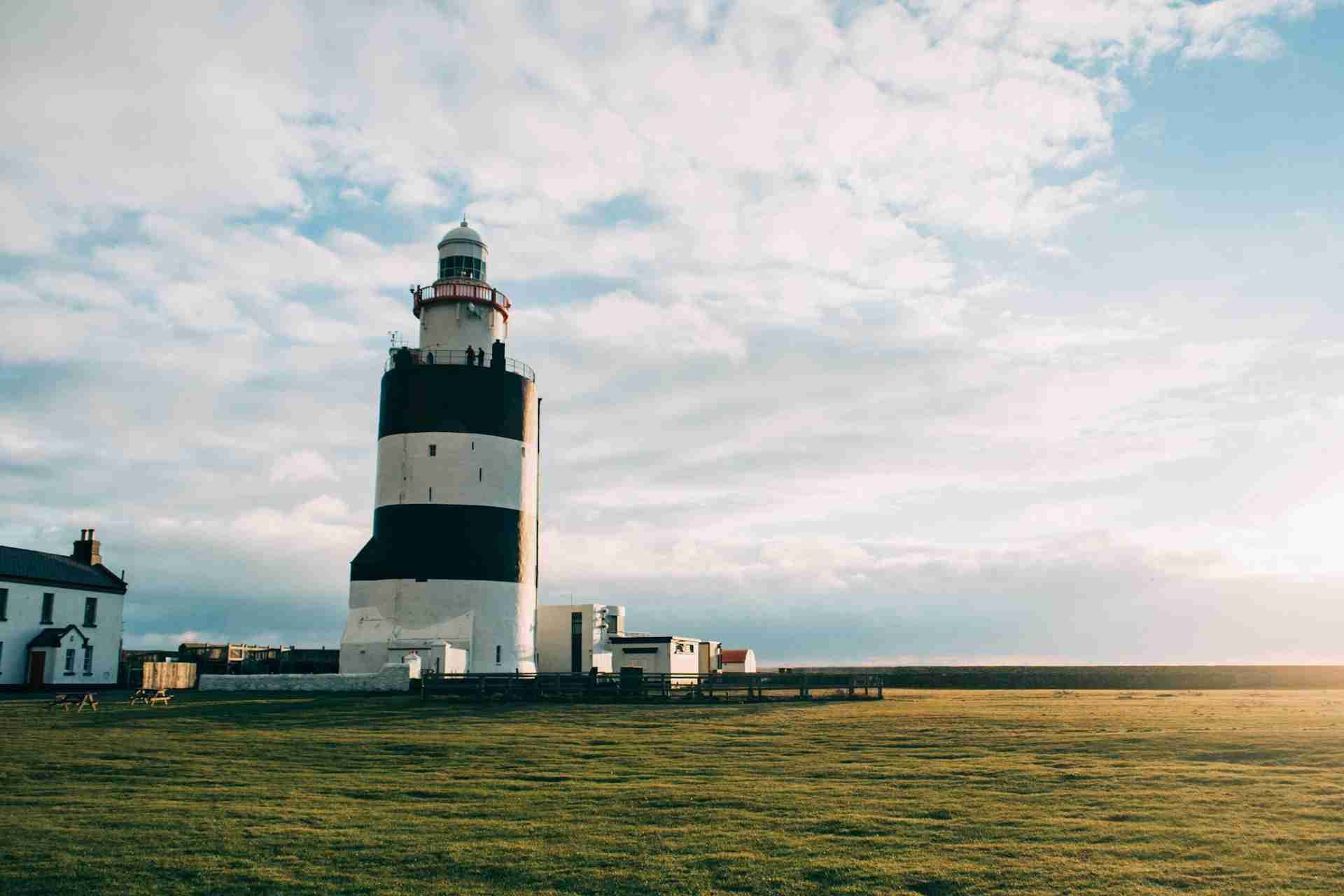
Standing firm against the winds of the Celtic Sea, Hook Lighthouse is one of Ireland's oldest working lighthouses and one of its most photogenic coastal structures. Located at the tip of the Hook Peninsula in County Wexford, the lighthouse is surrounded by exposed rock shelves, crashing waves, and wide Atlantic skies. Its bold black-and-white stripes, cylindrical stone form, and isolated setting offer photographers clear shapes, high contrast, and dramatic compositions in all kinds of weather. Whether shooting early light across the sea, long exposures of waves over rock, or close studies of the tower's historic surface, Hook Lighthouse is a rewarding subject for photographers who want to work with mood, structure, and shifting natural elements.
Best Photography Opportunities
Southwest Side of the Lighthouse in Morning Light
From the grassy rise just south of the lighthouse, you can frame the full structure with the rocky coastline and low morning sun behind or to the side. This angle brings out the bold contrast of the black and white paint against soft cloud texture. A 24 to 70 millimeter lens gives you flexibility to include foreground rock or shoot tighter for architectural emphasis. During early spring or late autumn, the light stays low and warm for longer, giving extra time to adjust and experiment with exposure. Use a polarizer carefully to deepen the sky without losing natural cloud variation.
Long Exposures of the Sea Against Rock Platforms
Directly below the lighthouse, layers of flat rock extend into the sea and catch the motion of the waves in every tide and season. These rocks offer excellent compositional lines for leading the eye toward the tower or out into the open water. With a tripod and six to ten stop neutral density filter, you can use long exposures to soften the water while keeping the rock and tower sharp. Early morning or evening works best for this, especially with overcast skies or broken cloud that adds shape to the background. Adjust white balance to preserve subtle sea color and keep your exposures clean and simple.
North Side Shadows and Side Light Details
In the late afternoon, the northwestern face of the lighthouse falls into partial shadow as the sun moves west, creating layered contrast along the tower's texture. This is a strong time to work in black and white, using mid-length focal lengths to isolate lines in the stone and shapes in the windows and lantern gallery. The rough surface of the lighthouse wall photographs well when light glances across it at a low angle. A short telephoto lens helps compress detail and avoid background distractions. Watch how the light moves down the structure and use that change to time your shot.
Clifftop View from the Eastern Trail
A narrow trail along the eastern side of the site gives you elevated views back across the lighthouse, with the sea behind and the open sky above. This position is strongest in golden hour or under cloudy skies with a touch of directional light. Frame wide with the surrounding landscape or tighter with just the top half of the tower and horizon. The wind here is strong and constant, so bring a weighted tripod and monitor for sea spray on your lens. This location also allows you to shoot during moody or stormy conditions with strong visual impact.
Details of the Tower and Weathered Stonework
The base of the lighthouse features weathered white stone and rusted fittings that make for strong detail shots in soft or indirect light. Get in close with a 70 to 200 millimeter lens to focus on cracks, textures, and anchor points in the wall. On overcast days, the shadows stay soft and color is muted, which is ideal for subtle compositions. These kinds of images work best when you isolate structure and keep backgrounds clean. Use a shallow depth of field for focus studies, or step back for formal framing with flat exposure and strong lines.
Best Time to Visit
The most productive light for Hook Lighthouse comes in early morning and late afternoon, when the sun's angle brings out the texture in the rock and tower. From April through October, sunrise occurs over the land and lights the western face of the structure, giving you warm tones and long shadow detail. During golden hour in the evening, the sea behind the lighthouse often reflects pink or amber light from the sky, adding atmosphere to wide compositions.
Overcast days are ideal for texture and detail work, especially on the lighthouse base and sea-worn platforms. The light stays even, and subtle contrast in the stone becomes easier to manage. When weather changes quickly, which happens often here, shifting clouds can break just before sunset and offer dramatic skies behind the tower.
Winter visits are quieter and give you a different look, with lower sun angles and more aggressive seas. Long exposures of the waves or black and white studies of the tower work well in these months. Bring waterproof gear and prepare for sudden changes in wind and temperature. Morning frost on the rocks can add a textured foreground when conditions are calm.
How to Get There
Hook Lighthouse is located at the end of the Hook Peninsula in County Wexford, Ireland. From Wexford town, follow the R733 south through Wellingtonbridge, then take the R734 toward the coast. The final approach leads through the village of Churchtown before reaching the parking area near the lighthouse grounds.
The site has a public car park just steps from the lighthouse, and access to the surrounding rocks and coastal paths is open throughout the day. There is no fee to photograph the exterior, and tripods are permitted around the grounds and along the cliffs. If you plan to photograph inside or climb the tower, you will need to book a tour. Interior photography is limited to handheld only, and flash is not permitted.
The clifftop paths are uneven and often slippery, especially after rain. Use caution near the edges and avoid venturing close to the water in rough conditions. The exposed position of the peninsula means strong winds are common, so bring extra layers and secure your gear when working near the edge.
Recommended Photography Gear
A 16 to 35 millimeter wide-angle lens is essential for capturing the full lighthouse with sky or sea in frame. A 24 to 70 millimeter zoom gives you the flexibility to work from multiple angles and include foreground or leading lines in the rock. For isolating details or compressing storm clouds behind the tower, a 70 to 200 millimeter lens is ideal.
Bring a tripod with a stable base and carry a hook or sandbag for added weight in high winds. A six to ten stop neutral density filter is useful for long exposures of water and clouds. A circular polarizer can help control reflections on wet rocks and deepen the tone of the sky, especially in late afternoon.
Carry a microfiber cloth and lens blower to deal with sea spray and wind-driven moisture. Use a weather-sealed bag or camera cover when working close to the surf. If you plan to shoot in stormy conditions, bring a rain shell for your gear and keep your kit tight and manageable. Solid footwear with good grip is important for moving safely across the rock shelves.
Nearby Photography Locations
Just a short drive from the lighthouse, this small fishing harbor features stone piers, working boats, and textured buildings. It is best photographed early in the day with soft light and calm water. The contrast between the colorful boats and dark stone creates strong compositions in both color and monochrome.
To the east of the peninsula, Baginbun offers sweeping cliff views and angled sea stacks. A good location for long exposures or wide coastal shots, especially in golden hour when the cliffs catch the last light of the day. Use a mid-length lens to frame the rock lines against the sea.
Located inland near the village of Fethard-on-Sea, these remains include arched windows, stone towers, and a partial curtain wall. Visit during the late afternoon when sunlight filters through the gaps and gives depth to the structure. The ruins work well for atmospheric detail or context shots.
A restored abbey with stone archways and riverside grounds, Tintern is a quiet location for photographing repeating patterns in soft light. Best on overcast days or in early morning when the stone holds even tone. Interior arches and columns allow for strong compositions with natural shadow and form.
This coastal fort provides views across the bay, layered stonework, and beach scenes below. During sunset, the fort casts long shadows and the water often reflects soft tones from the sky. It pairs well with handheld street-to-sea transitions or framed architectural studies.
Hook Lighthouse is not a fast shoot. It is a location that asks for time, attention to light, and a willingness to shift with the weather. With stone, sea, and sky all within easy reach, the structure offers both precision and possibility. For coastal photographers looking to work with line, texture, and movement, it remains one of Ireland's most enduring and practical settings.
Comments
Loading comments…