
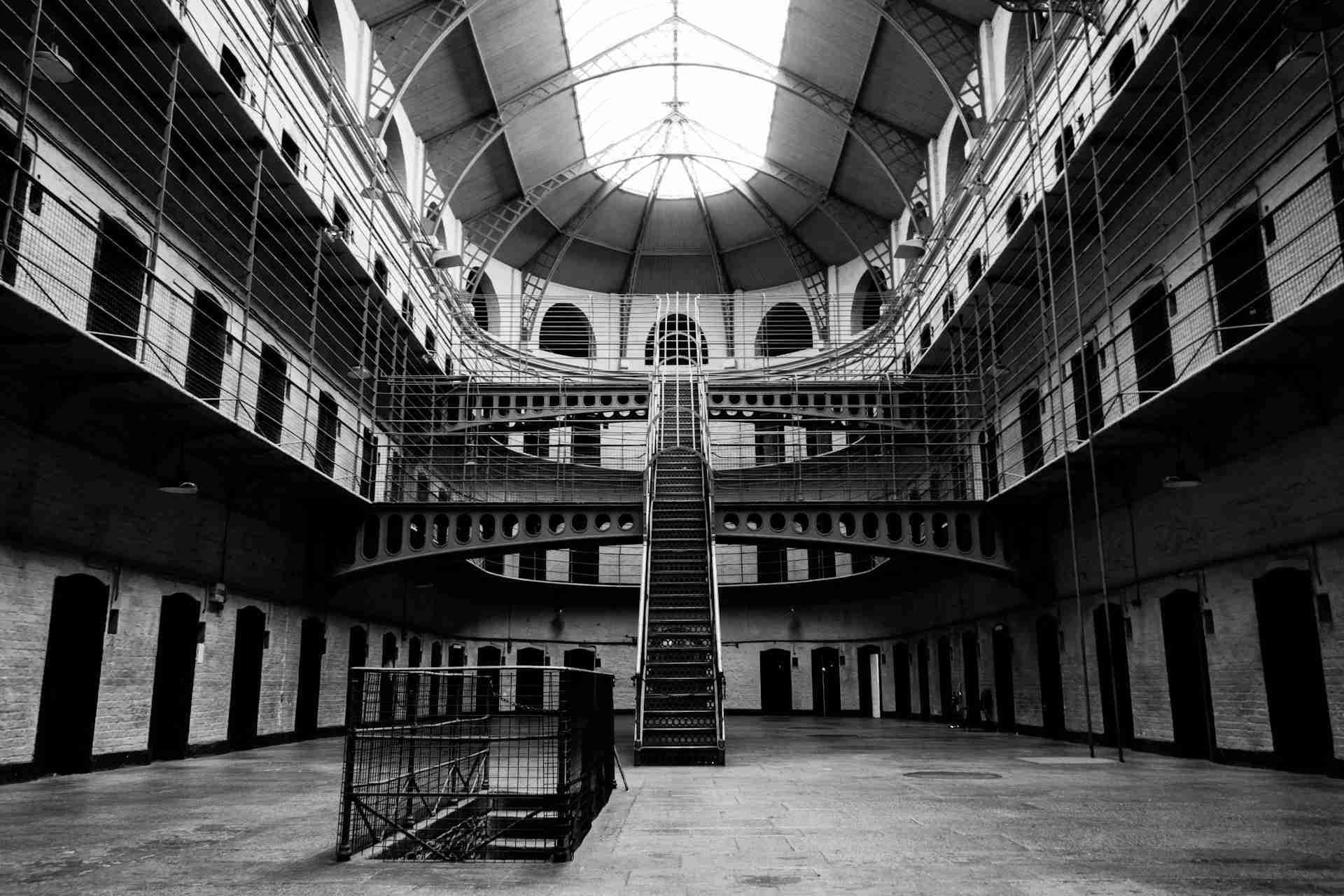
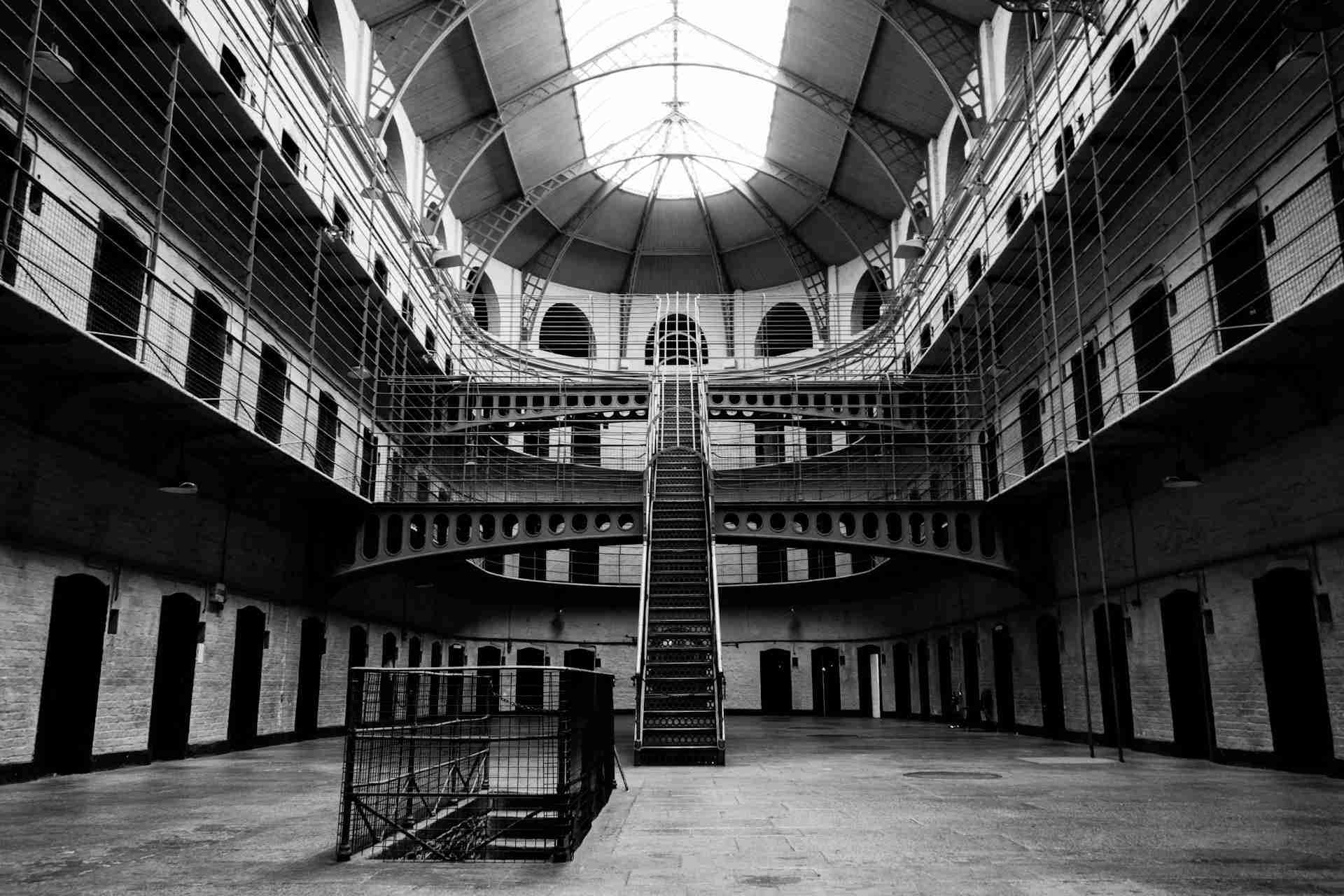
Kilmainham Gaol is one of Ireland's most atmospheric photography locations, offering an amazing mix of historic and architectural beauty. The decommissioned prison—famous for its role in Irish independence history—is defined by long corridors, iron walkways, stone walls, and light-filtered cell blocks. Photographers are drawn to the structure's somber tones, repeating patterns, and moody shafts of natural light. There's a cinematic gravity to this space that demands attention to detail, timing, and emotional resonance.
Best Photography Opportunities
• Main Cell Wing Interior
The most photographed area of the gaol is its Victorian-era east wing, where rows of cells face each other across a vast, oval-shaped atrium capped with a skylit ceiling. The iron walkways and staircases form repeating patterns of lines and shadows, ideal for wide-angle compositions that emphasize geometry. Early morning or late afternoon light streaming in from above creates beautifully diffused highlights and deep shadows that add emotional tone. Try bracketing exposures to preserve dynamic range and emphasize the spatial symmetry of the central shaft. Move between floors if permitted to experiment with layered depth, diagonal framing, or overhead abstract perspectives. If light conditions shift, embrace the change—darker shadows or fleeting rays can dramatically alter the mood.
• Stone Corridors and Archways
The narrow stone passageways that connect various sections of the prison are rich with visual texture. Crumbling plaster, moss-darkened corners, and fading inscriptions offer close-up and narrative-driven photographic potential. Use a shallow depth of field to isolate particular textures or try shooting down long corridors to emphasize symmetry and depth. Ambient light from iron-barred windows often casts haunting patterns onto the floor—ideal for moody monochrome work. Low-angle shots that lead the viewer's eye toward a vanishing point can create striking compositions, especially when shadows fall across the old flagstone. Don't hesitate to crouch low or frame diagonally across passageways to evoke a sense of mystery and timeworn memory.
• Cells and Door Details
Each cell door offers its own visual fingerprint: rusted bolts, faded numbers, cracked paint, and small rectangular openings once used for food. These are opportunities to explore intimate detail photography. Use a fast lens to capture scenes in low light, and experiment with compositions that tell a quiet story—perhaps focusing on a single latch or nameplate. Look for light spilling across thresholds to accentuate texture and emotion. Including the floor or wall in your frame can introduce subtle leading lines and give context to your detail shots. Pay attention to remnants like old hinges, nails, or wall scratches—they reveal the passage of time and add subtle narrative weight to your images.
• Exterior Yard and Stone Facades
The exterior yards—once used for prisoner exercise or execution—are defined by high stone walls and minimal ornamentation. These open-air spaces provide a stark contrast to the prison's cramped interiors, and they're excellent for stark, high-contrast shots under changing weather. Cloudy skies can enhance mood, while early morning or dusk light may throw long shadows across the stonework. The facades themselves—dotted with barred windows and weather-worn patches—offer both wide and tightly cropped composition possibilities. Try isolating a single window to convey mood, or use the repeating lines of the yard walls to build rhythm into your frame. Consider incorporating figures (if allowed) for scale and narrative tension, or shoot reflections in puddles after rain for dramatic visual layering.
• Staircases and Catwalks
The iron staircases and suspended catwalks are one of Kilmainham's most graphically engaging features. Try photographing from above or below to emphasize lines, depth, and vertical tension. Leading lines can be used to pull the viewer's eye toward a vanishing point or subject framed within the architectural structure. Reflections in glass panels or shadows cast by the catwalk's grating create further visual layers. These features are excellent subjects for shooting in black and white—heightening texture and drama—or for contrasting against the softness of natural light filtering through the skylights. Vary your focal length and shooting angle to find new geometric patterns in the overlapping shadows and lines.
Best Time to Visit
Kilmainham Gaol is open year-round but offers its best photographic conditions in the off-peak seasons of late autumn through early spring. During these months, natural light enters at more dramatic angles, especially during the short days when sunlight is lower in the sky. This is crucial for interior photography where light shafts from overhead or side windows define mood and contrast.
Weekday mornings are ideal, offering quieter tours and more flexibility to work within spaces without waiting for foot traffic to clear. Guided tours are mandatory, so try to join smaller groups or off-hour slots if you want extra time to focus on your compositions. The midday hours can create harsh lighting indoors if the sun is high, though in many interior areas, filtered light remains soft enough for balanced exposures. Booking early in the day also allows for return visits to exterior shots in evolving light.
On rainy days, the moisture-darkened exterior surfaces take on deeper tones, and fewer crowds often mean less movement in your frames. For black-and-white photography, the diffused overcast conditions are particularly effective in controlling highlight clipping and shadow blocking. If your goal is storytelling through minimalism or texture, lean into the quieter months and subdued skies to enhance the mood. Plan repeat visits to photograph both atmospheric interiors and brooding exteriors under changing light.
How to Get There
Kilmainham Gaol is located on Inchicore Road in western Dublin. It's easily accessible by public transport—take the Luas Red Line to Suir Road Station, then walk approximately 10 minutes west. Alternatively, buses from the city center stop nearby, and taxis are readily available. If you're driving, paid parking is limited in the immediate vicinity, but several lots and street options are available within walking distance.
Admission is only available through a guided tour, which must be booked in advance via the official website. Arrive early to check in, as tours run on a fixed schedule. Photography is permitted throughout much of the tour, but flash and tripods are not allowed. Be prepared to work handheld and use higher ISO settings for interior shots. Consider visiting on multiple days to scout and refine your approach. If you're using a camera bag, ensure it's compact enough to be maneuvered easily in narrow spaces and doesn't obstruct other visitors.
Recommended Gear for Photographing Kilmainham Gaol
A fast prime lens (35mm or 50mm f/1.4 or f/1.8) is invaluable in the low-light environment of the gaol. These allow you to capture sharp handheld shots without flash and create beautifully shallow depth of field for detail work. A wide-angle lens (16–35mm or 24mm equivalent) will help capture the expansive interiors of the cellblocks and corridors. Consider bringing a second wide or mid-range lens if you want to minimize lens changes in confined areas.
If you're carrying a zoom (24–70mm), it offers excellent flexibility for switching between architectural shots and close-ups of decayed textures or details. Image stabilization is helpful for slower shutter speeds. Because tripods are not permitted, consider a camera body with strong low-light performance and clean high ISO output. A mirrorless setup with silent shutter options will help maintain a respectful, unobtrusive presence.
Bring plenty of memory and spare batteries—shooting in low light and reviewing images frequently will drain power faster. A lens cloth is useful for dealing with indoor humidity and temperature shifts. Dress in layers: the stone interiors can be cold and damp even during the warmer months. Use a discreet shoulder bag or padded insert within a messenger bag for better mobility in tight spaces. If you're using a phone or compact camera, consider adding a clip-on wide lens for architectural breadth.
Nearby Photography Locations
: Located just across the street, IMMA's neoclassical architecture and formal gardens provide a strong contrast to the gaol's austere design. The long corridors and symmetrical courtyards offer refined architectural shots in open natural light. Interior exhibitions can also offer opportunities for creative abstractions and color studies.
: One of the largest enclosed parks in Europe, Phoenix Park is only a short distance away and features woodlands, formal gardens, and Dublin Zoo. Ideal for landscape photography, wildlife shots, and seasonal transitions. The Papal Cross and Wellington Monument are both striking structures worth exploring for dramatic compositions.
: While the interior may be crowded and commercial, the surrounding streets and brick industrial facades of the Guinness Storehouse offer gritty, urban compositions with a documentary feel. Best captured in overcast light or late afternoon. Look for reflected textures in puddles or sharp architectural lines softened by weather.
: Adjacent to IMMA, this 17th-century building combines historical elegance with a symmetrical layout, including colonnades, courtyards, and classic window grids—great for wide-angle and symmetry-driven work. The interplay of shadows across limestone columns during golden hour can add depth and richness.
: A pleasant and photographically rich stroll from the gaol back toward the city center, the Liffey River Walk provides views of historic bridges, canal locks, and the transition between Dublin's old and new architectural forms. Reflections, textures, and people-in-place compositions abound, especially in early morning mist or blue hour transitions.
Comments
Loading comments…