
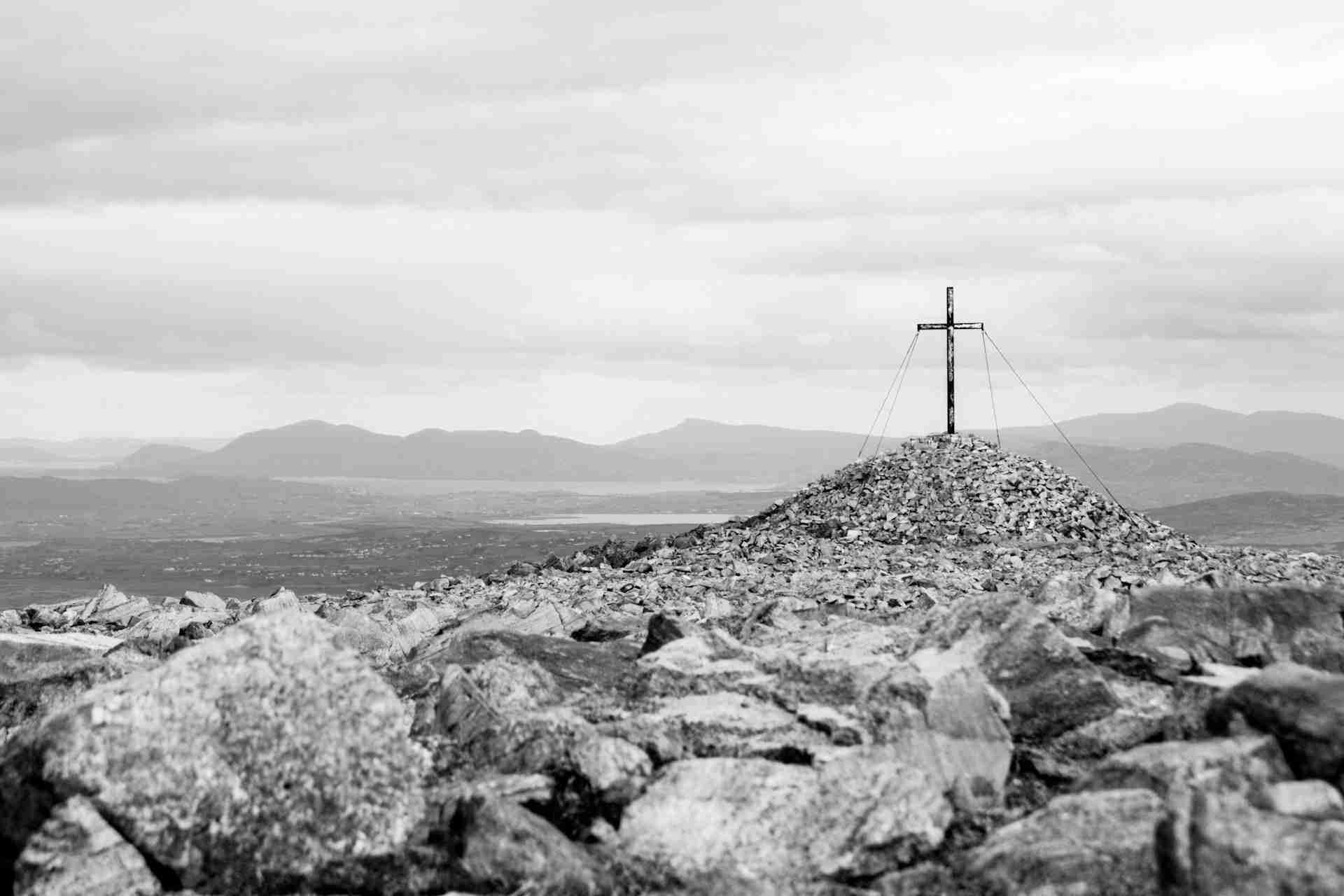
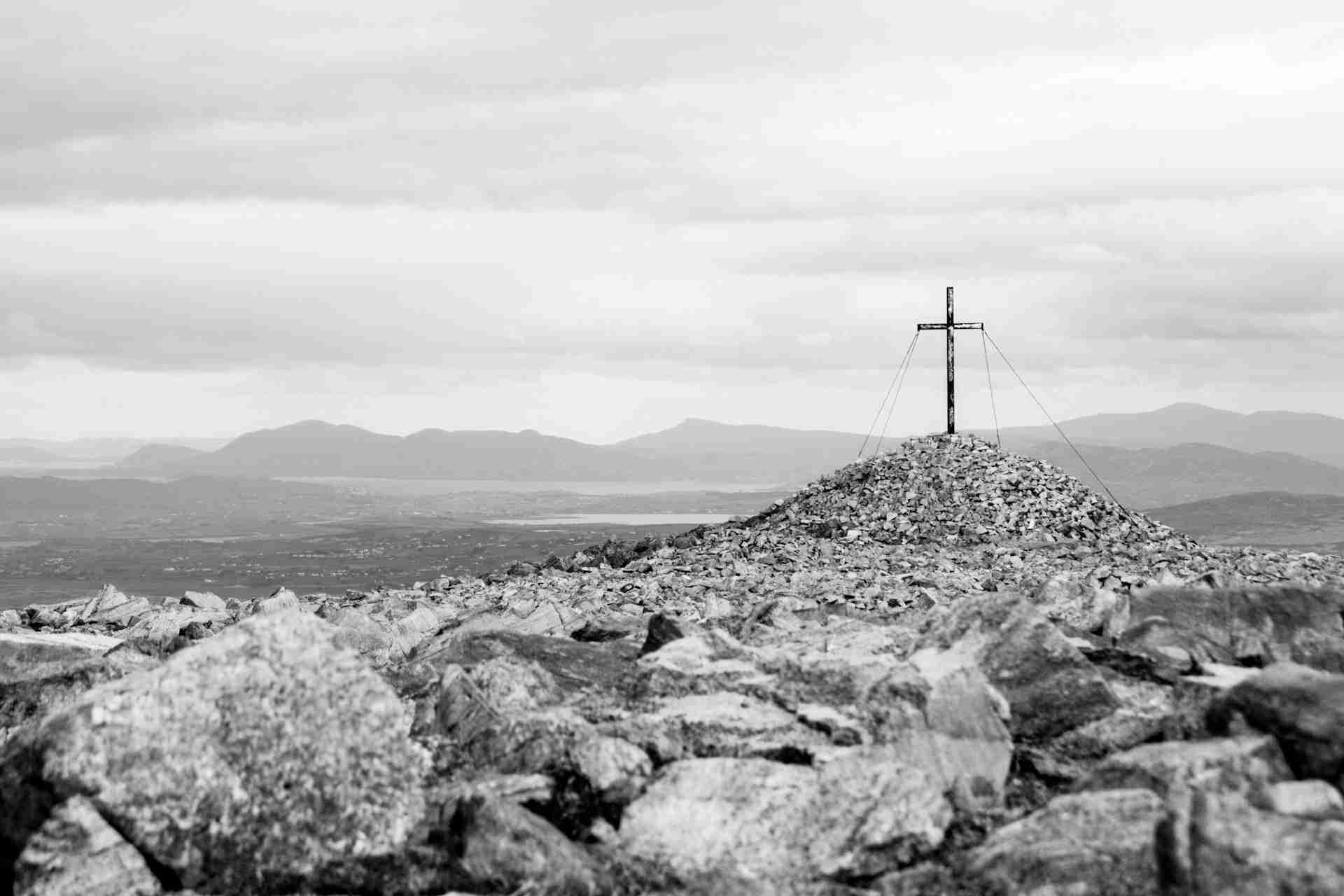
Muckish Mountain stands like a giant flattened wedge at the northern end of Donegal's Derryveagh range. Its table-top summit and steep scree-covered slopes make it visually distinct from the surrounding peaks, and its position near the coast gives photographers a rare chance to frame mountain and sea in one composition. From certain angles, Muckish appears monumental and still. From others, it dissolves into a changing landscape of shifting weather, exposed stone, and soft Irish grassland. For landscape photographers who appreciate shape, contrast, and changing skies, Muckish offers a location where each climb or vantage point reveals something new. The effort to reach it, or to shoot it from below, always rewards patience and a careful eye for how light hits land.
Best Photography Opportunities
• Summit Views Across Donegal
Reaching the broad, flat summit of Muckish gives you an unbroken view over north Donegal, from the Atlantic coast to the inland peaks of the Derryveagh range. The summit is made of bare quartzite and rough grass, giving foreground texture that contrasts beautifully with distant ridges and sky. Shooting wide from the top in clear morning light lets you include layers of land, loughs, and cloud shadow in your composition. Use a tripod and a small aperture to maintain sharpness across the frame, and wait for light to break through clouds across the lower hills. Early evening from the summit creates a more subdued palette of blues and golds, with long shadows that emphasize the plateau's unusual shape.
• Muckish Framed from Lough Fee
From the narrow road running west of Lough Fee, you can frame Muckish's steep western face rising beyond the water. This composition works well in the afternoon when side light carves into the scree and emphasizes the vertical texture of the slope. Calm days allow partial reflections in the lake, but even in wind the scene holds strength. A mid-range zoom lens gives the best flexibility, letting you adjust to foreground conditions like reeds, rocks, or passing sheep. Bracketing is useful here to retain sky detail while keeping shadowed land properly exposed.
• Long Lens Compression from the Glenveagh Hills
With a long telephoto lens from trails south of Glenveagh, you can isolate Muckish's layered form and compress it against other peaks or a distant sea horizon. This technique flattens the deep valleys between summits and draws attention to the mountain's broad, angular lines. Shooting in low morning light helps bring out tonal separation between each ridge. Haze is often present in these long-distance shots, but using a polarizer and underexposing slightly can enhance contrast and keep highlights under control. These compositions are strongest on clear days when you can maintain sharpness through the atmosphere.
• Golden Hour from the Dunfanaghy Road
Driving toward Muckish from the north near Dunfanaghy, the mountain sits as a wide mass over golden moorland. The road itself provides leading lines, and occasional breaks in the hedgerow offer pull-offs for tripod work. Sunset light from the northwest catches on the grasses and highlights the angular ridgeline against a soft sky. This scene works especially well in late summer when the landscape turns warm and textured. Use a wide-angle lens to include the road or stone walls as foreground, or compress the scene with a telephoto for a layered, tonal study.
• Low Cloud and Mist from Along the R251
On misty days, Muckish reveals a different personality. The upper plateau disappears into shifting fog, while the lower slopes remain visible under soft, diffused light. From spots along the R251, you can shoot into the side of the mountain as it rises through the atmosphere, emphasizing scale and depth. This is a good opportunity for minimalist compositions, especially with a long lens. Silhouettes of fence lines or bogland structures in the foreground can add contrast and visual grounding.
Best Time to Visit
Spring and early summer are ideal times to photograph Muckish. The surrounding grassland is vibrant, and air clarity is typically better before the peak of summer heat. Sunrise and sunset angles work well in spring, giving you long periods of low side light that emphasize the mountain's shape and bring out detail in the scree slopes and summit textures.
Autumn offers warm tones in the grasses and moorland, along with atmospheric conditions like mist, fog, and broken cloud that can create dramatic light. These are some of the most rewarding conditions for photography, especially in the morning when fog clings to the valleys but begins to lift as the sun rises.
Winter brings snow and clearer skies, particularly after high-pressure systems. The summit can be difficult to access due to ice and wind, but the visual contrast between white snow and dark stone is striking from lower viewpoints. Storm fronts often create quick, dramatic light breaks, and the mountain's shape remains readable even under overcast skies.
Summer is the most accessible time for hiking, though the light can be harsh and flat during midday. Early and late shooting is best, and a post-rain clearing often gives the richest light and cleanest skies.
How to Get There
Muckish Mountain is located in northwest Donegal, about thirty minutes from Dunfanaghy and one hour from Letterkenny. The most common access point for hiking the summit is from Muckish Gap, just off the R256. A rough roadside lay-by offers space for a few cars, and from there a clear path ascends toward the summit, taking between one and two hours depending on pace and conditions.
If you are photographing from a distance rather than climbing, several strong viewpoints can be reached by car. The R251 offers broad views of Muckish from the south and is one of the most scenic roads in the region. For lake reflections, head toward Lough Fee or Lough Keel via local minor roads west of the peak.
There are no entry fees or facilities at any of the viewpoints or trailheads. Conditions on the mountain can change quickly, and winds at the summit are often much stronger than in the valleys below. Always carry a map, adequate clothing, and gear protection. Weather forecasts should be checked before any summit attempt, especially in winter or spring.
Recommended Photography Gear
Bring a full-frame camera with wide, mid, and long lenses if you plan to capture the range of scenes available at Muckish. A 16–35mm wide-angle is perfect for summit shots and roadside scenes with strong foreground interest. A 24–70mm is a good all-around option for most compositions, especially when moving between trail points or shooting from car-accessible views. A 70–200mm or longer telephoto lens is key for compressing ridge lines and isolating the mountain from distant viewpoints or across valleys.
A sturdy tripod is essential if you plan to shoot long exposures, bracket your exposures for high contrast light, or work during twilight and blue hour. Graduated ND filters can help balance sky and land when photographing from below. A circular polarizer is useful for deepening color and managing reflections off water, especially at Lough Fee or when working through haze. Lens wipes and a weather-sealed camera bag are recommended due to Donegal's often damp, windy conditions. If hiking to the summit, bring waterproof footwear and gloves, as scree and boggy terrain are common.
Nearby Photography Locations
Donegal's tallest peak rises with a sharp profile just south of Muckish. Its dramatic pyramid shape reflects beautifully in nearby lakes like Lough Altan, and its white quartzite summit glows at sunrise and sunset.
This stretch of northern Donegal's Atlantic shore offers sea cliffs, tidal flats, and long beaches with dramatic skies. It's a perfect place to balance mountain images with coastal scenes.
With trails, woodland, a large valley lake, and the historic Glenveagh Castle, this park provides soft light, textured landscapes, and a contrast to the more severe topography of Muckish.
Located within Glenveagh but more remote in feel, this narrow lake flanked by steep slopes offers great reflections and early morning mist. It's a quiet location with less foot traffic than the main park areas.
• Tory Island (on clear days)
From higher vantage points on Muckish, you can sometimes see all the way out to Tory Island in the Atlantic. If you have time to visit, the island itself offers dramatic sea views, wave-carved cliffs, and traditional Irish coastal life.
Photographing Muckish is about working with contrast, atmosphere, and terrain. The mountain changes in appearance depending on your position, the season, and the light. Whether you climb to its flat summit or photograph it from the roads below, it stands apart from its neighbors not only in shape but in how it handles light.
Comments
Loading comments…