
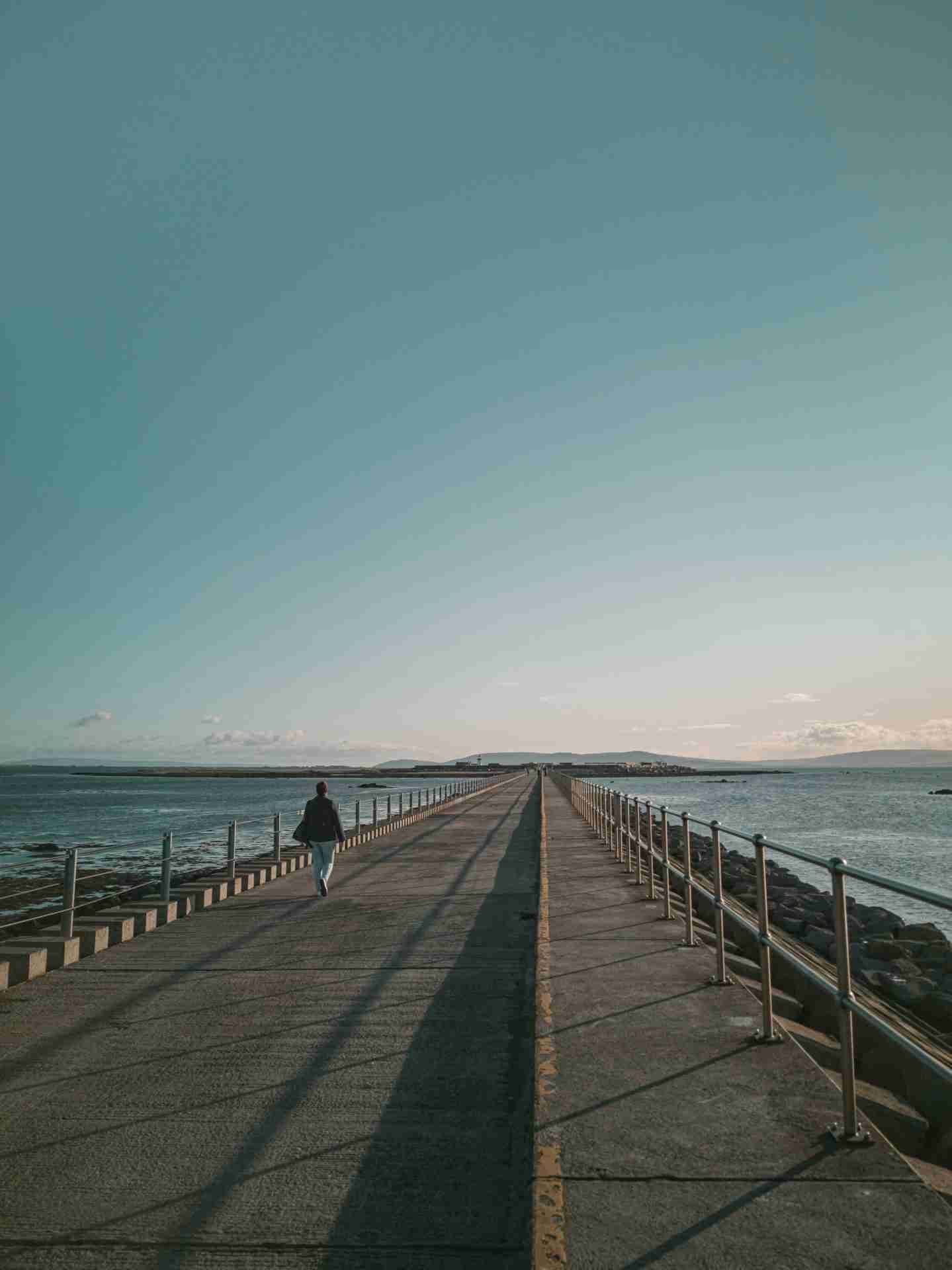
Mutton Island Causeway stretches across Galway Bay just outside Galway City, connecting the mainland to Mutton Island where the city's wastewater treatment facility sits. While the destination itself is industrial, the long straight road reaching across the water creates a surprisingly photogenic coastal scene. The narrow strip of pavement runs between tidal flats and open water, giving photographers a strong leading line that points directly toward the horizon. On either side of the causeway, the shoreline shifts with the tide, revealing mudflats, shallow water, and scattered seabirds. Looking back toward land, you can see Galway's coastline and distant hills, while the open Atlantic influence often brings fast moving clouds and dramatic light. The simplicity of the landscape is what makes this location work so well for photography. The causeway provides structure in an otherwise open seascape, allowing clean compositions that focus on line, light, and atmosphere.
Best Photography Opportunities
• Leading Lines Across the Bay –
The most compelling composition here comes from using the causeway itself as a strong leading line. Standing at the mainland end of the road and photographing straight down the center creates a powerful sense of depth as the pavement narrows toward the island. A wide lens works especially well because it exaggerates the perspective and emphasizes the long stretch of road surrounded by water. Positioning the camera low to the ground can strengthen the foreground and make the line of the road feel even more dramatic. Subtle variations in light across the bay can add atmosphere without distracting from the simple geometry of the scene. This is the defining image of the location and works well in many different weather conditions.
• Low Tide Mudflats and Reflections –
When the tide drops, large sections of mudflat appear on either side of the causeway. These shallow reflective surfaces can mirror the sky, creating interesting foreground textures and patterns. Shooting from the edge of the causeway allows you to combine these reflections with the road stretching toward the island. A wide lens helps capture both the foreground reflections and the distant horizon. Calm weather can produce smoother reflections, while wind creates subtle ripples that add texture. Including the causeway along one edge of the frame can balance the open water and sky.
• Stormy Atlantic Clouds –
The exposed position of the causeway means weather often moves quickly across the bay. Dark clouds rolling in from the Atlantic can create dramatic lighting across the water and shoreline. A wide lens allows you to capture both the expansive sky and the linear shape of the causeway below. Positioning the road diagonally through the frame can add energy to the composition when clouds are moving quickly overhead. These conditions can produce strong contrast between bright patches of light and darker storm clouds.
• Seabirds and Coastal Wildlife –
The tidal flats around Mutton Island attract a variety of seabirds that feed along the shoreline. Including these birds in the foreground can add scale and movement to the otherwise minimalist scene. A telephoto lens works well for isolating birds against the water or mudflats. Waiting for birds to cross the frame while the causeway stretches into the distance can create a balanced composition. These quieter wildlife moments often happen during lower tide when feeding areas are exposed.
• Evening Light Over the Bay –
Although the sun does not set directly over the causeway, evening light can still produce beautiful color across the sky and water. Clouds reflecting warm tones across the bay can add subtle color to the otherwise muted coastal palette. Photographing along the causeway during these moments allows you to combine the strong leading line with soft color gradients in the sky. A tripod can help maintain sharp images as the light fades. Calm water and wet surfaces can also reflect these colors along the edges of the road.
Best Time to Visit
Early morning is often the most productive time to photograph the causeway. The road is quieter, the air tends to be calmer, and the light can be softer across the bay. Morning conditions can also produce subtle mist or haze over the water, which adds depth to the scene.
Tide levels play an important role here. Low tide reveals the mudflats and feeding areas for birds, while higher tide simplifies the scene with open water on both sides of the road. Evening light can also be rewarding when clouds catch warm tones from the setting sun behind the land. Because the causeway sits in an exposed coastal location, checking weather and tide forecasts before visiting can help you plan the best conditions.
How to Get There
Mutton Island Causeway is located just outside Galway City on the western coast of Ireland. The road begins near the Claddagh and leads across the bay toward Mutton Island. The causeway is visible from nearby coastal roads and can be reached easily by car, bicycle, or on foot.
Parking can be found along nearby streets or coastal areas before the start of the causeway. From there it is a short walk to reach the road that extends out across the water. The causeway itself is open for access, though the facilities on the island are not open to visitors, there is a locked gate at the Mutton Island end of the causeway. Photographers typically work from the mainland side or along the edges of the causeway for the best views.
Recommended Photography Gear
A wide lens is especially useful at this location because the causeway works best as a strong foreground line leading toward the horizon. A mid range zoom offers flexibility when framing the road with changing sky conditions. A telephoto lens can be helpful for isolating seabirds or distant details along the shoreline.
A tripod is recommended for low light conditions and evening photography. Neutral density filters can allow longer exposures that soften the water around the causeway. A polarizer can reduce glare on wet surfaces and deepen color in the sky. Because the location is exposed to wind from the bay, bringing weather protection for your camera gear is often helpful.
Nearby Photography Locations
sits along the River Corrib near Galway's historic center. The stone arch and nearby quays create strong architectural compositions along the water. Evening light reflecting off the river can add atmosphere to the scene.
stands along the rocky shoreline of Salthill Promenade. Waves breaking against the rocks and the open Atlantic views create dramatic coastal photography opportunities. Stormy weather can make this location especially dynamic.
• Galway Harbour
offers colorful fishing boats, working docks, and views out across Galway Bay. The mix of maritime activity and historic waterfront buildings creates strong compositions. Early morning light often provides the calmest reflections.
is a small sheltered beach west of Galway with curved sand and rocky edges. The surrounding cliffs provide elevated viewpoints across the bay. Sunset light can produce warm tones across the water and shoreline.
sits along the River Corrib just outside Galway City. The ivy covered stone ruins create a dramatic historic subject surrounded by woodland and river views. Overcast weather often enhances the mood around the castle.
Comments
Loading comments…