
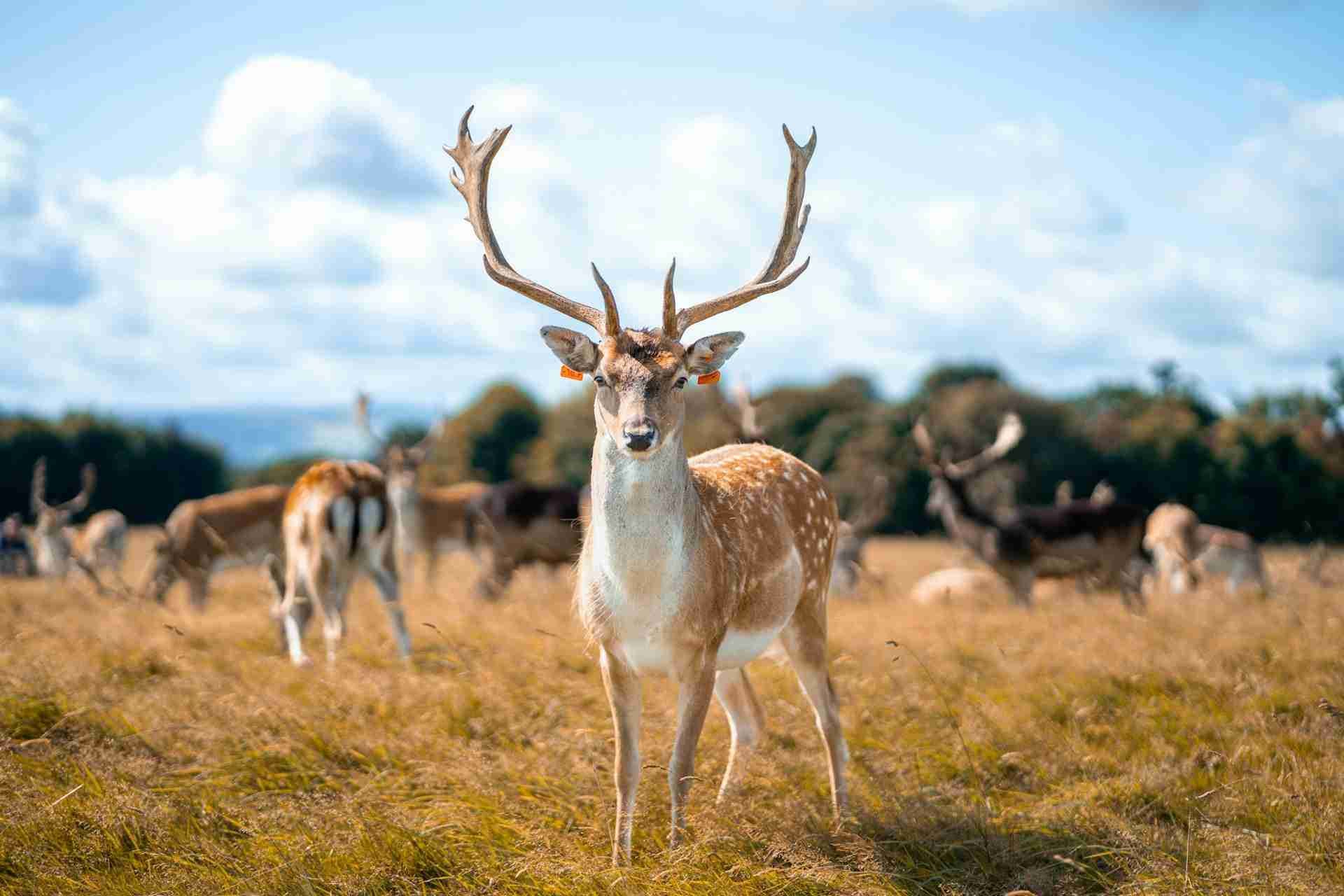
Sprawling across over 1,700 acres in the heart of Dublin, Phoenix Park is one of the largest enclosed city parks in Europe, and a deeply rewarding location for photographers. Unlike more manicured urban parks, Phoenix Park offers a rare convergence of formal gardens, ancient woodlands, wild meadows, and freely roaming fallow deer—all within view of Dublin's cityscape. It's a place where light filters through old oak groves, mist rolls across open fields at dawn, and historic landmarks such as Áras an Uachtaráin and the Wellington Monument add architectural punctuation to the natural drama. For photographers who enjoy juxtaposing wildlife with urban elements, or capturing tranquil landscapes in a bustling capital, Phoenix Park is a scene of constant seasonal transformation and subtle, story-rich moments.
Best Photography Opportunities
• Misty Morning Deer at the Furry Glen
: One of the most magical experiences in Phoenix Park is photographing its herd of fallow deer during the early morning hours, especially around the Furry Glen in the southwest corner. This wooded area, crisscrossed with narrow trails and featuring a small lake, often traps fog and diffused light—ideal conditions for atmospheric wildlife photography. The deer, accustomed to human presence, often move slowly through the tall grass or across clearings, providing ample opportunities for long-lens compositions with soft, painterly backgrounds. Patience and quiet movement are key, but the rewards can be cinematic: antlered silhouettes in the mist, subtle expressions caught mid-step, or groupings of deer grazing under shafts of golden light filtering through the trees.
• Long Lens Cityscapes from the Magazine Fort
: On the park's southern ridge, near the Magazine Fort, photographers can access elevated viewpoints that provide expansive views across the city of Dublin. This location is especially useful for telephoto work, allowing you to compress the layered skyline—church steeples, office towers, cranes, and the dome of the Four Courts—into a cohesive visual narrative framed by parkland in the foreground. In late afternoon or early evening, the light here is often warm and directional, casting long shadows across the fields and lighting up the buildings beyond. For skyline silhouettes at sunset, position yourself slightly west of the fort and frame eastward toward the city with a 200mm or longer focal length.
• Wellington Monument with Dramatic Skies
: The 62-meter tall Wellington Monument, the largest obelisk in Europe, is an iconic focal point in the central meadow and an excellent subject for minimalist or architectural photography. Surrounded by open lawn, it lends itself to both wide-angle compositions and vertical framing that exaggerates its height against the sky. In the right conditions—especially before or after storms—Dublin's sky can deliver swirling cloud formations or sharp breaks of light that add weight and drama to your shot. Silhouetting the monument against a moody sky during blue hour or framing it through the arched branches of nearby trees can provide compelling visual contrasts and narrative tension.
• Áras an Uachtaráin and the People's Gardens
: The formal gardens near the residence of the Irish President offer a more composed and orderly contrast to the park's wilder zones. Symmetrical flower beds, tree-lined avenues, fountains, and manicured lawns make this area ideal for compositions with strong geometry and color coordination. During spring and summer, the gardens bloom in waves of tulips, roses, and herbaceous borders that pair well with soft natural light during golden hour. The neoclassical architecture of Áras an Uachtaráin can be incorporated into backgrounds or framed through foliage for layered storytelling. This section of the park is excellent for experimenting with color grading and soft-focus bokeh, especially when shooting at f/2.8 or wider.
• Evening Wildlife and Sunset in the Fifteen Acres
: The vast central meadow known as the Fifteen Acres is often overlooked, but it becomes a canvas of changing light in the evening. The openness of the field allows for wide, cinematic compositions with the sun setting behind clusters of trees or long shadows cast by roaming deer. During the rutting season in autumn, dramatic interactions between bucks can occur here, offering rare opportunities for action wildlife photography. Wide lenses are ideal for capturing the full expanse of the landscape, while longer lenses allow for behavioral detail—snorts, posturing, and movement. As the sun drops, the temperature of the light turns golden-orange, creating opportunities for silhouettes or rim-lit profiles against the horizon.
Best Time to Visit
Phoenix Park is photographically rich throughout the year, but its full character reveals itself when lighting conditions, seasonal variation, and wildlife behaviors are aligned. The best time to visit largely depends on your photographic goals. For wildlife and atmosphere, early morning is unrivaled. The park's topography traps mist in low areas like the Furry Glen and the Fifteen Acres, creating ethereal scenes where deer and distant monuments appear as ghostly outlines in the fog. Sunrise here often brings soft, slanting light that illuminates dew-covered grass and filters through the canopy of ancient trees.
In spring, blooming cherry blossoms and early wildflowers transform the park's wooded areas and formal gardens into soft-focus dreamscapes. Summer provides long days and lush greenery, ideal for landscape work and architectural compositions. Autumn is peak season for photographing the deer during rutting, when bucks display their antlers and behavior becomes more dynamic—look for dramatic confrontations backlit by golden leaves. Winter brings stark beauty: leafless trees offer strong silhouettes, frost adds texture to morning scenes, and sunsets arrive early, providing golden-hour light for a longer stretch of the day.
For cityscape and architectural images, late afternoon and blue hour are optimal, especially near the Wellington Monument or Magazine Fort. Avoid visiting during midday on weekends when the park is crowded, unless you're aiming for street or event photography. Regardless of the season, flexibility is crucial—weather changes quickly, and some of the best moments occur when fog or light breaks unexpectedly.
How to Get There
Phoenix Park is located just northwest of Dublin's city center and is highly accessible by public transportation, bike, or car. The main entrance at Parkgate Street is a short walk from Heuston Station, which is served by multiple train and tram lines, including the Luas Red Line. Several Dublin Bus routes also stop near the park's various gates. Once inside, the park can be explored by foot, but due to its immense scale, a bicycle or car is helpful for covering more ground.
There is no entry fee to access any part of Phoenix Park. It is fully open to the public year-round, with pedestrian and vehicle access available through multiple gates. Car parks are scattered throughout the grounds, including at the Visitor Centre near Áras an Uachtaráin, the Dublin Zoo area, and along Chesterfield Avenue. The park's size means cell reception can be patchy in wooded areas, so plan your routes in advance if using GPS. Be mindful that deer are wild animals, and while often calm, they should not be approached closely or fed. Drone use is regulated and generally discouraged without special permission due to the proximity of governmental buildings and airspace restrictions.
Recommended Kit for Capturing the Scene at Its Best
Given the variety of photographic opportunities in Phoenix Park, a versatile and durable kit is essential. For landscape and cityscape work, a wide-angle lens in the 14–35mm range is invaluable. It allows you to capture the vastness of the fields, the dramatic presence of the Wellington Monument, and the quiet elegance of the formal gardens. For these scenes, a tripod is crucial—especially at dawn, dusk, or in fog—to ensure sharp images during longer exposures and to experiment with HDR or focus stacking techniques.
Wildlife photography here is a major draw, so a telephoto zoom lens in the 100–400mm range—or a prime lens of 300mm or longer—is strongly recommended. A fast autofocus system and good image stabilization will be essential when tracking moving deer, particularly during the rut. Wildlife opportunities often unfold quickly and unexpectedly, so a camera with strong low-light performance (for pre-dawn or dusk shooting) is ideal. A second body with a shorter lens, like a 70–200mm, can help you adapt quickly when switching from close-range wildlife to broader environmental portraits.
For macro and detail work, especially in the gardens or wooded areas, bring a 90–105mm macro lens or extension tubes to capture textures like frost on grass, insects in morning light, or floral compositions. Weather protection is critical—carry lens hoods, microfiber cloths, and waterproof covers. A small folding stool or ground mat is useful for low-angle wildlife or macro shots in damp areas.
Finally, pack a circular polarizer to reduce glare from water or shiny leaves and deepen sky contrast. ND filters can be used creatively near fountains or in long-exposure skyline compositions. If you plan to cycle through the park, a comfortable, padded camera backpack with chest and waist straps will make all-day shooting far more manageable.
Nearby Photography Locations
, located within the park itself, offers dynamic opportunities for animal photography with carefully designed enclosures that mimic natural habitats. Early morning is best for catching animals in active states and avoiding heavy foot traffic. The zoo's immersive habitats also allow for compositions that look surprisingly wild despite being in an urban setting.
along the River Liffey, just south of Phoenix Park, feature symmetrical stone terraces, rose gardens, and large reflecting pools. These elements combine to create striking formal compositions with strong symmetry, ideal for architectural and landscape photographers alike. Late afternoon light enhances the garden's textures and historical mood.
at Collins Barracks, located just east of the park, blends neoclassical architecture with industrial details. Photographers can capture courtyard symmetry, textured stone façades, and inner archways that play beautifully with angled light.
, just a short walk from the park's eastern gate, offers river-level views of Dublin's bridges, quays, and the ever-evolving city skyline. Reflections off the water, especially at dusk, make this a compelling location for cityscape photography, with both historic and modern elements side by side.
, a 15-minute walk to the southwest, is a powerful historical location with dramatic light and shadow play in its preserved prison corridors. The iron walkways, vaulted ceilings, and raw stone walls make for hauntingly beautiful compositions that suit black-and-white or high-contrast treatments.
Phoenix Park remains one of Dublin's most versatile and rewarding locations for photographers of all disciplines. Whether you're tracking the quiet grace of fallow deer in a misty glen, crafting compositions with ancient obelisks and storm-lit skies, or chasing golden hour through formal gardens and wooded trails, this vast landscape offers a meditative yet dynamic canvas. It is a rare space where city and nature intertwine—inviting you to return again and again, camera in hand, with fresh light and new stories to tell.
Comments
Loading comments…