
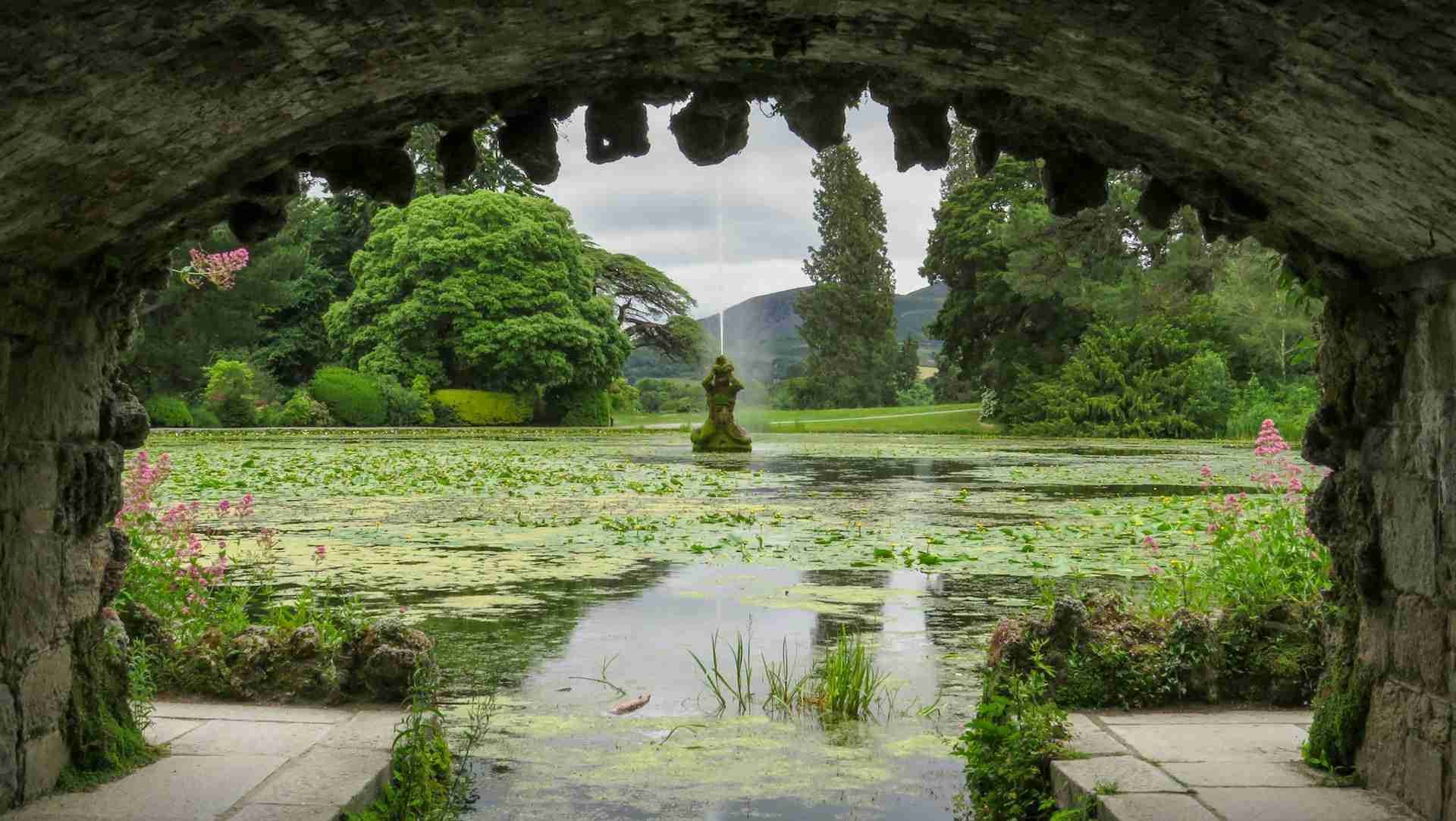
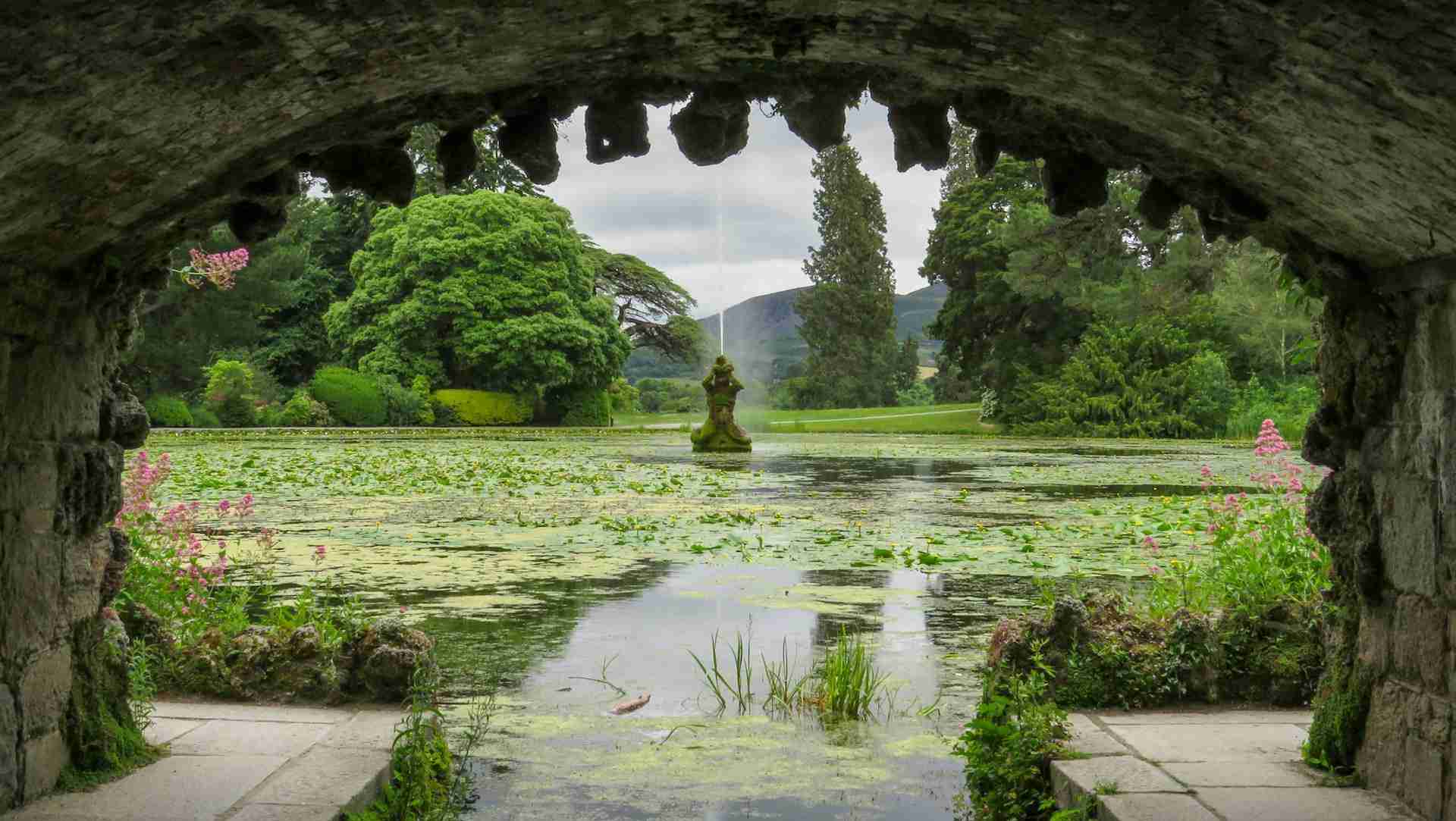
Set at the foot of the Great Sugar Loaf mountain in County Wicklow, Powerscourt House & Gardens offers one of Ireland's most elegant and varied photographic landscapes. The estate's centerpiece is a stately Palladian mansion, which opens onto 47 acres of formal gardens, reflecting pools, classical statues, and distant mountain backdrops. Originally redesigned in the 18th century and refined through successive generations, Powerscourt presents photographers with an exceptional interplay of architecture, symmetry, and seasonal color. From crisp early mornings in the Italian Garden to mist-shrouded forest walks and golden-hour shots over the Triton Lake, the estate unfolds as a series of carefully composed views waiting to be captured.
Best Photography Opportunities
• Terrace views over the Italian Garden and Triton Lake
One of the estate's most iconic perspectives is from the rear terrace of Powerscourt House. From here, the Italian Garden cascades downward in symmetrical tiers toward the reflecting pool of Triton Lake, framed by the Great Sugar Loaf beyond. This composition is strongest in morning light when shadows stretch diagonally across the formal lawns. A wide-angle lens captures the full sweep of terraces, statuary, and water, while a longer lens allows you to compress the garden's vertical layers against the backdrop of Wicklow's hills. Seasonal changes in foliage—from spring tulips to autumn reds—alter the palette while maintaining the same geometric structure.
• Statues and ornamental detail in the Italian and Japanese Gardens
The estate's lower gardens are rich in sculptural and botanical features. The Italian Garden's urns, classical figures, and balustrades offer high-contrast compositions in raking light, especially late in the day when soft golden tones bring texture to the aged stone. The Japanese Garden, hidden in a sunken glen, contrasts formal geometry with dense greenery, moss-covered steps, and curving paths. This area excels in dappled light or overcast conditions, which preserve subtle tonal transitions and allow for delicate rendering of foliage. Use a fast lens for close-ups of statuary or a polarizer to control glare on wet surfaces and leaves.
• Reflections and symmetry at Triton Lake
The large circular basin of Triton Lake reflects the house, trees, and sky in still conditions, particularly in the early morning when wind is minimal. A low position on the near bank helps align the symmetrical framing of the fountain and its reflection, often creating mirror-like compositions. Incorporate foreground reeds or branches to add natural texture and lead the eye toward the central axis. In autumn, this location becomes a canvas of color, with the lake mirroring flame-red trees and the pale stone of the house above. A tripod and a small aperture help maintain sharpness throughout the depth of the scene.
• Woodland walks and seasonal transitions
Beyond the formal gardens lie winding forest paths bordered by giant redwoods, beeches, and flowering rhododendrons. These natural corridors are ideal for capturing shafts of light, misty layers, and the changing atmosphere of the estate. Use backlight in early morning or after rainfall to highlight translucent leaves or water droplets. In spring, bluebells and primroses carpet the paths, while autumn introduces a rich tapestry of golden foliage. A moderate zoom lens (24–70mm) is well suited to these scenes, allowing you to isolate detail or frame vanishing points with equal ease.
• Architectural studies of Powerscourt House exterior and stonework
Although the house's interior is largely adapted for modern use, its exterior remains a textbook example of Palladian design. Photograph the front facade in soft sidelight to capture the play of columns, pediments, and window alignment. The stone lions at the front entrance, as well as urns and fountains scattered throughout the estate, offer additional subjects for classical studies. On cloudy days, switch to black and white to emphasize texture, shadow, and proportion in the masonry. This is especially effective in winter when bare trees and low light strip the scene to its essential forms.
Best Time to Visit
Powerscourt is beautiful year-round, but the best photographic conditions often depend on the desired subject. For soft light and strong reflections, early morning is ideal. The estate opens at 9:30 a.m., giving you access to the terraces and lake when winds are low and light angles are favorable. In spring, fresh greenery, blooming tulips, and flowering cherry trees animate the formal layouts with soft color. The Japanese Garden is particularly photogenic at this time, with diffuse light filtering through fresh foliage.
Summer offers extended hours, lush gardens, and the full formality of the estate's design at its peak. The lawns are vibrant, the borders are full, and sunrise and sunset extend your shooting window. However, midday light can be harsh; plan sessions in early morning or golden hour for better results.
Autumn, particularly from late September through October, is the most atmospheric time for landscape work. The changing trees around the lake, combined with fog and filtered sunlight through the woods, allow for dramatic and painterly compositions. Autumn also brings fewer visitors, making tripod use easier and reducing foot traffic in key compositions.
Winter has its own charm. Bare branches reveal the estate's bones—architectural lines, garden structures, and long shadows become more prominent. Morning frost or snowfall adds graphic contrast, especially around the terraces and water features. Visit on overcast days to capture subdued, minimalist imagery.
How to Get There
Powerscourt Estate is located near the village of Enniskerry in County Wicklow, roughly 30 minutes by car south of Dublin. From the city, follow the N11 toward Wexford, exiting at junction 7 for Bray South/Enniskerry. The estate is clearly signposted from there, with a winding road leading up to the main car park.
Public transport options include taking the DART to Bray Station, followed by a local bus or taxi to the estate. However, for early access or carrying gear, driving is far more convenient. Ample paid parking is available on-site, just a short walk from the main house and gardens.
Admission is ticketed and includes access to the formal gardens. Drones are not permitted, and tripods may be restricted indoors or during busy periods, so it's best to arrive early. The estate also features cafés, restrooms, and a well-stocked garden shop, all of which are useful amenities for longer shoots or midday breaks.
Recommended Photography Gear
Powerscourt's variety of subjects—from wide garden vistas to intricate stonework—requires a versatile kit. A wide-angle zoom (16–35mm or equivalent) is essential for terrace views and architectural shots of the house. A mid-range zoom (24–70mm) is perfect for garden scenes, woodland paths, and reflections at the lake. For detail work or distant compression, a telephoto lens (70–200mm) provides the reach and control necessary to isolate specific subjects against backgrounds.
A sturdy tripod is recommended for early morning and blue hour exposures, particularly when working with water reflections or tight apertures. A circular polarizer enhances foliage color, reduces glare on wet leaves, and improves contrast in reflections. A neutral density filter (3–6 stop) is useful for smoothing water movement in the fountains or for longer exposures at the lake.
Because garden photography often involves low angles or awkward terrain, a weather-sealed backpack and lightweight travel tripod are advisable. Include lens cloths, spare batteries, and a rain cover, as Irish weather can shift rapidly. A compact LED panel may be helpful for subtle fill light on statuary or close-up textures in shadowed areas.
Nearby Photography Locations
• Great Sugar Loaf Mountain
Visible from Powerscourt's lake and gardens, this conical peak offers panoramic views over Wicklow and Dublin Bay. A short drive and moderate hike give you elevated vantage points ideal for sunrise or long-lens compositions looking back toward the estate.
• Powerscourt Waterfall
Located a 10-minute drive from the house, this is Ireland's tallest waterfall at 121 meters. Surrounded by forest and rocky slopes, it offers long exposure opportunities, especially in spring when water flow is high and moss is vibrant. Early morning visits avoid crowds and harsh light.
• Enniskerry Village
This nearby village offers Georgian architecture, a quaint central square, and quiet charm. Ideal for documentary-style or detail-focused work, especially in the early morning when shopfronts are bathed in soft directional light.
• Wicklow Mountains National Park
A short drive inland, this rugged landscape of heather moors, peat bogs, and glacial valleys provides wide-open compositions and moody lighting. The nearby Sally Gap and Lough Tay (the "Guinness Lake") offer dramatic vistas in all seasons.
• Killruddery House and Gardens
About 25 minutes northeast, this historic estate near Bray combines formal gardens, a reflective pond, and walled courtyards. It's less visited than Powerscourt and excellent for quiet, architectural landscape photography, particularly in spring and autumn.
Powerscourt is a landscape shaped by design, but deeply responsive to weather, season, and light. It rewards photographers who take their time—studying alignments, waiting for wind to settle on the lake, or returning to the same vista under different skies. With its classical geometry, lush planting, and cinematic mountain backdrop, it stands as one of Ireland's finest estates for visual storytelling through the lens.
Comments
Loading comments…