
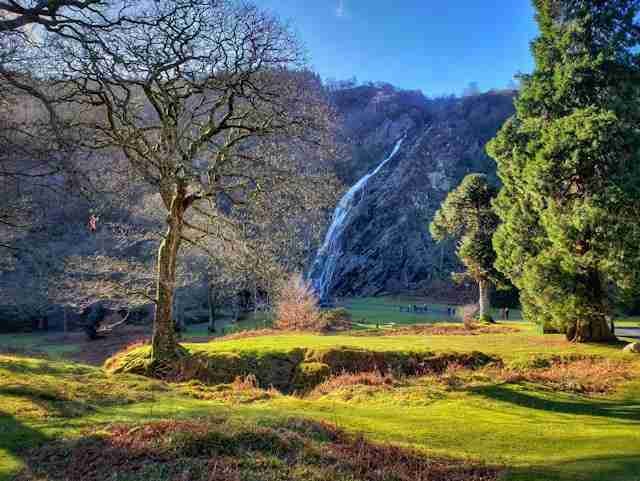
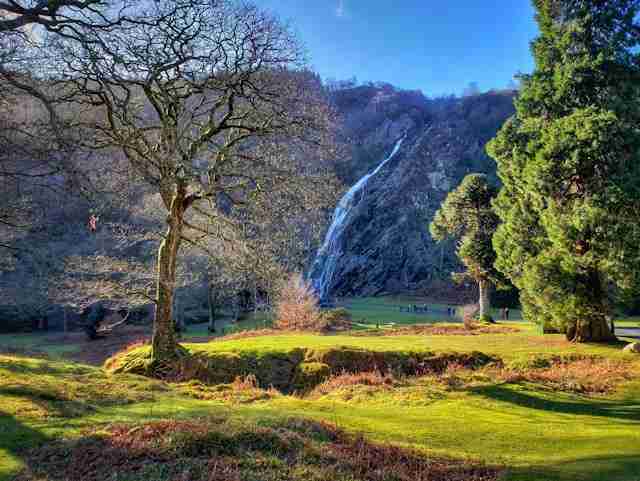
Tumbling 121 meters from a granite cliff into a sheltered forested valley, Powerscourt Waterfall is Ireland's tallest and one of its most photogenic cascades. Nestled within a wooded glen just outside Enniskerry, it's part of the larger Powerscourt Estate but feels like a separate world—defined more by natural drama than formal gardens. The surrounding parkland is rich with beech, oak, pine, and larch trees that shift with the seasons, offering a continually evolving backdrop of texture and light. With its combination of scale, simplicity, and shifting light conditions, the waterfall provides an exceptional canvas for landscape photographers looking to capture movement, contrast, and atmosphere.
Best Photography Opportunities
• Long exposure from the lower viewpoint near the base
From the main footpath, photographers have a clear, unobstructed view of the full height of the waterfall. A long exposure flattens the spray and creates elegant streaks that emphasize the verticality of the fall against the dark rock face. A tripod and neutral density filter are essential for exposures in the 1 to 5 second range. Shoot early in the morning or on overcast days to avoid blown highlights in the white water and to capture subtle detail in the surrounding cliff textures.
• Framed compositions through foreground trees
Moving off the main path slightly, there are opportunities to frame the waterfall through tree trunks or leafy branches. These natural frames add depth and help balance the composition by introducing strong vertical elements that echo the waterfall's descent. A mid-range zoom lens (24–70mm) works well here, allowing you to adjust framing quickly as light moves through the canopy. In spring and autumn, the leaves introduce soft color variation that contrasts beautifully with the stone and water.
• Detail and abstraction from the rock-strewn streambed
Below the main fall, the water breaks into smaller rivulets across a boulder-filled stream. Get close to these sections to photograph swirling motion in eddies or reflections on water-polished stone. A wide lens and low perspective allow you to lead the viewer's eye upstream toward the falls. Alternatively, isolate small details with a short telephoto for a more abstract approach. Early morning or post-rain conditions add mist and flow, enhancing texture and contrast.
• Contextual landscapes from the approach path
Before reaching the falls, there are several vantage points along the parkland trails where you can shoot the waterfall from a distance, partially veiled by trees and framed by rolling hills. These compositions situate the cascade within the larger forest landscape. Use a telephoto lens to compress the perspective and bring the falls visually forward. Fog or morning mist adds a sense of mystery and scale, while golden hour light grazing the tree canopy can create luminous layering.
• Backlit spray and atmospheric light play
During mid to late afternoon, especially on partly cloudy days, sunlight filtering through the canopy can backlight the falling water and create shimmering highlights or rainbow-like flare in the mist. Use spot metering to preserve detail in the waterfall itself, and consider shorter exposures to freeze individual droplets or layered motion. These conditions are fleeting but rewarding, and best captured with a flexible handheld setup to react quickly to changing light.
Best Time to Visit
Powerscourt Waterfall can be photographed year-round, with each season offering distinct moods and challenges. Spring brings new foliage, moss-covered stones, and higher water flow from seasonal rains. In these months, the surrounding trees are fresh and bright, and the stream is active with motion and clarity. Visit early in the day to avoid harsh overhead light and to capture calm, evenly lit conditions.
Summer provides longer days and lush vegetation, though midday light can be strong and contrasty. Plan to shoot early or late, when the light angle softens and the forest takes on a golden hue. Morning hours often offer the best chance for mist or fog lingering in the valley, especially after cooler nights.
Autumn is arguably the most photogenic time to visit. From late September through October, the woods around the falls blaze with orange, red, and yellow foliage. These warm tones contrast beautifully with the dark rocks and silver-white water. Water flow remains consistent through early autumn, and the softer ambient light is ideal for long exposures.
Winter offers starker compositions. Trees are bare, the undergrowth fades back, and the waterfall takes center stage against a muted background. Frost, occasional snow, and low-angle sunlight can add graphic contrast, though trail conditions may be wet or icy. The mood becomes more minimal, ideal for black and white interpretations or contemplative landscape work.
How to Get There
Powerscourt Waterfall is located about 6 kilometers from Powerscourt House and Gardens, in a separate area of the estate. From the village of Enniskerry, follow the clearly marked signs along the R760 and then the Waterfall Road. The drive from Dublin takes approximately 45 minutes via the N11. A private vehicle is the most practical option, as public transport does not serve the waterfall directly.
The site features a dedicated entrance with a ticket booth and on-site parking just a short walk from the falls. The grounds open at 9:30 a.m. and close before dusk, with last entries allowed roughly one hour before closing. Entry is ticketed separately from the main estate.
The path to the waterfall is well maintained and easy to walk, though the area near the base can become slippery or uneven, especially after rainfall. There are picnic areas, restrooms, and grassy lawns near the car park, but facilities are limited deeper into the site. Drones are not permitted without special authorization, and tripods are best used in early hours to avoid blocking visitor paths.
Recommended Photography Gear
The waterfall's dynamic range of compositions calls for a well-rounded landscape setup. A wide-angle zoom (16–35mm) is key for capturing the full height of the falls from close range, especially when working low to the ground. A mid-range zoom (24–70mm) is useful for contextual frames and compositions that incorporate foreground elements like trees or rocks. For detail shots of flowing water, distant views through trees, or compression of background layers, a short telephoto (70–200mm) is ideal.
A solid tripod is essential for long exposure work. Pair it with a remote shutter release or use a 2-second timer to minimize vibration. A 6-stop neutral density filter works well for exposures around 1 to 3 seconds in soft light, while a 10-stop filter may be needed on brighter days. A circular polarizer helps reduce glare on wet rock and foliage, and enhances color saturation after rain.
Bring a microfiber cloth for wiping spray off lenses, particularly when shooting close to the base. A lens hood is helpful in shielding flare during backlit conditions. Waterproof hiking boots and a weather-resistant backpack are recommended, especially in winter or after rainfall when conditions near the streambed can be slippery.
Nearby Photography Locations
Just a short drive from the waterfall, this estate offers classical formal gardens, sweeping terraces, and reflective water features. It's ideal for architectural and structured landscape compositions, especially in the early morning or late afternoon light.
Visible from parts of the Powerscourt Estate, this conical peak provides a short hike and panoramic views over the Wicklow coastline. Early morning light from the east or dramatic weather rolling in from the west adds dynamic conditions for mountain landscape photography.
A charming stop for street and architectural photography, Enniskerry features Georgian facades, a central clock tower, and tree-lined roads. Early morning is best for quiet compositions before shops and cafés open.
• Glencree Valley and Military Cemetery
Just 15 minutes away, this remote glacial valley offers a very different atmosphere. The cemetery, with its tidy rows and mist-shrouded pines, is hauntingly beautiful, especially on overcast days. Forest trails nearby provide moody woodland compositions.
Located in the heart of the Wicklow Mountains, this dark, peaty lake framed by steep cliffs and heather-covered hills is perfect for wide scenic shots. The contrast between bright sky and dark water creates moody, high-impact images. Visit at sunrise for the best light along the eastern cliffs.
Powerscourt Waterfall invites photographers to slow down and work with the rhythm of nature—flowing water, shifting mist, and seasonal transformation. Whether you're capturing the full height of the cascade, isolating ripples through a stand of oaks, or tracing light across mossy stone, the scene is both dramatic and intimate. It's a location that asks for patience, rewards presence, and continues to reveal new moods with each change of weather or season.
Comments
Loading comments…