
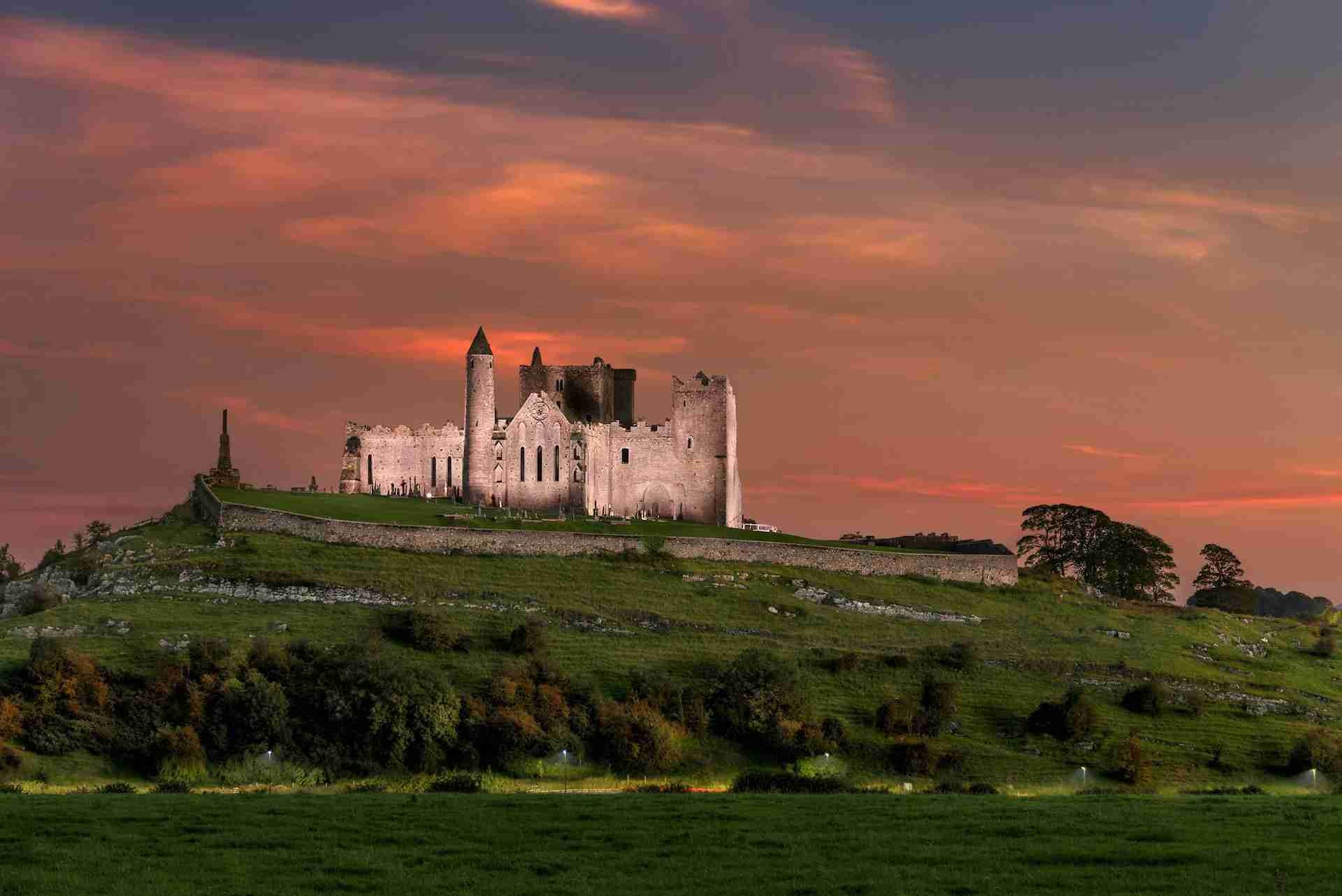
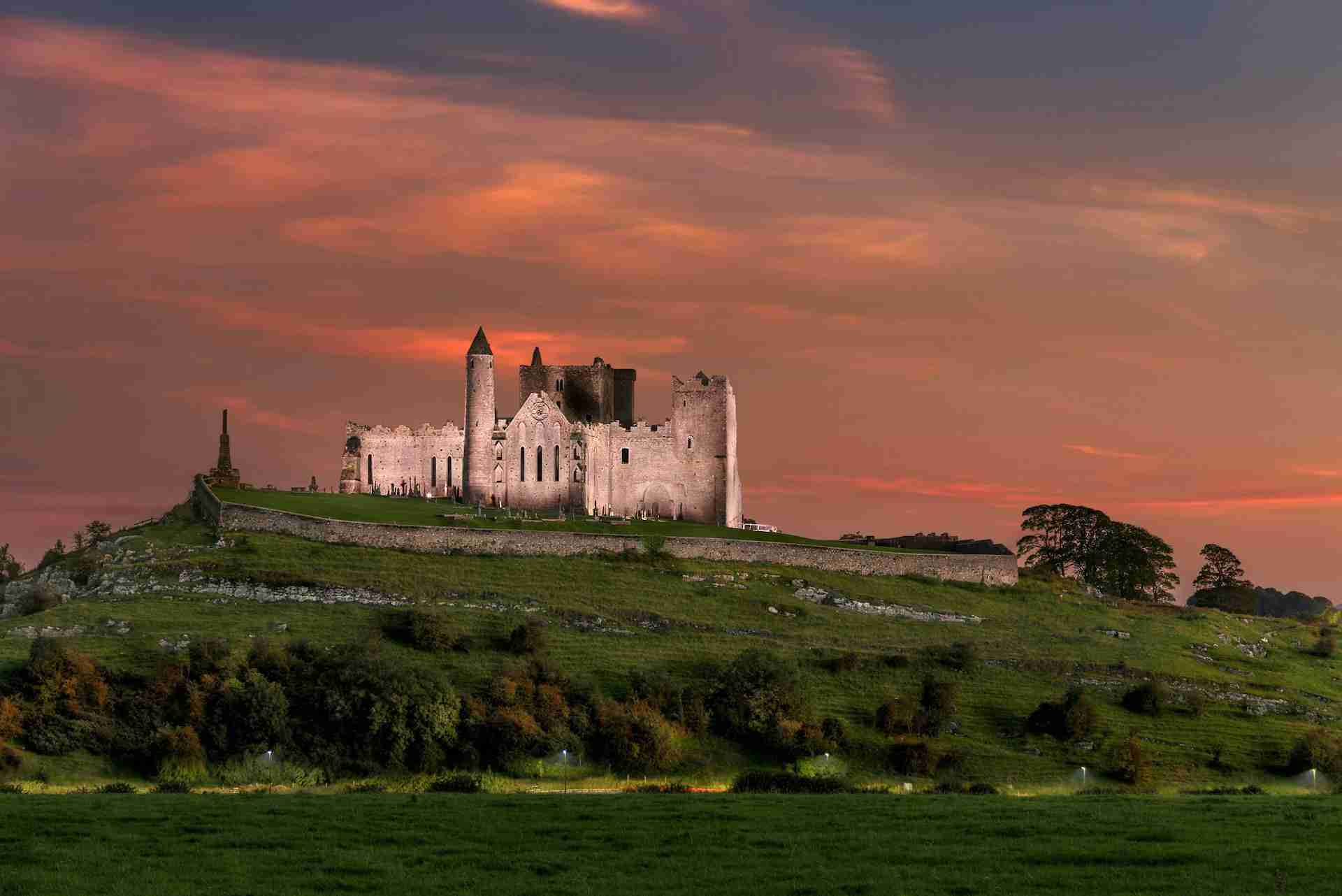
Rising dramatically from the green heart of County Tipperary, the Rock of Cashel commands not just the surrounding landscape, but also the imagination of photographers drawn to Ireland's mythic past. Also known as St. Patrick's Rock, this limestone outcrop crowned with medieval ruins is a masterclass in visual storytelling. From towering Gothic architecture and weathered stone crosses to panoramic vistas over the Golden Vale, the site offers a richly textured narrative of light, shadow, and ancient grandeur. Whether shrouded in mist or illuminated by golden-hour sun, the Rock of Cashel offers a singularly compelling subject for any photographer seeking to capture the essence of Ireland's spiritual and historical heritage.
Best Photography Opportunities
• Cormac's Chapel and Romanesque Details
Cormac's Chapel, dating to the early 12th century, is a jewel of Romanesque architecture and one of the most photogenic components of the Rock of Cashel. The exterior presents sharply carved stone corbels, blind arcading, and twin towers, all of which lend themselves to tightly framed architectural studies. Early morning light strikes the eastern face of the chapel at a low angle, emphasizing the subtle reliefs and worn carvings in golden tones. Inside, the atmospheric dimness challenges even experienced photographers—tripod use is restricted, so handheld shooting with fast primes or stabilized cameras becomes essential. The chapel also holds the remains of medieval frescoes, which are exceedingly rare in Ireland. These provide unique opportunities for capturing the convergence of sacred art and natural stone textures. For detail-oriented photographers, macro lenses can highlight individual motifs, while wide-angle compositions lend themselves to storytelling that captures the intimacy and mystery of this sacred space.
• Cathedral Ruins at Sunrise
The roofless 13th-century cathedral dominates the Rock's silhouette and transforms dramatically as the sun rises. From the eastern edge of the site, photographers can align the structure's pointed arches, broken walls, and narrow lancet windows with the rising sun for powerful, emotive compositions. During spring and autumn, the sunrise aligns nearly directly with the axis of the nave, producing stunning linear compositions with glowing light filtering through the hollow structure. Inside the cathedral, changing light animates the stone surfaces, revealing hidden details in the mortar and centuries-old graffiti. Overcast skies work well for controlling contrast and enhancing shadow detail, while long exposures during morning fog or rain can lend the space an ethereal quality. Bracketing exposures or using HDR techniques can help balance bright skies with dark interiors.
• Round Tower Framing Techniques
Standing over 28 meters tall, the round tower is one of the oldest elements of the complex and acts as both a central subject and a compositional anchor. Its cylindrical form and narrow stone doorway create an ideal vertical subject, especially when framed through arches, crumbling walls, or grave markers. Shooting upward with a wide-angle lens exaggerates its scale and curvature, while shooting from the cathedral's interior allows for dramatic juxtapositions between Gothic and pre-Norman forms. On clear days, fast-moving clouds can create dynamic long exposures with the tower as a still sentinel. During the blue hour, its silhouette stands stark against the deepening sky, offering minimalist yet powerful compositions.
• Graveyard with Celtic Crosses
The graveyard enveloping the cathedral is among the most atmospheric sections of the site. Dozens of lichen-covered Celtic crosses—some upright, others leaning with time—tell visual stories of heritage, faith, and decay. Golden-hour light skimming across the grass highlights the carvings in relief, while a light mist adds mystery and depth, softening the transition between grave markers and distant countryside. Selective focus techniques such as tilt-shift or shallow depth-of-field isolate crosses against dreamy backdrops. Wide compositions can incorporate distant mountain ridges and rolling fields to place the crosses within their geographical context, while monochrome conversions emphasize texture and mood.
• Panoramic Views Over the Golden Vale
The Rock's elevated position provides an unmatched platform for photographing the surrounding countryside, especially the Golden Vale—an expanse of fertile farmland, hedgerows, and rolling hills. Telephoto compression works beautifully here to flatten and layer the landscape into a painterly tapestry of green, gold, and shadow. During spring, young crops and flowering hedgerows fill the frame with vibrant color, while in autumn, the patchwork fields burn amber under soft skies. For panoramic stitches, sunrise and sunset offer the best color contrast between land and sky. A drone can be invaluable for capturing the scale of the site within its natural surroundings, though restrictions require advanced planning and permission.
Best Time to Visit
The Rock of Cashel offers an ever-shifting palette for photographers, and the best time to visit depends largely on the mood, lighting, and crowd conditions you prefer to capture. Spring, from March to May, is one of the most visually rewarding seasons. The surrounding landscape comes alive with saturated greens, blooming hedgerows, and clear skies that enhance visibility across the Golden Vale. This is also when morning mist is most frequent, wrapping the ruins in an ethereal veil and creating opportunities for atmospheric compositions. The early sun during this period casts long, raking shadows, which articulate texture on the stonework with subtle contrast.
Summer brings extended golden hours, especially in June and July, when the site remains lit well into the evening. The cathedral and chapel benefit from warm, directional light late in the day, making twilight one of the best windows for architectural and landscape shots. However, this is also peak tourist season. To avoid obstructed compositions, plan your visit around the opening or closing hours, and scout from outside the gates or nearby roads for unobstructed wide shots of the site at dawn.
Autumn, from September to early November, is exceptional for mood-driven photography. The light turns warmer and softer, foliage shifts to rich ambers and ochres, and the likelihood of fog increases. Rain becomes more frequent, but so do the opportunities for dynamic skies, stormy contrasts, and puddle reflections. This season favors photographers who embrace changing conditions and who are prepared to shoot in inclement weather for dramatic effect.
Winter, though quieter and colder, can be surprisingly fruitful. The low angle of the sun throughout the day offers golden-hour quality light from mid-morning to late afternoon. Snow is rare but transforms the scene when it occurs, creating stark visual contrasts and minimalistic compositions. The site is also significantly less crowded during these months, granting more time and freedom to experiment with slow compositions and multiple exposures without interruption.
Lighting conditions change rapidly in Ireland, and cloud cover often produces diffused, even lighting that softens shadows and enhances detail in the stonework. Photographers should monitor the weather closely and be prepared to adapt. A flexible schedule and an eye for changing skies are essential to fully take advantage of the site's expressive potential throughout the year.
How to Get There
The Rock of Cashel sits just off the M8 motorway and is easily reached by car from Dublin (approximately 2 hours) or Cork (1.5 hours). From the town center of Cashel, it's a 10-minute uphill walk along steep, cobbled paths—photographers carrying heavy gear may prefer to park in the designated lot on Ladyswell Street, just below the site. Early morning arrivals will avoid tour buses and allow for uninterrupted tripod use.
Access to the Rock of Cashel requires an entrance fee, which includes entry to the cathedral, Cormac's Chapel (when open), and the surrounding grounds. While prices vary over time, it's advisable to check current rates and availability in advance. Entry is managed through the visitor center located at the base of the complex. Note that Cormac's Chapel may operate on a timed-entry or guided-only basis, which can affect flexibility for interior photography, especially during busy periods or restoration work.
Be aware that while photography is allowed throughout most of the grounds, drone use is restricted without prior permission due to heritage protections. The nearest bus stop is in Cashel town center, served by Bus Éireann routes from major cities. No hiking is required, but sturdy shoes are recommended due to uneven ground and slippery stone in wet weather.
Recommended Photography Gear
Photographing the Rock of Cashel requires a thoughtful gear setup to accommodate the varied lighting conditions, compositional challenges, and access limitations of the site. A full-frame camera body with good dynamic range is highly beneficial, especially when dealing with high-contrast scenes involving bright skies and deep stone shadows. If you shoot mirrorless, take advantage of live exposure previews and focus peaking for precision in low light areas such as Cormac's Chapel.
For lenses, a wide-angle zoom (such as a 16–35mm or 14–24mm) is indispensable for capturing the dramatic interiors of the cathedral and for composing the site's broader architectural environment. Wide focal lengths also help exaggerate the scale of towering elements like the round tower when shot from below. A fast prime lens (35mm or 50mm f/1.4) is invaluable for interior low-light conditions, where tripods may not be allowed and ISO needs to be kept in check for detail retention.
A medium telephoto lens (70–200mm) serves dual purposes: it compresses the rolling landscape for layered countryside shots and isolates architectural features like carved stonework, crosses, and towers. For landscape-focused work, a 24–105mm walkaround zoom can provide a convenient range without constant lens changes, particularly helpful when navigating uneven terrain or dealing with rain.
A sturdy travel tripod is critical for shooting during low light, long exposures, and HDR sequences. Choose one with spiked feet for traction on grass and a ball head for quick adjustment. Filters are especially useful here—graduated neutral density filters help balance the sky against darker ruins, while circular polarizers deepen sky contrast and manage reflections on wet stone.
A weather-sealed camera bag is strongly advised, ideally one with top access for quick gear changes between rain squalls. Rain covers for both camera and lens are essential during the unpredictable Irish weather, as are microfiber cloths for constant lens wiping. An L-bracket enables quick vertical orientation when shooting tall elements like the round tower, and extra batteries are a must in colder months when power drains faster. Finally, consider bringing a lightweight remote shutter release for capturing bracketed exposures or long nighttime compositions if you're shooting from outside the grounds before opening hours.
Nearby Photography Locations
Just a 10-minute walk west of the Rock, Hore Abbey is a lesser-known monastic ruin set amid tranquil pastureland. Photographers can frame the abbey with the Rock of Cashel rising in the background, creating a compelling juxtaposition between two medieval sites. The surrounding fields often feature grazing sheep, adding bucolic context to the ruins.
Located 20 minutes south by car, Cahir Castle is one of Ireland's largest and best-preserved castles, with a commanding riverside presence. Its intact keep, battlements, and reflective water provide varied compositions under different lighting conditions. Early morning offers mirror-like stillness on the River Suir, while interior courtyard shots reveal dramatic stonework under soft shadows.
Visible from Cashel on clear days, Slievenamon rises to the southeast and provides an expansive viewpoint over County Tipperary. A moderate hike rewards photographers with panoramic landscapes and shifting cloud patterns ideal for timelapse or high-contrast black-and-white work. The mountain is steeped in folklore, adding narrative depth to any photographic essay.
A romantic 19th-century folly nestled in woodland just outside Cahir, this cottage offers a contrasting aesthetic to medieval ruins. Its thatched roof and ornate woodwork are surrounded by flowering gardens in spring and summer, making it a charming spot for architectural and detail-oriented photography. Early morning visits often yield misty, fairytale-like atmospheres.
Photographing the Rock of Cashel is more than capturing ancient stones—it's about visually interpreting a place where history, faith, and landscape collide in dramatic harmony. With ever-changing Irish light and centuries of craftsmanship carved into every stone, this iconic site invites not just documentation, but artistic exploration. For photographers seeking to balance storytelling with compositional challenge, the Rock of Cashel is an essential pilgrimage.
Comments
Loading comments…