
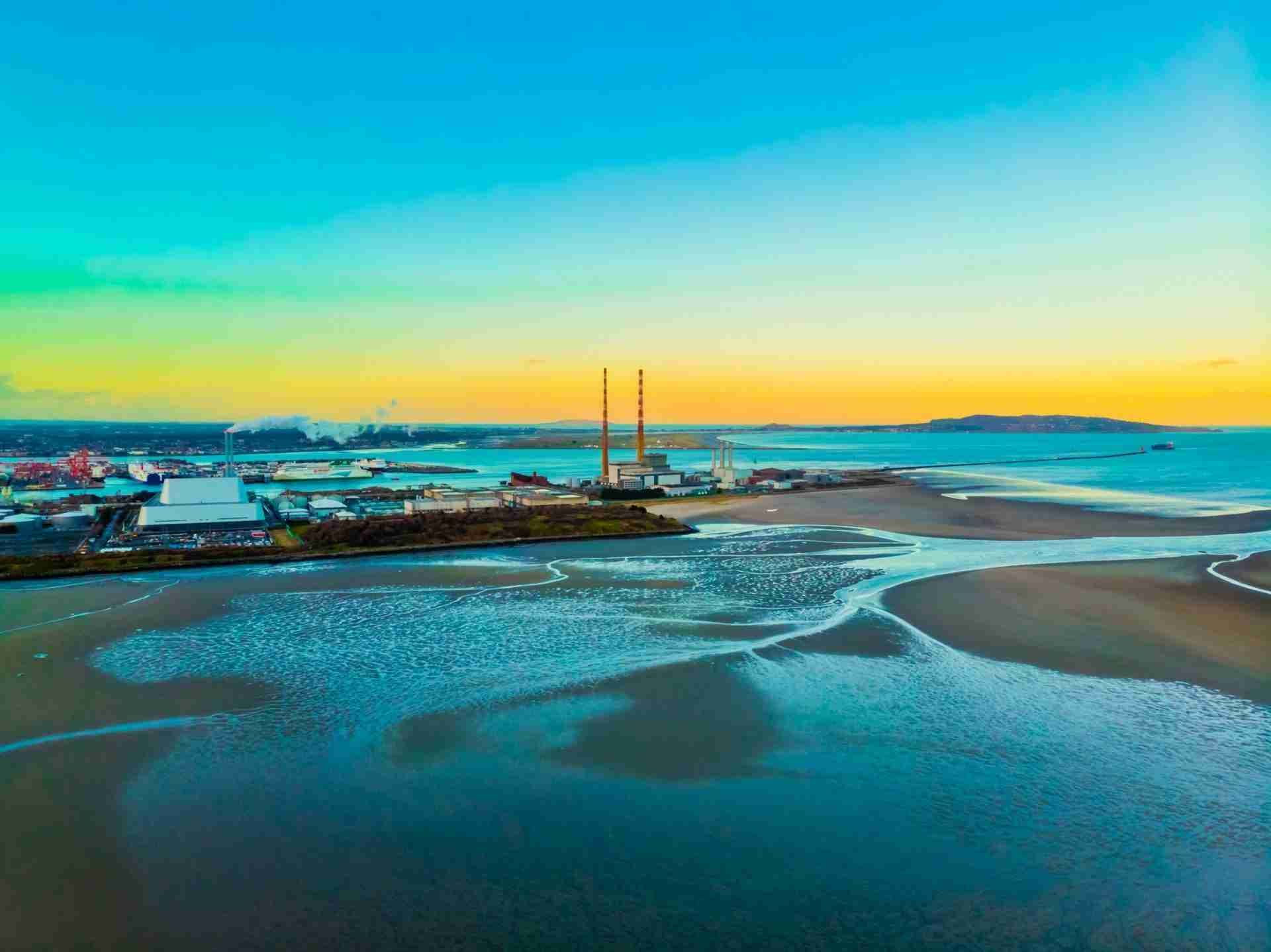
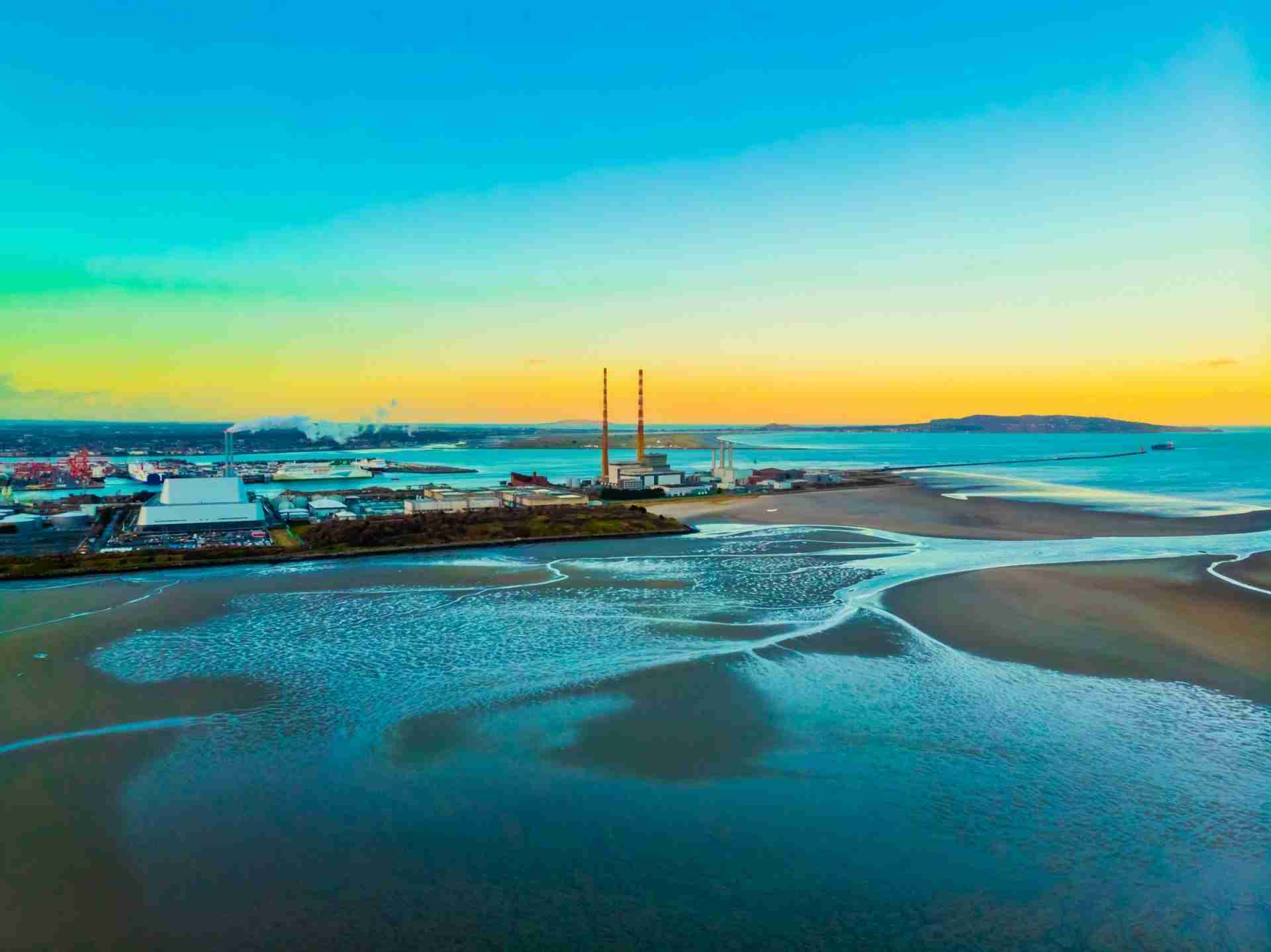
Sandymount Beach sits along Dublin Bay just a few kilometers southeast of the city center, offering a wide, flat stretch of sand that shifts constantly with the tide. Backed by a quiet residential area and open grassy promenades, the beach faces east toward the Irish Sea, making it one of the city's best locations for sunrise photography. The beach itself is broad and minimal, defined by tidal pools, soft sand ridges, and reflective flats that catch sky color when conditions line up. On clear days, the Poolbeg chimneys and Dublin Port rise to the north, adding vertical elements and a sense of scale to an otherwise horizontal scene. Sandymount is a location that rewards clean framing, patient timing, and a willingness to work with subtle tones rather than dramatic terrain.
Best Photography Opportunities
• Reflections Across Tidal Flats
At low tide, the beach opens up into wide, shallow pools that create natural mirrors for the sky. These reflections are strongest at sunrise or during soft cloud breaks when color and light skim the surface without strong glare. Framing low to the ground helps stretch the reflection across the frame, especially when using a wide angle lens. Early morning is the best time to shoot this scene, both for lighting and for undisturbed sand before foot traffic sets in. The soft curves of the tidal lines can also serve as leading lines toward the horizon, building strong visual flow through an otherwise minimal composition.
• Silhouettes of the Poolbeg Chimneys
To the north, the tall red and white stacks of the Poolbeg chimneys stand as one of Dublin's most recognizable skyline features. From Sandymount Strand, they appear isolated against the sea and sky, offering a strong focal point in longer lens compositions. These silhouettes work well at dawn or dusk, particularly when clouds are backlit or the tide is high enough to bring water into the lower portion of the frame. Including elements like beach grass or walkers in the lower third can add scale and local texture to the image.
• Texture and Detail in Sand Patterns
As the tide retreats, it leaves behind fine ripples and ridges in the sand that catch light and shadow beautifully. These textures are ideal for close up work or as foreground interest in wider landscapes. Shooting at a shallow angle to the surface brings out the low contrast shadow lines, especially in soft light. These patterns change daily with wind, water, and foot traffic, so returning often gives new material to work with even from the same shooting position.
• Soft Color Transitions at Blue Hour
Sandymount is one of the best places near Dublin to work with pre dawn and post sunset color transitions. The openness of the bay allows ambient light to stretch across the scene, and the flat beach surface often picks up reflected tones from the sky. This is the time to shoot long exposures with minimal subjects, focusing on color gradients and simple horizon lines. Because the beach is wide and open, it's easy to reposition as the light shifts, allowing you to adapt quickly if the best color moves north or south.
• Storm Fronts and Weather Changes
Being on the edge of Dublin Bay, Sandymount offers a front row view to fast moving weather. Low clouds and offshore rain systems often approach from the east or southeast and can add structure to the sky within minutes. These systems are excellent for adding drama to otherwise clean compositions, especially when the light breaks through the edge of a storm. Shooting slightly into or across the wind can help capture movement in the clouds without introducing too much flare or softness. These conditions often pair well with longer exposures and wider frames to emphasize the open space.
Best Time to Visit
Sandymount Beach is most photogenic in the early morning, particularly during low tide around sunrise. From April through September, the rising sun aligns with the open bay, creating soft directional light that spreads across the beach and lights up the tidal pools and texture. Winter sunrises are later and often come with low, fast moving clouds, offering more moody scenes with deeper shadows. High tide reduces the walkable area of the beach but can simplify the composition by removing clutter from the sand. Wind is frequent throughout the year, but early mornings tend to be calmer and more consistent for reflection work. Even on overcast days, the softness of the light and open sky make this a worthwhile location to shoot. Fog and sea mist are common in spring and autumn and can help separate the beach from the city skyline for clean, quiet frames.
How to Get There
Sandymount Beach is located just southeast of Dublin city center and is easy to reach by public transit or car. From the city, take the DART to Sandymount Station and walk east through the village toward the Strand Road, which runs along the beach. There are multiple public access points along the promenade and informal parking areas for those arriving by car. The beach is fully open to the public year round and requires no permits or entry fees. Paths along the grass provide easy access for tripods and gear, though the sand itself can be soft and uneven at low tide. The area is safe, well used by locals, and easy to navigate even in low light. Basic amenities, shops, and cafes are available in Sandymount village, just a short walk from the beach.
Recommended Photography Gear
A wide angle lens is essential for capturing the full scale of the beach, tidal flats, and sky, especially when working with reflections or foreground patterns. A telephoto is useful for compressing scenes toward Poolbeg or isolating texture on the sand. A tripod is recommended for long exposures at dawn or in low light, and also helps with precise framing when working close to the ground. A circular polarizer can help manage reflections and deepen color in the sky or water, though it should be used carefully to avoid uneven gradients across wide skies. Waterproof footwear is useful when working around tidal pools or walking across soft sand. A microfiber cloth is helpful for keeping gear dry on misty mornings. Because the light changes quickly near sunrise, packing light and keeping your setup simple allows you to move and adapt as conditions shift.
Nearby Photography Locations
Located just across the bay, Poolbeg Lighthouse sits at the end of the Great South Wall and is a popular subject for long exposure and minimal compositions. The long walk along the wall provides numerous shooting angles, and the structure itself pops well in red against most sky conditions.
Just north of Sandymount, this area includes grassy dunes, tidal marsh, and elevated paths with clean views over the bay. It offers a quieter, more natural contrast to the open beach and is strong in soft morning light.
A short drive or train ride south, Dún Laoghaire offers structured compositions using the harbor wall, boats, and lighthouses. Sunset light often reflects off the water, and the curve of the pier helps frame clean leading lines.
• Howth Head and Baily Lighthouse
On the opposite side of Dublin Bay, Howth provides elevated views back toward the city, especially from the cliff path around Baily Lighthouse. Sunrise from this side of the bay creates backlight across the water and cityscape.
Closer to the city center, Grand Canal Dock offers a more urban setting with strong reflections, modern architecture, and evening light that lingers after sunset. It's an easy add-on to a morning session at Sandymount or a return visit in the evening.
Sandymount Beach is a quiet but highly adaptable location for photographers working around Dublin. Its tidal shifts, soft light, and open views make it a dependable spot for clean coastal images with strong compositional control. Whether you're aiming to capture the skyline, abstract textures, or soft reflections, the beach holds its shape well under a variety of conditions and supports both quick sessions and deeper explorations of light and space.
Comments
Loading comments…