
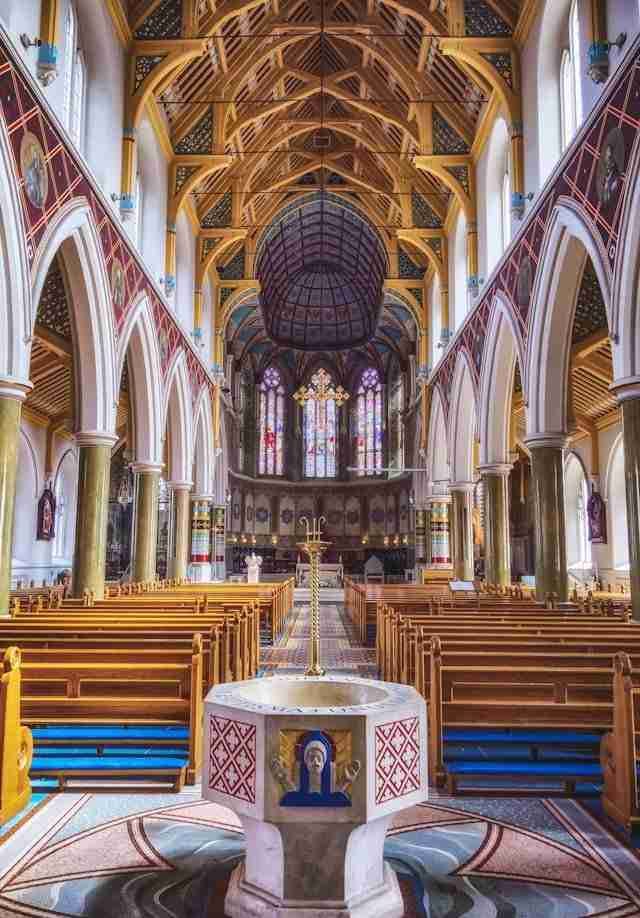
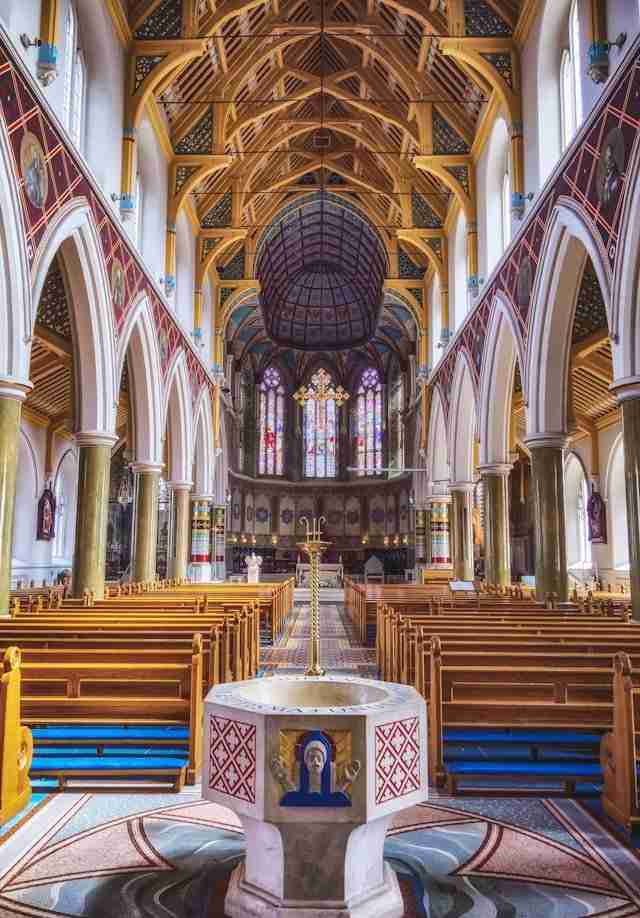
Rising from the heart of Belfast's vibrant Falls Road district, St. Peter's Cathedral stands as a commanding symbol of spiritual resilience and Gothic Revival architecture in Northern Ireland's capital. Constructed in the late 19th century and still serving as the mother church of the Diocese of Down and Connor, this sandstone structure features a soaring nave, intricate stained glass, twin spires, and richly ornamented interiors that draw photographers interested in sacred geometry, architectural detail, and quiet urban drama. Whether you're drawn to religious symbolism, grand interior spaces, or the interplay of light and stone, St. Peter's Cathedral offers a deeply atmospheric setting where history and devotion resonate through every frame.
Unlike many of the more tourist-centric ecclesiastical buildings in the UK, St. Peter's remains a living parish church, woven into the everyday rhythm of West Belfast. That blend of cultural presence, local energy, and traditional craftsmanship makes it especially compelling for documentary, fine art, or architectural photographers looking to go beyond the postcard perspective.
Best Photography Opportunities
• Gothic Facade and Twin Spires
The cathedral's western facade, complete with lancet windows, carved portals, and twin spires added in 1886, offers a textbook study in Gothic Revival symmetry. Frontal compositions taken from across the street allow for centered vertical alignment, while oblique angles—especially in the golden hours—cast long shadows and emphasize the depth of the stonework. Use a wide-angle lens (24–35mm) to capture the full structure from street level, and return during different times of day to see how the building's red sandstone responds to changing light conditions.
• Interior Nave and Sanctuary
The interior of St. Peter's is breathtaking in its balance of scale and detail. The ribbed vaulting, pointed arches, and decorative columns lead the eye directly toward the sanctuary, where the altar and baldacchino are bathed in filtered light from clerestory windows. Use a tripod and slow shutter speeds to capture the ambient light and reveal the subtle transitions between shadow and illumination across the stone and wood surfaces. Symmetrical compositions from the central aisle are a natural choice, but side-aisle perspectives also offer layered depth and light falloff.
• Stained Glass Windows
The cathedral features a series of richly colored stained glass windows that tell biblical and hagiographic stories in intricate detail. Best photographed during late morning or mid-afternoon when sunlight penetrates directly, these windows glow from within and cast vibrant reflections on the pews and floors. Isolate them with a medium zoom (70–100mm) or incorporate their cast light into wider shots of the interior for a more atmospheric effect. Look for moments when the stained light aligns with architectural curves or touches statues and altars.
• Ornamental Details and Sacred Objects
From carved wooden confessionals to intricate brass candlesticks, the cathedral is filled with quiet details that reward slow observation. A fast prime lens (50mm f/1.8 or similar) is perfect for isolating these elements with shallow depth of field, especially when working in lower light conditions. Statues of saints, Stations of the Cross, and devotional candles all offer emotional weight and compositional opportunity—ideal for documentary-style photography or narrative sequences.
• Exterior Context and Street-Level Energy
Located within the culturally rich and politically resonant Falls Road area, St. Peter's Cathedral can also be photographed in context with the surrounding neighborhood. Murals, residential buildings, and nearby street life provide a strong contrast to the church's grandeur and timelessness. Early morning and twilight offer soft directional light and quieter streets, while busier daytime hours can be used to incorporate human presence for scale or story.
Best Time to Visit
St. Peter's Cathedral is best photographed in the early morning and late afternoon, when light strikes the building at an angle and brings out the warmth and texture of the sandstone. The west-facing entrance glows in the late-day sun, while morning visits offer better conditions for photographing the eastern end of the building and its side chapels.
Inside the cathedral, ambient light varies throughout the day, but mid-morning and mid-afternoon provide the best illumination through the stained glass without overwhelming brightness. Overcast days are particularly well-suited for interior work, allowing for soft, even light across stone surfaces and reducing harsh contrasts.
If you're photographing the cathedral during a Mass or event, be respectful and avoid intrusive equipment—tripods and flash should be avoided at these times. Weekday mornings tend to be quietest and allow for more freedom of movement inside the nave and side aisles.
How to Get There
St. Peter's Cathedral is located at 35 St Peter's Square, just off the Falls Road in West Belfast. From the city center, it's a 20-minute walk or a 10-minute taxi or bus ride. Bus routes 10 and 11 regularly service the Falls Road corridor—get off at Dunville Park or St. Peter's and walk a short distance west.
If you're driving, limited street parking is available nearby, though spaces may be tight during school and church hours. There are public car parks in the city center if you prefer to walk. For visitors arriving by train, Great Victoria Street Station is about a 15-minute walk away.
Entry is free, though donations are encouraged. Photography is generally welcomed during quiet hours, but commercial shoots or the use of tripods may require prior permission from the parish office. It's recommended to call ahead or check the cathedral's website if you're planning a dedicated session.
Recommended Gear and Shooting Tips
A wide-angle lens (16–35mm) is essential for capturing the full sweep of the nave, ceiling vaults, and facade. For more intimate interior details, a 24–70mm or 50mm prime offers excellent balance between reach and light-gathering ability. A lightweight tripod is recommended for low-light interior work—especially early or late in the day—though handheld shooting at higher ISOs is also effective with modern sensors.
Shoot with a low ISO and longer exposures to maintain detail in shadow areas and avoid noise in the dimmer corners of the interior. Use live view and focus manually for stained glass and detailed stonework, especially when working in low contrast. Bracketing exposures for HDR blending can help retain highlight detail in windows while preserving interior shadows.
Silence is part of the space—use a silent shutter mode if possible, and dress and behave respectfully. Avoid wide-open apertures unless working with extreme depth-of-field effects; f/8–f/11 will typically give better sharpness and detail across the frame when photographing architecture.
Nearby Photography Locations
A short walk from St. Peter's, this impressive red-brick church is known for its Romanesque facade and peaceful cloisters. Its interior is equally photogenic, with warm stone, golden mosaics, and dramatic archways.
Just outside the cathedral, the Falls Road is home to some of the most iconic political murals in Northern Ireland. These vibrant works of street art are rich in color, context, and narrative—ideal for photo essays and documentary work.
A 15-minute drive or short hike from the city brings you to elevated viewpoints overlooking Belfast. Sunset and blue hour offer sweeping vistas with the cathedral and city lights glowing below.
Located in the heart of the city, this Edwardian Baroque landmark provides a stately contrast to the Gothic cathedral. The grounds and interior (when open) are perfect for architectural and civic-themed photography.
These famous dividing lines between Catholic and Protestant communities are within walking distance and offer deeply textured documentary subjects. Juxtapose sacred architecture like St. Peter's with these politically charged visual environments for impactful storytelling.
St. Peter's Cathedral is a location that rewards both technical precision and emotional sensitivity. Whether you're chasing the glow of late sunlight on stone or framing devotional quiet in the filtered light of the nave, this space invites a photographic approach rooted in reverence, patience, and perspective.
Comments
Loading comments…