
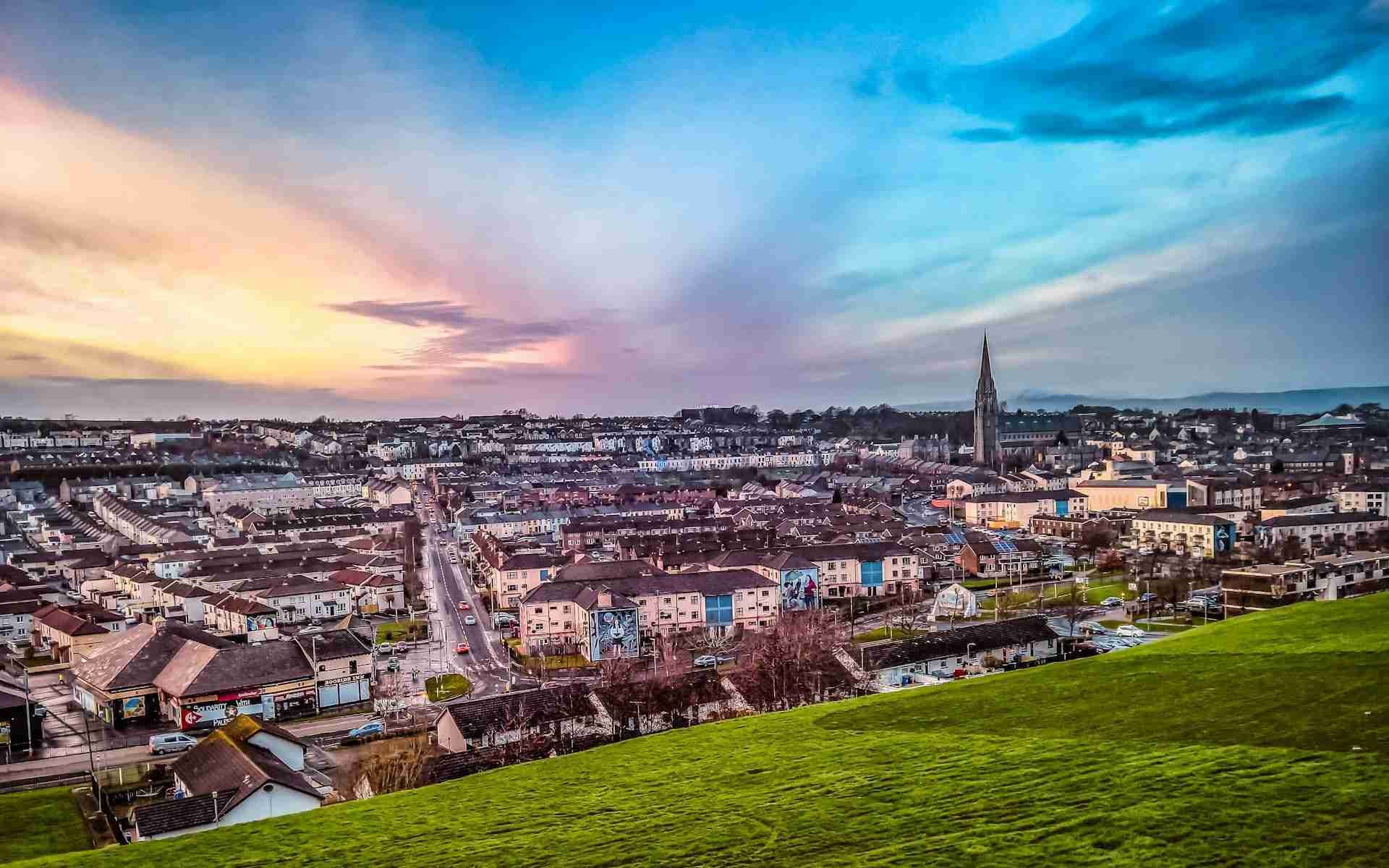
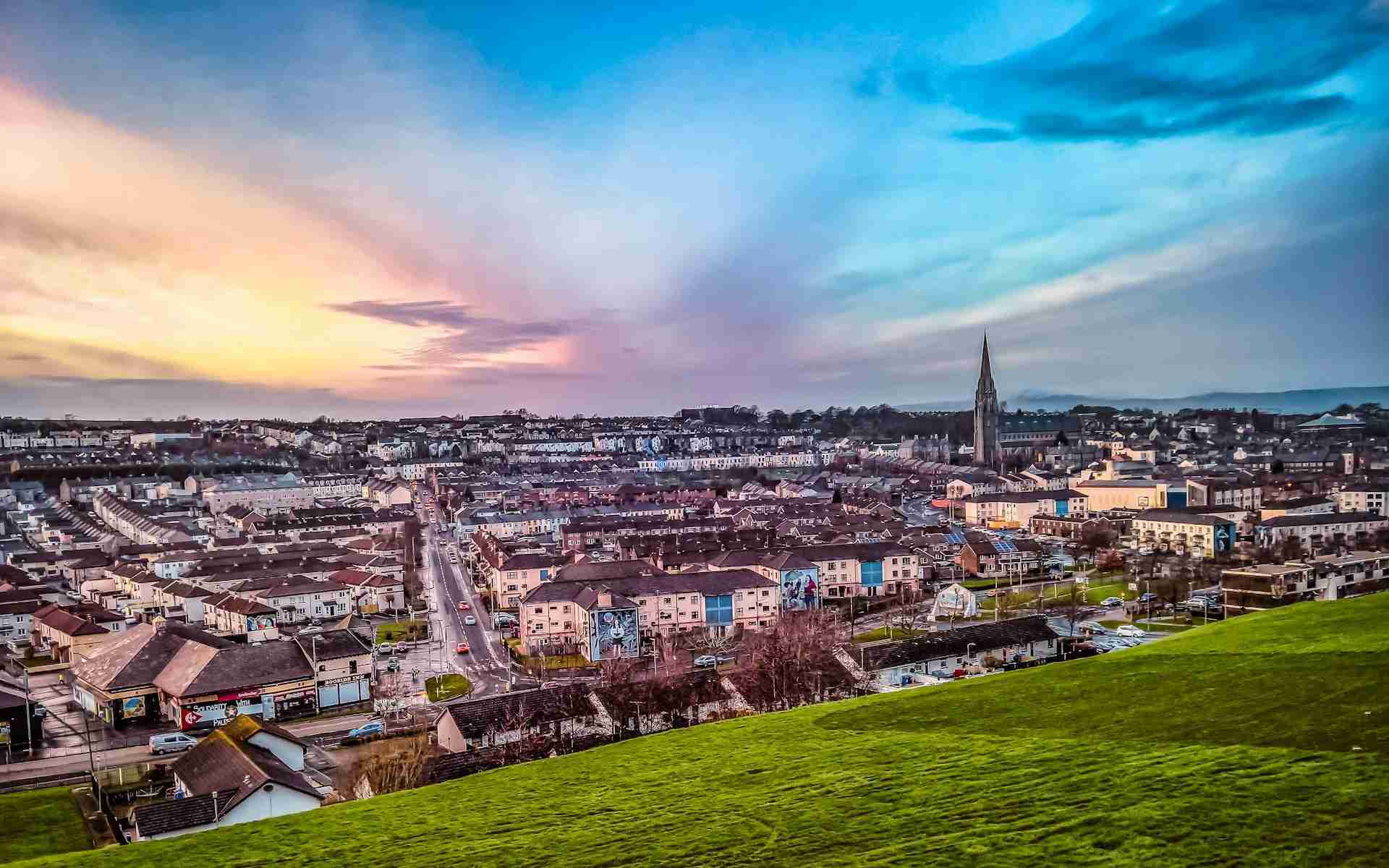
The Derry Walls are a remarkably complete set of defensive ramparts surrounding the historic city of Derry in Northern Ireland. Built in the early 17th century by English and Scottish settlers, these thick stone walls encircle the old town in an almost perfect rectangle, offering a continuous elevated pathway with views into narrow streets, across churchyards, and out toward the River Foyle. Because the walls are fully walkable and well preserved, photographers can explore them on foot, using the changing light and viewpoints along the perimeter to frame both architectural detail and broader city scenes. From bastions and cannon ports to distant spires and riverside vistas, the walls give you access to a range of visual stories about urban form, human scale, and the passage of time. Whether you focus on texture, context, or vista, this site rewards careful observation and patient pacing with your camera.
Best Photography Opportunities
• Circular Walk and Elevated Vistas
The circuit of the Derry Walls offers a unique opportunity for panoramic and cityscape photography without needing to climb a mountain or lookout tower. As you follow the continuous path, you can position the city's rooftops, church towers, and distant hills against the rising and setting sun, creating layered compositions that emphasize depth. Early morning light brings long shadows into the streets below and soft highlights to the stone surfaces, while late afternoon and golden hour add warmth that enhances texture and form. Using a wide angle lens lets you include both the walls and expansive context in a single frame, while a telephoto can isolate distant details like steeples or architectural motifs against a soft sky. These elevated vistas work especially well when the skyline contrasts with a dramatic cloudscape or calm river surface.
• Stone Texture and Architectural Detail
Up close, the walls reveal a wealth of texture and craftsmanship in their stonework. The surfaces vary from weathered, moss lined blocks to sharply cut edges at embrasures and walkways, and these details work beautifully when the light skims across them at a low angle. A standard zoom or short telephoto lens helps you isolate sections of stone, doorways, steps, or defensive features without losing context. Overcast days are particularly good for this kind of shooting, as diffused light softens contrast and brings out subtle tonal variation in the masonry. You can also make intimate studies of joints, coping stones, and crenellations that stand in quiet contrast to the grander views from the walk itself.
• Historic Gates and Urban Edges
Several gates punctuate the wall circuit, including Bishop's Gate, Shipquay Gate, and Butcher Gate, each offering a different framing of the streets and market squares they open onto. Photographing through these gateways provides natural frames and visual transitions between old town interiors and the defensive structure. Shooting from just inside or outside a gate with a mid range zoom lets you emphasize perspective and depth of field, while including passersby adds life and scale. The mixture of shadow and illumination around these thresholds often produces engaging light contrasts, especially in the golden hours before sunset.
• Bastions, Cannons, and Historic Defenses
Several bastions along the Derry Walls still feature cannons and defensive placements that offer both historical interest and strong visual subjects. These elements provide a sense of scale and texture that works well in both wide and tight compositions. Shooting at golden hour adds depth to the iron and stone, especially when shadows stretch across the walkways or the cannon barrels catch sidelight. You can photograph these structures in isolation for a clean, graphic frame or include parts of the city skyline in the background to contrast past and present. These locations also offer opportunities to create layered images with leading lines from the stone walls guiding the eye toward focal points like spires, towers, or distant hills.
• People, Movement, and Contextual Storytelling
The walls are a living structure, used daily by locals and visitors alike, and including people in your images helps communicate scale, rhythm, and human presence. Candid shots of walkers, strollers, and families from behind or at a slight angle give context without distracting from the architectural forms. Using a standard zoom allows you to switch quickly between wide environmental portraits and tighter frames of interaction, expression, or gesture. Early morning tends to be quieter, giving you uninterrupted stretches of stone and sky, while evenings bring more movement and casual life that you can incorporate into your frames. Watching how people move through the space adds narrative to images that go beyond static form.
Best Time to Visit
The Derry Walls can be photographed year round, but the quality of light changes significantly with the seasons and time of day. Early morning is excellent for calm, directional light and minimal crowds, which is especially useful if you want unobstructed shots of the walls and vistas. Golden hour in the late afternoon brings warm tones across stone and landscape, making cityscape and riverscape compositions particularly appealing. Blue hour and twilight are also rewarding, especially if you include illuminated streets and architectural details against a cooling sky.
Cloudy or overcast days are effective for texture and detail work on the stone surfaces, as the diffused light reduces harsh shadows and helps maintain detail across surfaces. Autumn adds warmer color to distant hills and trees seen from the walls, while winter often brings crisp air and clearer long distance views. Checking local sunrise and sunset times in advance allows you to plan your visit around the best light for the kinds of shots you want to capture.
How to Get There
The Derry Walls encircle the old city of Derry and are easily accessible on foot from multiple entrances around the city centre. Public transport, including buses, brings you close to Guildhall Square or the city centre, from which it's a short walk to the walls. If arriving by car, there are several car parks near the historic core, but walking remains the best way to explore the walls and their viewpoints without restriction. The circuit is fully open to the public at all times, and there is no admission fee or permit required for photography. The pathway is generally level and paved, though some sections have steps or uneven stone.
Recommended Photography Gear
A wide angle lens is essential for capturing the broad sweep of city and landscape from the elevated wall walk. A standard zoom gives you flexibility for mid range shots of gates, textures, and street scenes. A telephoto lens is useful if you want to isolate distant architectural elements, distant hills, or riverside details. A tripod is helpful for low light situations such as golden hour or twilight, especially if you are working with long exposures or blue hour scenes. A circular polarizer can deepen skies and manage glare on stone surfaces, particularly in strong daylight. Comfortable walking shoes and a lightweight camera bag make it easier to move steadily around the full circuit.
Nearby Photography Locations
• Guildhall and Riverfront
Just inside the walls, the landmark Guildhall offers rich architectural detail, stained glass, and a spacious square that works well for wide compositions, especially near sunrise and sunset.
Linked to the city centre by riverside walkways, the Peace Bridge offers modern architectural contrast and layered views over the Foyle. Blue hour light often enhances its curves and reflections.
This area of the walls connects to atmospheric streets and historic fountains that make great subjects for textured urban photography and environmental detail.
Across the river from the walls, this open public space provides clean lines and modern structures that contrast with the historic core, ideal for evening or abstract compositions.
A short stroll from the walls on the riverside, this leafy park offers shaded paths, water features, and quiet spots for casual landscape or seasonal photography.
The Derry Walls combine architectural strength and layered context with living city life and riverside views. They invite photographers to think in sequences and contrasts, from detailed stone surfaces to broad panoramas, all within a walkable and historically resonant setting.
Comments
Loading comments…