
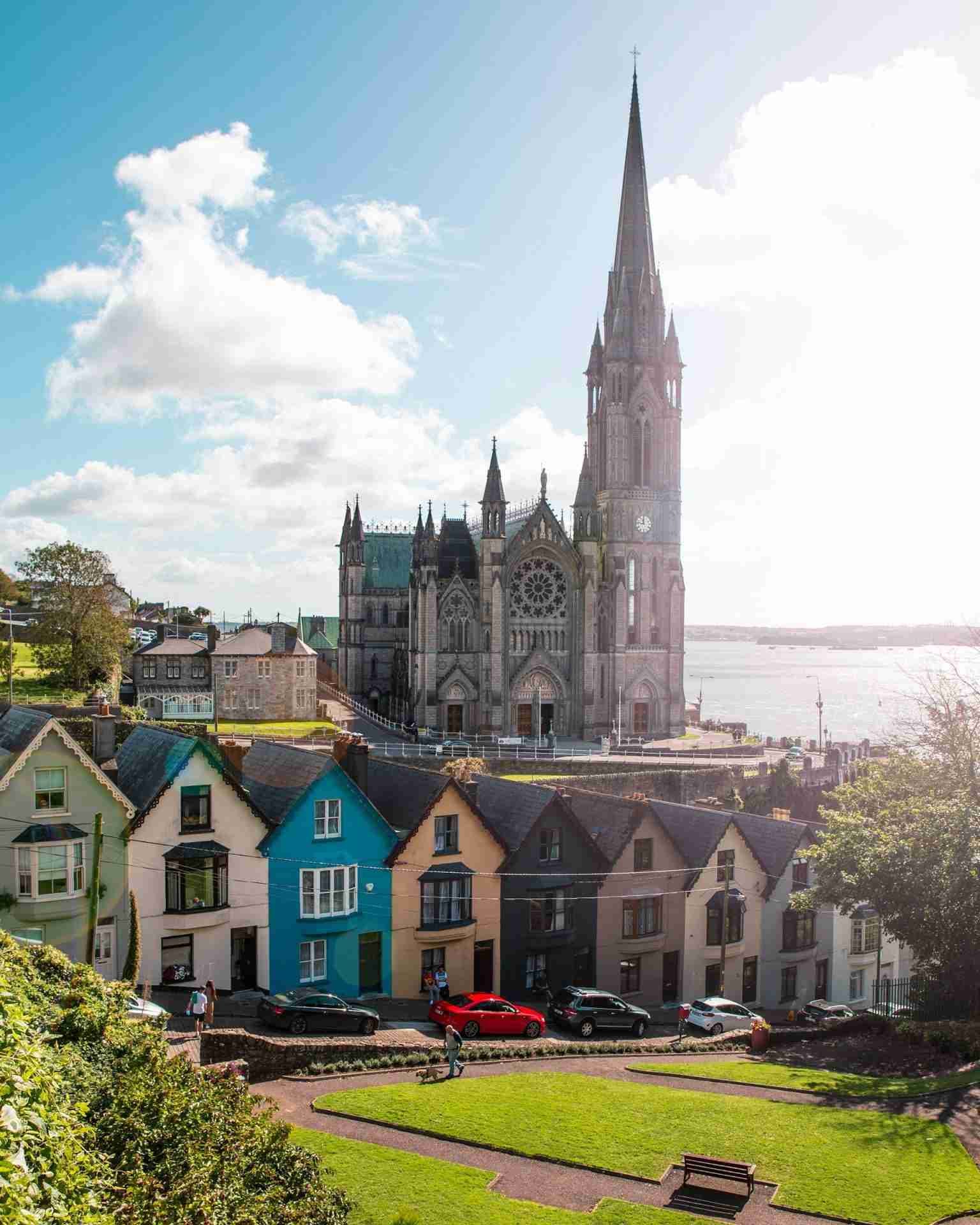
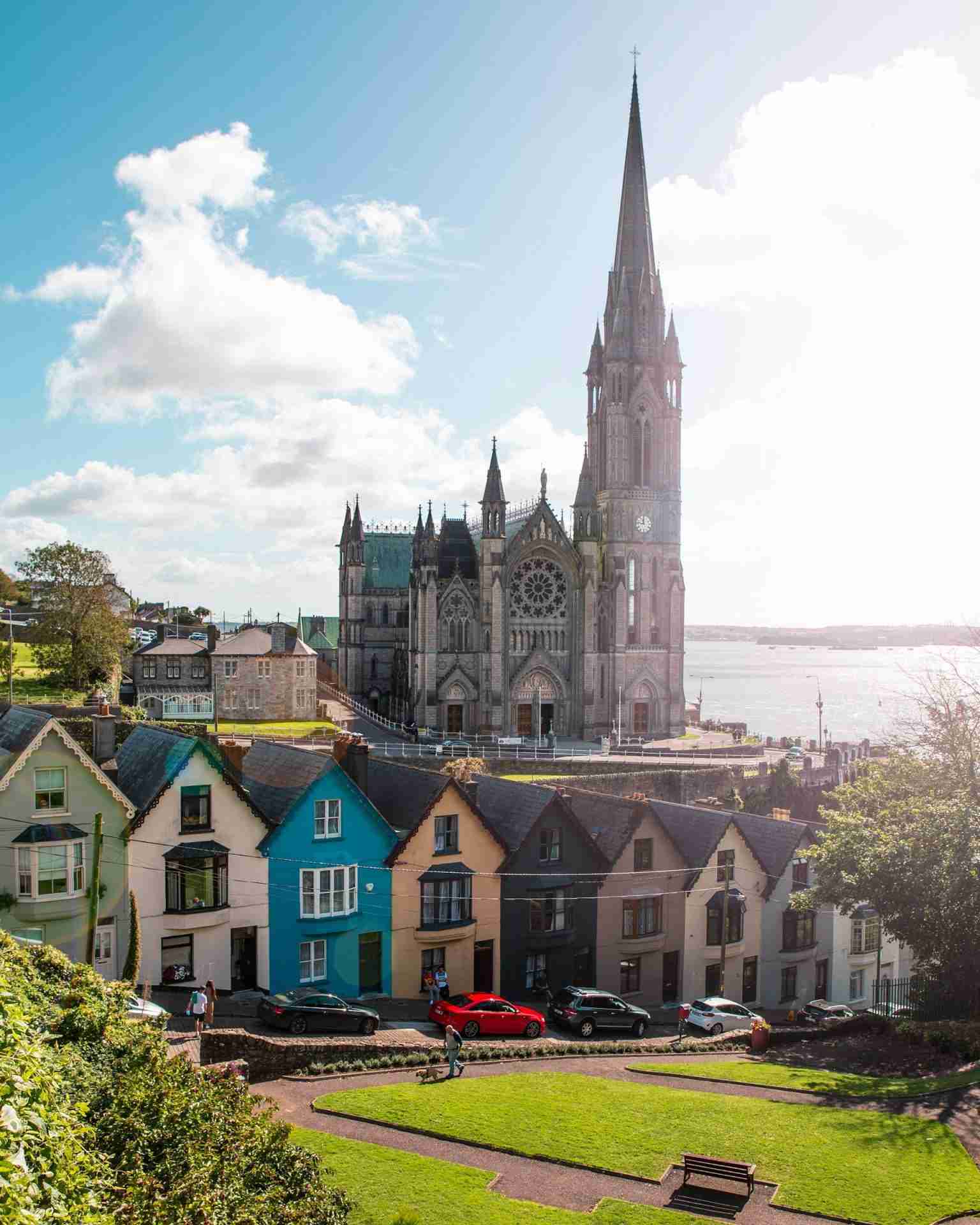
Cobh, a historic port town tucked into the hillsides of Cork Harbour, offers one of Ireland's most vibrant and theatrical compositions for photographers. Nowhere is this more evident than at West View Park, where a row of brightly painted homes known as the "Deck of Cards" tumbles down a steep street in perfect symmetry beneath the towering Gothic spire of St. Colman's Cathedral. This stunning vantage point captures the essence of Cobh's character—lively, colorful, and steeped in history. From the right angle, this layered urban landscape delivers an almost storybook aesthetic that is rare in European town photography. For those seeking a scene where architectural whimsy meets spiritual grandeur, West View Park is the ideal frame.
Best Photography Opportunities
• Deck of Cards Overlook from the Grassy Knoll
: The primary composition at West View Park is best achieved from the small grassy patch that crests the hill. From here, photographers are treated to a naturally elevated perspective that aligns the rows of homes into a colorful staircase ascending toward the stately Gothic spire of St. Colman's Cathedral. A wide-angle lens allows the full rhythm of the houses to be captured, emphasizing their slope and cheerful hues. For best results, position your tripod slightly back from the railing and shoot from a low angle to elongate the foreground slope. This method also softens the transition between the vibrancy of the houses and the more austere tones of the cathedral. During morning light, the sun travels over your shoulder and washes the entire slope in soft warmth, while in the evening, long shadows provide a natural frame around each tier of the street. This scene works equally well in portrait or landscape orientation and benefits from bracketed exposures if the sky is particularly dynamic.
• Telephoto Isolation for Architectural Studies
: Standing from the same vantage point but switching to a 70–200mm or 100–400mm lens, photographers can produce a series of intimate architectural portraits that spotlight the character of individual homes or small groupings. The narrow street alignment and uniform rooflines create natural leading lines that enhance the feeling of depth and structure. These zoomed-in studies can reveal charming details like lace curtains, blooming window boxes, or the aged textures of painted wood and stucco. The compressive effect of a longer focal length brings the houses and cathedral closer together, which creates a more dramatic relationship between the domestic and the divine. Fog, drizzle, or overcast light deepens the colors and reduces harsh shadowing, making this approach particularly powerful on Ireland's moodier days. Use a shallow depth of field (f/4 to f/5.6) to soften backgrounds and guide the viewer's eye.
• Golden Hour Light on Cathedral and Town
: Timing is critical to maximizing the drama of this location, and golden hour provides some of the most cinematic results. In the morning, light from the southeast creeps gently over the harbor and illuminates the facades of the Deck of Cards while casting a warm backlight on the cathedral spire. This directional lighting defines the stair-step arrangement of the homes and brings out the texture in their painted walls. In the late afternoon and early evening, the sun arcs around to the west and backlights the entire scene, silhouetting the spire and causing the rooftops to glow with rim lighting. This is a perfect time for dynamic exposures or for shooting into the sun using flare creatively. During these hours, the soft ambient contrast allows for greater flexibility with ISO and shutter speed, especially for handheld shots. If you're looking to add a human presence to your frame during golden hour, consider a slow shutter to create motion blur as pedestrians move along the street, adding life without detracting from the architectural composition.
• Incorporating Human Scale and Local Life
: West View is a residential street, and the presence of daily life here adds a compelling dimension to any composition. Including figures—whether it's a local resident walking a dog, a child playing on the steps, or a postman delivering letters—provides scale and intimacy to the grandeur of the setting. One particularly photogenic detail is the way shadows fall on the steps and doorways during the afternoon, creating opportunities for split-light portraits or motion-based captures. Consider using a fast prime lens like a 50mm or 85mm for environmental portraits that feel anchored in place. Street photography purists will find ample moments of subtle storytelling here—morning routines, quiet conversations, and seasonal décor like hanging flower baskets or Christmas lights depending on the time of year. These small human touches help convey the lived-in charm of this otherwise cinematic backdrop.
• Drone Photography with Contextual Sweep
: For aerial photography enthusiasts, a drone opens up the entire topography of Cobh and its relationship to the sea. Launching from just above West View Park or slightly downhill (where open space permits), you can capture a sweeping view of the town's colorful houses ribboning upward to the cathedral, framed against the natural curve of Cork Harbour and the broader maritime landscape. This perspective emphasizes how the town is cradled within its coastal setting, giving a sense of harmony between human construction and natural geography. Flying low along the line of rooftops provides dynamic parallax movement ideal for video, while ascending vertically creates a layered top-down view of the terraces. Be aware that this is a residential area, so flying respectfully and within line-of-sight is essential. Light wind conditions during sunrise or sunset offer the best clarity and color contrast, and ND filters can help balance exposure when facing into the sun.
Best Time to Visit
Photographing West View Park rewards those who understand how light transforms both architecture and atmosphere in this part of Ireland. The golden hours—just after sunrise and just before sunset—remain the optimal windows for shooting due to their low-angle light and tonal richness. In the morning, the facades of the Deck of Cards are directly illuminated, their colors glowing gently in a golden sheen. This light continues to move up the slope as the sun rises, eventually bathing the cathedral in soft brightness while the lower houses retain their shadowed depth. These shifting contrasts can be exploited for more complex dynamic range photography or bracketed exposures.
In the afternoon and evening, especially between late spring and early autumn, the sun swings around to the southwest and casts warm backlight across the scene. This creates dramatic silhouettes and opens the door to experimentation with lens flare and creative shadows. In the winter months, the sun stays low on the horizon all day, which can extend the golden-hour effect for hours at a time—ideal for slower, more methodical shoots. The soft haze often present in cooler seasons adds a layer of romantic atmosphere to the scene, especially when fog rolls up from the harbor and partially obscures the cathedral spire.
Weather, of course, is always a variable in Ireland, and even a passing shower can produce reflective cobblestones and saturated house colors that pop in contrast with stormy skies. Overcast conditions, while less dynamic, are excellent for detail shots and architectural portraits. The Deck of Cards doesn't lose its charm in diffused light; in fact, the absence of harsh shadows often simplifies the composition and allows colors to take center stage.
How to Get There
Getting to West View Park is refreshingly simple, yet the short journey delivers an outsized visual reward. If you're arriving from Cork City, Cobh is served by a regular commuter train that travels along a scenic route hugging the coast of Cork Harbour. The ride concludes at Cobh Railway Station, itself a photogenic spot with its arched glass roof and maritime history. From the station, it's a ten-minute walk through the town center, past the waterfront promenade and upward toward West View Street. As the hill begins to rise steeply, you'll see the painted houses begin to appear. The park itself is not marked by formal signage, but the grassy knoll at the top is unmistakable—it's where nearly every iconic image of the Deck of Cards has been made.
For those driving, limited parking is available in the town center, with metered spaces near the waterfront. It's not advisable to attempt parking near the top of the hill due to narrow residential streets and the risk of blocking access. There is no entrance fee to visit West View Park; it is a public overlook on a residential street. However, photographers should exercise discretion and courtesy—avoid standing in driveways, keep noise to a minimum, and never photograph through windows or into private yards. While tripods and small groups are generally tolerated, drone pilots should verify compliance with Irish aviation authority guidelines, particularly when flying over populated areas.
Recommended Kit for Capturing the Scene at Its Best
To photograph West View Park effectively, your gear selection should reflect the diversity of scenes available—from sweeping townscapes to tightly composed architectural studies. Start with a full-frame DSLR or mirrorless camera that offers high dynamic range performance and solid weather sealing, as the climate in Cobh can shift quickly from clear skies to mist and drizzle. A wide-angle lens in the 14–35mm range is essential for capturing the entire Deck of Cards with St. Colman's Cathedral looming above. Look for a model with minimal distortion at the edges, as you'll often be shooting from elevated or angled positions.
Pair that with a high-quality telephoto zoom—ideally a 70–200mm or 100–400mm lens—for isolating architectural details and compressing the colorful row of houses against the cathedral backdrop. A fast prime lens, such as a 35mm f/1.4 or 50mm f/1.8, can be particularly useful for capturing moments of street life or intimate architectural portraits with creamy background separation. For early morning or low-light shooting, bring a lightweight tripod with a quick-release head to allow for precise adjustments, especially when bracketing exposures or shooting HDR composites.
A polarizing filter is invaluable for reducing glare on painted surfaces and enhancing sky contrast, especially when photographing after rain. ND filters are also useful if you plan to capture long exposures during golden hour or twilight. Don't forget a lens hood and microfiber cloths—coastal wind can carry mist and seawater droplets that fog up your front element quickly. If you're shooting video or drone footage, consider packing extra batteries and microSD cards, as the combination of wind, cold, and frequent shooting can drain your equipment faster than expected.
Nearby Photography Locations
invites photographers to explore a dynamic interplay of seafaring heritage and Victorian elegance. With its iron lampposts, decorative benches, and panoramic harbor views, this area is perfect for long-exposure photography at twilight or architectural studies of the waterfront buildings. The soft curve of the promenade also serves as an excellent leading line in both wide and telephoto compositions.
, just a short ferry ride across the harbor, provides a stark but complementary contrast to the color of West View. This former fortress and prison is a treasure trove of atmospheric textures—moss-covered stone walls, rusting gates, and sunken courtyards all offer high-drama backdrops. The island's elevated views back toward Cobh make for sweeping landscape shots, especially at sunrise when the town lights reflect on the water.
• St. Colman's Cathedral Grounds
reward a closer inspection of the architecture that looms over West View Park. The flying buttresses, carved pinnacles, and intricate stonework can be photographed up close in dramatic lighting conditions. Fog and low cloud frequently wrap around the upper spire, adding depth and mood. This location also offers an elevated reverse view back down toward the harbor and the town's geometric layout.
along the shoreline is a quiet yet visually compelling place to photograph. Commemorative installations, floral beds, and bronze sculptures create opportunities for symbolic and emotionally resonant compositions. During golden hour, the garden glows with coastal light, and its position on the water makes it a fine spot for reflection photography and minimalist seascapes.
, just a short drive from Cobh, expands your photographic opportunities beyond urban architecture into wildlife and environmental portraiture. With spacious, semi-natural habitats and species ranging from lemurs to giraffes, it's a place where longer lenses can be put to excellent use. The surrounding gardens and walking trails also offer soft-focus botanical compositions, particularly in spring and early summer.
Whether you're chasing early light on a sea-facing hillside or exploring the interplay of color and form in a town soaked in history, West View Park offers more than a simple overlook—it provides a stage for storytelling. In every season, under every sky, this humble hill in Cobh delivers a photographer's dream: vibrant, authentic, and ever-changing.
Comments
Loading comments…