
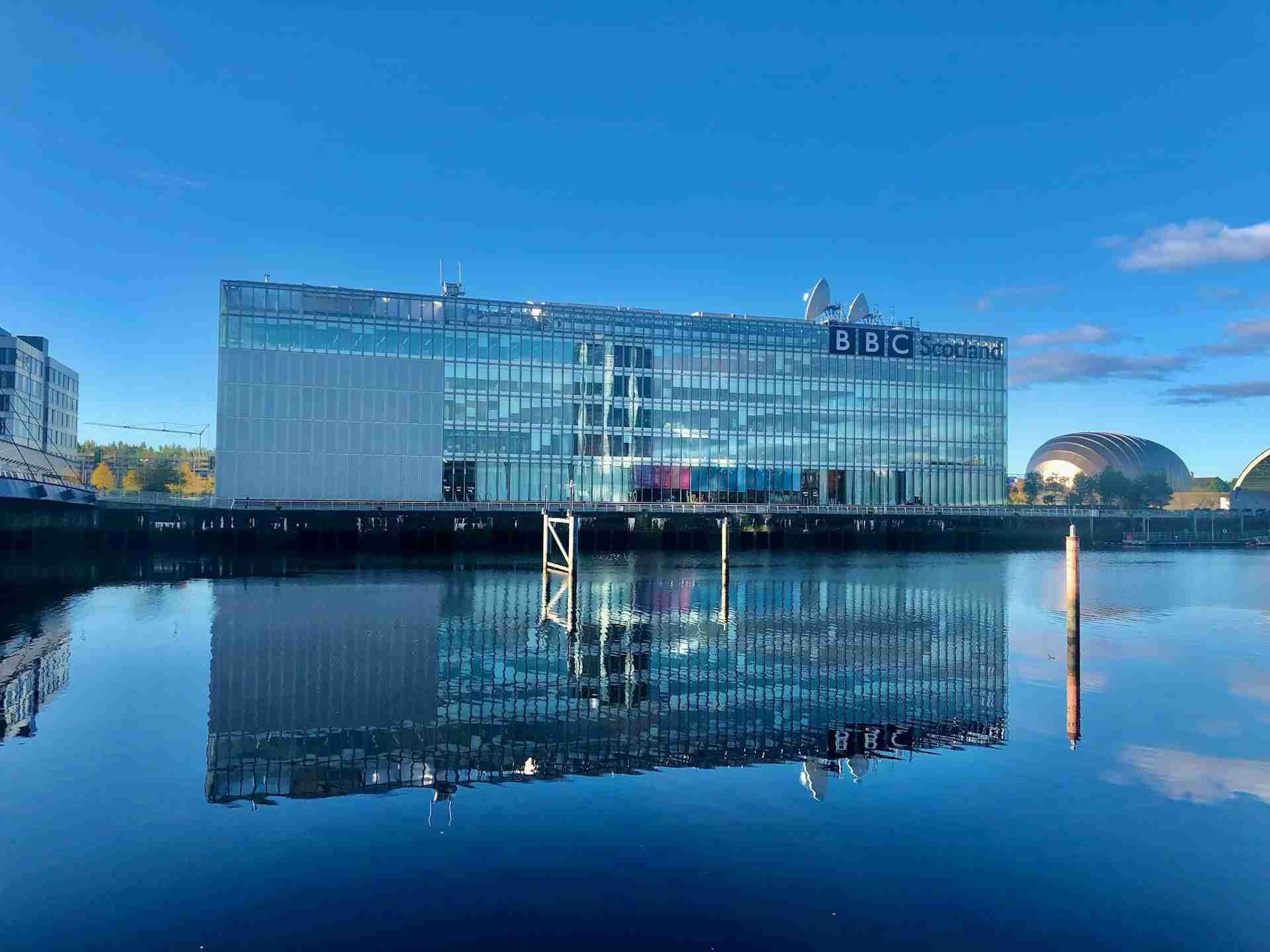
Set along the south bank of the River Clyde in central Glasgow, the BBC Scotland headquarters at Pacific Quay is a contemporary architectural subject that rewards both minimalist and urban photographers. Designed by David Chipperfield and opened in 2007, the building is a glass-and-steel prism that reflects and refracts light across its surface in constantly shifting ways. Its sharp geometry, expansive riverside location, and proximity to other bold modern buildings—like the Clyde Auditorium and the SEC Armadillo—make it a strong anchor point for cityscape photography. Whether you're exploring leading lines, water reflections, or the play of dusk light on glass, BBC Scotland offers a sleek, dynamic focal point in one of Glasgow's most visually rich riverfront environments.
Best Photography Opportunities
• Riverside Reflections at Dusk
: The north-facing glass facade of the BBC building picks up the pastel tones of twilight with remarkable clarity. From the opposite bank along the Clyde Walkway or from Bell's Bridge, you can frame the entire structure reflected in the calm river water. This scene becomes most photogenic during blue hour when artificial lighting from within the building begins to glow, creating a strong color contrast between the warm interior and the cool ambient light outside. A tripod and a long exposure smooth the river surface and emphasize symmetry. A 24 to 70 millimeter lens gives enough flexibility to frame the building tightly or include nearby architectural elements.
• Minimalist Geometry from Pacific Quay
: Standing close to the structure on its south side gives a more abstract view of its sharp lines and patterned glass panels. Here, reflections of sky and water become compositional elements themselves, and the grid of steel and glass creates a clean framework for minimalist architectural studies. Shooting in flat light or overcast conditions helps reduce harsh contrast and allows the surface textures to stand out. A tilt-shift lens can be helpful to correct perspective distortion, but even a standard wide-angle lens works well if care is taken to level the frame.
• Leading Lines from the Clyde Arc Bridge
: Also known as the "Squinty Bridge," this structure curves gracefully across the river and offers one of the best elevated perspectives toward the BBC building and the Pacific Quay skyline. The arc of the bridge and its suspension cables naturally lead the eye across the frame, especially when paired with long exposures that blur passing traffic or evening reflections on the water. Shooting here at sunset allows you to incorporate glowing skies and river light while retaining detail in the surrounding buildings. A mid-range zoom gives you framing options without moving too frequently across the bridge span.
• Close-Up Detail of Facade Reflections
: The mirrored surfaces of the BBC Scotland headquarters reflect the changing Glasgow skyline, including neighboring buildings like the Glasgow Science Centre and the Armadillo. Using a telephoto lens in the 100 to 200 millimeter range allows you to isolate these reflected fragments, creating abstract or layered compositions that shift depending on time of day and sky conditions. These images work well in series and benefit from a controlled exposure to balance the brightness of the reflected sky with the darker surface tones of the building.
• Night Cityscapes with Light Trails
: After dark, the area around Pacific Quay lights up with color and movement. Positioning yourself along the Clyde Walkway or near the bridge intersections allows for dynamic compositions combining building lights, vehicle trails, and the faint glow of the city beyond. A tripod, remote shutter release, and a series of bracketed exposures help maintain highlight control and recover shadow detail. For longer compositions, including reflections from multiple buildings across the water, consider stitching several frames in post-processing for a panoramic result.
Best Time to Visit
BBC Scotland's riverside setting makes it a location highly responsive to light and weather, and timing your shoot can greatly impact the mood and clarity of your images. Spring and summer months (April through August) offer long daylight hours, clean skies, and warmer sunsets that paint the glass facade with soft golden and violet tones. In these seasons, sunrise and sunset light aligns well with the river's east-west orientation, allowing for side lighting that reveals texture without overwhelming the scene with glare.
Autumn (September to November) introduces lower sun angles and often a mix of stormy skies and soft light. This is an ideal time for capturing contrast-rich compositions, especially reflections on the glass during transitional light. Mist and fog off the Clyde add atmosphere to morning shoots, while overcast evenings let interior lighting stand out without being overpowered by the sky. Winter (December to February) is colder and darker, but blue hour lasts longer and offers a clean, ambient glow that complements the building's lighting scheme. Snow is rare but transforms the surrounding walkways and railings into textured, high-contrast elements if present.
The most photogenic light typically occurs one hour after sunrise and during the last hour before sunset. Blue hour begins shortly after sunset and lasts for around 30 to 45 minutes depending on the time of year, providing the best balance between sky light and building illumination. Midday can still be productive for close-up work and abstract compositions when shadows are minimal.
How to Get There
BBC Scotland is located at 40 Pacific Quay, just south of the River Clyde in Glasgow. The area is easily accessible from central Glasgow by public transport, bike, or on foot. From Glasgow Central Station, the nearest subway stop is Cessnock, a 15-minute walk through residential streets to Pacific Quay. Alternatively, you can take one of several bus lines that stop near the Science Centre or along Govan Road.
For those arriving by car, there are paid parking lots at Pacific Quay, including options near the Glasgow Science Centre. Street parking is limited and often restricted during business hours, so early morning and evening visits are more convenient. Cyclists will find dedicated bike lanes along the Clyde Walkway, with ample space near the BBC building to lock bikes.
Photographers looking for the best river views should head to the opposite bank via Bell's Bridge or the Clyde Arc. These pedestrian-friendly crossings provide safe and easy access to the best elevated vantage points. The area is well-lit and generally safe after dark, though visiting with a friend is always a good idea when shooting at night.
There are no fees or permits required to photograph the building from public paths, bridges, or riverbanks. While exterior photography is unrestricted, shooting inside the BBC premises is not permitted without prior authorization. For low-light work, tripods can be used freely on the walkways and bridges, though you should be mindful of foot traffic and set up off to the side to avoid blocking pedestrian routes.
Recommended Photography Gear
BBC Scotland's combination of glass surfaces, changing sky conditions, and layered reflections demands a kit that balances flexibility and control. A full-frame camera with solid dynamic range will help capture the subtle tonal shifts between interior lighting and twilight skies. A wide-angle zoom lens in the 16 to 35 millimeter range is ideal for capturing the full scale of the building and its surroundings, especially from the opposite riverbank. Pair this with a 24 to 70 millimeter lens for tighter compositions that integrate reflections, geometry, or architectural context.
A 70 to 200 millimeter telephoto lens is highly recommended for isolating reflected patterns or compressing layers of the building against the skyline. For abstract detail work, a fast 85 millimeter prime or a macro lens can pick up fine texture and surface detail, especially on overcast days when contrast is low. A tripod is essential for evening and night shooting, both for long exposures and for careful alignment in architectural work. Choose a tripod with stable leg locks and a panoramic head if you intend to create stitched images from the bridge or riverside.
A circular polarizing filter can reduce glare on the building's glass panels, especially useful in harsh sunlight. However, use it sparingly to avoid creating uneven gradients across wide reflections. Neutral density filters (3-stop or 6-stop) are useful for extending exposure times during the day to smooth out water surfaces or remove foot traffic from popular shooting areas. A remote shutter release or interval timer is helpful for precise exposures, and a microfiber cloth is critical for keeping lenses clean in the often windy and damp riverside environment.
Weatherproof gear is advised year-round, particularly in autumn and winter when light rain or mist can develop quickly. Extra batteries and memory cards will allow you to capture a full session without interruption, especially if you plan to shoot through multiple light transitions. Bring gloves with touch sensitivity for working at night or in cold months, and carry a flashlight or headlamp for navigating after sunset.
Nearby Photography Locations
Also known as the Squinty Bridge, this graceful white arch is one of the most photographed structures in Glasgow and provides a strong leading element in compositions with BBC Scotland in the background. It lights up at night with color-changing LEDs, making it ideal for long exposures and blue hour cityscapes.
: Located just steps from the BBC building, the Science Centre's curving metallic tower and smooth, reflective dome offer dramatic contrast to the angular form of the BBC headquarters. The best time to shoot both structures together is during twilight, when their lights create layered reflections on the river.
: Across the river, these uniquely shaped venues form a dramatic skyline of curves and glowing windows, particularly during events. They photograph well from Pacific Quay with long lenses, or from Bell's Bridge with a wide-angle for full water reflection.
: This historic industrial relic stands tall near the Clyde Arc and offers a gritty contrast to the modern structures nearby. It is especially effective in high contrast light or black-and-white, and can be used to frame shots of the river and BBC building creatively.
: Just downriver, the award-winning Riverside Museum features bold geometric design and sits beside the masted Glenlee. Shooting from across the river allows you to incorporate these with sunset light and water reflections for detailed urban compositions.
Photographing BBC Scotland at Pacific Quay offers a rich balance of geometry, color, and movement. Whether you're chasing symmetry across calm water, isolating abstract reflections, or building a modern skyline portrait of Glasgow's waterfront, this location gives back what you put into it. As the light shifts across the river and the city comes to life after dark, the BBC building becomes not just a subject but a dynamic part of the broader photographic conversation that defines the Clyde.
Comments
Loading comments…