
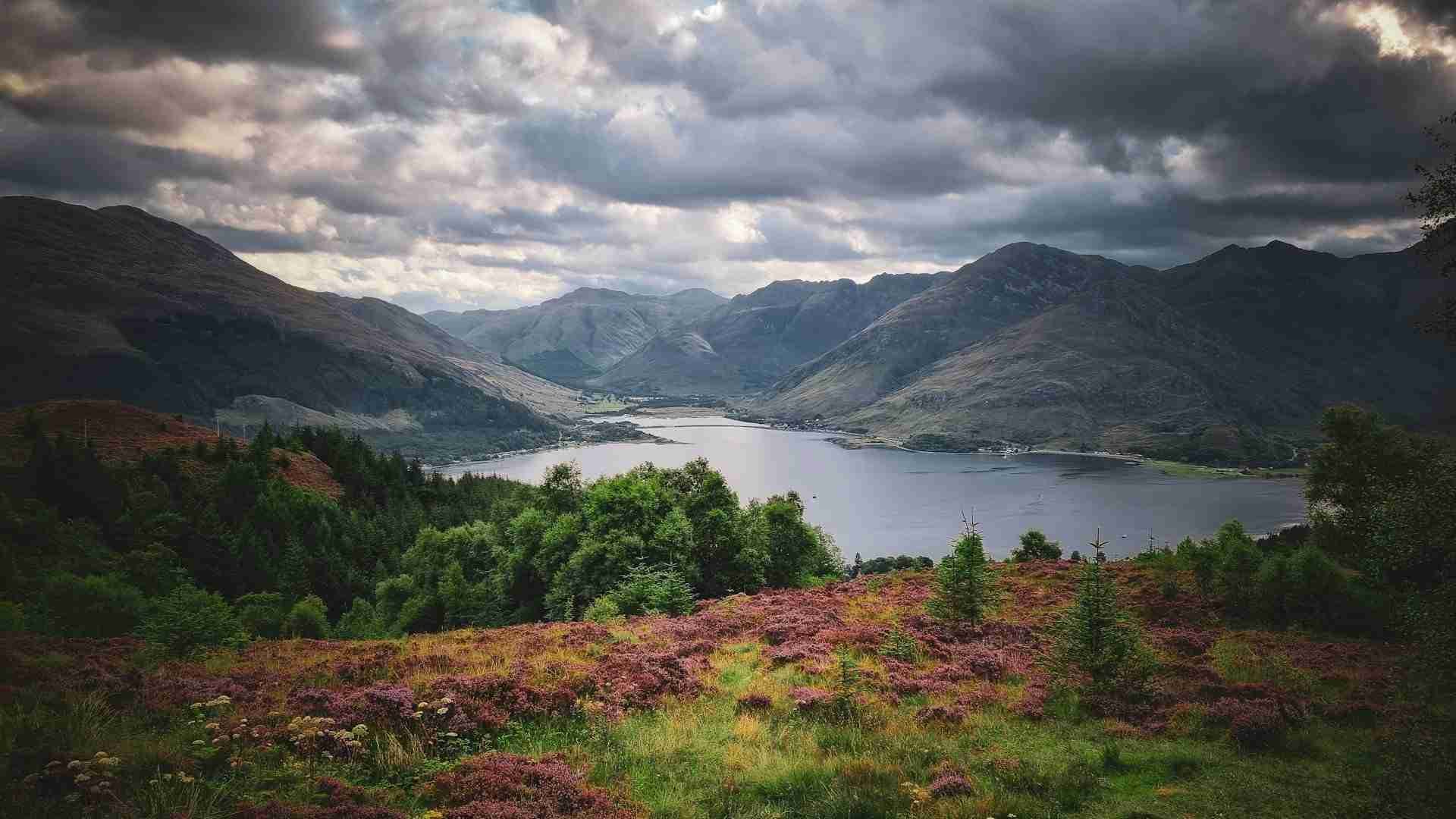
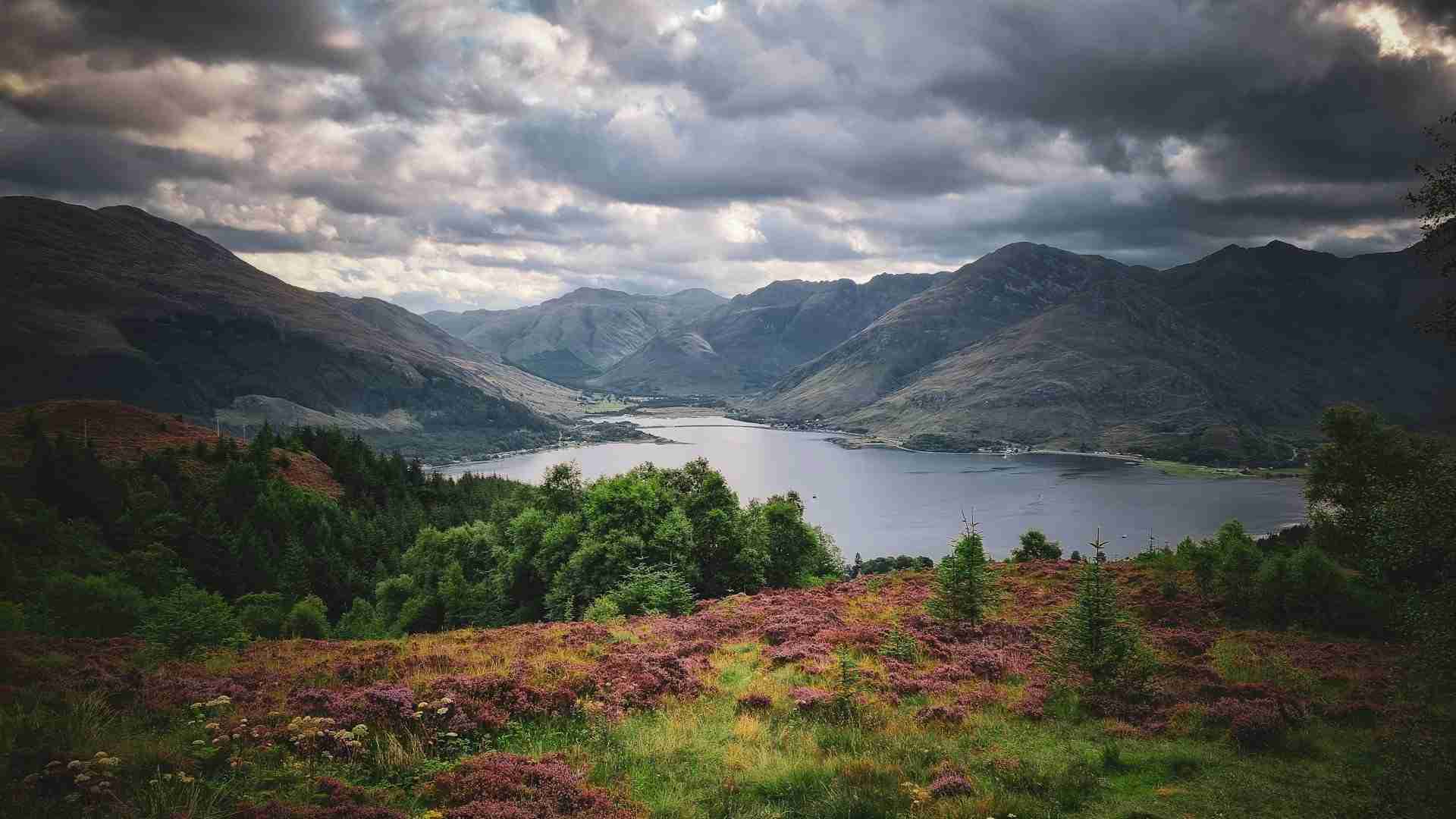
Tucked along the twisting path of the Old Military Road near the village of Ratagan, the Bealach Ratagan Viewpoint offers one of the most commanding and underappreciated views in the Scottish Highlands. From this elevated perch, photographers are treated to a sweeping panorama across Loch Duich toward the rugged peaks of the Five Sisters of Kintail—a mountain ridge known for its dramatic profile and mythic significance. The viewpoint is remarkably accessible yet feels remote, with few visitors lingering long enough to appreciate how the light changes across the water, the glens, and the shifting Highland weather systems. This is a landscape where atmosphere and scale converge, offering photographers a complete Highland composition rich with texture, mood, and geographic grandeur.
Best Photography Opportunities
• The Five Sisters of Kintail from the Upper Platform
The primary viewpoint looks west across the full stretch of Loch Duich toward the jagged spine of the Five Sisters. These peaks, often snowcapped in winter and veiled in low-hanging cloud the rest of the year, provide the dominant visual anchor. Use a wide-angle lens to capture the full range of peaks set against the loch's reflective surface. In early morning or late afternoon, side light carves out each peak's profile, while long exposures can smooth the water and soften the scene beneath stormy skies. During autumn, the foreground bracken glows orange and rust, adding a rich base layer to wide landscape shots.
• Loch Duich Reflections and Weather Drama
From slightly lower vantage points, you can look straight down the loch and frame subtle mirror reflections of the mountain ridge, especially during calm early mornings. Mist is common here—rolling off the water and catching sunlight in golden hour, especially in colder months. Use a standard zoom to adjust for shifting light and atmospheric thickness. Rain squalls often move quickly through the glen, so be prepared for fast weather changes and dramatic cloud action above the ridgeline. These layered compositions work well for moody, high-contrast black-and-white studies or soft, muted color work depending on the day's conditions.
• Telephoto Compression of the Ridge
For photographers with a longer lens, the viewpoint offers excellent opportunities to compress the visual distance between the ridge and the foreground terrain. A 70–200mm or longer focal length flattens the scene and exaggerates the vertical drop from the peaks to the loch, drawing attention to subtle folds in the land. This approach works well when the light rakes across the mountains from the side, casting long shadows and emphasizing texture. These shots benefit from early or late sun, when contrast is strongest and the peaks catch a slight atmospheric haze for depth.
• Foreground Detail with Heather and Stonework
Closer to the ground, especially near the roadside or from the path leading up to the platform, seasonal flowers like heather and foxglove can be incorporated into foregrounds. Mossy stone walls and roadside grass also serve as compositional elements. Shoot low with a wide lens to include these features against the grand backdrop of the loch and peaks. Overcast days help reduce harsh shadows and bring out color richness in the foreground, especially when the mountains are partially obscured, creating a layered and immersive frame.
• Changing Light Over Glen Shiel
Because the viewpoint is elevated and unobstructed, it offers a clear view of light moving across Glen Shiel in the east. Even if the main peaks are obscured, watching light patterns move across the valley's slopes can yield striking results, especially when clouds break to reveal isolated beams. This is a perfect setting for time-lapse work or still sequences, capturing the shifting relationship between land, cloud, and sunlight. Side light here tends to graze the ridges at an angle, accentuating every crease in the hills and giving the terrain its distinctive dimensionality.
Best Time to Visit
The viewpoint is accessible year-round, but the conditions and photographic quality shift significantly with the seasons. Spring brings fresh green growth and more dynamic skies, while autumn provides peak color in the bracken and ground cover, especially in September and early October. In winter, snow on the higher elevations of the Five Sisters adds contrast and compositional clarity, particularly when paired with crisp blue skies or heavy cloudbanks.
The best light typically occurs during golden hour—early morning in spring and autumn, or late afternoon in summer when the sun is low enough to side-light the peaks. Mist and cloud are frequent here, even in summer, and tend to lift in the morning or reform just after sunset. The constantly shifting conditions make this a location worth waiting at; even on grey days, moments of brilliant light can break through without warning.
Avoid midday shooting when light tends to be harsh and flat, especially during summer. While the view remains impressive, shadows disappear and the landscape can look washed out. Early arrivals and patience are rewarded with more nuanced color and texture in both land and sky.
How to Get There
The Bealach Ratagan Viewpoint is located just west of Shiel Bridge in the Scottish Highlands, off the A87 road that runs from Invergarry to Kyle of Lochalsh. Turn onto the Old Military Road at Shiel Bridge and follow the steep, narrow road uphill toward Ratagan. The viewpoint is marked by a small roadside parking area with interpretive signage and a short gravel path leading to the main platform.
The parking area is limited, accommodating only a handful of vehicles, so early arrival is recommended during summer months. The road is narrow and winding, and while it is fully paved, it requires cautious driving, particularly in poor weather or low visibility. The viewpoint itself is easily accessible via a short walk, with additional off-path opportunities to explore slightly higher ground for different shooting angles.
There are no facilities at the site, and mobile reception is inconsistent, so bring everything you need for the session, including water, warm clothing, and offline maps if you're unfamiliar with the area. The nearest services are in Shiel Bridge or Dornie, a short drive away.
Recommended Gear and Shooting Tips
A wide-angle zoom lens (16–35mm) is ideal for capturing the expansive ridge and its relationship to the loch and sky. A standard zoom (24–70mm) offers versatility for mid-range compositions, while a telephoto (70–200mm or longer) is excellent for compressing peaks and pulling detail out of the distant ridges.
A tripod is essential for low-light sessions or when shooting long exposures to smooth the loch's surface. Graduated ND filters help manage the dynamic range between the bright sky and the darker foreground, especially during sunrise or sunset. A polarizer is useful for reducing glare off the water and enhancing sky contrast, but rotate carefully to avoid uneven polarization across wide scenes.
Pack rain protection for both yourself and your gear—conditions can change quickly, and passing showers are common even on seemingly clear days. Lens cloths or a microfiber towel are essential for dealing with spray or mist. Shoot in RAW for maximum flexibility in managing contrast and color, and consider bracketing exposures for scenes with extreme dynamic range.
Scouting the location in advance will help you find the best compositions that align with the light, which shifts quickly and often dramatically. Patience is essential—wait for breaks in the weather or shafts of light that transform the view from scenic to sublime.
Nearby Photography Locations
Just fifteen minutes away in Dornie, this frequently photographed castle sits on a tidal island at the meeting point of three sea lochs. Visit at high tide or during blue hour for reflections, and aim for sunrise or sunset when the castle is lit and framed by mountains.
East of the viewpoint, Glen Shiel offers rugged Highland scenery, fast-moving weather, and numerous pull-offs along the A87. The area is excellent for moody valley shots, waterfall studies, and layering distant ridgelines in fog.
• Loch Cluanie
A reservoir to the southeast with open views, sparse vegetation, and excellent sky reflections. Best at sunrise or sunset, when the light flattens the hills and adds color to the loch's surface. Long exposures here are especially effective with dramatic clouds.
A challenging hike from the Ratagan area leads to one of Britain's highest waterfalls. This location rewards those seeking wilder compositions—steep cliffs, isolated moorland, and dynamic water movement make it ideal for adventurous landscape work.
• Loch Alsh and Kyle of Lochalsh
To the west, Loch Alsh and the surrounding ridgelines provide great late-day compositions with boats, tidal shifts, and the Skye Bridge in the distance. Golden hour and sunset light reflecting on the loch can produce particularly vibrant color palettes.
Bealach Ratagan Viewpoint is the kind of location where patience is as vital as your gear. The Scottish Highlands rarely deliver easy conditions, but they always deliver atmosphere—and here, with the Five Sisters rising in formation above the loch, that atmosphere reaches its most cinematic. For photographers who thrive on light, texture, and unpredictability, this ridge-side vantage point is one of the Highlands' most rewarding places to set up a tripod.
Comments
Loading comments…