
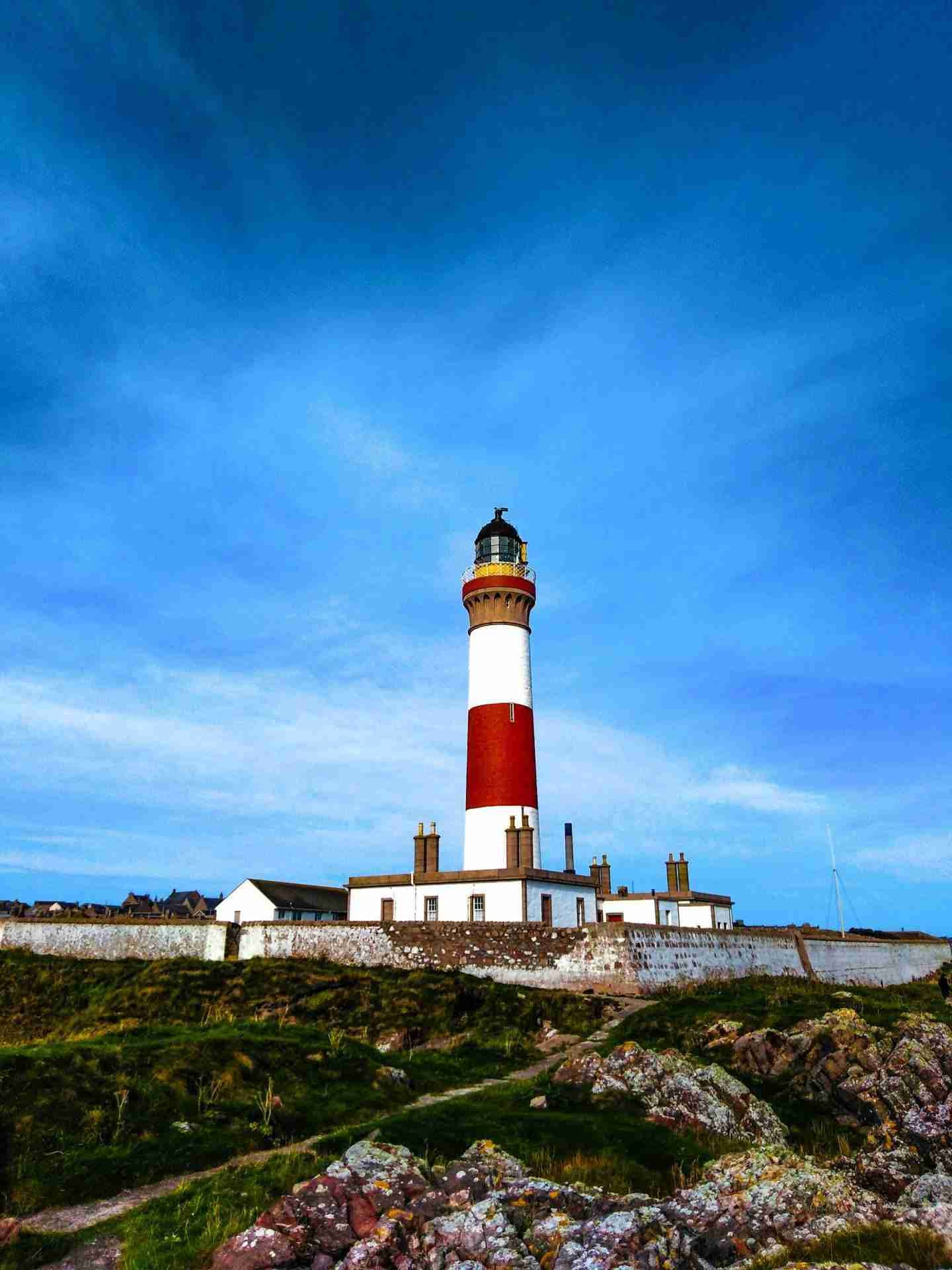
Just off the coast of northeast Scotland, where the North Sea pounds relentlessly into granite cliffs, stands Buchan Ness Lighthouse—an eye-catching sentinel marked by bold red and white bands. This lighthouse, anchored to a tidal island at the edge of Boddam village, is not just a navigational structure but a striking photographic subject shaped by weather, light, and sea. The surrounding coastline is rugged and raw, defined by fractured stone and crashing waves, offering an unfiltered maritime scene that constantly shifts with the tide and the sky. The isolation of the tower and the texture of the land create images rich in mood and movement. For photographers drawn to coastal drama, strong compositional elements, and a taste of wild Scottish weather, Buchan Ness delivers.
Best Photography Opportunities
Sunrise at the Lighthouse from the Mainland Shoreline
The lighthouse faces east, making early morning light ideal for shaping its forms and highlighting the contrast between the red and white paint against the cool hues of the sea. From the mainland side, just before the causeway, you can position the tower against a backdrop of changing clouds or a warming horizon. The low sun rakes across the rocks, bringing out their rough texture and giving the sea a golden shimmer. Use a wide-angle lens to incorporate the surrounding landscape or zoom in for tighter frames that emphasize the tower's structure and position. The lighthouse becomes particularly photogenic in the minutes before and just after sunrise, when colors are soft and the water takes on glassy or misty tones with long exposure.
The Causeway with Leading Lines and Reflections
This narrow stretch of road linking Boddam to the lighthouse makes an excellent compositional anchor. At higher tides, water pools beside the path, creating mirror-like reflections, while at low tide the exposed seaweed and stones add character to the foreground. Shooting low along the causeway lets you pull the eye straight toward the tower, with the road acting as a natural leading line. Early morning or late evening light can cast strong shadows that enhance the dimensionality of the scene. Neutral density filters are especially useful here to extend shutter speeds and blur water movement, making the structure feel even more rooted and enduring.
Storm Watching and Wild Weather Photography
Buchan Ness is an excellent location for capturing rough sea conditions and fast-moving skies, which often feel tailor-made for dramatic images. During autumn and winter, storms roll in from the northeast, throwing huge waves against the rocks while dark skies loom overhead. Use a telephoto lens to isolate sections of crashing surf or frame the lighthouse as a solitary subject against the chaos. A tripod with a remote shutter is useful for safety and precision during long exposures, though handheld shots at higher ISO settings can also deliver gritty, high-energy frames. Always keep a safe distance from the water, as the rocks can be slick and unpredictable.
Abstracts and Detail Shots Around the Island
Beyond the big landscapes, there is a wealth of textures and shapes around the base of the lighthouse. The red granite boulders are deeply fissured and speckled with lichen, while rusted bolts, old chain links, and paint-chipped rails tell a story of marine weathering. Tight compositions with a macro lens or a zoom lens can yield powerful images full of grit and contrast. These types of shots work well in flat or overcast light, where surface textures come through without harsh shadows. Don't overlook the utilitarian structures like signal boxes or metal railings—they offer strong lines and a sense of place.
Birdlife and Contextual Wildlife Frames
While not a dedicated birding site, the area around the lighthouse supports regular visits from gulls, cormorants, and the occasional fulmar. These birds can often be seen perched on rocks or wheeling through the air above the surf. Including them in wide shots gives scale and a sense of the environment, especially when they're caught mid-flight with the lighthouse in the background. A fast shutter speed and a zoom lens in the 200mm to 400mm range will help capture clean frames without disturbing their behavior. Wildlife here is more of a supporting element, but it adds motion and interest to broader compositions.
Best Time to Visit
From a lighting and weather perspective, the most productive months for photographing Buchan Ness are April through September. In spring, the skies are often crisp and clear after rain, and sunrise comes early enough to catch soft light before the sea breeze builds. Summer days are long, and the golden hours stretch well into the evening, offering both morning and evening light suitable for planning multiple shoots. Autumn delivers the most changeable skies and a high likelihood of storm photography, with bold light shafts breaking through fast-moving clouds. Winter offers dramatic skies and more frequent wave action, but light levels are low and conditions can be hazardous near the rocks.
Sunrise is the prime shooting time, especially when looking back at the lighthouse from the village side or the coastal paths to the north. Evening light can still work well from certain angles, especially when capturing the tower in profile or photographing toward the sea. Midday tends to flatten colors and make exposures more difficult to control due to contrast, but overcast days can work well for detail and monochrome work.
How to Get There
Buchan Ness Lighthouse is located in Boddam, a small village about 30 miles north of Aberdeen. To reach it by car, take the A90 north toward Peterhead, then turn off into Boddam just before reaching the town. Within the village, follow the signs toward the harbor or simply continue along Harbour Street until you reach the access point to the causeway. Parking is available in the village near the harbor, with no formal parking lot but several safe pull-off areas along the roadside.
The causeway to the lighthouse is accessible year-round and at all tide levels, though storm conditions may make the walk hazardous. There is no fee to visit or photograph from the outside, but the lighthouse and the surrounding buildings are not open to the public. Photographers should come prepared for exposure to strong winds and spray, and tripods should be used with caution due to slippery surfaces.
Recommended Photography Gear
Given the changeable weather and proximity to the sea, weather-sealed gear is highly recommended. A sturdy tripod with spiked or rubber feet will be useful for long exposures, especially during low light or stormy conditions. Bring a full-frame or crop-sensor camera with wide-angle lenses (16–35mm or similar) for landscape shots and a mid-range zoom (24–70mm) for flexibility when composing tighter frames. A telephoto lens (100–400mm) will be helpful for isolating details or capturing birds and distant waves. Filters, including neutral density and circular polarizers, are valuable for managing glare off the water and extending shutter speeds to blur wave motion. A rain cover, microfiber cloths, and lens cleaning supplies are essential due to the constant salt spray in the air.
Nearby Photography Locations
Just a short drive south along the coast, Slains Castle sits in dramatic ruins on a sea cliff. Its skeletal stone walls and exposed interiors catch early morning and late afternoon light beautifully. The nearby coastline is sharply cut and filled with jagged formations, making it an excellent pairing for moody seascape shots or minimal, long-exposure frames.
This collapsed sea cave and natural amphitheater is a fascinating geological site located just off the A975. The cliffs are lined with nesting seabirds during the warmer months, and the central blowhole gives you a unique composition opportunity from above. Fast shutter speeds can capture the chaos of incoming surf, while slow exposures create a mist-like feel rising from the churn.
Located to the north near the town of St Fergus, Rattray Head offers a more remote coastal experience with a solitary offshore lighthouse that shifts position relative to the tide. The long, open beach and surrounding dunes create simple, powerful compositions. It's a great spot for sunrise or twilight photography, especially when shooting from the dunes for elevated perspectives.
This working harbor provides gritty urban textures and a contrast to the natural scenes at Buchan Ness. Fishing boats, dockside cranes, and salt-streaked seawalls give photographers the chance to explore industrial themes. It's particularly good in overcast conditions, where soft light brings out the textures of weathered metal and wood.
A sweeping arc of sand backed by rolling dunes, Cruden Bay offers a softer, more open coastal scene. Low tide reveals patterns in the sand and shallow pools that reflect the sky. It's ideal for minimal landscape compositions, or for drone photography if you're looking to capture symmetry from above.
Photographing Buchan Ness Lighthouse is as much about responding to the elements as it is about planning the perfect shot. With its ever-changing light, raw coastal scenery, and dynamic weather, it rewards patience and creativity. Whether you're capturing the first light of day on the tower or watching waves batter the rocks during a storm, this spot invites repeat visits and varied approaches. The surrounding coast offers plenty of reasons to stay a little longer, camera in hand, chasing that perfect moment when the sea, sky, and structure align.
Comments
Loading comments…