
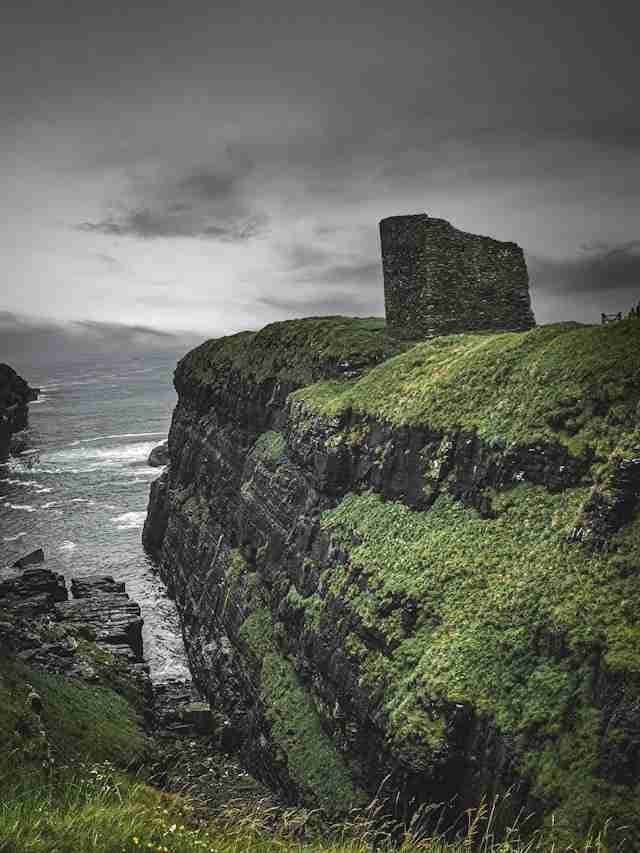
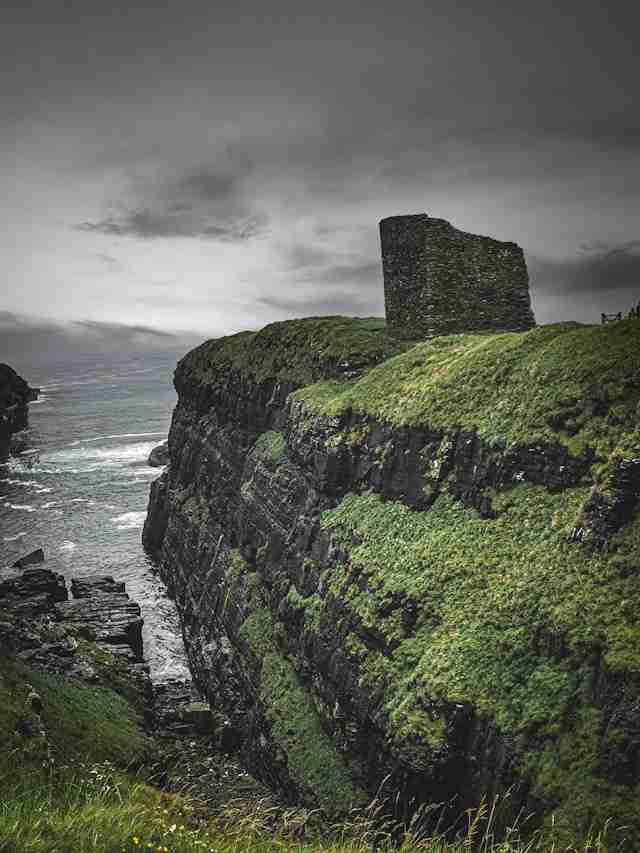
Standing alone on a narrow headland that juts into the North Sea, the Castle of Old Wick is one of the oldest stone castles in Scotland and arguably one of its most starkly positioned. Located just south of the town of Wick in Caithness, this 12th-century ruin rises from windswept grass and dark coastal cliffs, facing the full force of northern Scotland's weather. Unlike grand castles preserved for tourism, Old Wick is raw and exposed, with its surviving tower and foundations weathered to near skeletal form. For photographers, this means a location that trades polished aesthetics for drama, solitude, and a powerful relationship between history and landscape. The surrounding cliffs, seabirds, and ever-changing skies offer endless opportunities to work with movement, contrast, and elemental composition.
Best Photography Opportunities
• Sunset from the Coastal Path
– The cliff-edge path that leads to the castle opens up sweeping views of the ruins framed against the sea. As the sun lowers in the west, it casts warm, low-angle light on the stonework while backlighting the waves and sky. This is one of the few moments when the grey stone catches subtle color, offering a short but rewarding window for golden hour photography. Including some of the rugged cliff edges in the frame adds scale and helps emphasize the precarious position of the ruin. A wide-angle lens allows you to pull in the entire headland while still controlling the depth and relationship between the sky and the sea.
• Storm Light and Moody Skies
– With its exposed location and harsh North Sea weather, Old Wick thrives in dramatic conditions. Incoming storm fronts, fast-moving clouds, and rain passing offshore can all add texture and power to your images. Shooting during or just after a squall creates high contrast between the wet stone and bright cloud gaps. Long exposures with an ND filter can blur water and sky for a surreal look, while faster shutter speeds capture the raw motion of wind and wave. Black and white processing works especially well in these moments, emphasizing shape, contrast, and emotion.
• Aerial Views from the Seaward Side
– From above, the castle's position on a narrow, almost blade-like peninsula becomes even more striking. Drone photography reveals its isolation in full, with steep cliffs dropping on either side and the sea curling around the headland. Morning and evening are the best times to fly due to wind conditions, and you'll want to plan your angles to show the division between ruin and mainland. Shots facing inland give a sense of scale and placement, while images facing east at sunrise can silhouette the ruin against the glowing horizon. Always monitor conditions carefully and respect wildlife regulations, especially during seabird nesting season.
• Textures and Details of the Stonework
– Despite its ruined condition, parts of the original masonry still bear tool marks and layered construction. Focused detail shots of archways, wall fragments, and weather-worn ledges can capture the history embedded in the stone. Close-range compositions work well with overcast light, which reduces contrast and helps bring out subtle textures. Try framing sections of wall against sea or sky for visual contrast. A fast prime or short telephoto lens helps isolate these elements while maintaining sharpness and depth.
• Waves and Sea Cliffs from the Base
– Though access is limited, some viewpoints along the lower cliff paths offer opportunities to shoot the sea below the castle. These locations are best used to capture crashing waves, sea stacks, and the underbelly of the promontory. A medium zoom lens between 70 and 200 millimeters allows you to work from a safe distance and still fill the frame. When conditions are rough, spray and wind add movement to the scene, and careful timing can yield shots where the waves appear to strike directly below the ruins. Safety is critical here, as the terrain can be slippery and unprotected.
Best Time to Visit
The Castle of Old Wick is accessible year-round, but the character of the light and landscape changes dramatically with the seasons. Late spring and early summer offer longer days and clearer skies, with strong coastal light during golden hour and early morning. In autumn, the area's moorland tones deepen, and the angle of the sun lowers, creating more dramatic shadows and color gradients across the cliffs. Winter brings shorter days and high winds, but also rich skies and moments of sharp clarity between storms, especially in the early afternoon. Photographers looking to capture strong mood and contrast may find November through February especially rewarding. Sunrise tends to hit the seaward side first, casting long shadows and cool light across the western walls, while sunsets tend to light up the cliffs and the remaining tower face more directly. Conditions can shift rapidly, so flexibility is key.
How to Get There
The Castle of Old Wick is located just a five-minute drive south of Wick in Caithness, northern Scotland. From Wick town center, follow the A99 south and take the signed turnoff for Castle of Old Wick, which leads to a small parking area. From there, it is a short walk along a well-worn coastal path to reach the ruin. The trail is uneven in places and exposed to wind, so suitable footwear is necessary. There are no access fees, facilities, or protective barriers at the site, so visitors must use caution when exploring near cliff edges. The site is open to the elements and entirely unsupervised, which adds to its sense of isolation but requires awareness and care, especially in poor weather. There is no public transport directly to the castle, but Wick is accessible by train and bus, with taxis available for the short trip south.
Recommended Photography Gear
A weather-sealed camera body is strongly recommended, as conditions near the headland can change quickly. Wide-angle lenses from 16 to 35 millimeters are ideal for capturing the castle in its full coastal context, while a 24 to 70 millimeter zoom works well for mid-range shots and flexible framing. For isolating waves or compressing the coastline, a 70 to 200 millimeter telephoto provides strong reach without loss of sharpness. A sturdy tripod with spiked feet or rubber grips is essential on the uneven, often windswept ground. Circular polarizers can help manage glare on water and stone, especially during midday shooting, while ND filters allow for long exposures of the sea. Lens cloths, rain covers, and microfiber wipes should be on hand to deal with sea spray and wind-driven moisture. If flying a drone, carry multiple batteries and launch from a stable inland spot to avoid gusty cliff edges.
Nearby Photography Locations
– Located south of Wick, this dramatic stone staircase carved into a sea cliff leads down to a natural harbor. The sweeping curve of the steps and the surrounding vertical rock faces offer unique compositions from above and below. Early morning light adds warmth and depth, especially when low clouds drift over the cliff tops.
• Duncansby Head and Sea Stacks
– Near John o' Groats, this site offers powerful sea stack formations that rise from the ocean just offshore. Long-lens work captures the height and separation of each stack, while wide-angle shots from the cliff edge offer dramatic coastal landscapes. It is particularly rewarding during golden hour when light grazes the edges of the formations.
– Another coastal ruin north of Wick, this site offers more structural detail and dramatic sea views. The castle sits on multiple levels, with arches and broken walls that create layered compositions. It is especially photogenic in overcast or misty weather, which brings out the detail in the stone and the tension of the setting.
• Ackergill Tower and Reiss Beach
– The tower itself is now privately operated but the beach is open and offers long, sweeping views of the coastline. Reflections in wet sand and layered sky elements make this a strong location for minimalist and symmetry-driven shots. It is especially compelling during tide changes and late in the day.
• Loch Watten
– Inland from Wick, this calm loch offers a complete contrast to the coastal drama. It is ideal for peaceful landscape work with mirror reflections and subtle shoreline details. Sunrise and foggy mornings add atmosphere, and its quiet nature makes it an excellent spot for slow, deliberate shooting.
Few places combine history, isolation, and raw landscape like the Castle of Old Wick. Its ruined walls and exposed headland setting create a sense of elemental drama that invites photographers to respond with patience and bold compositions. Whether framed against a glowing horizon or lashed by wind and sea, this small remnant of Scotland's medieval past offers images that feel timeless and deeply rooted in place.
Comments
Loading comments…