
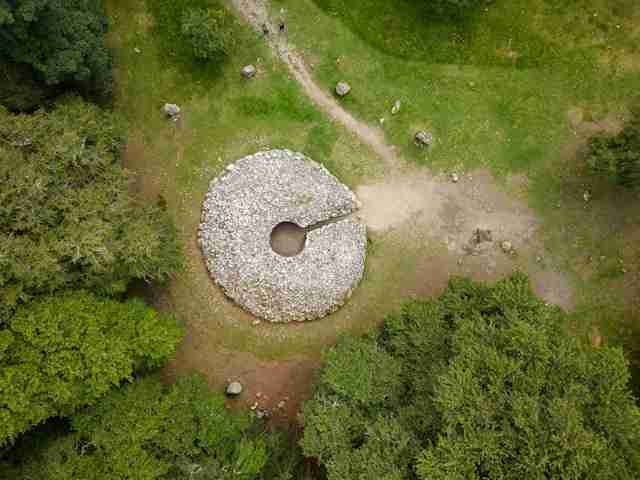
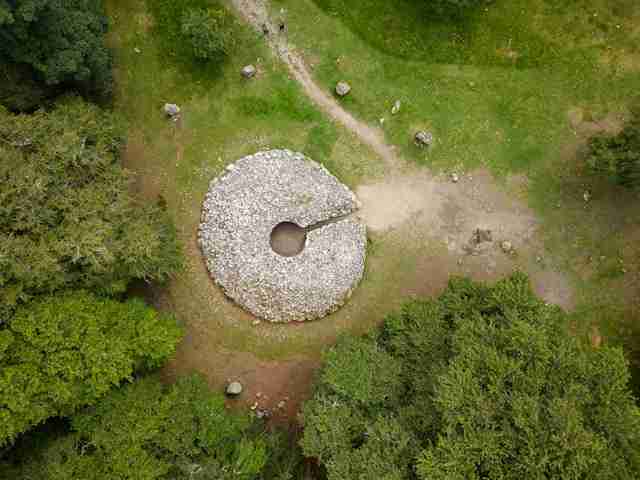
Clava Cairns, located near Leanach just outside Inverness in the Scottish Highlands, is a hauntingly beautiful Bronze Age burial site surrounded by moss-covered trees and quiet fields. This prehistoric complex, dating back over four thousand years, consists of passage graves, standing stones, and ring cairns, all arranged with striking alignment to the midwinter solstice. The site's raw, tactile presence and atmospheric setting make it ideal for photographers drawn to ancient textures, subtle light, and compositions that explore time, place, and ritual. With elements of stone, forest, shadow, and sky, Clava Cairns offers a quiet but powerful subject that rewards thoughtful framing and sensitivity to mood and light.
Best Photography Opportunities
• Passage Graves at Sunrise or Sunset
The central passage cairns at Clava are aligned with the setting sun during the winter solstice, and this alignment makes sunrise and sunset ideal for dramatic, directional light. Early morning light casts long shadows across the grass, while warm evening tones bring out the reddish hues in the stonework. Composing shots through the passages allows you to highlight the depth and alignment of the cairns while guiding the viewer's eye into the structure. A tripod is particularly helpful at these times, as light levels drop quickly and longer exposures allow you to maintain detail in both the stones and the sky. Waiting for a break in the clouds during these golden hour periods can transform a static frame into something far more layered and moody.
• Textural Close-Ups of Stones and Lichen
The stones at Clava Cairns are rich with surface detail, including patches of lichen, erosion scars, and patterns created by thousands of years of exposure to the Highland weather. These textures are best captured with a macro or short telephoto lens, especially when light is raking across the surface from the side. Overcast conditions eliminate harsh shadows and bring out subtle color variations in the rock, particularly greens, oranges, and muted browns. Close-up studies of the stone can function as abstract compositions or be integrated into a series that shows the relationship between natural decay and human construction. Pay attention to how different stones contrast with the surrounding moss and grass, as these elements can enhance the composition and narrative without overwhelming the subject.
• Forest Fringe Compositions
The outer edge of the site is surrounded by trees that add vertical structure and natural framing to wide compositions. In the early morning, mist often lingers among the trunks, providing atmospheric depth that contrasts with the dense, grounded forms of the cairns. Positioning the cairns in the foreground with branches and trunks in the background creates a layered composition that suggests enclosure and quiet. In autumn and winter, bare branches add stark lines to the frame, while fallen leaves create a warm base of color on the ground. This setting invites slow, contemplative work, where slight changes in light and angle dramatically shift the tone of the image.
• Standing Stone Silhouettes Against Moody Skies
Scotland's frequently shifting skies provide an excellent backdrop for photographing the upright stones surrounding the cairns. These vertical stones can be silhouetted against a turbulent sky, especially just before or after a storm when cloud contrast is strongest. Shooting from a low angle allows you to isolate the shape of the stones against the sky, emphasizing their form and placement. Black-and-white treatment enhances these frames by focusing attention on line and texture rather than color, though color versions with heavy skies and warm side light are equally effective. Patience is key here, as the best results come when light briefly breaks through to add structure to the background while preserving the weight of the scene.
• Seasonal Elements and Wild Flora
Throughout the spring and early summer, the site becomes a canvas of blooming wildflowers, tall grasses, and fresh green growth. These seasonal changes provide not just color, but also opportunities to introduce foreground elements that enhance the visual depth of wider compositions. A shallow depth of field can isolate a flower or grass blade against a backdrop of ancient stone, creating a contrast between natural renewal and ancient permanence. Morning dew and soft sunlight make these scenes especially photogenic, adding highlights and sparkle that bring the flora to life. Even small details such as moss on the cairns or leaf clusters at the base of the stones can become the focal point of intimate, quiet compositions that still reference the history of the location.
Best Time to Visit
Clava Cairns is photogenic throughout the year, but certain conditions dramatically elevate its photographic potential. Winter, especially around the solstice in late December, offers the most meaningful light from both a historical and visual perspective. The low sun angles create long, expressive shadows that highlight the cairns' alignment and texture. If you plan a visit near the solstice, aim to be in position an hour before sunset for the best chance at dramatic light.
Autumn, particularly from late October through early November, provides rich colors in the surrounding trees, and fallen leaves on the ground enhance composition. The site becomes quieter as the tourist season winds down, allowing more time and space to work uninterrupted. Morning mist is also more likely during this period, creating soft backgrounds and atmospheric separation between trees and stones.
Spring brings renewed growth and the arrival of soft greens, which can be used to contrast against the grey and brown stones. The light remains low through April, providing gentle illumination throughout most of the day. Early summer can also be productive, especially in the early morning when grasses are tall and skies are still cool in tone.
Scotland's weather is unpredictable, but this works to a photographer's advantage. Overcast skies provide excellent light for stone textures and detail work, while breaks in clouds during storms can lead to dramatic skies and strong contrasts. Rain enhances color saturation in the moss and stonework, and puddles often form between cairns, offering opportunities for reflection photography. Whenever you visit, bring weather-resistant gear and be prepared to wait for the light to shift.
How to Get There
Clava Cairns is located approximately seven miles east of Inverness, just off the B9006 road near the village of Culloden. The site is well-signposted, and most visitors combine it with a visit to the nearby Culloden Battlefield. If you are driving, free parking is available just beside the entrance to the site. The road is narrow but paved and accessible to all vehicles.
For those using public transport, buses from Inverness to Culloden run regularly, but you will need to walk the final stretch to the cairns, which takes around twenty minutes along a quiet country lane. The site is open year-round and free to access. There are no gates or admission hours, allowing for early morning and late evening sessions. There are no facilities on site, so bring water, snacks, and anything else you may need for your visit.
Tripods are allowed, and there are no photography restrictions, but commercial use requires permission from Historic Environment Scotland. As the site is spiritual for some visitors, it is important to work respectfully, avoiding blocking pathways or climbing on the structures. The paths are mostly flat, with grass or gravel underfoot, and the entire site can be explored on foot in under an hour, though photographers will likely want more time.
Recommended Photography Gear
Given the site's compact size and the variety of available compositions, a lightweight kit with strong low-light performance is ideal. A wide-angle lens in the 16 to 35 millimeter range will allow you to capture full cairn views, tree framing, and atmospheric sky scenes. This is your primary tool for storytelling and context shots. A standard zoom in the 24 to 70 millimeter range provides flexibility for both detail work and framing mid-range compositions of cairns, standing stones, and textures.
A fast prime lens such as a 35 or 50 millimeter can be useful for working handheld in low light or for isolating elements in shallow depth of field. For macro or texture studies, a 90 to 105 millimeter macro lens will help capture stone detail, lichen, or plant life without distortion. This is especially effective on misty or wet days when surface textures are emphasized.
A sturdy tripod is essential for long exposure work during twilight or when bracketing exposures for dynamic range. Bring a remote shutter release or use the in-camera timer to avoid vibration. A polarizing filter helps control glare on wet stone and deepens sky contrast when shooting wide scenes. Neutral density filters are optional but useful if you want to work with motion blur in passing clouds or soften moving branches.
Because the weather can change rapidly, pack a waterproof bag cover, microfiber cloths, and lens wipes. Waterproof boots are recommended due to occasional mud and wet grass, especially near the tree line. Dress in layers and bring gloves and a hat during cooler months. With no shelter nearby, plan to carry everything you need and keep your gear mobile so you can respond quickly to shifting light and conditions.
Nearby Photography Locations
Located just a short walk from Clava Cairns, Culloden is the site of the 1746 battle that ended the Jacobite rising. The open moor, scattered gravestones, and lone memorials make for stark, atmospheric compositions. Overcast skies and early morning mist amplify the somber tone and historical weight of the site.
• Loch Ness and Dores Beach
A short drive southwest leads to Dores Beach on the eastern edge of Loch Ness. This viewpoint offers wide lake vistas, pebble shorelines, and moody skies. Sunrise sessions here often yield mirror-like reflections and soft color gradients across the water.
To the northeast, the beach at Nairn offers wide sands, shallow tidal pools, and expansive sky compositions. Low tide reveals rippled textures and foreground interest that suit long exposure and minimalist coastal photography.
Located near Ardersier, Fort George is an 18th-century fortress with extensive stone ramparts, internal courtyards, and views across the Moray Firth. Its strong lines, repetitive forms, and open space make it ideal for architectural and historical landscape photography.
This forested hill near Inverness contains the ruins of a Pictish fort and offers elevated views over the Beauly Firth. The trail winds through quiet woodland, offering opportunities for forest photography, especially during autumn when color and leaf texture are at their peak.
Comments
Loading comments…