
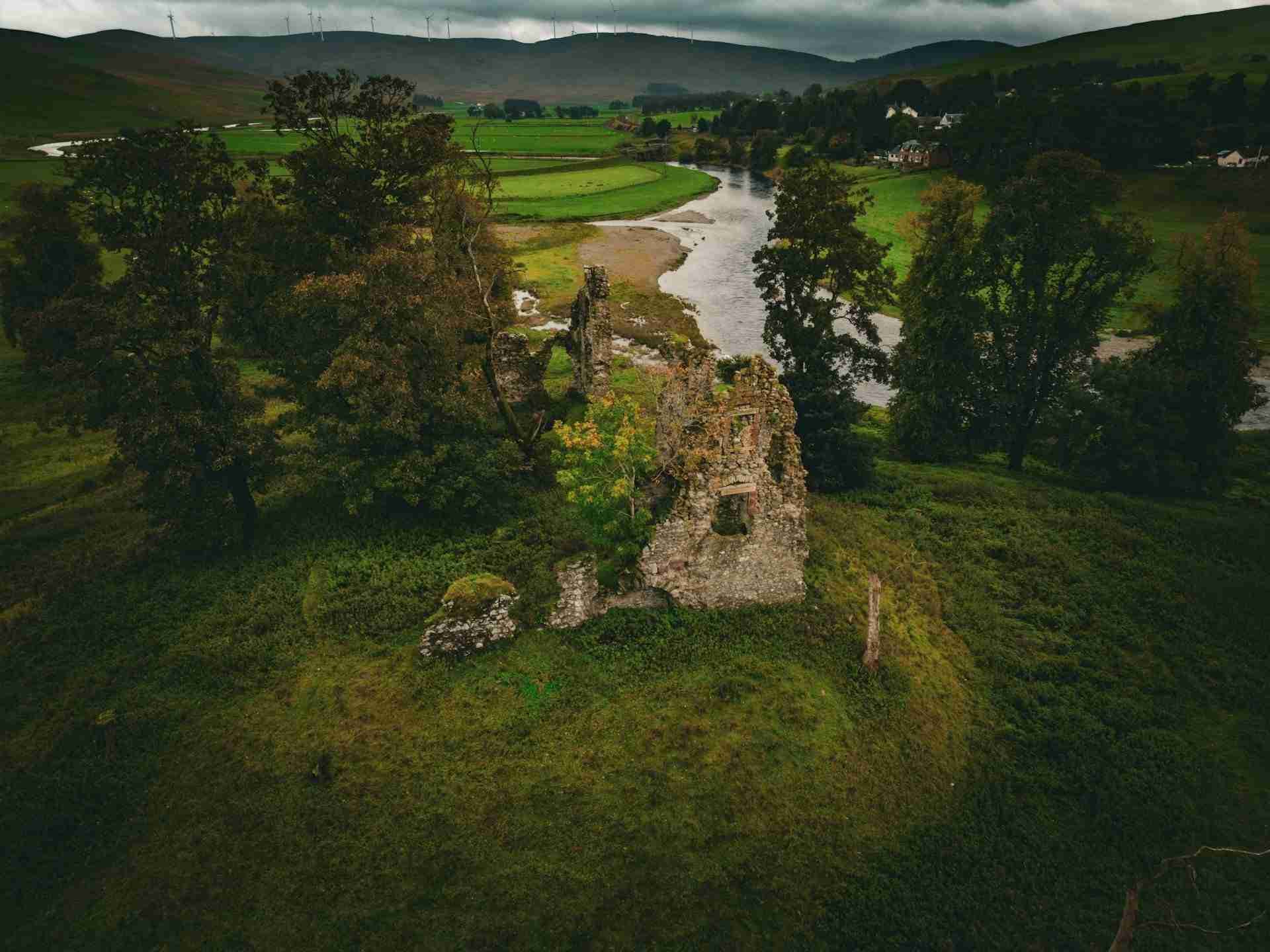
Rising quietly above the upper reaches of the River Clyde, Crawford Castle stands as a weathered fragment of Scotland's medieval past. Though the structure is now in ruin, its solitary presence on the landscape evokes a profound sense of stillness and forgotten history. Surrounded by rolling pasture, distant hills, and the persistent flow of the Clyde below, the castle provides a richly atmospheric setting for landscape and architectural photographers alike. Its isolation, combined with an unregulated openness, invites careful, deliberate compositions that explore light, texture, and the relationship between built heritage and natural terrain.
Best Photography Opportunities
• Castle Ruins at Golden Hour
: Crawford Castle takes on a transcendent quality during the golden hours of sunrise and sunset, when light skims across the surface of the ruin and amplifies the warm, earthen tones of its sandstone remains. At these times, the shifting shadows across the grassy foreground and within the partially collapsed walls offer depth and contrast that are difficult to capture under midday conditions. Shooting from a low angle with a wide-angle lens emphasizes the scale of the structure relative to the open sky, helping to dramatize the castle's position in the landscape. This is also an ideal time to introduce human scale into the composition—placing a figure in the frame can evoke the castle's lost grandeur while enhancing storytelling.
• Moody Skies and Storm Light
: The open skies above the Clyde Valley are often dramatic, shifting quickly from blue to brooding gray, and this changeable weather is a gift for photographers seeking contrast and emotion. When storm clouds roll in from the west, the ruins appear stark and ghostly against a turbulent backdrop, especially if you catch a shaft of light breaking through to highlight the stonework. Using a polarizer or graduated neutral density filter can help manage exposure and bring out detail in both sky and structure. Longer exposures can exaggerate the motion of the clouds, adding an expressive, dynamic element to static compositions of the ruin.
• Drone Perspectives Over the Clyde Valley
: From above, Crawford Castle's footprint becomes clearer, revealing the geometric remnants of curtain walls and outbuildings within a gently undulating terrain. Aerial photography highlights its strategic location near the river and its historical significance as a fortified seat guarding the southern approaches to Lanarkshire. The view also captures the surrounding moorland, farmland, and the meandering course of the Clyde, offering context and scale that can't be fully appreciated from the ground. Morning or late afternoon flights yield the best shadows and contrast; be mindful of wind conditions and nearby livestock when flying low.
• Black and White Architectural Detail
: Stripped of color, Crawford Castle's ruins take on a stark, textural beauty that lends itself well to monochrome interpretation. Close-up images of fractured lintels, moss-covered walls, and eroded joints showcase the tactile aging of the site, while deeper shadows can be pushed in post-processing for a dramatic, almost gothic effect. Working in black and white encourages a different way of seeing—composition becomes more about contrast, form, and negative space. Bring a macro or telephoto lens to isolate specific architectural details like arrow slits, corner joints, or the layering of stone courses, which can all reveal the craftsmanship and decay in equal measure.
• Sunrise Over Frosted Fields
: During colder months, a pre-dawn visit can yield extraordinary images of the castle enveloped in mist or rimmed with frost, set against a soft pastel sky. The eastern approach offers the best vantage point to capture the first light as it gently illuminates the stonework, while low-angle rays reveal texture in both grass and stone. Use a tripod and slower shutter speed to handle low light, and bracket exposures if needed to balance the sky with the foreground. These early hours are especially rewarding for photographers seeking solitude and a sense of quiet timelessness in their compositions.
Best Time to Visit
Crawford Castle is photogenic throughout the year, but each season brings distinct qualities that influence not only the look of the landscape but also how it feels to work within it. Spring (April to early June) is particularly atmospheric, with fresh green fields, longer days, and early morning mist drifting along the Clyde, softening the view and lending a painterly effect. During this time, the land around the castle begins to bloom, adding life and contrast to the aging stone.
Summer delivers the longest shooting days, allowing extended access to golden hour conditions late into the evening. While midday light can be flat and overly bright, early mornings offer soft hues and clean skies. The surrounding grasses are tall and golden by late summer, which can be used as foreground texture in wide shots of the castle.
Autumn is arguably the most visually rich season, especially from late September through October. The trees that dot the surrounding fields take on amber and russet tones, while the lowering sun creates long, cinematic shadows. This is an ideal time for both drone and ground photography, as the contrast between warm foliage and cool stone is particularly strong.
Winter transforms the site into a study in minimalism. Frost, snow, and skeletal trees create a desaturated palette that's perfect for black and white compositions. Light tends to be low and raking for much of the day, making even mid-morning shoots feel like golden hour. Though conditions can be harsh, the visual rewards are significant—especially when a light snowfall dusts the ruin without obscuring its details.
Cloud cover and sudden weather changes are common in all seasons and should be embraced rather than avoided. Moody skies and fleeting shafts of light are what give this site its emotional resonance. Regardless of season, photographers will find that patience is often rewarded at Crawford Castle, where atmosphere plays as crucial a role as composition.
How to Get There
Crawford Castle sits on the edge of the village of Crawford in South Lanarkshire, roughly halfway between Biggar and Abington. From the M74, take junction 14 and follow signs to Crawford via the A702. Once in the village, the castle is accessed by foot from a small layby on Carlisle Road, where informal parking is usually available. A short walk across open pasture brings you directly to the ruins; the approach is relatively flat but can become muddy in wet conditions, so waterproof boots are recommended.
There is currently no charge to visit Crawford Castle, as the site sits on private farmland with open, informal access that is tolerated rather than formally regulated. No signage, fencing, or entry system exists, and visitors are free to explore the site at their own risk. However, this situation is subject to change, particularly if visitor numbers rise, so photographers should check local access conditions or landowner notices before arrival. As always with such locations, respect for livestock, property boundaries, and the integrity of the ruins is essential.
Recommended Gear and Shooting Tips
Photographing Crawford Castle rewards thoughtful preparation and gear tailored for both landscape and architectural work. A sturdy tripod is essential for low light conditions, particularly at sunrise, sunset, or during long exposures in overcast weather. Wide-angle lenses (14–35mm range) are ideal for capturing the ruins within their sweeping moorland setting, while a mid-range zoom (24–70mm or 70–200mm) allows for tighter compositions and detail isolation. A drone adds tremendous value if you aim to contextualize the site within the Clyde Valley—just ensure wind conditions and livestock proximity are favorable before flying.
Filters can be especially helpful here. A circular polarizer enhances contrast in the sky and helps reduce glare from wet stone or grass, while a graduated neutral density filter allows for better balance between a bright sky and darker foreground. In winter or early spring, consider hand warmers or extra batteries, as cold weather drains power quickly—particularly in drones and mirrorless systems.
Light changes rapidly in the valley, so keep an eye on cloud movements and be prepared to adapt. Scout your angles early, and don't overlook the site's subtle details—mossy textures, crumbling corners, and weather-worn masonry all contribute to a richer visual narrative. Above all, take your time; Crawford Castle rewards the patient eye with compositions that only emerge when light, mood, and structure come into quiet alignment.
Nearby Photography Locations
: A charming market town with stone-fronted buildings, period signage, and a distinctly preserved feel, Biggar provides rich material for photographers interested in street and architectural scenes. The town's parish kirk, with its tower rising above the rooftops, makes a fine subject, particularly in the soft morning light when the shadows are long and the streets are still. This is also a great location for capturing seasonal decorations and everyday village life.
: Tinto dominates the southern landscape and is one of the region's most photogenic upland hikes. From the summit, panoramic views stretch in all directions, capturing the patchwork of fields, the winding Clyde, and even distant views toward the Highlands on clear days. Photographers aiming for sunrise or sunset should begin the ascent an hour or so beforehand to catch changing light conditions, with ample opportunities along the way to shoot layered hills and atmospheric skies.
: This site combines historical significance and natural beauty in a way few others do. The series of waterfalls along the Clyde are surrounded by native woodland, offering perfect long exposure conditions with boardwalks and footpaths that bring you close to the water. The nearby 18th-century mill village of New Lanark adds architectural variety, and the whole area is especially photogenic in autumn when the forest blazes with color.
: Located deeper into Dumfries and Galloway, Drumlanrig Castle is a visual counterpoint to Crawford's ruin—immaculate, imposing, and full of baroque elegance. Photographers can explore formal gardens, tree-lined avenues, and the richly textured stone façade of the castle itself, which looks spectacular in both color and monochrome. The surrounding estate includes forest walks, riverside paths, and wildlife viewing areas that lend themselves well to both wide and detail-focused compositions.
: A hidden gem for landscape photographers, Daer Reservoir lies in a high, wind-swept valley just west of Crawford. The clean lines of the dam, the minimalist shoreline, and the wide expanse of water offer superb opportunities for abstract and mood-driven imagery. On calm days, the still surface mirrors the sky perfectly, while in harsher weather the stark isolation of the reservoir creates a dramatic, almost Nordic mood.
Crawford Castle is the kind of place that reminds you why you picked up a camera in the first place. It's not about crowds, tours, or convenience—it's about mood, light, and timelessness. For those willing to rise early, wait out the weather, and tread carefully across the land, the rewards are profound. Whether you walk away with one perfect shot or a series of moody studies, this remote ruin will stay with you longer than any image.
Comments
Loading comments…