
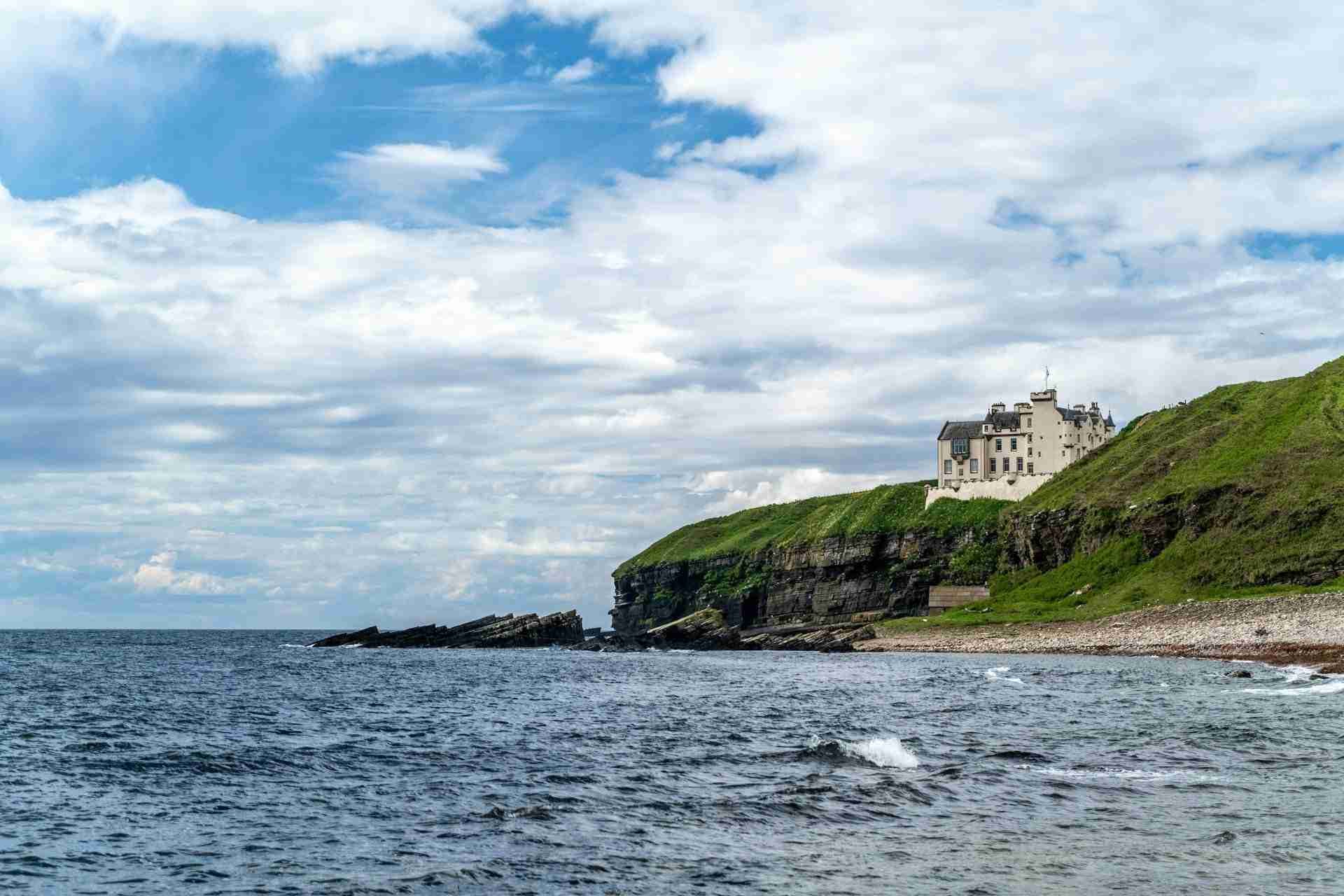
Perched dramatically on a cliffside overlooking the North Sea, Dunbeath Castle is one of Scotland's most atmospheric and visually commanding coastal castles. Located along the eastern coast of Caithness in the northern Highlands, this privately owned estate combines centuries of architectural legacy with raw natural scenery—sharp sea cliffs, heather-strewn hills, and the ever-shifting mood of the northern sky. With its whitewashed towers, steep gables, and panoramic setting above crashing waves, Dunbeath Castle offers photographers a perfect blend of formal structure and wild landscape. Though the castle itself is not open to the public, the surrounding coastal areas provide rich vantage points for capturing its enduring presence against the elemental Scottish backdrop.
Best Photography Opportunities
• Clifftop view from the coastal path
: The most iconic view of Dunbeath Castle is from the narrow trail that runs along the clifftops to the south of the property. From this position, you can frame the castle in full, perched high above the sea with layers of cliff, sky, and open water below. Use a wide-angle lens to include foreground grasses or wildflowers for scale and color. This vantage works especially well during golden hour when low light grazes the cliffs and adds texture to the castle's facade.
• Telephoto compression from Dunbeath village
: From certain higher points in the nearby village, a telephoto lens allows you to compress the castle against the sea and sky, bringing out its vertical prominence in the landscape. Early morning mist or late afternoon light can add mood and atmospheric layers to the shot. Look for angles where the castle's silhouette rises cleanly against the horizon, particularly on stormy days when clouds churn behind it.
• Detail work with natural elements
: While the castle itself isn't publicly accessible for close-up architecture shots, the surrounding landscape provides abundant opportunities to combine natural textures with the distant outline of the estate. Photograph rock formations, sea foam, or windswept grasses in the foreground, using the castle as a secondary or blurred backdrop. These compositions emphasize the wildness of the coast and create visual stories about environment and history.
• Moody weather and monochrome studies
: Dunbeath's coastal position makes it prone to fast-changing weather, with fog, rain, and shafts of sunlight all sweeping through within hours. These conditions are ideal for creating high-drama black-and-white images or working with minimal color palettes. The white castle walls stand out starkly against a grey sea or looming sky, giving strong contrast and mood for abstract or atmospheric interpretations.
• Evening glow and sea horizon silhouettes
: Sunset offers the most painterly light along the northern coast. Although the sun sets to the west, the side-lighting it provides can cast soft amber tones across the eastern cliffs and ignite the castle walls in color. Silhouette the castle against the post-sunset sky for a clean, graphic composition that highlights its iconic form. These are strong images for long-exposure work, especially when combined with wave motion or blurred clouds.
Best Time to Visit
Spring through early autumn (April to September) is the most practical and rewarding time to photograph Dunbeath Castle. During this period, the weather is more stable, the cliffs are greener, and coastal flowers add texture and color to foregrounds. Late spring offers longer days with moody light well into the evening, while early autumn brings golden tones to the grasses and often dramatic skies as weather patterns begin to shift.
Lighting conditions vary greatly along the coast. Early morning light offers side illumination from the east, casting long shadows and often catching sea mist rolling in from offshore. Evening light, while more indirect, is often the most colorful and adds a gentle warmth to the castle's white stone. Overcast skies and mist are common—and welcome for photographers—as they lend atmosphere and remove harsh contrast, ideal for shooting the castle's pale surfaces and textured surroundings.
Avoid shooting in the midday sun, when the castle's stark white exterior can become overly bright and lose detail. Instead, aim for the golden hours on either end of the day or return during unsettled weather, when cloud drama and wind movement animate the coastline.
How to Get There
Dunbeath Castle is located near the village of Dunbeath in Caithness, about 85 miles north of Inverness along the A9. The castle itself is private property and not open to visitors, but excellent views can be found along the clifftop trails and coastline just south of the estate. From the village, footpaths and old sheep trails lead toward the cliffs—take care, as these are informal and can be steep or muddy depending on recent weather.
Parking is available in the village near the old bridge or the heritage center. From there, walk east toward the coast, following local paths that skirt the private lands and offer clear, respectful viewpoints. Use a map or GPS, as the signage is limited and some trails fade into pastureland or heather scrub.
Plan for uneven ground, coastal winds, and the possibility of sudden rain—weatherproof clothing and sturdy boots are essential. Always respect signage and property boundaries; do not attempt to access the castle directly or approach beyond public land.
Recommended Gear and Shooting Tips
A wide-angle lens (16–35mm) is ideal for full landscape scenes where the castle is framed by cliffs, sea, and sky. A mid-range zoom (24–70mm) is excellent for walk-around shooting and for capturing more balanced views with both structure and landscape. A telephoto lens (70–200mm or longer) is particularly useful for compressing the castle into abstract sky scenes or isolating it across the clifftops from village perspectives.
A tripod is a must for long exposures during blue hour or to stabilize in strong coastal winds. Bring a circular polarizer to deepen sky tones and reduce glare off sea spray or wet rocks. A 6- or 10-stop ND filter is recommended for smoothing wave motion or drawing out long cloud streaks during overcast shooting.
Always pack a lens cloth and waterproof cover—coastal mist and windblown moisture are constant. Scout the location in advance to assess where trails allow safe and legal access, and return at multiple times of day to catch different light and tidal conditions. Work quickly when the light breaks—sunshine is often fleeting in northern Scotland and shifts quickly into cloud or rain.
Nearby Photography Locations
: A dramatic manmade staircase descending a steep cliff to a natural harbor. Perfect for long-exposure coastal shots and layered compositions with crashing waves and craggy stone.
: One of the most photogenic castle ruins in the region, perched on its own sea stack just north of Wick. Ideal for sunrise compositions and architectural decay against the sea.
: The northernmost point on the UK mainland offers massive cliffs, bird photography opportunities, and wide panoramas over the Pentland Firth. It's especially striking under dramatic skies or during fog breaks.
: A small, historic fishing harbor to the south of Dunbeath, great for close-up detail work, dockside textures, and moody maritime compositions.
• Loch Watten
: Inland from the coast, this tranquil loch offers reflective water, distant hills, and quiet moods that contrast nicely with the drama of the coastal cliffs.
Dunbeath Castle is a place of stillness and storm—where history clings to the edge of land and sea, and every shift of light reveals something new in the cliffs, the clouds, and the stone. For landscape photographers, it's a place to wait, watch, and shape images from the changing elements of the far northern coast.
Comments
Loading comments…