
Duncansby Head Beach and Stacks: A Photographer's Guide to Scotland's Rugged Coastal Drama
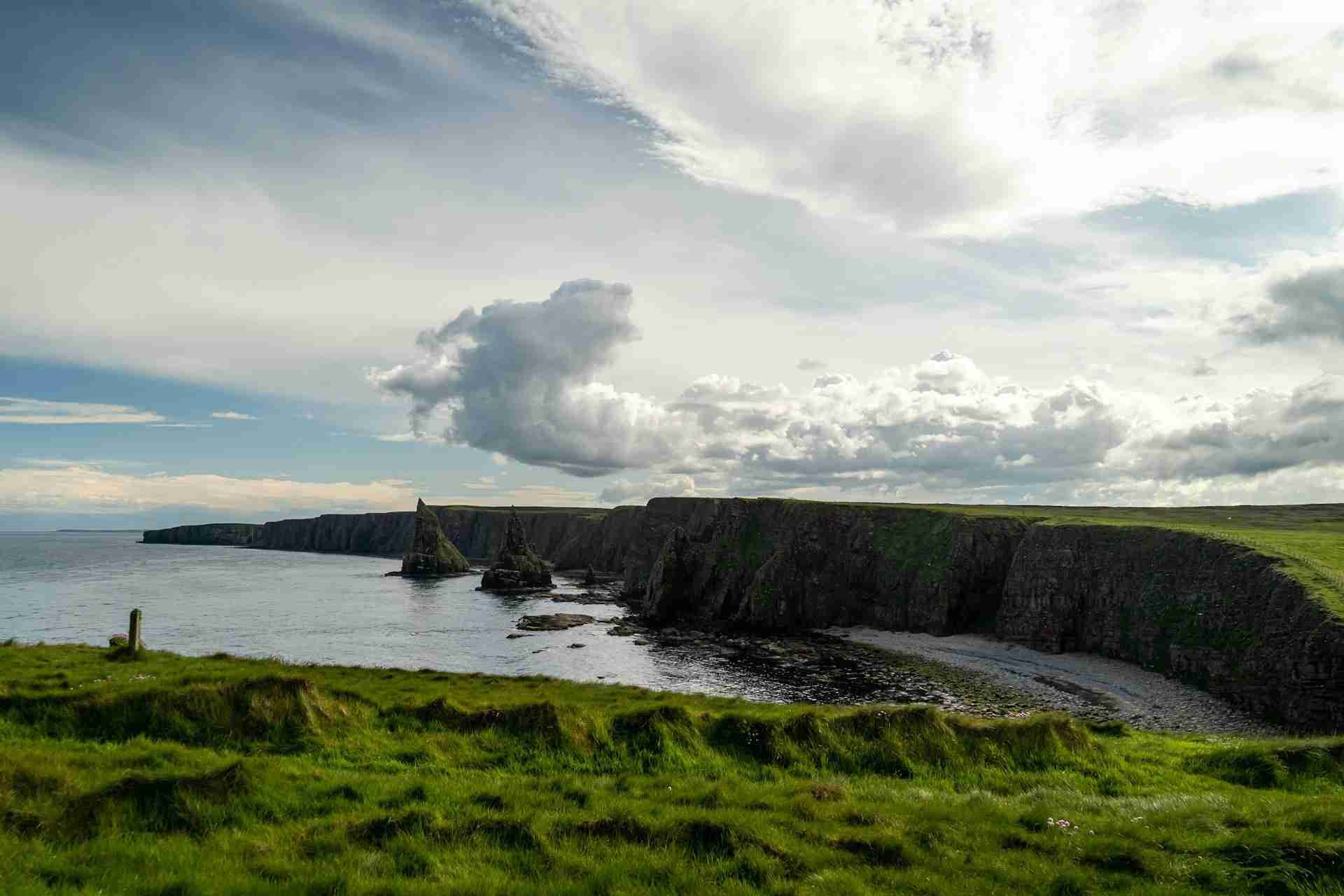
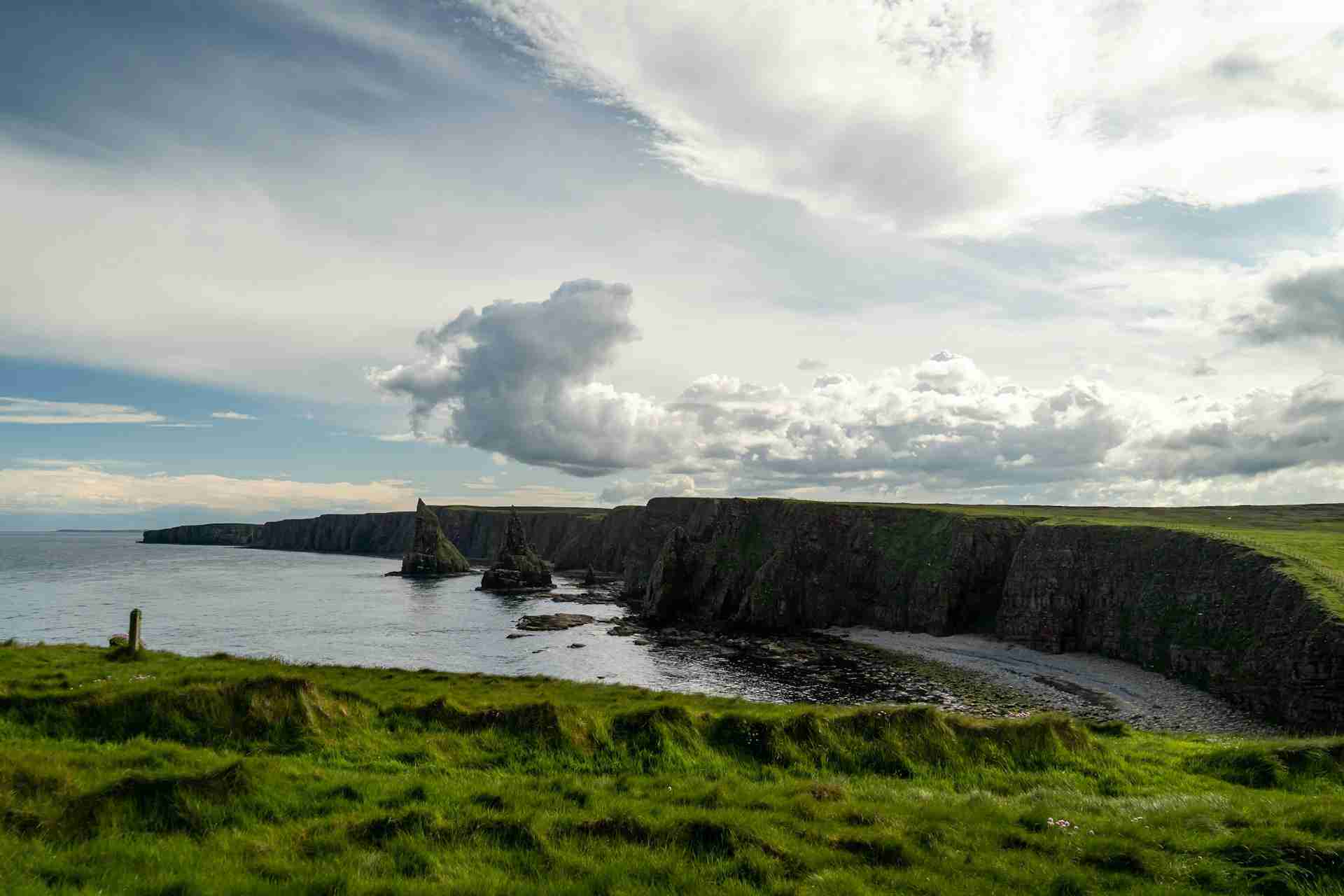
Located at the far northeastern tip of mainland Scotland, Duncansby Head Beach and the dramatic sea stacks nearby are among the most awe-inspiring coastal scenes in the country. Just a short drive from the more well-known John o' Groats, this windswept headland feels remote, wild, and timeless. Towering cliffs, sharply rising rock formations in the sea, wide grassy paths, and sweeping views make this a dream for landscape photographers. Here, Scotland's natural power is on full display. Constant shifts in weather and light offer new photographic possibilities with every passing hour. This location is not only photogenic but unforgettable.
Best Photography Opportunities
• The Duncansby Stacks at Sunrise
The two towering sea stacks just off the coast are standout subjects and look their most dramatic in the soft light of early morning. At sunrise, light spills across their sharply angled faces, casting long shadows and enhancing the layered textures of the cliffs behind them. From the main trail, a wide-angle lens allows you to include the grassy cliff edges in the foreground while showcasing the jagged silhouettes of the stacks against the glowing sea. For a different angle, walk slightly south along the path for a more diagonal composition. If there is light mist rising from the water, it adds extra mood and softness to the scene.
• Clifftop Paths and Rolling Grasslands
The walk along the cliffs from the lighthouse toward the stacks is just as rewarding as the final viewpoint. Rolling green hills meet the edge of craggy cliffs that plunge steeply into the sea, and wildflowers dot the path in spring and summer. This is a great area for layering foreground and background elements. Try close-up shots of flowering heather or tall grasses with the sea cliffs or stacks beyond. A mid-range zoom lens is useful here, letting you easily move between wide landscapes and tighter frames of textures or leading lines. Look for natural curves in the path or fence lines that help guide the viewer's eye.
• Seabird Activity in Early Summer
From late spring into summer, Duncansby Head becomes a noisy, bustling haven for seabirds. Puffins, razorbills, fulmars, and guillemots nest along the steep cliff faces. With a bit of patience and a telephoto lens, ideally 300mm or longer, you can photograph birds flying in and out of their nests, perched on the rocky outcrops, or resting against the vivid green backdrop of the grasslands. Early mornings are best, when the light is soft and birds are most active. Try to find a stable patch of grass to sit quietly and observe before shooting. Birds may come closer if they do not feel threatened.
• Rock Formations and Coastal Details at the Beach
The beach below the cliffs is rugged and textured, filled with rounded stones, tidal pools, and wave-carved rock formations. It is perfect for long exposures, where crashing waves can be turned into soft mist wrapping around the rocks. You will need a tripod and neutral density filters to slow your shutter speed during daylight. Even in overcast light, this area shines with natural drama. For close-up or macro photography, focus on barnacles, seaweed patterns, or water ripples inside the tidal pools. These small details offer a quieter, more intimate perspective of this wild location.
• Changing Weather and Dramatic Skies
Scotland is known for its fast-changing weather, and Duncansby Head puts on a sky show like few other places. Storm clouds rolling in over the sea, sun breaking through distant gaps, and rainbows stretching across the stacks can all occur within a single hour. These conditions are perfect for dramatic, high-contrast compositions. A wide-angle lens and graduated filters help balance the exposure between bright skies and dark foregrounds. Even if it rains, do not pack up too quickly. Often the best light arrives just after a storm passes. Black-and-white conversions also work beautifully here, emphasizing mood and form.
Best Time to Visit
Duncansby Head is a rewarding location in every season, but different times of year offer distinct moods and photographic themes. In spring and summer, the cliffs come alive with seabirds, wildflowers bloom across the grasslands, and the long daylight hours give you plenty of time to explore. Sunrise and sunset are particularly beautiful this time of year, with the low-angle light bringing out the texture in the cliffs and painting the sky with soft color gradients.
Autumn introduces more golden tones in the landscape as the grasslands turn bronze and the sea becomes moodier with shifting skies. This is also a quieter time for visitors, giving photographers a more peaceful experience. Winter can be harsh, with strong winds and snow, but those conditions also bring a stark and powerful beauty. The cliffs covered in frost or the stacks silhouetted under dramatic skies make for deeply atmospheric photographs.
In terms of daily timing, early morning is best for bird activity and soft coastal light, while late afternoon offers side lighting on the cliffs and stacks. Blue hour and golden hour both deliver exceptional color and tonal variation. It is important to dress for the weather and be prepared for changes. Even in summer, it can be windy and cool along the cliffs.
How to Get There
Duncansby Head is located about 1.5 miles east of John o' Groats in Caithness, northern Scotland. From the A99 road, follow signs to John o' Groats, then take the small road east toward Duncansby Head Lighthouse. The road is paved and suitable for all vehicles. At the end, you will find a small parking area next to the lighthouse with space for several cars. There is no charge for parking or access.
From the car park, the main walking path heads southeast along the cliffs. It is about a one-mile walk to reach the best viewpoint of the Duncansby Stacks. The path is well-trodden but can be muddy or slippery after rain. Sturdy, waterproof footwear is strongly recommended. There are no toilets, visitor centers, or shops at the site, so be sure to bring your own water and snacks.
The area is generally safe to explore, but the cliff edges are completely exposed. Keep a safe distance, especially in windy weather. If you are planning to fly a drone, take care not to disturb bird nesting areas. Use common sense and always respect wildlife and the natural landscape.
Essential Gear for Coastal Landscape Photography
To photograph Duncansby Head effectively, you will want a kit that balances flexibility, durability, and weather resistance. A wide-angle lens is perfect for capturing the sweeping cliffs and sea stacks, especially at sunrise or sunset. A mid-range zoom gives you framing options as you move along the trail, while a longer telephoto lens is essential for bird photography and isolating features along the coastline.
A solid tripod is crucial for long exposures and for stabilizing your shots in strong coastal wind. Bring neutral density filters for smoothing water motion and a circular polarizer to reduce glare and deepen sky contrast. Graduated filters are useful for balancing sky brightness with darker land.
Other essentials include waterproof clothing, a weatherproof camera bag, extra batteries, microfiber cloths for wiping off sea spray, and hand warmers for cold mornings. A headlamp or flashlight is handy for navigating before sunrise or after sunset. If you are shooting in misty or rainy conditions, a lens hood and rain cover for your camera can keep your gear safe and dry.
Comfortable, sturdy footwear is non-negotiable, as you will be walking on uneven terrain with plenty of climbing and crouching involved. Planning ahead with weather forecasts and checking tide times will also help you make the most of your visit.
Nearby Photography Locations
Just minutes away, this colorful harbor village provides a playful contrast to the dramatic cliffs. Brightly painted buildings, old boats, and rugged shorelines offer great material for street-style or coastal photography. Early morning light brings warmth to the facades and quiet to the normally bustling area.
Roughly a 30-minute drive from Duncansby Head, the Castle of Mey is a beautifully preserved 16th-century structure with gardens, ocean views, and rich historical texture. It is especially photogenic in spring and summer when flowers bloom along the stone walls.
This expansive bay near Keiss features miles of sandy beach, gentle dunes, and the ruins of Sinclair and Girnigoe Castles. Low tide reveals reflective wet sand and tide pools, ideal for minimalist landscape shots. Arrive during golden hour for soft skies and long shadows.
A hidden gem south of Wick, this hand-cut staircase leads down 365 steps to a dramatic cove once used by fishermen. The vertical descent framed by sheer cliffs is perfect for moody, atmospheric compositions, especially under cloudy skies.
Scotland's true northernmost point lies just west of John o' Groats. The cliffs are taller and more exposed than those at Duncansby, offering vast views across the sea toward Orkney. The lighthouse and panoramic surroundings are excellent for both wide and telephoto compositions.
Comments
Loading comments…