
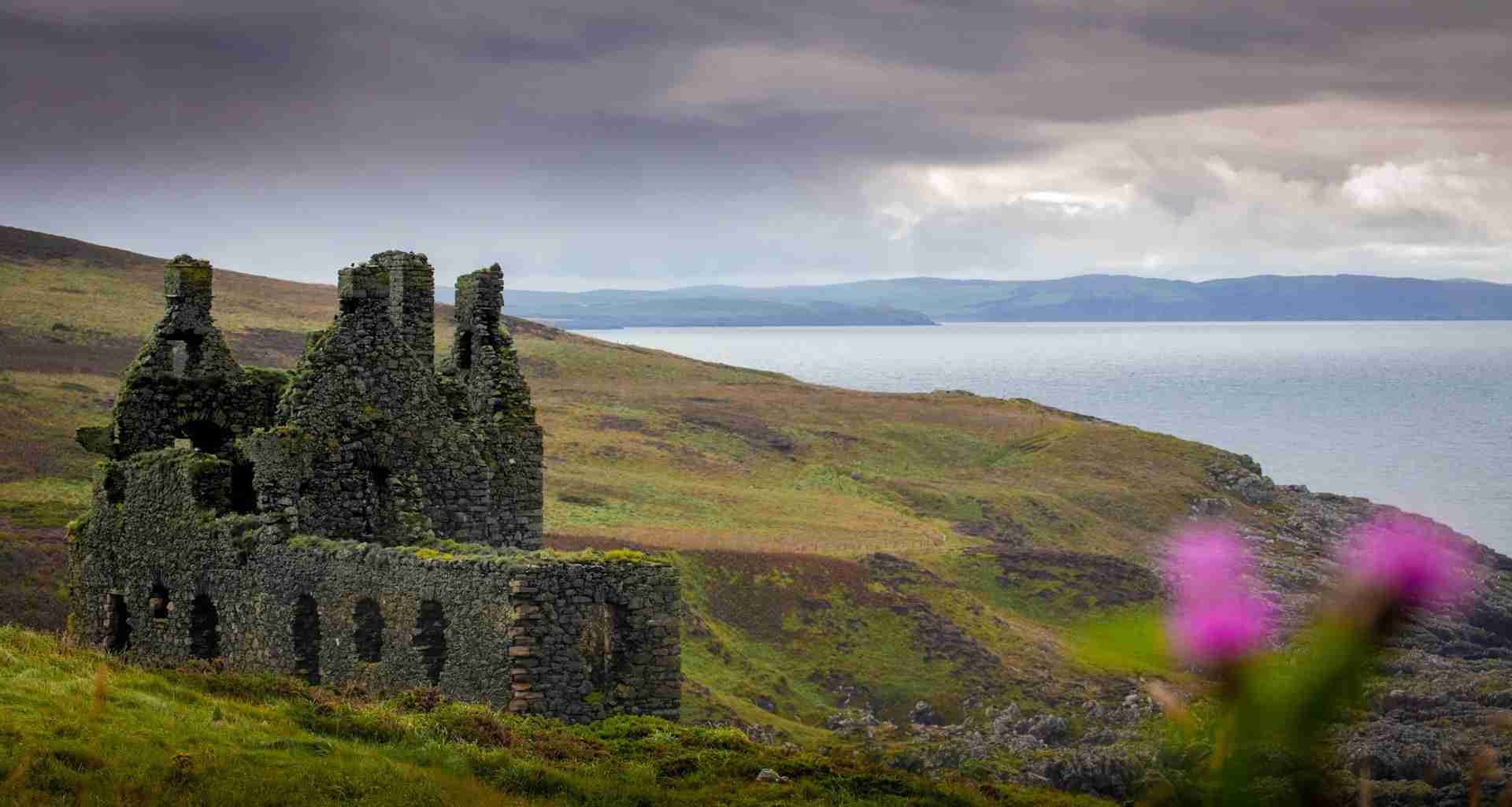
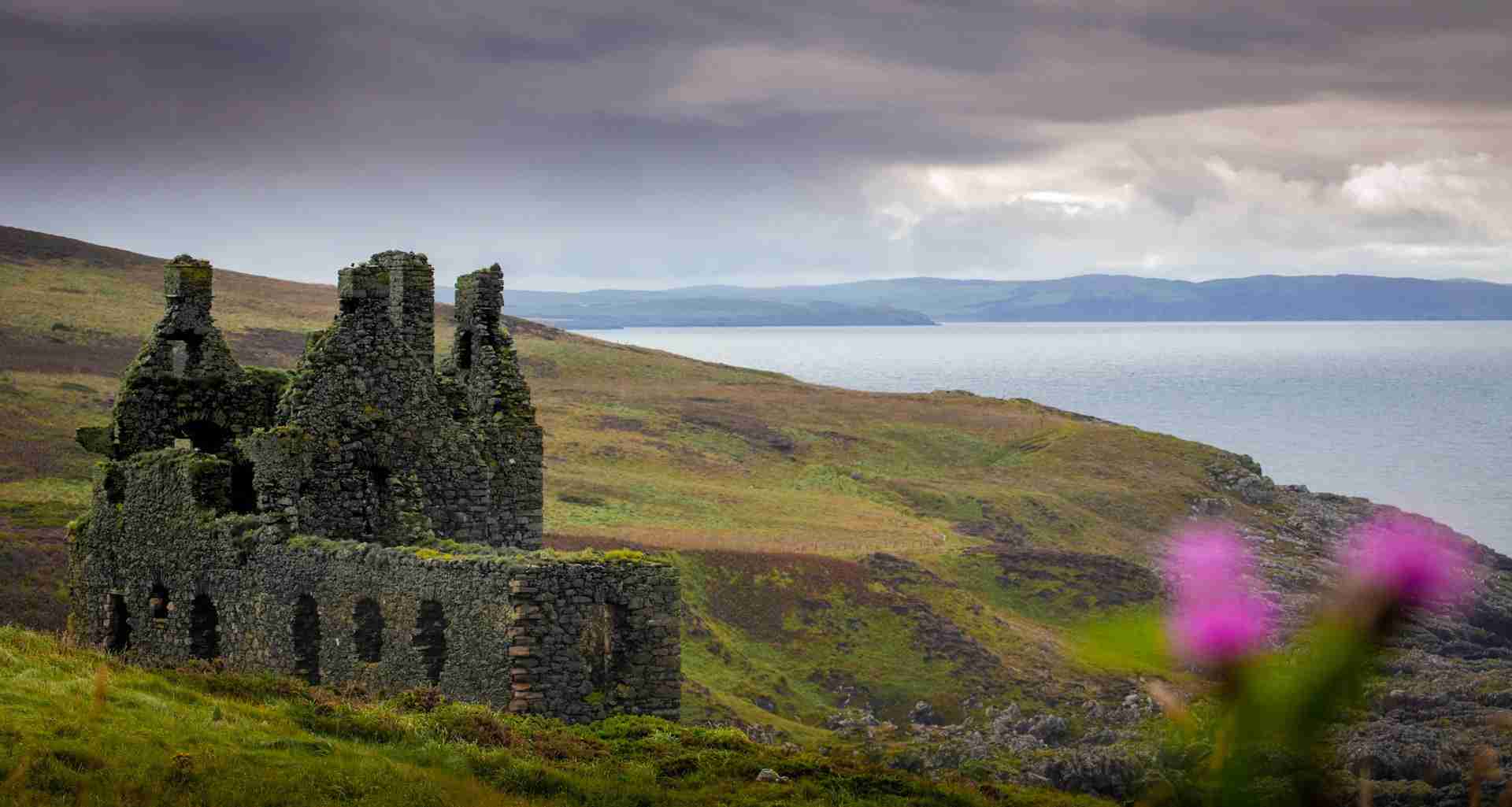
Perched dramatically on a grassy clifftop overlooking the North Channel, Dunskey Castle is one of Scotland's most visually powerful and atmospheric historic ruins. Located just outside the fishing village of Portpatrick in Dumfries and Galloway, this medieval castle offers a unique blend of rugged seascapes, weathered architecture, and timeless solitude. Its remote position and crumbling stone walls make it a captivating subject for photographers seeking to explore Scotland's lesser-known coastal gems. With waves crashing below and the wind brushing across the exposed headland, every visit to Dunskey Castle promises fresh compositions, and shifting light.
Best Photography Opportunities
• Clifftop Views of the Ruins
The most iconic angle of Dunskey Castle is from the approach along the coastal path. As you round the bend, the castle appears perched on the edge of the earth, standing against the open sea. This viewpoint works perfectly with a wide-angle lens, especially in the golden hour when the light creates a soft glow on the stone and enhances the contrast between the green grass and blue sea. Try framing the castle slightly off-center to include sky and foreground elements like wildflowers or footpaths, which add both context and depth to your image.
• Castle Walls and Architectural Details
Even though the inside of the castle is not open to the public, you can still explore the exterior remains closely. Stone arches, window frames, and fragmented towers offer wonderful subjects for close-up shots. Use a mid-range zoom to isolate parts of the wall that catch the light or show interesting patterns in the stone. Lichen, cracks, and moss all add textural richness. Shooting at different times of day changes the way shadows play across the masonry, so it's worth revisiting the site under different lighting conditions.
• Sea and Cliff Interplay Beneath the Castle
If you venture down the rocky shoreline beneath the cliffs, you can capture dramatic upward-looking perspectives of the ruins silhouetted against the sky. These shots are particularly powerful when waves are crashing onto the rocks below or when clouds are moving quickly across the background. A tripod and neutral density filter can help you create soft, flowing water textures. Always be mindful of tides and slippery terrain if you explore this area.
• Pathway Leading Toward the Castle
The grassy trail from Portpatrick to Dunskey Castle is more than just a route—it's a framing device. Use it to lead the eye directly to the ruins. Shoot from a low angle to emphasize the path, or include the coastal cliffs and sea to enrich the background. Early morning mist or low sunlight casting shadows across the grass can enhance the scene's depth and mood. This is a perfect opportunity to tell a visual story about journey, history, and discovery.
• Storm Clouds and Changing Weather
This part of Scotland often sees fast-changing skies, which can be a gift to landscape photographers. Moody clouds rolling over the sea, a burst of sunlight breaking through after rain, or a rainbow arcing across the sky all offer incredible photographic moments. Bring a wide-angle lens and consider bracketing exposures to handle the contrast between sky and land. On days with heavy weather, the castle takes on an even more haunting and majestic appearance, perfect for black-and-white conversions.
Best Time to Visit
Dunskey Castle can be photographed in every season, with each one offering its own advantages. Spring brings fresh green fields, blooming coastal plants, and long days for shooting. In summer, the light lasts well into the evening, and the sea often appears deep blue under clear skies. This is the best time for vibrant, colorful landscape photography.
Autumn covers the nearby hills in golden tones, with warm side lighting in the mornings and evenings giving the ruins a gentle glow. Fewer visitors during this season mean you'll likely have the area to yourself. Winter, though colder and more unpredictable, creates a dramatic atmosphere with grey skies, crashing waves, and the possibility of frost on the grass and stone. This stark setting makes for compelling and powerful imagery.
In terms of daily light, early morning and late afternoon offer the most flattering conditions. Sunrise provides soft, directional light that highlights textures and creates long shadows across the land. Sunset paints the cliffs and castle in warm tones. The hour just after sunset (blue hour) can also be very effective for more contemplative, atmospheric shots.
How to Get There
Dunskey Castle is situated just outside the village of Portpatrick on Scotland's southwest coast. From the town of Stranraer, take the A77 to the A718 and follow signs to Portpatrick. The journey takes about 15 minutes by car. Once in the village, you can park at the main lot near the harbor.
From the harbor, a well-trodden trail follows the coast and leads directly to the castle site. The walk is approximately half a mile and offers beautiful views of the sea and surrounding cliffs along the way. The path is mostly flat but can become muddy or slippery after rain, so sturdy footwear is recommended.
There is no admission fee, and the land around the ruins is open to the public. However, the castle structure itself is unsafe to enter, and visitors should respect posted warnings. There are basic amenities, including restrooms and cafés, in Portpatrick. Plan to bring water and snacks if you intend to spend several hours exploring and shooting.
Essential Gear for Coastal Ruin Photography
A flexible kit is ideal for photographing Dunskey Castle. A wide-angle lens (such as 16–35mm) allows you to capture the full scope of the castle and its surrounding landscape. A mid-range zoom (24–70mm) gives you versatility for tighter compositions or for focusing on stonework and other features. For compression shots or to frame the castle with distant cliffs or skies, a telephoto lens can also be helpful.
A sturdy tripod is essential for long exposures and to help maintain sharpness during windy conditions. Neutral density filters allow you to blur the motion of the sea for a dreamlike effect. A polarizing filter can reduce reflections off wet surfaces and enhance the saturation of skies and foliage.
Waterproof shoes or hiking boots are necessary, especially if you plan to explore the lower cliffs or rocky shoreline. Bring a lens cloth, extra batteries, a waterproof camera cover, and layered clothing to stay comfortable in changing weather. Scotland's coast is famously unpredictable, so always come prepared for rain and wind—even in summer.
Nearby Photography Locations
Just minutes away, this working harbor is full of charm. Colorful boats, stone walls, and waterfront cottages provide a lively setting for street-style and maritime photography. It is especially photogenic in the early evening when warm light reflects on the water.
Located a few miles north of Portpatrick, this white lighthouse stands proudly on a cliff overlooking the sea. The winding path to the lighthouse and the dramatic coastline make it an ideal subject for minimalist seascapes and coastal compositions.
Continuing beyond the castle, this long-distance trail leads along the coast and through rolling hills, offering many elevated views of the cliffs and ocean. Photographers will find expansive landscapes, wildlife, and ever-changing light conditions along the route.
A short drive east, the town of Stranraer offers access to the calm waters of Loch Ryan. Reflections, misty mornings, and boats anchored in the harbor create peaceful and balanced compositions ideal for early morning photography.
As Scotland's southernmost point, the Mull of Galloway delivers sweeping views, tall cliffs, and a classic lighthouse perched above the ocean. This site is perfect for sunset photography, with vast skies and uninterrupted horizons stretching toward Northern Ireland.
Comments
Loading comments…