
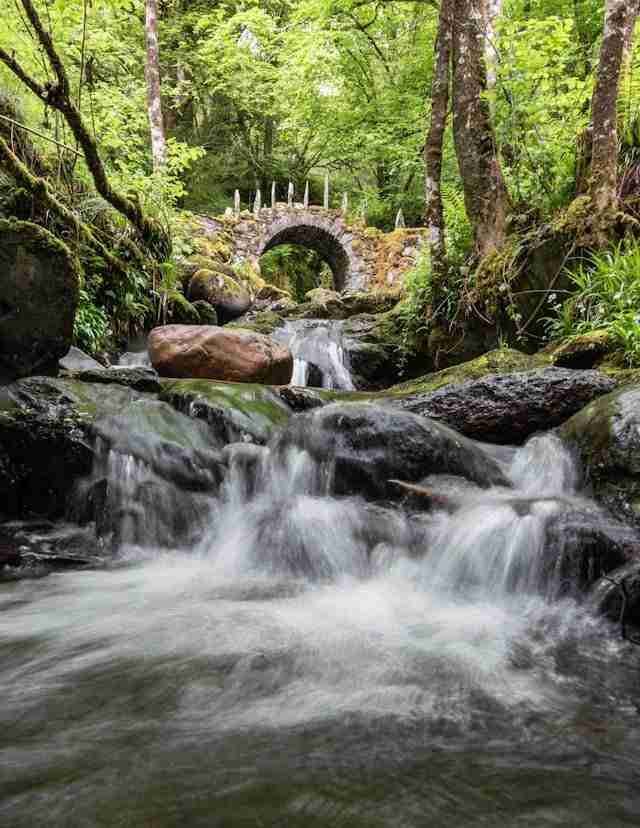
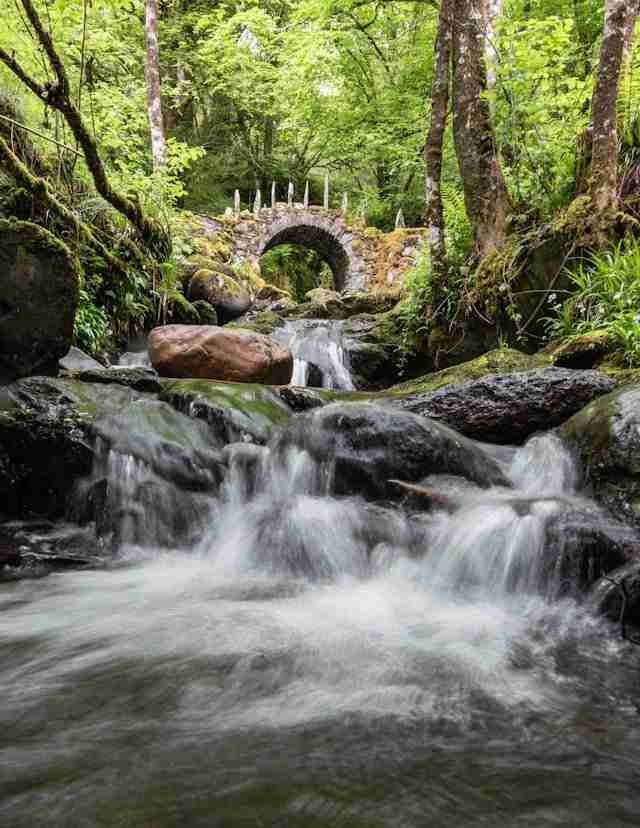
Hidden deep in the woodlands of Glen Creran near Appin, the Fairy Bridge is a moss-covered stone arch that spans a narrow mountain stream, seemingly untouched by time or change. Overgrown, tucked into a quiet glen, and wrapped in myth, this bridge isn't just a landscape element—it's a story waiting to be told. Though modest in size, it holds an undeniable sense of magic and solitude that has made it a favorite for those who specialize in atmospheric and narrative landscape photography.
The surrounding glen, with its thick moss, ferns, and trickling water, creates a compositionally rich environment where every angle offers texture, depth, and layered light. It's a place that changes dramatically with the seasons and weather, where a beam of sunlight or a veil of mist can entirely transform the feel of an image.
Best Photography Opportunities
• Classic Frontal Bridge Composition
One of the most effective ways to capture the Fairy Bridge is from downstream, where the full arch is visible as it spans the stream. Shooting from a low angle allows you to include the water flowing beneath and leads the viewer's eye toward the arch. Use a wide-angle lens to exaggerate the curve and bring in the forest canopy, especially effective when autumn leaves or spring greens fill the upper frame. In overcast light or light drizzle, the moss glows vividly and the textures become rich without harsh contrast.
• Reflections and Long Exposures in the Water
The pool below the bridge offers opportunities for long exposure photography to smooth the water and enhance the mirror-like reflection of the arch. Use a tripod and ND filter to experiment with exposure times from 2 to 15 seconds depending on light. When the water is calm, you can frame a nearly perfect arc mirrored beneath the bridge. Even in rougher water, longer exposures create a soft, dreamlike quality that suits the location's folklore.
• Side-On Angle Through Trees and Ferns
Moving slightly off-trail and to the side of the bridge allows you to shoot through natural framing elements like tree trunks or branches. This approach emphasizes the structure's age and isolation and adds foreground interest that draws the eye inward. A shallow depth of field works well to blur ferns and foreground moss, letting the bridge emerge softly from its environment. This technique is ideal in soft morning light or during misty conditions.
• Detail and Texture Shots of Stonework and Moss
The bridge is blanketed in vibrant moss, lichens, and creeping ivy. Get in close with a macro or mid-range lens to explore the surface—look for areas where stone meets root, where water droplets catch on fern fronds, or where sunlight glows through translucent leaves. These kinds of shots provide excellent supporting images if you're building a narrative series around the glen.
• Atmospheric Conditions and Seasonal Interpretations
The bridge comes alive under diffused or misty conditions. Autumn adds rich golden tones to the leaves, while spring brings dense new growth and wildflowers. In winter, frost clings to the moss and the forest becomes a quieter, starker place. Fog, drizzle, or filtered sunlight through trees can all create light rays or haze that add depth and magic to your frame. Always revisit after rain—wet stone enhances contrast and makes colors pop.
Best Time to Visit
The Fairy Bridge is best photographed in early morning or late afternoon, especially during the spring and autumn months. Morning mist often lingers in the glen, and the soft, low light filtering through trees gives the scene a natural diffusion that enhances mood and reduces glare. This is the time when the forest feels most enchanted—quiet, dew-laden, and saturated with color.
Autumn offers peak tonal variation, with fallen leaves carpeting the ground and golden light streaking through thinning branches. The contrast between the bridge's green moss and the warm, decaying foliage is especially photogenic. Spring delivers vivid greens, wild garlic, and soft blooms, casting the glen in a fairy-tale light that works well for wide and close-up compositions alike.
Winter brings a more austere atmosphere—bare trees, frosted moss, and sometimes snow accentuate the textures of the landscape and the stonework itself. Short daylight hours make timing more critical, but even in low light, the glen retains its sense of stillness and timelessness. Summer, while lush and alive with birdsong, introduces harsher midday sun that can be difficult to manage under the trees. To get the most out of this season, aim for overcast days or arrive early before the light becomes too directional.
The bridge photographs best under diffuse conditions. Overcast skies, soft rain, or light fog all enhance the forest's natural tones and reduce the dynamic range between highlights and shadow. It's a location that rewards patience and repeated visits across different seasons and times of day.
How to Get There
The Fairy Bridge is located in Glen Creran near the village of Appin, in Argyll, Scotland. From the A828 between Ballachulish and Oban, turn inland on the single-track road marked Glen Creran and follow it for several miles. Eventually, you'll reach a forestry track and a small parking area near Elleric.
From the parking spot, the trail to the Fairy Bridge is unmarked but well-used. It begins as a forest road, then transitions to a rougher woodland path along the river. The walk takes around 20 to 30 minutes each way. Good hiking boots are recommended, especially in wet conditions, as the trail can be muddy and uneven. The bridge itself is not signposted, so keep an eye out for the mossy arch slightly off to the right of the path.
Because the location is relatively secluded and lacks signage, it's rarely crowded—making it an ideal stop for landscape photographers seeking quiet, contemplative spaces.
Recommended Gear and Shooting Tips
A wide-angle lens (16–35mm) is essential for full-bridge compositions that include both the stream and the forest surroundings. A 24–70mm lens is excellent for mid-range scenes and isolated compositions that highlight parts of the structure or trail. Bring a macro lens if you want to explore close-up details like moss textures, running water, or decaying leaves.
A tripod is critical for long exposures and low-light woodland shooting. A 6-stop or 10-stop neutral density filter allows for extended shutter speeds even during the day, helping to smooth water and add atmosphere. A polarizer will enhance color saturation and reduce glare from wet stone or leaves—especially useful after rain.
Pack a waterproof cover and lens cloths, as rain and mist are common. Be prepared to shoot handheld at wide apertures if working under tree cover in early or late light. Shoot RAW to preserve shadow detail, as dynamic range can be extreme between sky and shaded forest.
Scout compositions carefully before setting up. Because of the narrow paths and irregular ground, sometimes moving only a few feet makes a dramatic difference in perspective. Be patient and allow the light to shift—this is a location where subtle changes in atmosphere are everything.
Nearby Photography Locations
Located south along the A828, this dramatic castle sits on a tidal islet and offers moody coastal compositions, especially at high tide or in stormy light. Sunrise and sunset create incredible contrast as the isolated structure reflects in the loch, framed by distant hills and shifting clouds.
A short drive inland, this glen features waterfalls, woodland, and rugged mountains—perfect for wide, cinematic landscapes and dramatic weather conditions. The winding single-track road provides countless pull-offs for spontaneous compositions, particularly when mist clings to the slopes or deer roam near the roadside.
• Loch Creran Shoreline
Downstream from the glen, the shoreline offers views of still water, oyster beds, and distant Highland hills. At low tide, exposed textures of the sea floor and layered rocks make for compelling foreground elements in longer landscape frames.
A moody, textured site with industrial history, deep pools, and strong leading lines in rock formations—ideal for black and white work or overcast days. Reflections off the quarry pools and angular stonework offer abstract compositions that contrast beautifully with nearby natural scenery.
A historic forest location just north of Glen Creran, tied to Jacobite legend and surrounded by lush woodland. The light filtering through the tall Scots pines gives the area a cathedral-like quality, particularly effective in soft morning light or during fog.
The Fairy Bridge of Glen Creran offers more than a scenic view—it's a quiet, moss-draped moment in Scotland's storied landscape. For photographers who enjoy slow, thoughtful work among textures, shadows, and folklore, it's a gem tucked into the Highlands, waiting to be rediscovered with each season and shift of light.
Comments
Loading comments…