
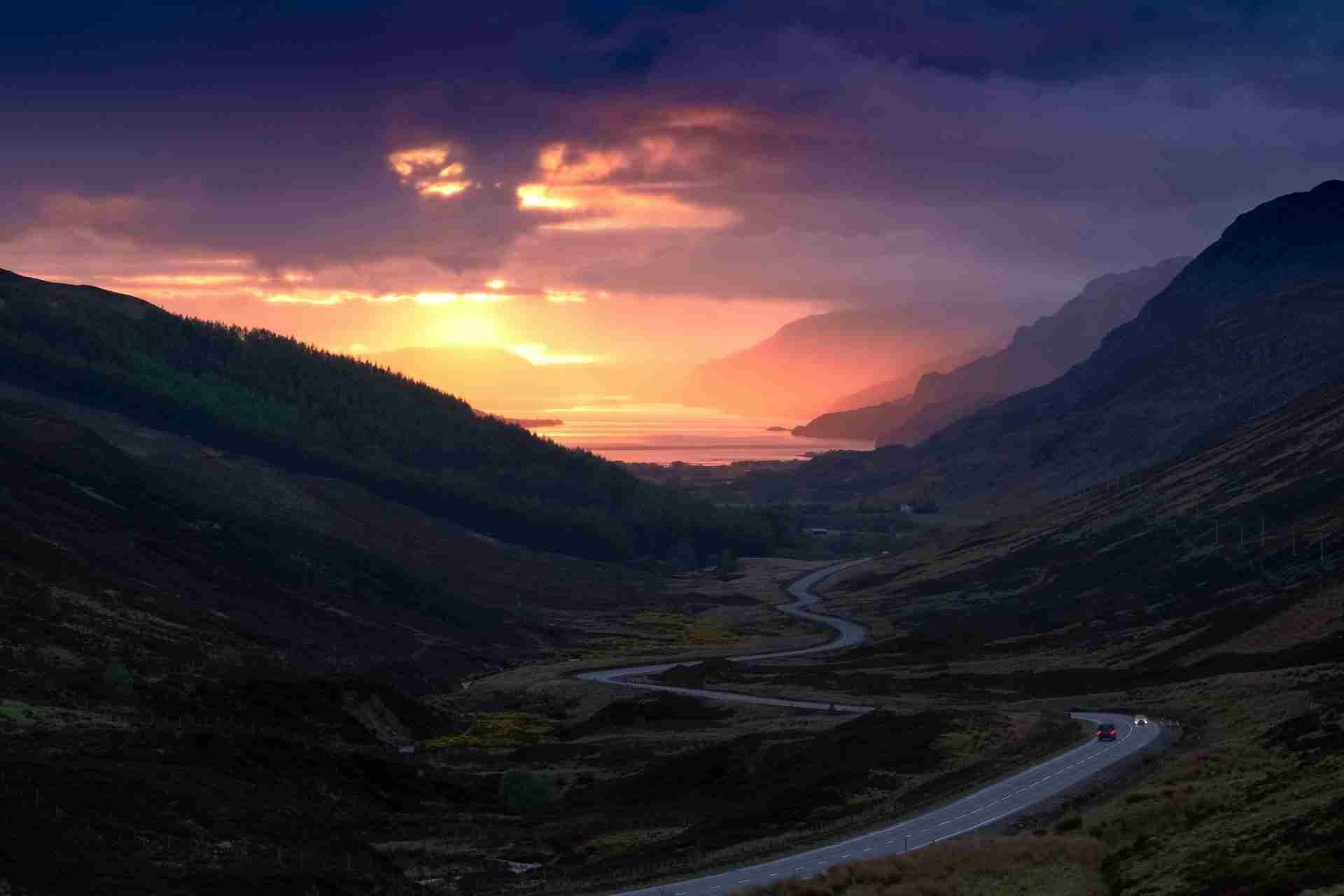
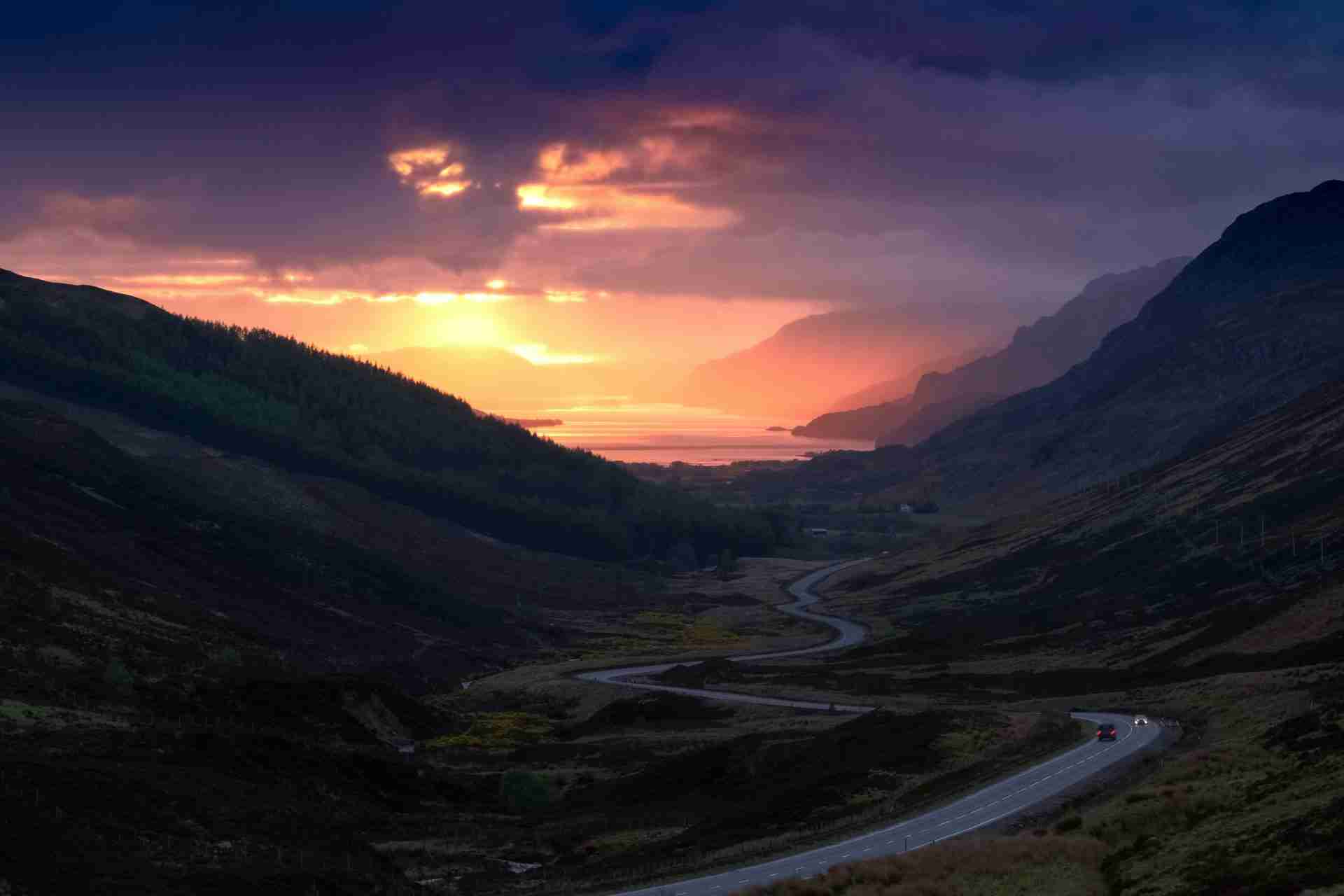
The Glen Docherty Viewpoint, just off the A832 in the Scottish Highlands, offers one of the clearest and most balanced landscape scenes along the North Coast 500. From the viewpoint, a long glen stretches westward, framed by rolling hills and centered by a quiet road that leads toward distant Loch Maree. The valley opens up naturally in front of you, with no trees or obstacles blocking the view, making it easy to set up a composition within minutes of arriving. It is a popular stop for travellers driving the route, but it still feels peaceful, especially early or late in the day. For landscape photographers who appreciate clean lines, natural framing, and big skies, this spot is as dependable as it is rewarding.
Best Photography Opportunities
• Wide View of the Glen and the Road to Loch Maree
This is the most classic composition from the viewpoint. The road creates the perfect leading line through the center of the valley, pulling the eye straight toward Loch Maree and the mountain ridge beyond. A wide lens allows you to take in the full scene, including some foreground detail like grass or rock. This shot works well in almost any weather, but morning and evening light bring out more shape in the hills. If you shoot during softer light, the contrast between the pale road and darker hills becomes more pronounced, adding strength to the overall frame.
• Telephoto Framing of Layers and Light
Using a longer lens, you can compress the valley into a tighter frame, highlighting the shapes of the hills and the subtle curve of the road. This setup is especially effective when low clouds are moving through the scene or when mist softens the view into layers. The distant peaks near Loch Maree begin to stand out more clearly in these conditions, creating a sense of depth. You can also use this angle to exclude the sky and focus on the land itself. It is a good way to build a more abstract version of the scene with clean bands of tone and texture.
• Cloudy Weather and Soft Textures
Even when the sky is overcast or rain is moving in, this viewpoint remains a strong location to shoot. The glen holds its shape well under flat light, and the grass and rock show more even texture without deep shadows. You can lean into the moodier atmosphere and shoot slightly underexposed to keep detail in the clouds. A standard lens will give you the flexibility to frame either a centered valley or shift slightly to the left or right. These images tend to have a quiet, steady feel and work well for black and white conversions later on.
• Blue Hour and Light Trails on the Road
If you stay past sunset, the glen takes on cooler tones and the road becomes a good spot for capturing light trails from passing cars. Use a tripod and long exposure settings to record headlights as they move along the curve of the road. This adds a modern element to the scene and gives it a little movement. The soft blue light in the sky pairs well with the pale yellow of headlights or the red of taillights, depending on direction. It is a subtle way to turn a quiet landscape into something more dynamic without losing the natural feel.
• Foreground Framing with Heather or Rock
A few steps away from the parking area, you will find patches of heather, mossy rock, and tufts of grass that can help shape your frame. Including foreground detail like this gives your photo more depth and makes the glen feel more immediate. A wide lens lets you pull these elements into the lower part of your frame while still holding the line of the valley beyond. Early morning is best if you want dew or soft side light on the grass and stone. You do not need to move far from the viewpoint to find these additions, and they help break up the symmetry of the main shot.
Best Time to Visit
Glen Docherty is accessible all year, but the best time to shoot is from late spring through early autumn. May and June bring fresh green to the hills, while August and September offer warmer tones and more stable weather. Mornings tend to be quieter and are more likely to offer calm conditions and soft light across the valley. Evening light works well for color and long exposures, though wind may pick up later in the day. Cloudy days are common in this part of Scotland and can still provide strong images thanks to the valley's shape and the natural contrast of the road against the land.
How to Get There
The viewpoint is located just west of Kinlochewe along the A832, part of the North Coast 500 route in Ross-shire. It is a marked pull out with space for several vehicles and does not require any walking or climbing. There are no barriers or fences, and you can shoot directly from the edge of the turnout or take a few steps for a slightly elevated view. The road is paved and well maintained, but weather in the Highlands can change quickly, so check forecasts before heading out. There are no fees or restrictions for photography at the site. The location is best visited early in the day if you want to avoid traffic or tour groups passing through.
Recommended Photography Gear
Bring a wide angle lens to capture the full valley and road in a single frame. A standard zoom or a 70 to 200mm lens will help you isolate sections of the glen or work with layering and compression. A tripod is recommended for low light or long exposure shots, especially if you plan to shoot at blue hour or after sunset. A polarizing filter is helpful on partly sunny days to cut glare and increase contrast in the hills. Waterproof shoes are useful if you plan to move off the pavement, particularly in wetter months when the surrounding ground can be soft. A lens cloth is a good idea for cleaning off moisture from mist or light rain.
Nearby Photography Locations
Continue west along the A832 and you will reach the shores of Loch Maree, one of the most photogenic lochs in Scotland. With small islands, tree covered slopes, and mountains on both sides, it offers endless shoreline compositions and moody reflections.
Just northeast of Glen Docherty, this reserve has well maintained trails, rocky outcrops, and views into the surrounding mountain range. It is a great place for hiking with a camera and works well in both wide and detailed compositions.
• Kinlochewe Viewpoint
Before reaching Glen Docherty, you can stop at a separate viewpoint near Kinlochewe that looks toward Slioch and Loch Maree from a different angle. The light here in early morning is especially good, and the terrain feels more open and broad.
Further along the route toward Torridon, the Shieldaig area offers coastal views, winding roads, and layered hills. The small village and sea loch make for excellent evening compositions when the tide is in and the sky opens up.
The peaks near Torridon rise steeply and offer bold shapes, often with mist or cloud brushing their tops. There are roadside views as well as trails into the hills, and the light shifts constantly across the slopes, making it a strong spot for dynamic shots.
Comments
Loading comments…