
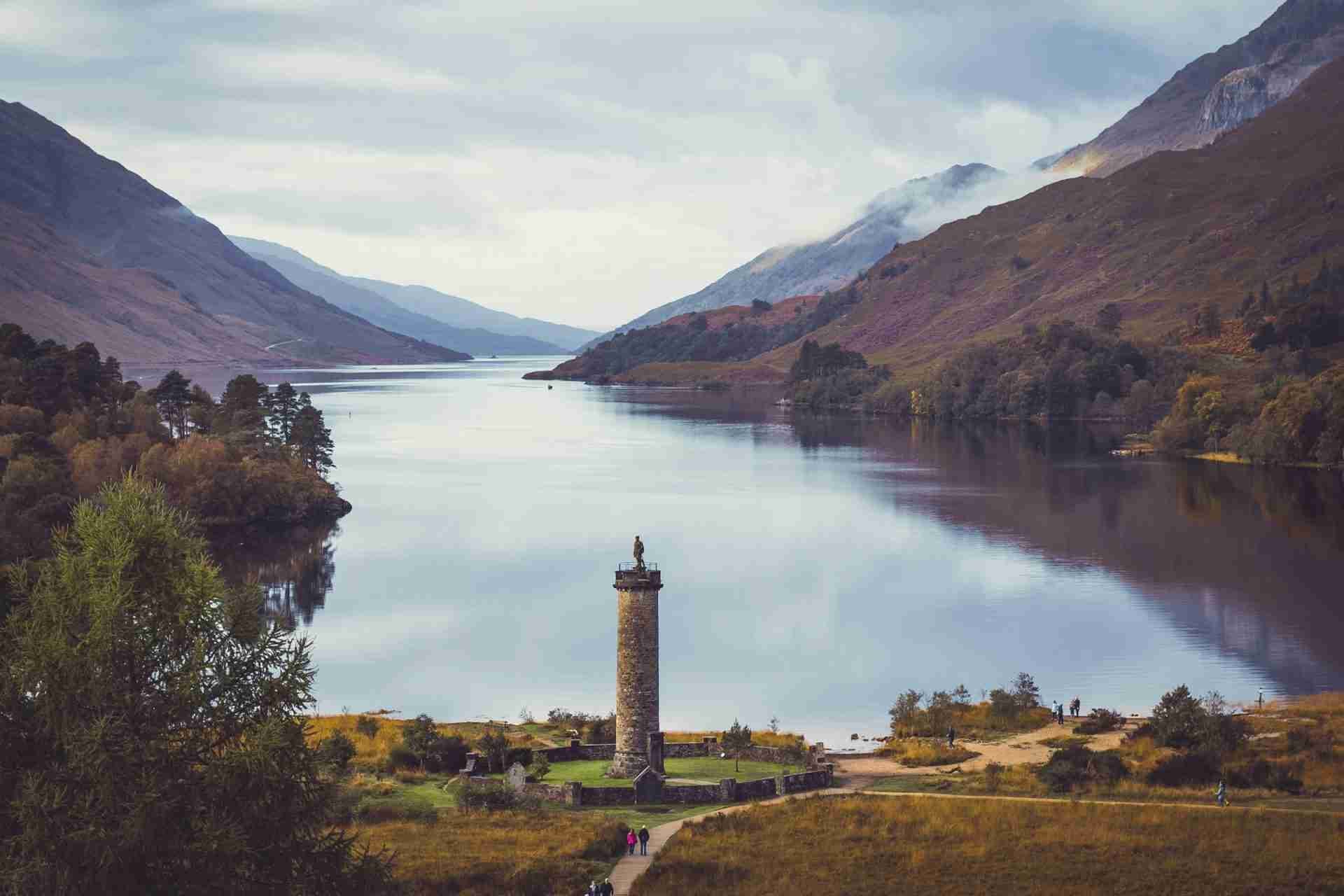
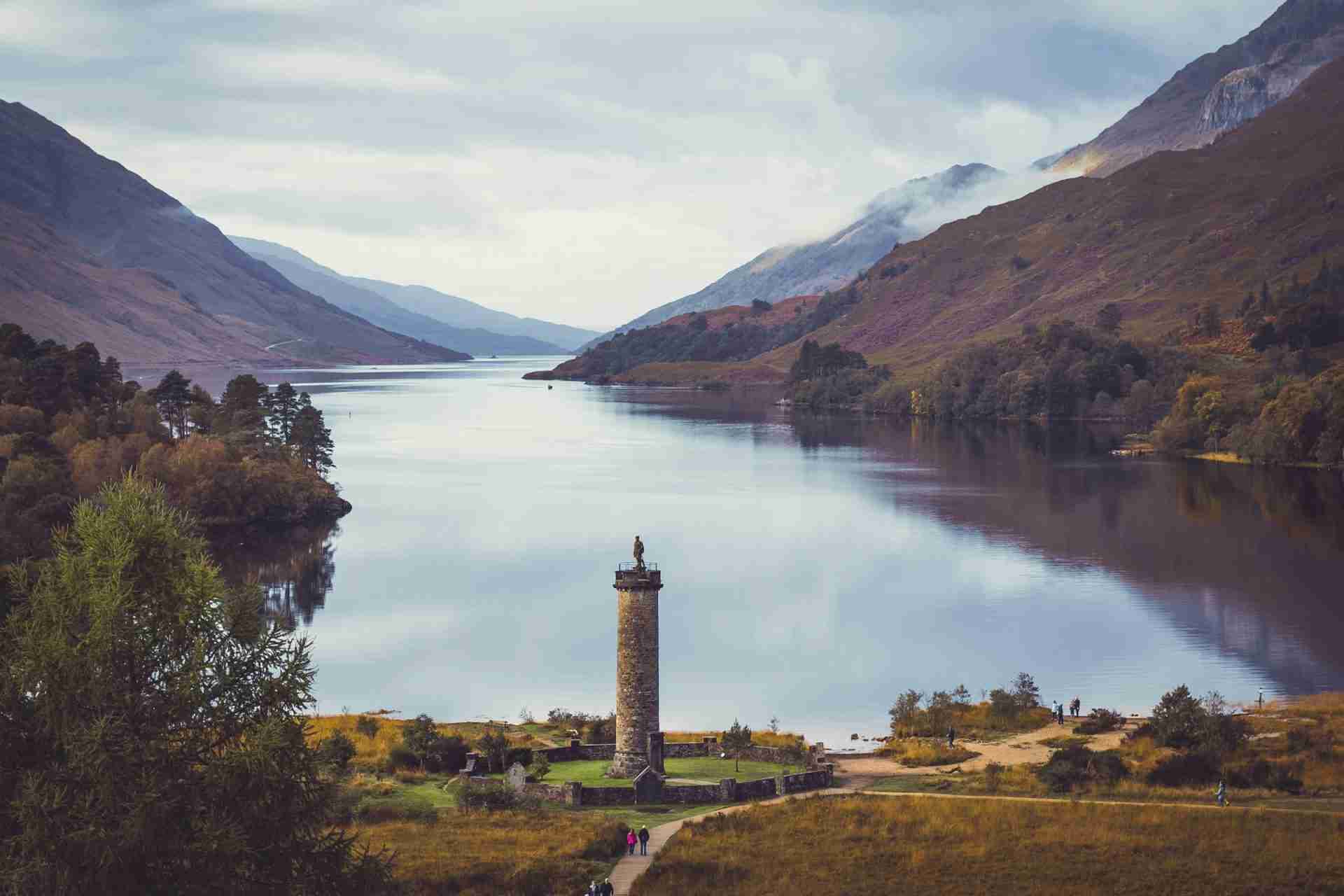
At the head of Loch Shiel, the Glenfinnan Monument stands within a broad Highland valley where land, water, and weather define the photographic experience as much as the structure itself. The monument's tall, restrained form provides a strong focal point in a landscape that is otherwise open and constantly shifting. Light moves quickly through the glen, changing contrast and tone throughout the day and encouraging photographers to slow down and respond rather than rush. The surrounding hills give scale without overwhelming the frame, allowing compositions to feel balanced and intentional. This is a location that rewards patience, careful framing, and repeated observation rather than chasing dramatic moments.
Best Photography Opportunities
• Monument Viewpoint Across Loch Shiel
The elevated viewpoint across the road offers the most controlled and adaptable composition of the monument within its setting. From this position, photographers can fine tune how dominant the column appears simply by adjusting focal length rather than repositioning. Morning light often reaches the monument before the hills behind it, creating natural separation and depth without relying on heavy contrast. Passing clouds introduce layers that subtly reshape the background from moment to moment. Remaining here for an extended period allows you to work a single composition through multiple lighting conditions without repetition.
• Loch Shiel Shoreline
Shooting from the shoreline introduces foreground elements that soften the monument's strong vertical lines. Stones, grasses, and gentle ripples help guide the viewer into the frame while keeping the image grounded in place. Calm mornings may produce partial reflections that feel natural and understated rather than perfectly mirrored. When wind increases, longer exposures can smooth the water while preserving movement in the sky. These perspectives work particularly well when cloud cover lowers the visual ceiling of the valley.
• Elevated Angles Around the Monument Grounds
Slight elevation near the monument shifts emphasis away from height and toward spatial relationships within the glen. From these angles, the column feels integrated into the landscape rather than isolated from it. Side light reveals surface texture in the stone, adding depth without overwhelming contrast. This approach suits photographers who prefer structured compositions built on balance and alignment. It also allows for tighter framing while still retaining a clear sense of location.
• Working With Changing Weather
Glenfinnan responds strongly to unsettled conditions, where light and shadow move quickly across the valley. Passing showers often create brief moments of clarity followed by softer contrast, offering a wide range of visual outcomes from the same viewpoint. These transitions reward photographers who are willing to wait rather than constantly relocate. Reworking one composition through shifting conditions often produces a stronger and more cohesive set of images. This location favors awareness and timing over constant motion.
• Detail Studies and Isolated Elements
Beyond wider compositions, the monument and its immediate surroundings offer opportunities for tighter studies. Sections of stonework, weathered surfaces, and the relationship between the column and sky can all be isolated with longer focal lengths. These images work well when light is flat, allowing texture and form to take precedence over contrast. Focusing on details provides variety without leaving the main shooting area. This approach is especially useful during midday when broader scenes may feel less responsive.
Best Time to Visit
Late spring through early autumn offers the most dependable balance of access, daylight, and workable conditions. Summer provides very long days, which allow photographers to scout locations in neutral light and return when conditions improve later in the day. Early mornings during this season are particularly useful, as lighter winds often create smoother water on the loch and more stable compositions. Autumn brings shorter days but introduces more frequent weather changes, which can create layered skies and moving light across the hills. These months often reward photographers who are flexible with timing and comfortable working between showers rather than waiting for clear forecasts. Winter can produce strong results when snow settles on surrounding ground, but daylight is limited and access can be affected by road conditions. Across all seasons, early morning consistently offers the best balance of light direction, reduced wind, and fewer visitors.
How to Get There
The Glenfinnan Monument is easily accessible along the A830, with clear signs directing visitors to the site. A dedicated car park beside the visitor center provides direct access to the monument grounds and nearby viewpoints. Entry to the monument requires a fee, although some viewpoints can be accessed without entering the main grounds and paying the fee. Footpaths are well maintained but can become wet and uneven after rain, so stable footwear is important when carrying camera equipment.
Recommended Photography Gear
A versatile lens selection is important at Glenfinnan, as compositions range from wide landscape views to tighter studies of architectural detail. A standard zoom paired with a longer lens allows photographers to adjust framing without frequently changing position, which is helpful when light changes quickly. A sturdy tripod is essential for low light work and for maintaining consistency when working the same composition over time. Neutral density filters can be useful for controlling shutter speed when wind affects the loch or when cloud movement becomes part of the image. Weather protection for both camera and photographer is critical, as rain and moisture are common even during calm periods. Gloves that allow camera control and a simple cloth for managing condensation can make longer sessions more productive.
Nearby Photography Locations
Within walking distance of the monument, the viaduct offers strong curves and elevation that contrast with the vertical form of the column. It works well as a primary subject or as part of a broader visual sequence.
• Loch Eil
A short drive east, Loch Eil provides quieter shorelines and broader open views than Glenfinnan. Its calmer character suits softer light and slower shooting sessions.
West of Glenfinnan, the coastline near Arisaig introduces sand, rock, and distant island views that differ completely from the inland valley. This area allows photographers to vary subject matter without travelling far.
South of Glenfinnan, this loch offers more sheltered water and a tighter surrounding landscape. It works well for layered compositions and calmer reflections.
• Road to the Isles Viewpoints
Along the A830, several pull offs provide elevated views across lochs and hills. These spots are ideal for spontaneous shooting when light breaks unexpectedly.
Comments
Loading comments…