
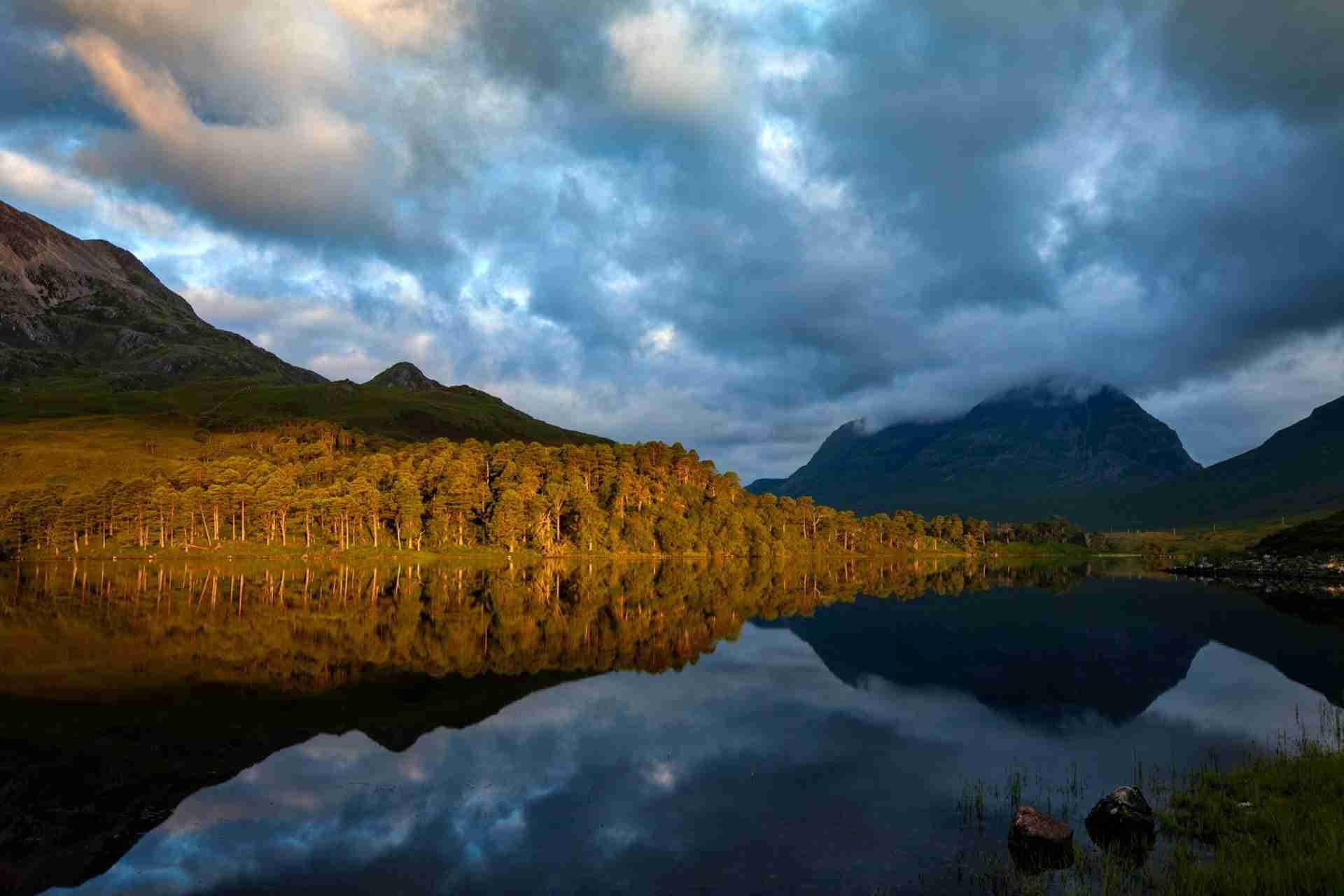
Framed by towering sandstone peaks and reflecting some of the clearest skies in the Scottish Highlands, Loch Torridon is a photographic haven for those drawn to bold landscapes and quiet, expansive spaces. This sea loch, flanked by the dramatic mountains of Liathach, Beinn Alligin, and Beinn Eighe, offers ever-shifting moods—from wind-scoured minimalism to mirror-still serenity—depending on the time of day and the whims of Highland weather. With its rich blend of geological drama, ancient woodlands, and picturesque shoreline villages like Shieldaig and Torridon, this region provides both sweeping wide-angle compositions and intimate, atmospheric details. For serious landscape photographers, Loch Torridon is not just a stop along the North Coast 500—it's a destination in its own right.
Best Photography Opportunities
• Reflections on a Calm Morning
: When the wind drops and Loch Torridon's surface flattens, the mirror-like reflections of Liathach and Beinn Alligin are breathtaking. Early morning is best, when light pours in from the east, illuminating the snow-streaked ridgelines and the rugged foreground of heather and stone. A polarizer helps control glare and intensifies color, while a 24mm or wider lens captures the full breadth of the scene. Look for small pools along the shore that double the drama of the peaks in tighter, more focused compositions.
• Golden Light on Liathach
: One of Scotland's most formidable mountains, Liathach dominates the northern side of the loch with ridges that catch fire during sunset. The best viewpoints are from the western shore near Inveralligin or from higher ground along the Torridon to Diabaig single-track road. As the sun sinks, side-lighting creates rich tonal gradients on the corrugated face of the mountain. A longer focal length (70–200mm) isolates these patterns beautifully, while wider shots benefit from strong foreground interest—such as lone trees, boulders, or patches of bracken catching the same warm light.
• Shieldaig Island from the Village Pier
: In the heart of the western loch, the small pine-covered island near Shieldaig is a perfect subject for minimalist compositions. From the village pier, you can frame the island with distant mountains behind, or wait for low tide to use seaweed-covered rocks as foreground texture. This spot is ideal during blue hour or on misty mornings, when subdued light and soft tones lend a painterly quality to the scene. Neutral density filters enable long exposures that smooth the water and accentuate mood.
• High Vantage from Beinn Eighe Nature Reserve Trails
: A short but steep ascent along the Beinn Eighe Woodland Trail or the Mountain Trail yields commanding views across Loch Torridon to the west and the jagged skyline of Torridonian sandstone peaks to the north. These elevated viewpoints are excellent for capturing the scale and drama of the Highland landscape, particularly in the shifting light of late afternoon. Cloud shadows moving across the loch and hillsides create dynamic layers. Keep an eye out for eagles, deer, and passing light shafts—long lenses are ideal for compressing these elements into evocative frame-within-frame compositions.
• Storm Light and Winter Drama
: In colder months, snow on the summits and fleeting storm light transform Loch Torridon into a scene of raw, cinematic power. Shooting from the southern shore, you can frame the loch against fast-moving weather fronts and sunbursts breaking through cloud layers. Bracket exposures to preserve shadow and highlight detail, and consider black-and-white processing to emphasize the contrast between mountain, water, and sky. These are the days that test your patience but often yield the most unforgettable imagery.
Best Time to Visit
Loch Torridon rewards year-round exploration, but certain seasons elevate its photographic potential to extraordinary heights. Spring (late April through June) brings fresh color to the landscape, with bracken and birch brightening the hillsides and longer days that accommodate early morning and late evening shoots. Early summer offers good weather stability and crisp morning reflections with relatively few midges.
Autumn (late September through early November) is a highlight of the Highland year. The slopes blaze with gold and amber, particularly around the native pinewoods and the western hills. Low sun angles extend golden hour conditions and bring out the fine textures of the terrain, while calm days invite powerful reflection shots. Autumn also tends to produce the clearest skies for astrophotography—Milky Way arcs are easily captured over the loch when conditions are right.
Winter introduces a more austere, dramatic mood. Snowcapped peaks, frozen loch edges, and brief windows of golden light define this season, best for those with weather-resistant gear and the patience to wait for passing light. The low winter sun creates long, low-angle shadows even at midday, casting sculptural light across the ridges.
Summer, while accessible, can be less favorable for moody shots due to flatter midday light and the infamous Highland midge, especially near water. However, it offers lush greens, high-level hiking, and late sunsets over the loch that stretch well past 10:00 p.m., giving generous golden hour conditions if you're willing to work late into the evening.
How to Get There
Loch Torridon is located in the Wester Ross region of the northwest Highlands, easily accessed by car via the A896 from Kinlochewe or Shieldaig. The village of Torridon lies at the head of the loch, and provides the most direct access to major viewpoints, parking, and trailheads. Numerous pullouts and lay-bys line the A896 and the minor roads around Inveralligin, Annat, and Diabaig, offering spontaneous stops with stunning roadside views.
There is no entrance fee to access the loch or the surrounding hills, though some trailheads and reserve areas, such as those managed by NatureScot in the Beinn Eighe Reserve, may have voluntary donation boxes or seasonal facilities. Most areas are part of Scotland's access land system, meaning responsible access is free and encouraged under the Scottish Outdoor Access Code. If you're photographing near livestock or crofting areas, maintain distance and avoid crossing fenced areas without clear paths.
Mobile signal is sparse, and petrol stations are few, so plan accordingly. The nearest full services are in Kinlochewe and Lochcarron. Parking is typically free at trailheads and village car parks, but during summer months these fill quickly—arrive early if you're hoping to shoot sunrise from a popular location.
Recommended Gear and Shooting Tips
To photograph Loch Torridon at its best, you'll want a lightweight yet flexible setup that balances rugged conditions with creative control. A wide-angle lens (16–35mm) is essential for dramatic landscapes and foreground-rich compositions, especially near the shoreline. A telephoto (70–200mm or 100–400mm) helps compress peaks and isolate light patterns on distant ridges. A mid-range zoom (24–70mm) is invaluable for general work and works well from roadside stops or moderate hikes.
Bring a sturdy tripod—gusts from the loch can knock over lighter setups—and use a remote trigger or 2-second timer to minimize camera shake. Neutral density filters are critical for long exposure work, particularly when trying to smooth water on breezy days or stretch time during blue hour. A graduated ND filter is helpful for balancing bright skies above darker landforms, especially when shooting toward the sun.
Weather protection is vital. A rain cover or waterproof bag is a must, and microfiber cloths should be kept handy to deal with persistent mist and spray. In autumn and winter, gloves with fingertip access will make all the difference during long waits for the light to change. For aerial work, drones are permitted, but remain alert for raptors and adhere strictly to Civil Aviation Authority guidelines—particularly near nature reserves.
Use apps like Windy or Clear Outside to track weather and light movement across the glens. Loch Torridon is expansive and remote, and scenes can change in minutes. Be prepared to shift locations quickly or wait patiently—some of the best shots come moments after the worst weather seems to have set in.
Nearby Photography Locations
: Just over the Bealach na Bà pass—one of the UK's most thrilling mountain roads—the Applecross Peninsula offers sweeping views of Skye, the Outer Hebrides, and open moorland dotted with isolated cottages. Photographers will find golden hour compositions looking west toward the Cuillin range and excellent coastal abstracts among the sculpted sandstone shorelines.
• Beinn Eighe and Glen Torridon
: One of the most photogenic ridgelines in Scotland, Beinn Eighe's shattered summit and cirques are best approached from Glen Torridon to the south. Here, compositions take advantage of winding burns, glacially carved rock formations, and low, shifting light. Mist in the glen often enhances drama, and wildlife—including red deer—is common at the edges of day.
: About 30 minutes east, Loch Maree offers towering Scots pines, rugged islands, and views of Slioch reflected on still water. Its ancient Caledonian forest and island-dotted expanse create deeply atmospheric images, particularly in the golden hour or under overcast skies that highlight tonal subtleties.
• Diabaig Bay and Cliff Coastline
: Reached by a winding single-track road, Diabaig is a secluded village with access to bold coastal cliffs, rock pools, and sweeping seascapes. The compositions here lean toward wild minimalism—broken light over the sea, stark rocks, and lone croft houses clinging to the hillside. It's a place of strong mood and visual solitude.
• Loch Torridon Viewpoints
: Drive the twisting road from Torridon to Fasaig and Inveralligin for some of the loch's most iconic roadside views. At golden hour, these elevated turns provide layered vistas of the loch below, the red flanks of Liathach catching fire, and the silhouettes of Shieldaig Island in the distance. These stops often go overlooked by passing traffic but reward the photographer who waits.
Whether you're chasing golden light over the sandstone peaks or leaning into the shadows of a stormy Highland afternoon, Loch Torridon invites an unhurried eye and a willingness to embrace the changing rhythm of the land. It is not a place to rush through, but one to return to—again and again—with your camera ready and your senses tuned to the light, the weather, and the silence between.
Comments
Loading comments…