
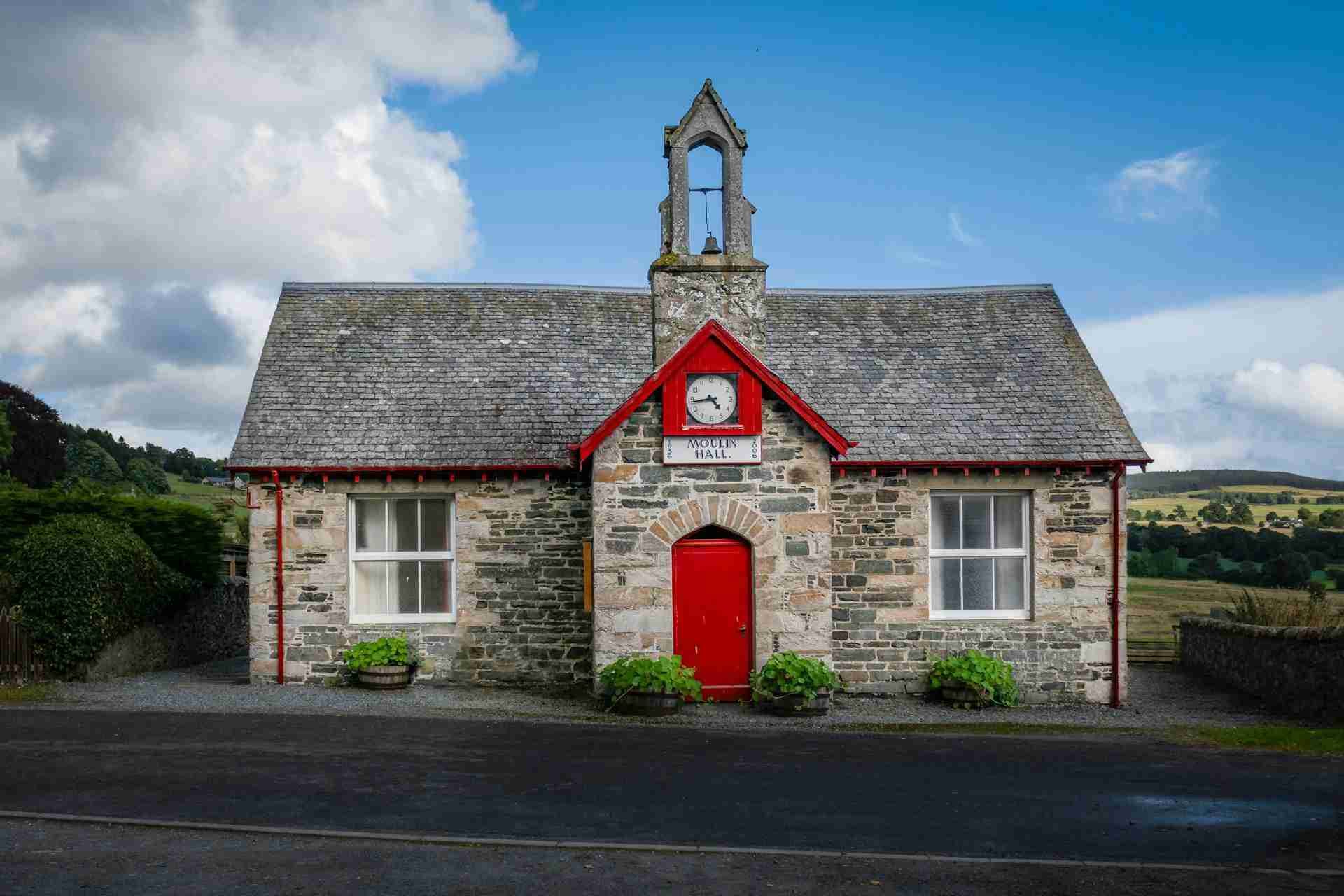
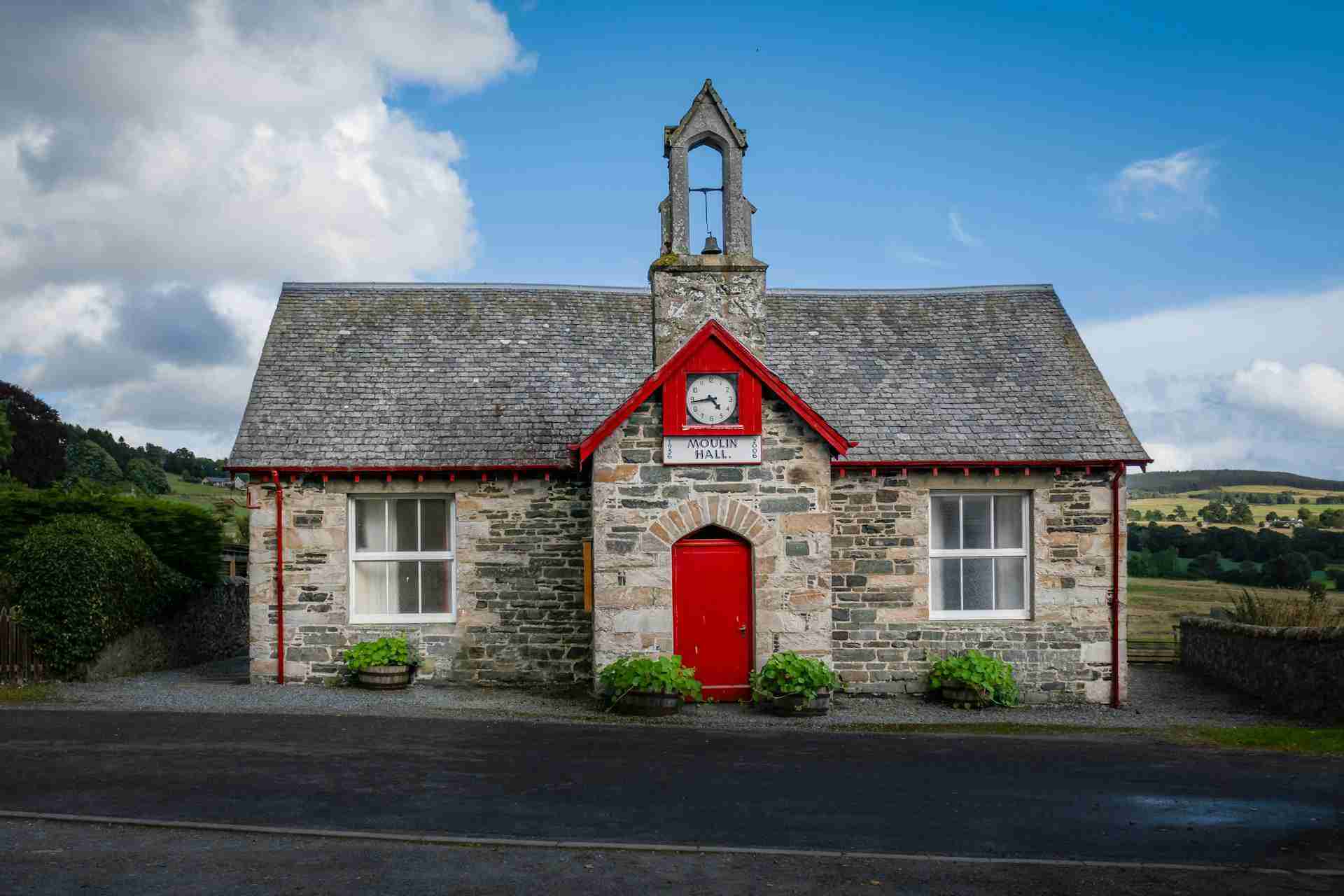
Moulin Hall is a Category C listed Victorian building dating from 1851, located in Moulin Square on the edge of Pitlochry. Originally serving as a village school, then later a laundry, and now a community hall, its stone walls and simple architectural lines carry a timeless charm. The setting, situated amid mature trees, close to historic landmarks like Moulin Church and the Black Castle ruins, gives photographers a chance to blend human history with rural atmosphere and gentle village life.
Best Photography Opportunities
• Morning light on the schoolhouse front
In the early hours of the day, the front of Moulin Hall is softly lit by sunlight, casting long shadows that highlight the texture of the aged stone and wooden doors. With few people around, this is a peaceful time to shoot clean architectural lines and consider framing the hall within its leafy surroundings. Positioning yourself across the square allows you to use the trees and stone walls to add foreground interest. The light also brings out the warm tones in the stonework, creating an inviting image.
• Community life in the afternoon
When community events are held, such as the local Repair Café or seasonal gatherings, the hall becomes a vibrant focal point. Capture candid images of people interacting, entering or leaving the hall, and scenes that show the connection between the community and the historic building. Including details like the signage, bicycles, or chairs set up outside adds depth to your storytelling. A mid-range zoom lens works well to alternate between wide environmental portraits and tighter scenes that focus on gestures or expressions.
• Evening silhouette at sunset
As the sun sets, the hall's roofline and small chimney stand out against the glowing sky. From certain angles in the square, you can position the building so it's framed by surrounding tree branches or lamp posts. A tripod helps stabilize longer exposures, especially when the light fades and you're balancing the remaining glow in the sky with the darker tones of the building. These quiet evening shots are especially effective for evoking a nostalgic village feel.
• Textural studies in decay and renewal
Look closely at the walls, window frames, gutters, and climbing ivy. Over the years, the stone has weathered in ways that tell its story. Moss, lichen, and age-worn carvings make for excellent close-up compositions. Using a macro or short telephoto lens, you can isolate these textures and create abstract studies or detailed documentation. Early morning or late afternoon light brings out the depth in these features and avoids the flatness of overhead sun.
• Nighttime ambience under street lamps
When the square quiets down at night, Moulin Hall takes on a calm, timeless appearance. Streetlights cast a soft amber glow on the stonework and reflect off the nearby pavement. This is an ideal time for long exposure work—using a tripod to stabilize the frame and letting the camera gather light. If the weather is damp, reflections in puddles can add interest. These shots are especially effective for conveying the peacefulness of village life after dark.
Best Time to Visit
Moulin Hall and its surrounding square can be photographed at any time of year, each season offering something different. Spring is one of the most rewarding times, with bright green leaves emerging on the nearby trees and early flowers adding small pops of color. Morning mist is common, especially after a cool night, and it enhances the quiet, historic mood of the square.
In summer, the square is often more lively, especially if events are taking place. The long daylight hours give you more flexibility in planning shoots, but the best light remains in the early morning and late afternoon. Midday light can be harsh, though the surrounding trees provide helpful shade that softens the contrast.
Autumn is a particularly photogenic season here. Leaves turn golden and fall gently across the stone paths and roads, adding warmth to your compositions. You can use fallen leaves in the foreground or include them in wide shots for added color and depth. The angle of the sun is lower, which means better light for most of the day.
Winter brings a more subdued palette, but also clear opportunities for texture-focused compositions. Snowfall or frost highlights the lines of the roof and the curve of the surrounding square. Early sunsets provide the chance to shoot blue hour and night images even in the late afternoon. It's a great time for storytelling and moody village scenes.
Regardless of the season, early mornings are typically quieter and offer soft light, while evenings are best for golden tones and shadow play. Be mindful of local event schedules if you're hoping to capture the hall in use.
How to Get There
Moulin Hall is located in Moulin Square, just north of Pitlochry town center in Scotland. It's easily reached via the A924, with signage pointing toward Moulin. Free parking is available nearby on Kirkmichael Road, and it's a short walk into the square. The site is accessible on foot, by car, or by bicycle.
If you're arriving by train, Pitlochry Station is just over a kilometer away. From there, you can walk up to the hall in about 15 minutes or take a short taxi ride. Buses also serve the Pitlochry area, with stops not far from the hall depending on the route and season.
The grounds surrounding the hall are mostly flat and accessible, though some of the older paths may be uneven. The building's interior is usually open only during events, but the exterior offers ample subjects. Pitlochry has public facilities such as cafés, shops, and restrooms nearby.
Moulin Square itself is a lovely place to wander with your camera. Give yourself time to walk the area slowly and consider returning at different times of day for changing light and activity.
Recommended Gear for Moulin Hall Photography
A balanced kit will serve you well here. Bring a wide-angle lens (16–35 mm) for capturing the hall in context with the village square, nearby trees, and surrounding rooftops. A mid-range zoom (24–70 mm) is ideal for most general shots, including architecture and community scenes. A short telephoto or macro lens (70–200 mm or equivalent) is useful for detail work, especially when photographing textures in the stone walls or ornamental features.
A sturdy tripod is essential for night photography or low-light scenes during twilight or cloudy days. A polarizing filter will reduce glare on stone surfaces and help deepen sky tones. Lens cloths come in handy, particularly in damp weather or mist. Extra memory cards and batteries will keep you shooting during long sessions.
Bring layers and comfortable shoes—village photography often means standing or walking slowly for long stretches. A weather-resistant backpack will keep your gear safe in case of sudden showers, which are not uncommon in this part of Scotland.
Nearby Photography Locations
• Moulin Church and Cemetery
Located just steps from the hall, this 19th-century church features classic stone architecture, a bell tower, and a peaceful graveyard. It's especially beautiful in morning or late-day light, with shadows falling across gravestones and moss-covered paths.
A short walk north of the hall, these medieval ruins provide a stark contrast to the Victorian hall. The remaining stone walls and surrounding fields create a moody atmosphere, perfect for atmospheric compositions or historical storytelling.
• Pitlochry town center
The main part of Pitlochry is only a few minutes' walk away and offers street scenes, shopfronts, bridges, and riverside views. Photograph local life, traditional storefronts, or the nearby theatre depending on the time of day.
• River Tummel walk
Just east of the square, a riverside path follows the River Tummel. Trees arch over the water, benches line the walkway, and you'll find reflections, birds, and shifting light that work well for calm, peaceful compositions.
A bit further afield, this nearby hill offers panoramic views over Pitlochry and the Tummel Valley. It's a good destination for those wanting to end the day with a wide-angle landscape image, especially at golden hour or after light snowfall.
Comments
Loading comments…