
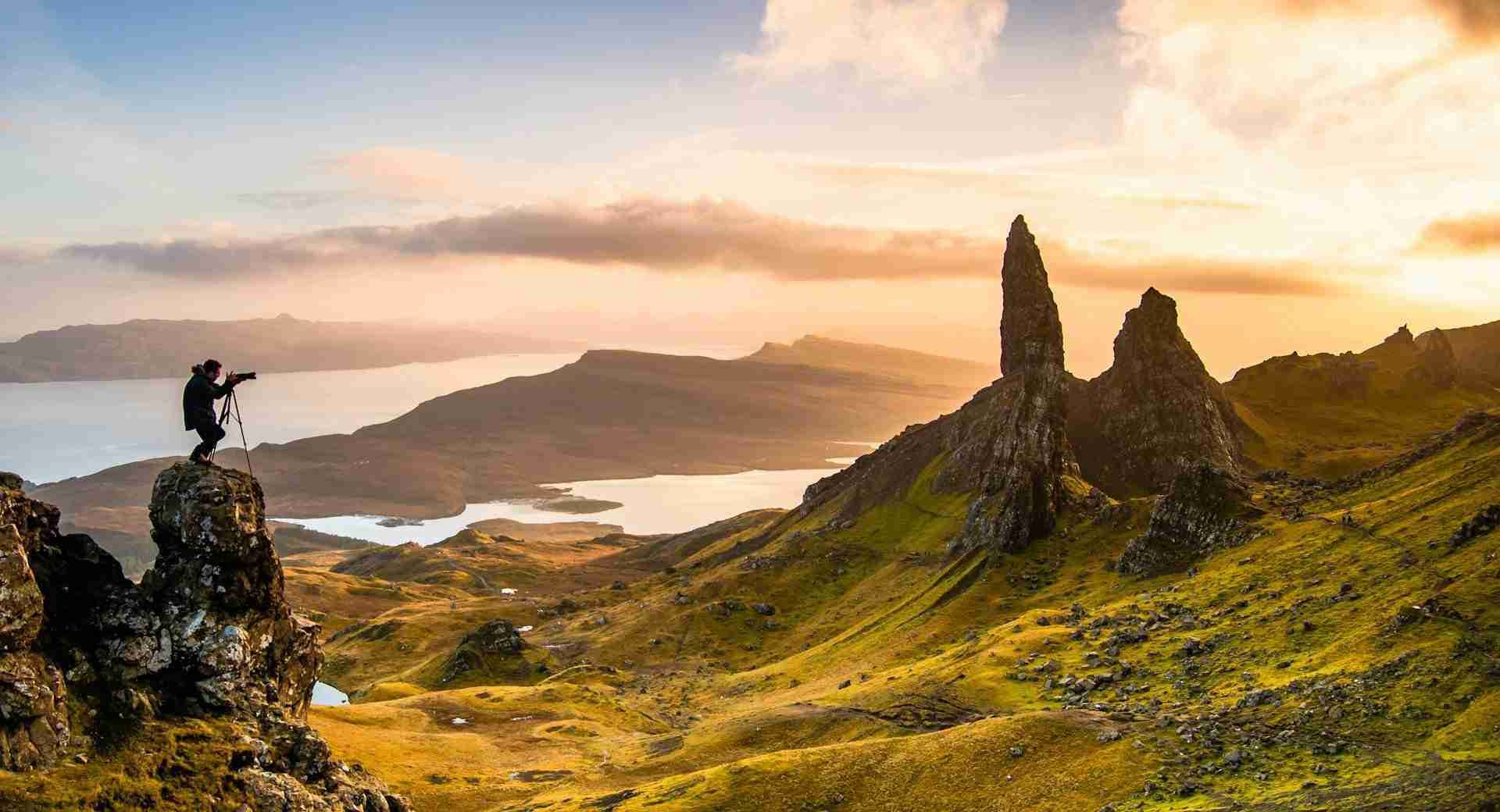
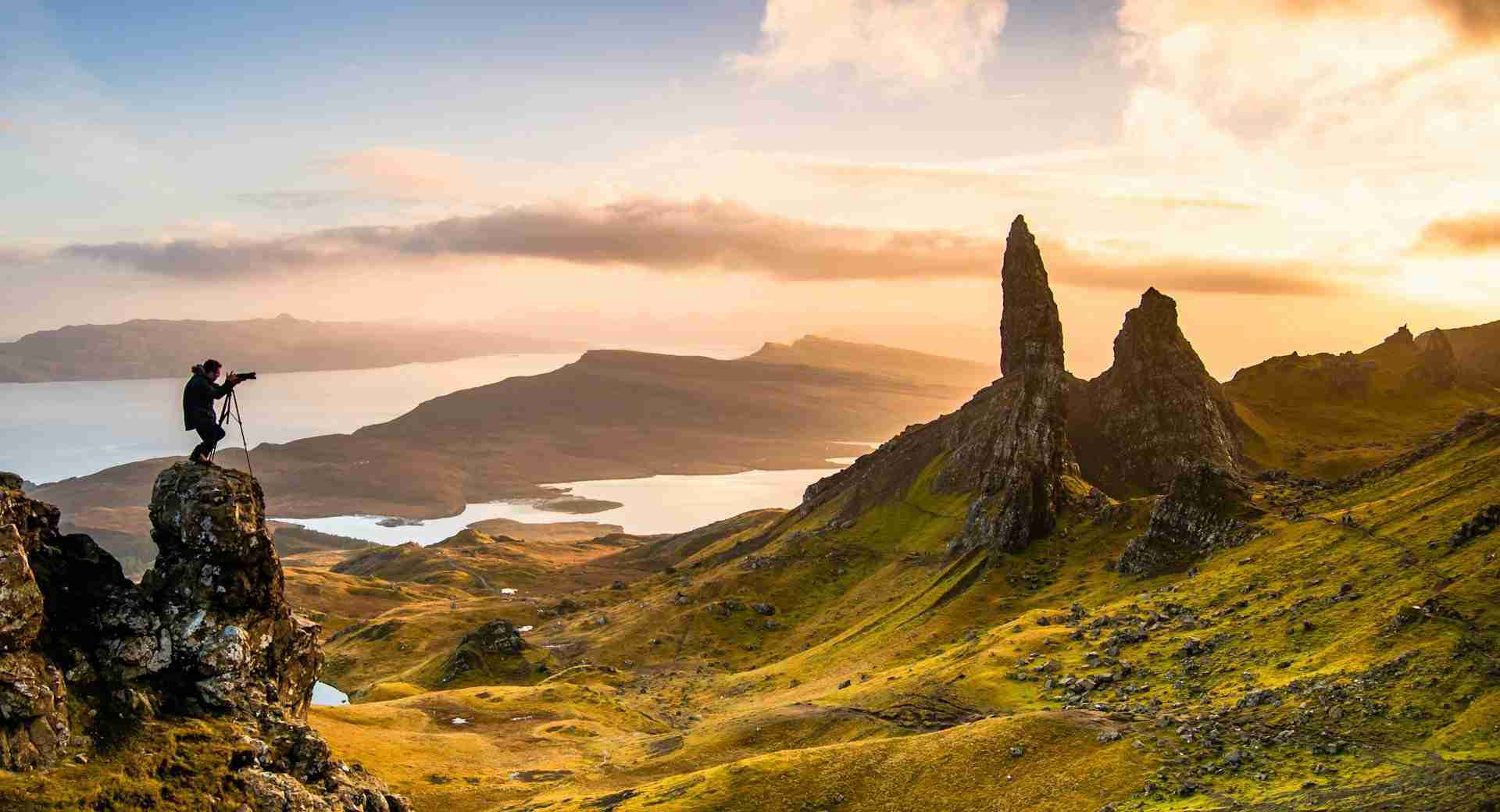
Few locations in Scotland command the visual and emotional presence of the Old Man of Storr. Rising dramatically from the rugged landscape of the Trotternish Ridge on the Isle of Skye, this towering pinnacle of rock—shaped by ancient landslides and eons of erosion—has become one of the most iconic photographic subjects in the Highlands. The surrounding terrain of jagged outcrops, sweeping vistas, and shifting cloud patterns creates an otherworldly atmosphere, especially in the early hours when the mist moves like breath over the hills.
For photographers, the Old Man of Storr offers a dynamic environment where light, weather, and perspective all play a central role. It rewards both patience and physical effort: the best views are earned through a moderately steep hike, but once you reach the plateau, you're standing in one of the finest natural theatres in all of Scotland.
Best Photography Opportunities
• Classic View from the Mid-Ascent Plateau
This is the signature composition—the Old Man of Storr rising in the left frame, flanked by needle-like pinnacles and backed by sweeping views toward the Sound of Raasay. From this plateau just below the base of the formation, you can compose wide landscape images that feature layers of rock, rolling terrain, and dramatic sky. In soft dawn light or under low-hanging mist, the scene transforms into something mythic. Use a wide-angle lens to exaggerate foreground textures and sky, or a mid-range focal length to compress the rock features against the distant water.
• Dramatic Upward Angles from the Base
From directly beneath the Old Man, the rock tower looms into the sky with incredible scale. Position yourself low and shoot upwards with a wide-angle or ultra-wide lens to emphasize height and drama. On days with heavy cloud or fast-moving weather, the rock seems to pierce the sky, adding to the vertical tension of your composition. Side lighting during golden hour brings out the textures in the weathered stone, while overcast skies simplify contrast and enhance tonal mood.
• Distant Perspective from Below the Trail
Before the main ascent, look back up from lower in the valley to frame the full formation as it dominates the ridgeline. This position gives context and scale to the Old Man's shape, particularly when small figures appear on the trail for a human contrast. This is an ideal vantage point at sunrise, when the first light touches the peak while the valley remains in shadow. It also works beautifully in winter when snow dusts the slopes and defines the edges of the landscape.
• Atmospheric and Mist-Laden Shots
The Storr is well-known for its ethereal quality, particularly on days when mist rolls across the ridge. These moments, though fleeting, create dramatic conditions where the rock features emerge and disappear in fog, allowing for minimalist and moody compositions. Work quickly and revisit compositions as the light changes. Silhouettes, partial reveals, and soft transitions between sky and ground can all be used to convey mystery and isolation.
• High Ground Perspective Looking North
For those willing to climb higher along the trail or ridge, you'll be rewarded with elevated compositions looking down onto the Old Man with the sea and distant hills stretching beyond. This angle is less commonly captured and allows for powerful diagonal compositions with the formation leaning into the landscape. Use longer focal lengths to flatten the layers or a wide lens to capture sweeping drama when clouds break above the horizon.
Best Time to Visit
The Old Man of Storr is at its photographic best during sunrise, especially from spring through early autumn when the sun rises over the sea and casts a golden wash across the ridges and rock formations. Early morning light enhances the textures and adds depth, while also offering calmer wind conditions and fewer visitors on the trail.
Autumn offers rich, warm tones in the bracken and heather, and weather tends to be more changeable—perfect for those chasing dramatic sky and atmosphere. Winter brings clarity on frosty mornings and soft light throughout the day, though the trail can be icy and visibility more unpredictable. Summer provides extended golden hour lighting but also larger crowds, so early arrival is critical for clean, undisturbed compositions.
Mist and cloud cover are common, especially in spring and autumn, and often elevate the mood rather than hinder it. If the peak is shrouded, wait for breaks—these shifting windows often result in the most powerful images.
How to Get There
The Old Man of Storr is located about 10 kilometers north of Portree on the Isle of Skye. The main car park sits directly off the A855 road and is clearly marked, though it can fill quickly during peak season. From the parking area, the well-trodden trail leads steeply uphill through a recently restored path, eventually opening out onto the moorland below the rock formation.
The hike takes around 45 minutes to an hour depending on conditions and fitness level. Although the trail is straightforward, it can be muddy, especially after rain, and the upper sections become rocky and uneven. Good footwear and layers are essential, as the weather can change quickly even on short climbs.
Arrive early—well before sunrise if possible—for the best light and the fewest people. If photographing sunrise, bring a headlamp for the climb and allow extra time for scouting compositions along the way.
Recommended Gear and Shooting Tips
A wide-angle lens (16–35mm) is essential for capturing the full scale of the rock formations and their relationship to the surrounding landscape. A 24–70mm lens is ideal for more controlled framing and mid-range landscape work, especially for composing balanced shots that include sea, sky, and rock. A 70–200mm or longer telephoto is useful from a distance to isolate shapes, textures, or capture atmospheric layering across the sea and hills.
A tripod is critical for sunrise and golden hour shots, particularly when working with low ISO and small apertures. A 6-stop or 10-stop ND filter allows for creative long exposures of cloud movement when the weather is dynamic, while a polarizer can help enhance contrast and control glare in moody, low-light conditions.
Bring lens wipes or cloths, as mist and wind-blown rain are common. If you're working in foggy conditions, consider underexposing slightly to preserve highlight detail and let the shadows fall naturally. Watch your histogram closely, especially when shooting into bright sky.
The trail is steep but manageable—packing light will help you move faster and adapt quickly if the weather changes. Consider scouting compositions the day before if you plan to return for specific light, as vantage points and rock alignment are more complex than they first appear.
Nearby Photography Locations
• Quiraing Landslip
North of the Storr, the Quiraing offers equally dramatic geological forms with sweeping roads, green cliffs, and twisted rock features. Excellent at sunrise with similar mist-prone drama.
• Lealt Falls and Coastal Cliffs
Just minutes south of the Old Man, this waterfall and sea cliff viewpoint gives you crashing waves, layered coastlines, and strong vertical elements to contrast with upland imagery.
A less-visited gem, this coastal headland is home to sea stacks, basalt cliffs, and wild surf. Ideal for sunrise work or long exposures with foreground rock detail.
A surreal landscape of rounded hills and spiral paths, perfect for storytelling-style photography and softer atmospheric work, especially in the evening light.
The colorful harbor in Skye's main town offers calm water reflections, fishing boats, and traditional architecture—a nice complement to the wildness of the Storr.
The Old Man of Storr isn't just a rock formation—it's a story etched into the skyline. Whether rising out of golden mist or silhouetted against a storm-filled sky, it rewards those who arrive early, stay patient, and let the light unfold. For photographers drawn to mood, movement, and elemental landscapes, it remains one of Scotland's most essential and soul-stirring subjects.
Comments
Loading comments…