
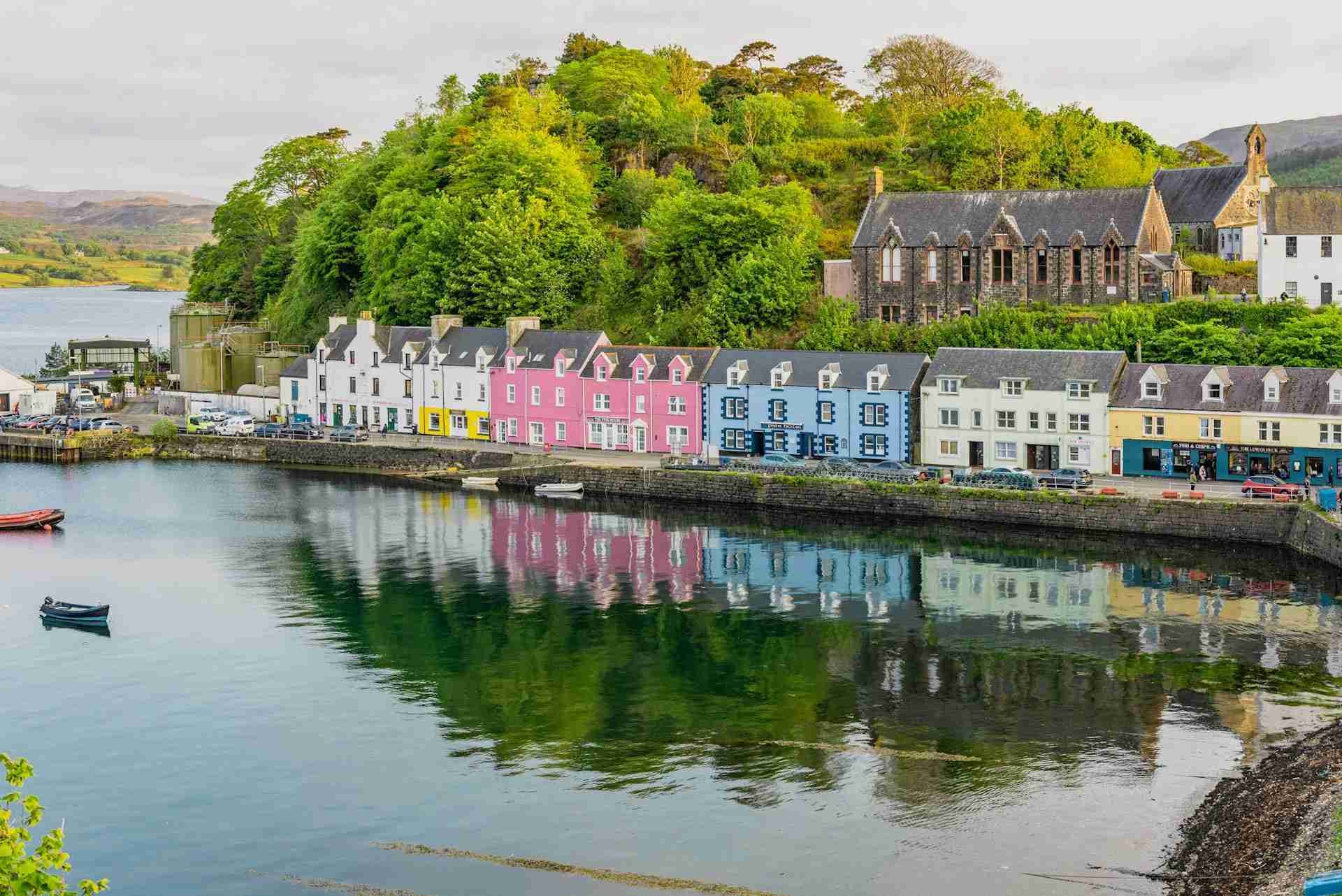
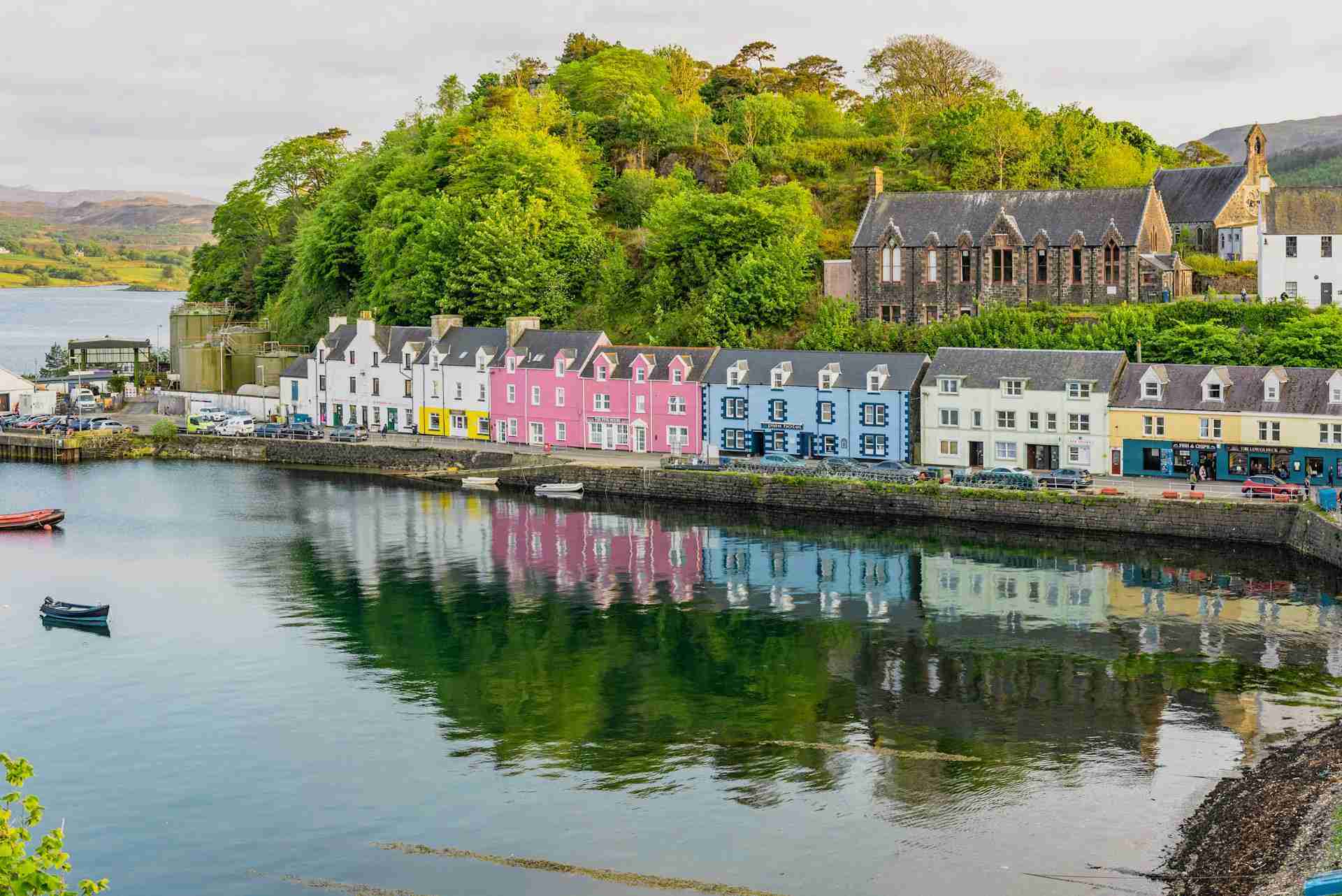
Portree Harbour, nestled within the natural embrace of a sea loch on the eastern coast of the Isle of Skye, is one of Scotland's most visually charming coastal settings. Encircled by cliffs and forested slopes, and lined with boats bobbing gently along painted quayside buildings, the harbour presents a scene where traditional maritime life and highland atmosphere come together in perfect balance. The pastel facades of Portree's waterfront curve along the shoreline in a tight arc, mirrored in the often-still water below, while the backdrop of distant hills and fishing vessels lend depth, scale, and authenticity to the scene. For photographers, this compact yet richly layered harbour is a location full of color, texture, and narrative opportunity—changing dramatically in mood with the tides, weather, and light.
Best Photography Opportunities
• Classic waterfront composition from the viewpoint above Bosville Terrace
The elevated overlook from Bosville Terrace is the definitive vantage point for capturing the entire harbour. From this position, photographers can frame the arc of painted houses along the quay, the curve of the waterfront, and the still waters of the inner harbour reflecting both buildings and boats. A wide-angle lens is perfect for capturing the full sweep of the scene, while longer focal lengths can isolate details like window shutters, fishing nets, or boat reflections. Early morning light casts a gentle glow over the buildings, while evening brings golden light that illuminates the quay and softens the distant hills.
• Quayside detail shots and human-scale maritime textures
Walking along the quayside provides access to the fine-grained textures and details that bring Portree's working harbour to life. Fishing nets, weathered ropes, mooring cleats, and the hulls of docked boats create opportunities for richly textured close-up compositions. These shots work well with a fast prime or mid-range zoom lens, capturing the interplay of color, age, and material. The proximity of the pastel buildings provides colorful backdrops or reflected hues in polished surfaces. These images often carry a strong sense of place and time, especially when framed with soft directional light in the early or late hours.
• Long exposure images of boats and reflections across still water
On calm days or just after sunset, the harbour's water often turns to glass, allowing for long exposures that capture soft reflections of the boats and shoreline architecture. Using a tripod and ND filter, photographers can smooth out ripples and draw focus to symmetrical shapes and mirror-like compositions. These shots are best made from the eastern end of the harbour, looking back toward the quay, especially during blue hour when the buildings glow and the sky transitions to rich, soft tones. Including static elements like pilings or dock edges helps anchor these images visually.
• Environmental portraits and street scenes along the waterfront
Portree Harbour remains an active working area, and candid portraits or street photography along the quay can capture moments of interaction between locals, visitors, and the setting itself. Early mornings often show fishermen preparing boats, while afternoons bring a blend of tourists and townsfolk walking the harbour. These scenes benefit from mid-range lenses and ambient natural light. Shooting with the painted buildings or boats as context creates compositions that are both documentary and artistic, conveying the unique rhythm of daily life in a Highland harbour.
• Moody weather and atmospheric wide shots from the southern approach
From the southern edge of the harbour, particularly near the small pier where tour boats depart, photographers can shoot northward across the water to the quay, capturing both the full sweep of buildings and the distant slopes rising behind them. This angle is ideal in overcast or rainy conditions when dramatic cloud formations and mist enhance the moody atmosphere Skye is known for. These images often pair best with black-and-white or desaturated processing, emphasizing tone and structure over color. Foreground elements such as rocks, boats, or puddles help ground the composition and add scale.
Best Time to Visit
Portree Harbour is highly photogenic year-round, but the most productive light for photography occurs during the early morning and late afternoon. In the morning, soft side light from the east warms the pastel-colored buildings and creates long shadows that define the quay and boats, often with minimal foot traffic and calm water. The low sun also highlights the textures of the stonework and working boats, providing contrast that benefits both color and black-and-white imagery.
Evening offers golden hour tones that illuminate the quay from the west, making this a prime time for capturing the arc of buildings in warm light. Blue hour brings particularly rich reflections in the water, ideal for long exposure and symmetrical compositions. During peak summer months, this light lingers late into the evening, offering a long window for varied shooting styles.
Autumn brings changing colors to the trees surrounding the harbour and more dramatic skies, while winter introduces low-angle light and reduced crowds. Mist, fog, and light rain—common even in spring and summer—add to the atmospheric character of the location, particularly when paired with the quiet of off-season visits. Each season offers distinct moods: vibrant and active in summer, quiet and introspective in winter, and constantly shifting in between.
How to Get There
Portree is the main town on the Isle of Skye and is easily accessible by car from the Skye Bridge via the A87, which runs directly into the town center. From central Portree, follow signs down toward the harbour along Bosville Terrace or Quay Street. The harbour is only a five-minute walk from the main town square and well signposted.
There is limited parking near the quay itself, with a small lot available just above the harbour. Additional parking is available uphill in the town center, especially during busier months. The area is pedestrian-friendly, with paved paths around the harbour and several informal footpaths leading to elevated viewpoints.
Public transportation is also available via bus routes from Inverness and Kyle of Lochalsh, with the Portree central bus stop just a short walk from the harbour. While access to the waterfront is straightforward, those wishing to explore the upper viewpoints should be prepared for short uphill walks and uneven pavement in some areas.
Recommended Photography Gear
A wide-angle zoom lens (16–35mm) is essential for capturing the full curve of the harbour from elevated viewpoints and for working in tighter spaces along the quay. It allows you to frame wide environmental scenes without losing the intimacy of the waterfront. This lens also works well in combination with vertical compositions when photographing reflections across the harbour's surface or including foreground elements such as rocks, nets, or puddles.
A mid-range zoom (24–70mm) provides the flexibility needed for shooting architectural details, boats, and human interactions along the quayside. It's the most versatile lens for walking the area and responding to changing light or dynamic weather. For close-up work, a fast prime (35mm or 50mm) excels at capturing detail-rich textures and shallow depth of field, particularly in low light or when isolating foreground elements.
A tripod is essential for long exposure images, particularly in early morning or blue hour when shutter speeds slow and reflections are most stable. ND filters (6- or 10-stop) allow for extended exposures to smooth water and sky movement, while a circular polarizer helps enhance reflections and manage glare on wet surfaces. Weatherproofing is highly recommended—carry lens wipes, protective covers, and a sealed bag for wet conditions. The harbour is compact but full of visual potential, so a small, nimble kit often performs better than heavy gear loads.
Nearby Photography Locations
This elevated park offers panoramic views over Portree and the harbour, ideal for sunrise or sunset compositions that frame the town within its natural setting. The tower itself can be a foreground feature, adding architectural interest to wide landscape shots.
• Old Man of Storr
Located north of Portree, this dramatic rock formation is one of Skye's most photographed natural landmarks. Rising above lochs and rolling hills, it offers high drama at dawn or under stormy skies. Ideal for landscape photographers looking to pair harbour imagery with Skye's rugged interior.
Approximately twenty minutes south of Portree, this historic stone bridge sits at the foot of the Black Cuillins, offering moody landscape compositions and strong leading lines in river scenes. Especially powerful in changing light or at golden hour.
• Staffin Bay and Quiraing Road
East of the harbour, these locations offer surreal landscapes, dramatic rock formations, and wide open coastal views. They contrast nicely with the intimate textures of the harbour and are best visited in early morning for solitude and side lighting.
• Fairy Glen
A short drive northwest, this whimsical series of miniature hills, ridges, and stone circles offers softer, almost fantastical scenes. It's an atmospheric location for abstract compositions or dreamy landscapes, particularly under fog or overcast skies.
Portree Harbour may seem compact at first glance, but its blend of Highland light, working boats, and colorful architecture makes it a photographic treasure. Whether you're shooting crisp architectural frames, reflective water at blue hour, or abstract textures along the quay, this harbour rewards patience and a sharp eye for mood. For those willing to return at different times of day or in changing weather, the variety of images available in this single location is remarkably deep—and always evolving.
Comments
Loading comments…