
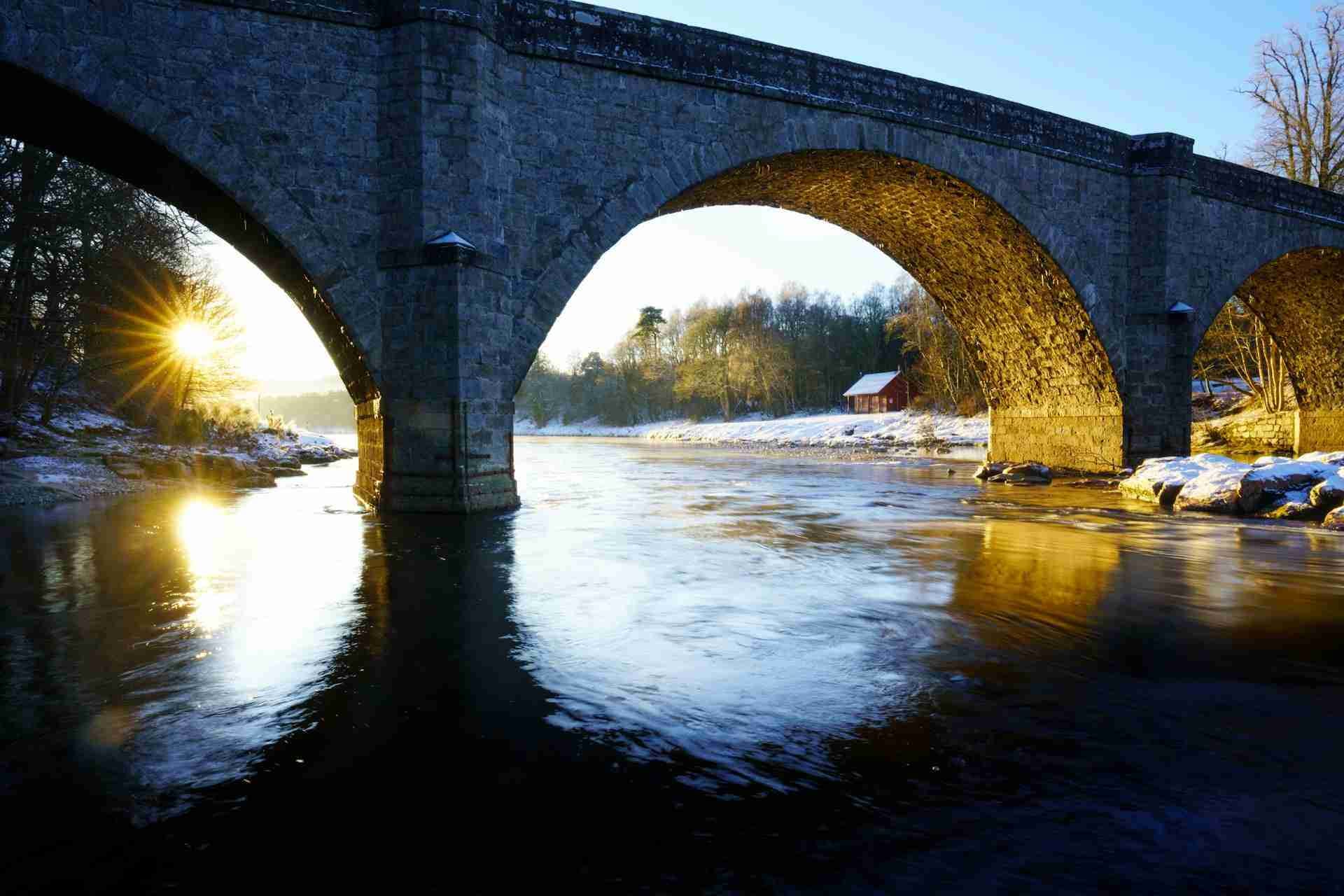
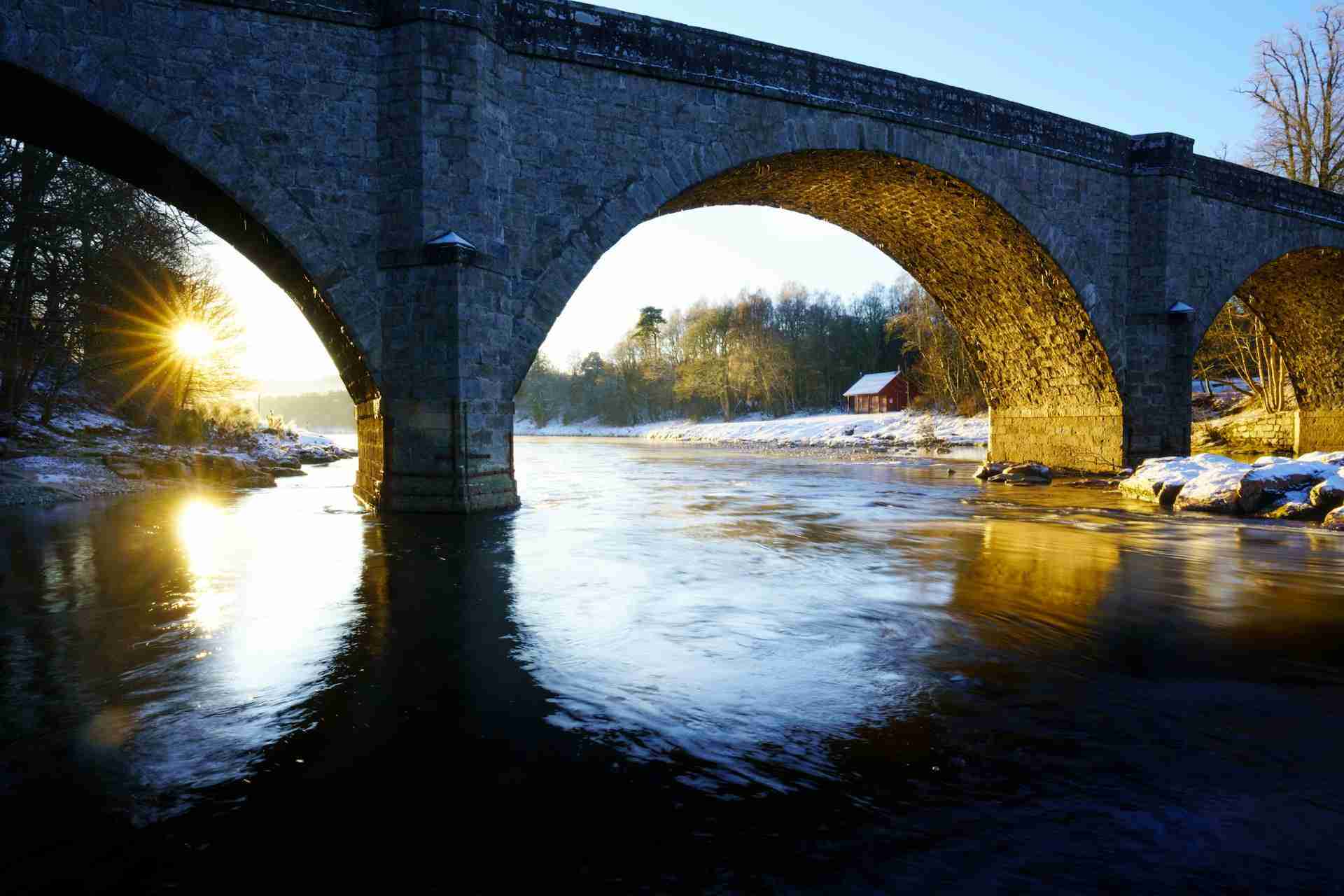
Crossing the wide sweep of the River Dee near Banchory in Aberdeenshire, Potarch Bridge is a classic piece of 19th-century engineering that blends gracefully into the surrounding Highland landscape. This stone-arched bridge, with its weathered granite and symmetrical curves, sits in a quiet riverside setting surrounded by woodland, rolling farmland, and the slow, dark flow of the Dee. It's a place that doesn't shout for attention but rewards a photographer who takes the time to slow down and explore it from different angles. Reflections, textures, leading lines, and seasonal color shifts all come together here, offering a calm and consistent environment for developing well-balanced compositions.
While not remote, the setting feels removed from modern noise. Early in the day, the river often moves like glass, and mist rises off the water in low, curling tendrils. It's an ideal place to work with reflections and light transitions, especially in spring and autumn when the surrounding trees bring added color to the scene. Potarch Bridge might not have the height or drama of a Highland summit, but it offers something just as valuable: simplicity, symmetry, and space to refine your craft.
Best Photography Opportunities
• Stonework and Symmetry
: The defining feature of Potarch Bridge is its series of graceful arches, made from thick local stone that has weathered into warm tones of grey, tan, and brown. The bridge is low and long, with three even spans that rise gently over the river and mirror themselves in calm water. From the northern bank, you can get a classic side-on shot that shows the full curve of the structure. With a wide-angle lens and a low camera position, you can stretch the bridge across the frame and use the curve of the arch to lead the viewer's eye into the rest of the scene. If the light is coming in from the side, especially in the early morning or late afternoon, it will pick out the rough texture of the stone and cast long shadows that add depth.
• Morning Reflections and Still Water
: One of the best times to shoot at Potarch Bridge is just after sunrise, before the breeze picks up. The River Dee often lies flat and smooth at this hour, giving you beautiful reflections of the bridge, the sky, and the trees lining the shore. Set up close to the water's edge with a tripod and you'll find that you can create strong, symmetrical compositions—where the real and reflected versions of the bridge form a circle of light and stone. A polarizing filter can help control reflections and deepen the sky, but be careful not to overdo it, especially when using a wide lens, as it can create uneven patches of contrast.
• Framing with Seasonal Trees
: On both sides of the bridge, the riverbanks are lined with trees that shift in character throughout the year. In spring, new leaves catch the morning light with a soft, fresh quality. In summer, full green canopies surround the bridge and add a feeling of privacy and enclosure. And in autumn, everything opens up into golds, yellows, and rust-reds, which contrast beautifully with the stone bridge and the dark water below. Use these trees to frame your shot—either by placing them on the edges of the frame or by shooting through gaps in the branches for a natural, textured look. You can also find interesting leaf cover along the ground, especially after a rain, which adds rich detail to low, wide compositions.
• Under-Arch Views and Structural Detail
: When the river is low or the bank is dry, it's possible to walk beneath the bridge's arches and shoot upwards. This lets you emphasize the curve of the stone and the details in the construction that are often missed in more distant views. Try shooting from just inside the first arch and aiming the camera up and out through the other spans. This gives a tunnel-like feel and works particularly well when clouds are moving fast across the sky, adding motion and contrast. If you're shooting on a day with filtered sunlight, you'll find soft shadows that define the inside of the arch without blowing out the brighter background.
• Long Exposure Water and Subtle Movement
: While the Dee at Potarch doesn't move fast, there's always some motion—ripples, drifting leaves, or the occasional fly fisherman wading into the current. This makes it a good spot for long exposure work. Using a neutral density filter and a tripod, you can smooth the surface of the water into a reflective sheet, or blur small waves into a soft texture that contrasts with the solid structure of the bridge. A 30-second exposure around sunrise or just after sunset will usually be enough to get that still, glassy effect, especially if clouds are moving and adding interest to the sky above.
Best Time to Visit
Potarch Bridge is open and accessible throughout the year, but the best shooting conditions tend to fall in the shoulder seasons (spring and autumn) when light is softer, color is stronger, and crowds are minimal. In April and May, the trees are just coming into leaf, giving the scene a light, fresh feeling. Mist is common along the river in the early morning, especially after a cold night, and this creates beautiful separation between foreground and background. If you're lucky, you'll get light breaking through the mist in patches that are great for adding atmosphere and depth.
Summer brings long days and full foliage, which can be both a benefit and a challenge. While the tree coverage is at its peak, midday light can be flat and strong, so aim for early morning or late afternoon. Shadows are longer, the river is often calmer, and the light falls more evenly across the stonework and trees. Autumn is perhaps the most photogenic season here. The colors along the Dee Valley reach their peak in October, and the low-angle light during these months works beautifully with the textures of the stone and the layered colors of the trees. Even overcast days can be productive, as the soft light brings out detail in the scene without harsh contrast.
Winter, while more bare and less colorful, has its own appeal. Snowfall outlines the bridge's structure and quiets the landscape, making for clean, minimal frames. Early sunsets allow for golden and blue hour shooting without having to stay out late. Just be prepared for wet ground, cold air, and the possibility of ice along the riverbanks.
How to Get There
Potarch Bridge is located just off the B993 in Aberdeenshire, Scotland, between the towns of Banchory and Aboyne. If you're coming from Aberdeen, it's about a one-hour drive west, following the A93 through the Deeside region; a scenic route in its own right. Once you reach the small hamlet of Potarch, turn down toward the bridge, where there is a clearly marked car park with easy access to both sides of the river. The bridge itself carries vehicles, but traffic is light, and pedestrian access is safe and straightforward.
There are no entrance fees, gates, or restrictions to photograph here, making it an easy and flexible stop. You can access the riverbank by footpaths on both sides, and there are grassy areas and small trails that lead you right up to the water. During wet weather, some of these trails can get muddy, so waterproof footwear is a good idea. A café and public restrooms are open seasonally nearby, which can be convenient if you plan to spend a few hours shooting in the area.
Recommended Photography Gear
A thoughtful but simple setup will serve you well at Potarch. A DSLR or mirrorless camera with good low-light performance is ideal, especially if you plan to shoot during golden or blue hour. A wide-angle lens (16–35mm or similar) is essential for capturing full views of the bridge and its reflection, especially when you're working close to the riverbank. A standard zoom (24–70mm) gives you enough flexibility to shoot across the river or frame tighter compositions of the arches and stonework. If you enjoy compressing scenes or picking out background details, a 70–200mm lens can also be useful.
Bring a solid tripod for low light and long exposure work, especially if you're aiming to smooth out the river surface or shoot during the quieter parts of the day. A circular polarizer helps reduce glare and deepen tones, and an ND filter (6 or 10 stop) is useful for extended exposures when the river is active or the sky is in motion. Weather conditions can change quickly, so keep a lens cloth handy to manage mist or light drizzle, and consider a rain cover or plastic bag to protect your camera. Waterproof boots, gloves with tactile fingertips, and a kneeling pad can all make a long session by the river far more comfortable.
Nearby Photography Locations
: Just upstream from Potarch, this footbridge stretches across the Dee with a light, wireframe structure that contrasts beautifully with the natural surroundings. Framed by trees and river bends, it's particularly striking in the early morning when low light catches the metalwork and the water below.
: Located to the west, this reserve is home to a mix of pine forest, open moor, and small lochs. Loch Kinord, in particular, offers still-water reflections and excellent birdlife, making it a versatile location for both landscape and wildlife photography. Paths are well-marked and accessible year-round.
: Hidden in the forest within the Muir of Dinnet reserve, this natural cauldron formed by ancient meltwater channels offers a completely different scene. With a small waterfall and walls of rock surrounding you, it's ideal for wide-angle, moody shots in soft light or mist.
: Just outside Banchory, this short but steep walk rewards you with sweeping views over the Dee valley. From the stone tower at the top, you can shoot in all directions, capturing the rolling farmland, river bends, and layered hills beyond.
: South of Aboyne, Glen Tanar offers a mix of open moorland, forest trails, and river views. The landscape here changes with elevation, offering a wide variety of shooting conditions. In autumn, the area is known for rich color and soft light filtering through the pines.
Potarch Bridge is the kind of location that grows on you the longer you spend with it. It may not be the flashiest subject in the Highlands, but it's one of the most reliable—always offering a new perspective when the light shifts or the season turns. Whether you're a local looking to refine your technique or a visitor exploring Scotland's quieter corners, this riverside spot provides a steady rhythm of stone, water, and sky that's both simple and satisfying to photograph.
Comments
Loading comments…