
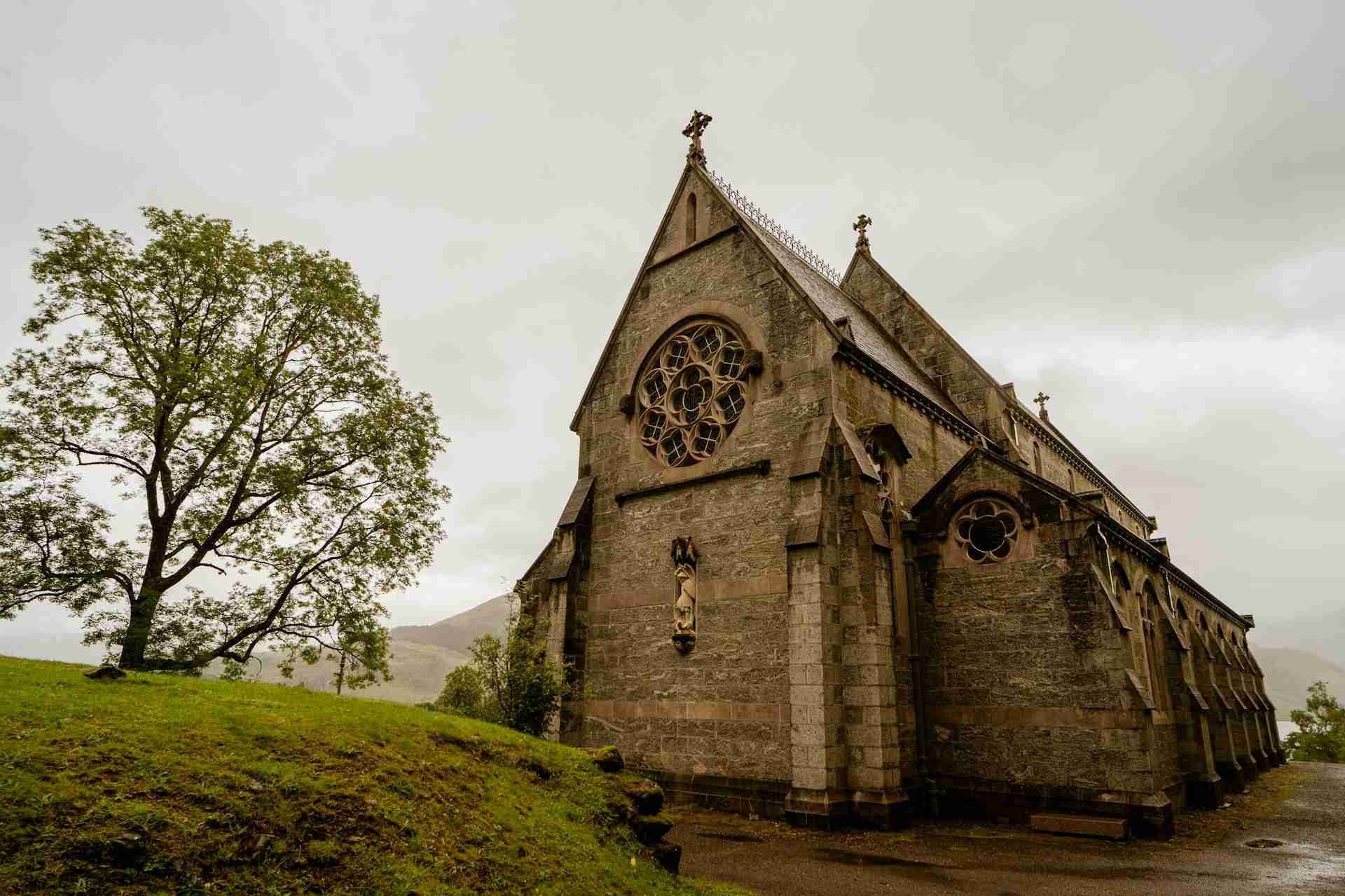
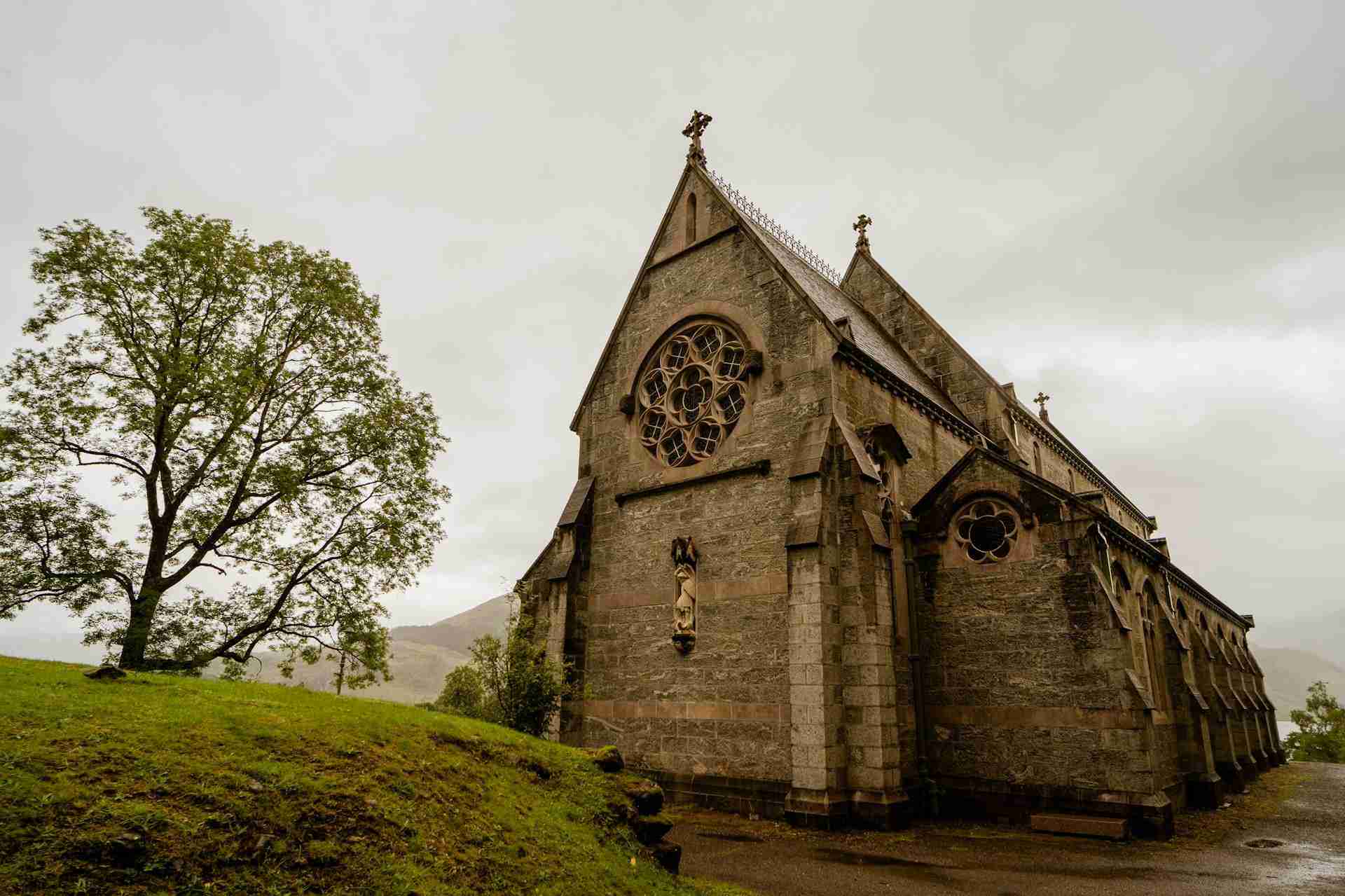
Set among the hills overlooking Loch Shiel in the Scottish Highlands, Saint Mary and Saint Finnan Catholic Church offers a rare blend of medieval-inspired architecture and sweeping natural beauty. Built in the late 19th century in a Gothic Revival style, the church sits quietly on a hillside just outside the village of Glenfinnan, framed by tall conifers and backed by mist-shrouded peaks. The nearby loch, stone viaduct, and changing Highland weather create endless variations in light, atmosphere, and visual tone. For photographers, this is a location where architecture and landscape meet without tension, each element enhancing the other. Whether you are drawn to the sharp lines of the church spire or the soft transitions of distant hills, this is a place where silence shapes the scene as much as structure.
Best Photography Opportunities
• Frontal View from the Field Below the Church
From the grassy field below you can frame the entire structure rising gently above the slope with Loch Shiel stretching out behind it. Early morning light from the east works beautifully here, casting soft illumination across the front of the building and bringing texture to the stonework. Using a wide-angle lens allows you to incorporate the surrounding hills or reflect the moody sky above. For more compression and intimacy, a mid-range zoom helps tighten the composition and draw out architectural detail. Framing the church with overhanging branches or grasses in the foreground adds depth and Highland character to the shot.
• Side Perspective with Loch and Mountains in the Background
Moving to the east side of the church offers a striking three-quarter view with the loch and distant peaks layered behind it. This angle is especially strong in late afternoon when the light side-lights the building and enhances the volume of the hills beyond. A 24–70mm lens gives you enough flexibility to include both structural and environmental elements while keeping perspective natural. Wait for moments when clouds break or mist lifts from the water to add atmosphere and separation in the background. This is one of the best spots to work with both color and black-and-white, depending on the mood of the scene.
• Interior Stone Vaults and Soft Window Light
The interior of the church is modest but carefully built, with stone vaulting, stained glass, and an overall quiet tone that lends itself to subtle compositions. Late morning is best for capturing the window light as it filters across the pews and floor, creating natural highlights and controlled shadows. A fast prime lens in the 35mm to 50mm range works well here, especially if you are shooting handheld in the low light. Focus on clean framing, symmetry, and the textures of the wooden and stone elements rather than wide coverage. The interior invites minimalism and mood, best captured with deliberate, slower-paced shooting.
• Pathway and Rear of the Church Framed by Trees
Behind the church, a narrow path winds into the woods, offering a more enclosed, intimate composition with the rear structure framed by tree trunks and undergrowth. This spot is ideal in early evening or during overcast weather, when soft light enhances the mossy textures and forest color. Use a telephoto lens or shoot through foliage to compress layers and give the scene a slightly hidden, secluded feeling. Fallen leaves or wet ground can add seasonal interest in autumn or winter. Compositions here work well as transitional shots if you are building a visual narrative of the location.
• Drone or Elevated View over the Church and Loch Shiel
If permitted and weather allows, a drone shot reveals the full integration of the church into its landscape. From above, you can position the church in the foreground with Loch Shiel stretching into the distance and the Glenfinnan Monument and Viaduct further beyond. Early morning or sunset provides low, directional light that adds texture to both the terrain and the church roofline. Keep compositions simple, using the curve of the loch and the angles of the church roof to draw the viewer's eye across the frame. These aerial perspectives emphasize the church's scale within the vast Highland setting.
Best Time to Visit
The most favorable times to photograph Saint Mary and Saint Finnan Church are spring and autumn, when the Highland light is more directional and the landscape more visually complex. In spring, soft greens begin to emerge from the hills and trees, contrasting with the gray stone of the church and the muted blues of the loch. Morning light is clearest this time of year, particularly from March to May, when fog often lingers over the water before lifting slowly through the hills. Autumn provides deep color in the surrounding vegetation and soft golden tones across the grass and stone, especially from September through late October.
Summer offers long daylight hours and generally stable weather, but the midday sun can flatten compositions and introduce harsh contrast, particularly on the building's stonework. During this time, sunrise and sunset remain the best periods for working with low, directional light. Winter presents a starker visual palette but creates powerful minimalist scenes, especially with snow on the surrounding peaks or a heavy mist over the loch. Cloudy days throughout the year should not be avoided, as they create even light across the stone surfaces and allow for extended shooting without extreme contrast. The light in Glenfinnan changes quickly, so it is worth returning at different times of day to find the best combination of cloud, reflection, and illumination.
How to Get There
Saint Mary and Saint Finnan Catholic Church is located just outside the village of Glenfinnan in the western Highlands of Scotland. From Fort William, the drive takes approximately thirty minutes via the A830. The church is situated on the hill to the right just before entering the main part of the village and is clearly signposted. There is a small parking area available near the base of the path that leads uphill to the church. The walk is short but steep, so comfortable shoes and a lightweight camera setup are recommended if you are carrying gear.
The site is open during daylight hours and is typically very quiet, especially in the early morning. There is no fee to visit or photograph the church or surrounding grounds. Interior access is sometimes limited depending on the day, so check local parish information or visit during weekend services if you want to photograph inside. Tripods are allowed outside and are generally tolerated inside if used respectfully and without interfering with services or visitors. Weather conditions can shift quickly, so pack accordingly if planning to stay for extended sessions or changing light.
Recommended Photography Gear
A wide-to-standard zoom such as a 24–70mm will cover most needs at this location, offering the flexibility to shoot both architectural compositions and broader environmental frames. Pair it with a wide-angle lens in the 16–35mm range for capturing the church in context with the surrounding hills and loch, especially when working from below or beside the structure. A fast prime lens in the 35mm or 50mm range is essential for interior shots, where light is limited and tripods may not be practical. For those planning to capture detail or shoot through foliage, a short telephoto lens can help compress layers and isolate key visual elements.
A lightweight tripod is useful for early morning and evening long exposures, particularly when photographing the water or low light on the stone. A circular polarizer helps reduce glare on the loch and deepens sky contrast, especially on clear days. If you are shooting in mist or light rain, a lens cloth and basic weather protection for your camera are essential. A drone can offer valuable elevated views, but it should be used responsibly and within local regulations to avoid disrupting the quiet atmosphere. Extra batteries and cards are recommended, especially if planning to photograph during the shifting light of multiple times of day.
Nearby Photography Locations
Just a short walk or drive from the church, the viaduct is one of Scotland's most photographed rail structures. Best photographed in the morning or early evening, especially if you want to capture the Jacobite steam train passing across it, the curves and arches are ideal for telephoto compression or wide scenic shots of the Highlands.
Located on the shores of Loch Shiel, this monument offers strong foreground interest with the loch and surrounding hills behind. Sunrise often casts a beautiful golden light over the scene, and the visitor centre's walking trails allow for a variety of angles and elevations.
Walking along the loch's edge from either side of Glenfinnan gives access to quiet, reflective compositions of water, hills, and sky. Mist and changing weather create shifting layers of light and tone that work well for minimal or moody landscape photography.
• Loch Eilt
About fifteen minutes west, Loch Eilt is known for its tree-covered islets and still water. This is a great location for long exposures, especially on overcast days when reflections are clean and the mood is calm and cinematic.
• Callop River and Woodland Walks
Just east of Glenfinnan, the Callop River and its surrounding forest offer woodland photography, streams, and small bridges that contrast nicely with the more open and expansive compositions of the loch and church. Early morning light here can be soft and directional through the trees.
Saint Mary and Saint Finnan Catholic Church is more than a hilltop structure. It is a point of quiet balance between Highland landscape and human craft, where weather, light, and architecture meet in slow, unfolding ways. For photographers, it offers an ideal location to explore subtle variation, layered storytelling, and the interplay between built form and natural scale.
Comments
Loading comments…