
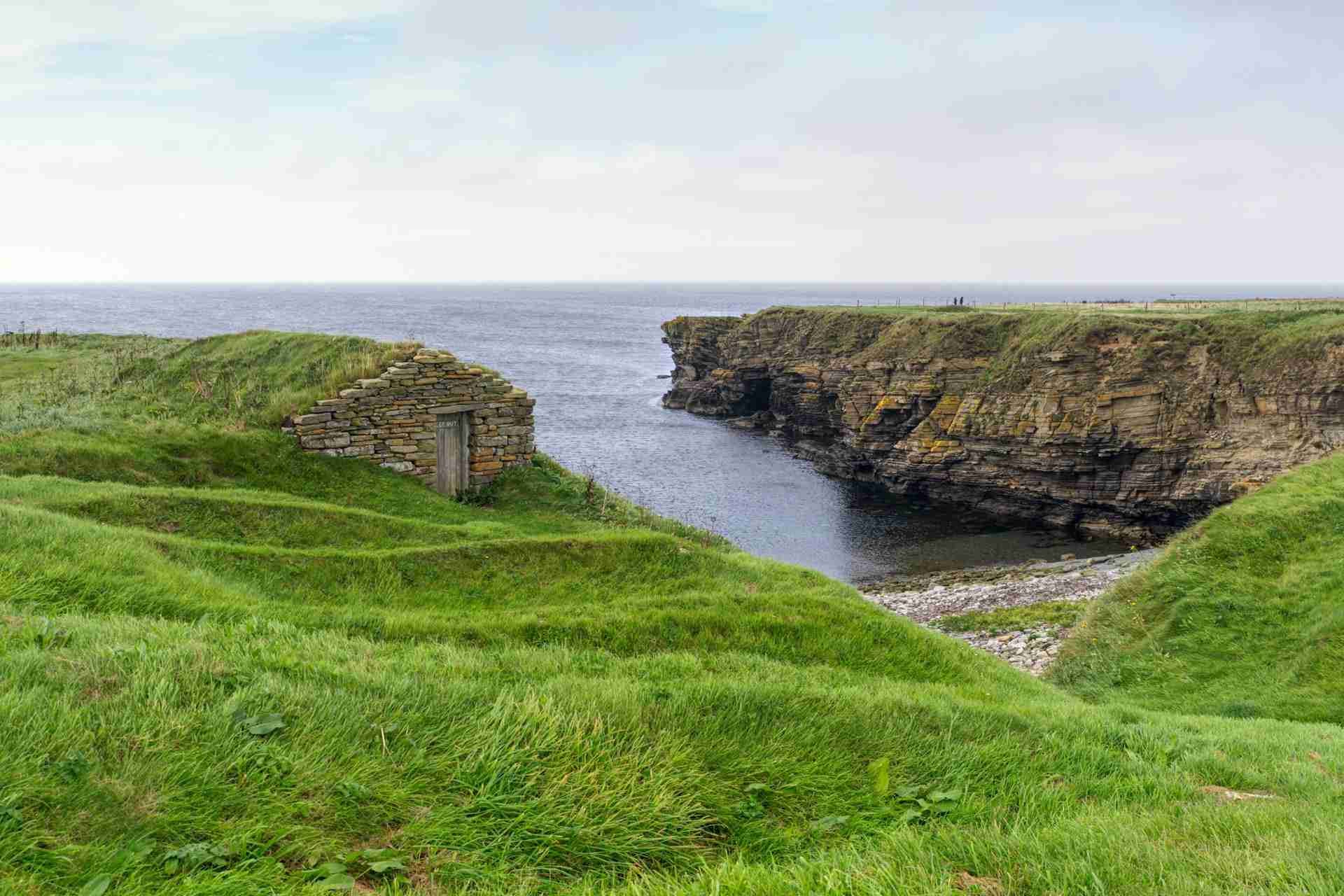
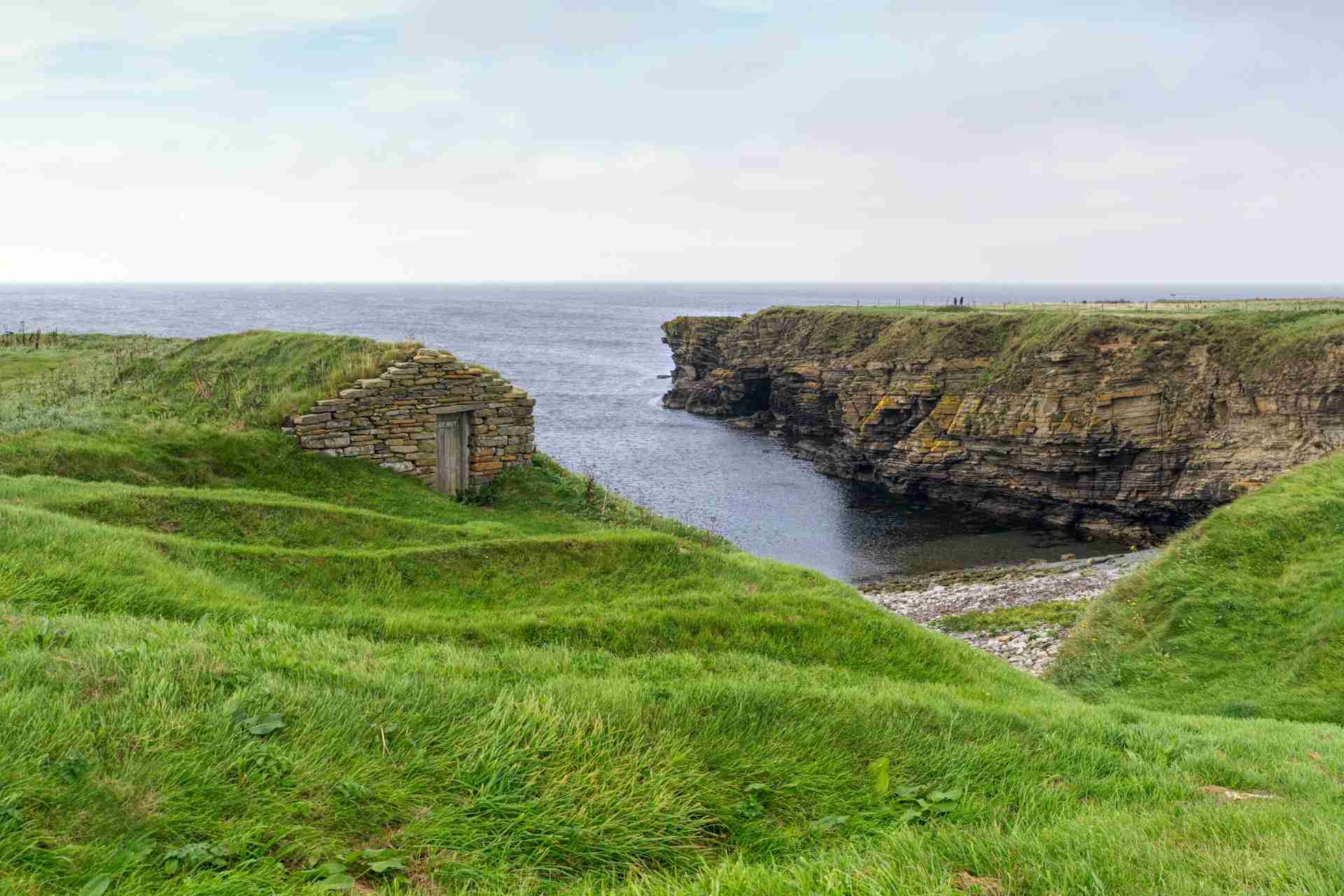
Skiba Geo, on the exposed northern cliffs of Birsay in Orkney, is one of the archipelago's most atmospheric and visually layered coastal formations. A deep inlet carved by centuries of Atlantic erosion, this narrow chasm cuts sharply into the cliffside, framed by vertical stone walls, tidal pools, and crashing surf. Set against the dramatic coastline north of the Brough of Birsay, Skiba Geo is a lesser-known but profoundly rewarding location for photographers drawn to elemental landscapes. The raw textures of layered rock, the ever-changing sea, and the coastal light create a setting that's perfect for high-contrast compositions, long exposure work, and natural studies that explore depth, scale, and time
Best Photography Opportunities
• Overhead wide-angle views of the geo and cliff walls
One of the most striking ways to capture Skiba Geo is from above, standing along the cliff edge and looking directly into the chasm. The sharply carved walls of stone, often darkened with moss and sea spray, converge into a narrow channel where the sea surges and withdraws. Using a wide-angle lens from this position allows you to emphasize the scale and depth of the geo while incorporating surrounding textures like windswept grass, lichened rock, and distant sea stacks. In low, angled light, the geometry of the inlet becomes especially pronounced, with shadows adding dimension and mood to the shot.
• Long exposure compositions of water movement and stone formations
Skiba Geo is an excellent subject for long exposure photography. With a sturdy tripod and ND filters, you can capture the motion of the Atlantic as it flows into the inlet and swirls around submerged rock shelves. These exposures transform the crashing surf into a silky texture that contrasts beautifully with the hard, static cliff walls. Shooting at blue hour or under overcast skies amplifies the tonal range of the scene, creating images that are both moody and meditative. Positioning the camera low and just behind a safe cliff edge enhances the dramatic perspective of water flowing toward and beneath the frame.
• Detail studies of sedimentary layers and erosion textures
The vertical cliff faces surrounding Skiba Geo display some of the finest examples of Orkney's sedimentary rock formations. These layers of ancient sandstone are exposed and weathered into sharp lines, deep grooves, and crumbling ledges. Photographers focusing on geological texture will find ample material for abstract or close-up work here. A mid-range zoom or macro-capable lens is ideal for isolating patterns in the rock—especially when highlighted by sidelight from a low sun. Wet surfaces after rain or sea spray deepen the color of the stone and add contrast to cracks and fractures, making even small details visually compelling.
• Environmental compositions with sea cliffs and surrounding terrain
Stepping back from the geo itself, the wider landscape north of Birsay provides a rich environment for broader compositions. The cliffs stretch into the distance with undulating lines and dramatic drop-offs, and in the right conditions, waves crash below with a rhythmic pulse that gives life to the horizon. Composing with a wide lens, you can include sections of grassland or cliff-top fence lines as foreground elements, drawing the viewer into the scene. In spring and summer, wildflowers and seabirds add vitality and contrast to the frame, while in autumn and winter, low light and atmospheric mist bring a brooding, cinematic quality.
• Silhouetted cliff structures and sky-driven mood studies
Late in the day or during sudden weather shifts, the silhouettes of Orkney's cliffs and outcrops take on a powerful visual identity. Skiba Geo, seen from an angle or framed between darker sections of rock, becomes a negative space filled with sea and sky. These compositions are especially effective when storm clouds build behind the cliffs or when shafts of light briefly illuminate the chasm below. Exposing for the highlights in the sky allows the rock forms to fall into shadow, resulting in dramatic, high-contrast images. Black and white processing is particularly suited to this approach, emphasizing structure and tone over color.
Best Time to Visit
Skiba Geo is best visited in the early morning or late afternoon, when the sun is low enough to rake across the cliff walls and accentuate the vertical textures of the rock. Golden hour brings warmth to the stone and enhances the color of the grassland surrounding the geo, while also creating long shadows that increase depth and visual drama. Overcast days are equally rewarding, especially for long exposure work, as the diffused light reduces harsh contrast and allows for balanced tones across rock and water.
Seasonally, spring and summer offer the clearest access conditions and the longest shooting windows. Wildflowers and nesting seabirds provide additional foreground and midground interest, especially when working with environmental compositions. Autumn introduces more variable skies and golden light that suits both color and monochrome work. Winter is the most challenging but visually rewarding season, offering dramatic seas, low light, and strong atmosphere—ideal for minimalist or elemental compositions.
It's essential to check wind and tide conditions before visiting, as the cliff paths can be slippery and exposed, particularly after rain or during strong coastal gusts. Visiting during high tide increases the drama and movement in the geo itself, while low tide reveals more of the rock shelves and the geological foundation of the feature.
How to Get There
Skiba Geo is located on the north coast of Mainland Orkney, just west of the Brough of Birsay. From Kirkwall, take the A965 northwest toward Finstown, then continue on the A986 through Dounby. From Dounby, follow signs to Birsay and continue past the village toward the Brough of Birsay car park. Before reaching the causeway, take one of the signposted farm tracks or walking paths north toward the coastline. The geo is not marked on standard maps, but local footpaths and coastal trails will lead toward the area where the inlet becomes visible.
There are no formal facilities or designated parking areas at the cliffside itself, so plan to park near the main car park in Birsay and hike in. The walk is short but can be muddy or uneven, especially after wet weather. Sturdy boots and weather-resistant clothing are essential. As with most locations on Orkney's coastline, be aware of rapid weather changes and stay well back from unstable cliff edges. The site is remote and quiet, making it ideal for extended, uninterrupted photography sessions.
Recommended Photography Gear
A wide-angle zoom (16–35mm) is essential for capturing the full depth of the geo, cliffside panoramas, and sky-dominated compositions. For close-up studies of rock patterns, a mid-range zoom (24–70mm) or macro-capable lens offers the right balance between reach and detail.
A tripod is necessary for long exposures and low-light shooting, particularly in shaded cliff areas or during golden and blue hour. ND filters (6- or 10-stop) are recommended for smoothing water movement and cloud trails over long exposures. A polarizer helps manage reflections on wet stone surfaces and enhances contrast in layered rock or dramatic skies.
A telephoto lens (70–200mm) is useful for compressing distant cliff forms, isolating rock formations, or capturing birdlife along the ledges. In windy conditions, stabilize your tripod with weight or shoot from a lower angle to reduce shake. Waterproof protection for your camera bag and microfiber cloths to manage sea spray are essential year-round. Due to the exposed environment, minimize gear swaps to reduce sensor contamination from salt or moisture.
Nearby Photography Locations
Just to the west, this tidal island offers sea stack views, lighthouse compositions, and tidal causeway reflections. It's one of Orkney's best locations for combining natural landscape with built elements.
South of Birsay, this dramatic clifftop reserve features seabird colonies, wave-battered cliffs, and panoramic ocean views. The Kitchener Memorial provides a strong focal point for environmental shots.
Further east along the north coast, these similarly dramatic inlets provide additional opportunities for photographing deep fissures, crashing surf, and Orkney's complex geological formations under shifting light.
A broad sandy bay with low dunes, tidal textures, and long sightlines—ideal for sunset beach photography and quieter shoreline compositions that contrast with the rugged cliffs of Skiba Geo.
Located on the sheltered coast of Eynhallow Sound, this Iron Age site offers layered stone dwellings and tranquil sea views—perfect for architectural studies and context-rich landscape work.
Skiba Geo rewards photographers who are willing to explore beyond the obvious and engage with the subtle power of form, weather, and erosion. Its sheer walls and narrow passage to the sea embody the elemental drama of Orkney's coast, while its quiet presence and lack of signage make it a place of solitude and careful attention. For those seeking a raw, textured subject framed by sea and sky, Skiba Geo delivers.
Comments
Loading comments…