
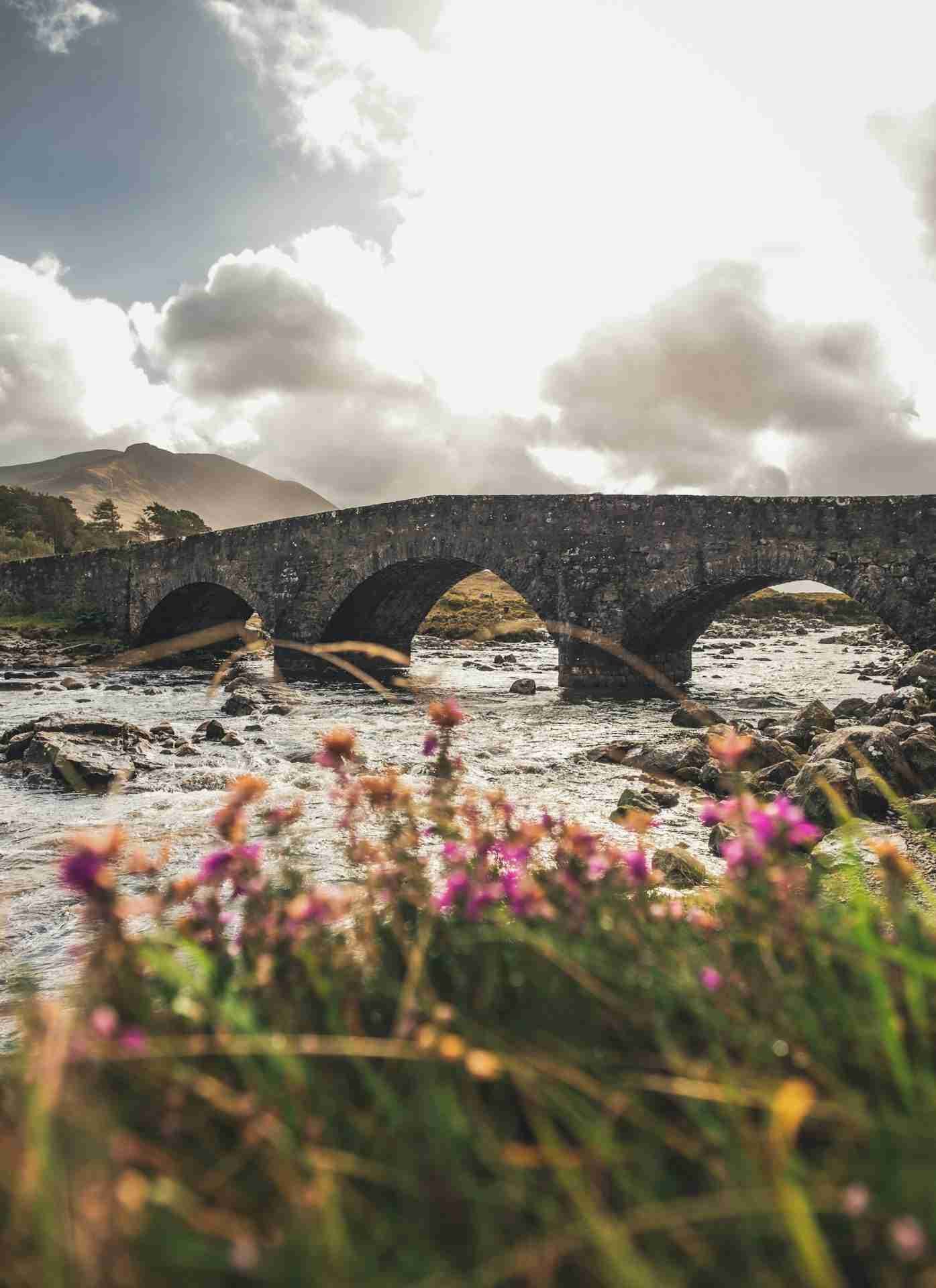
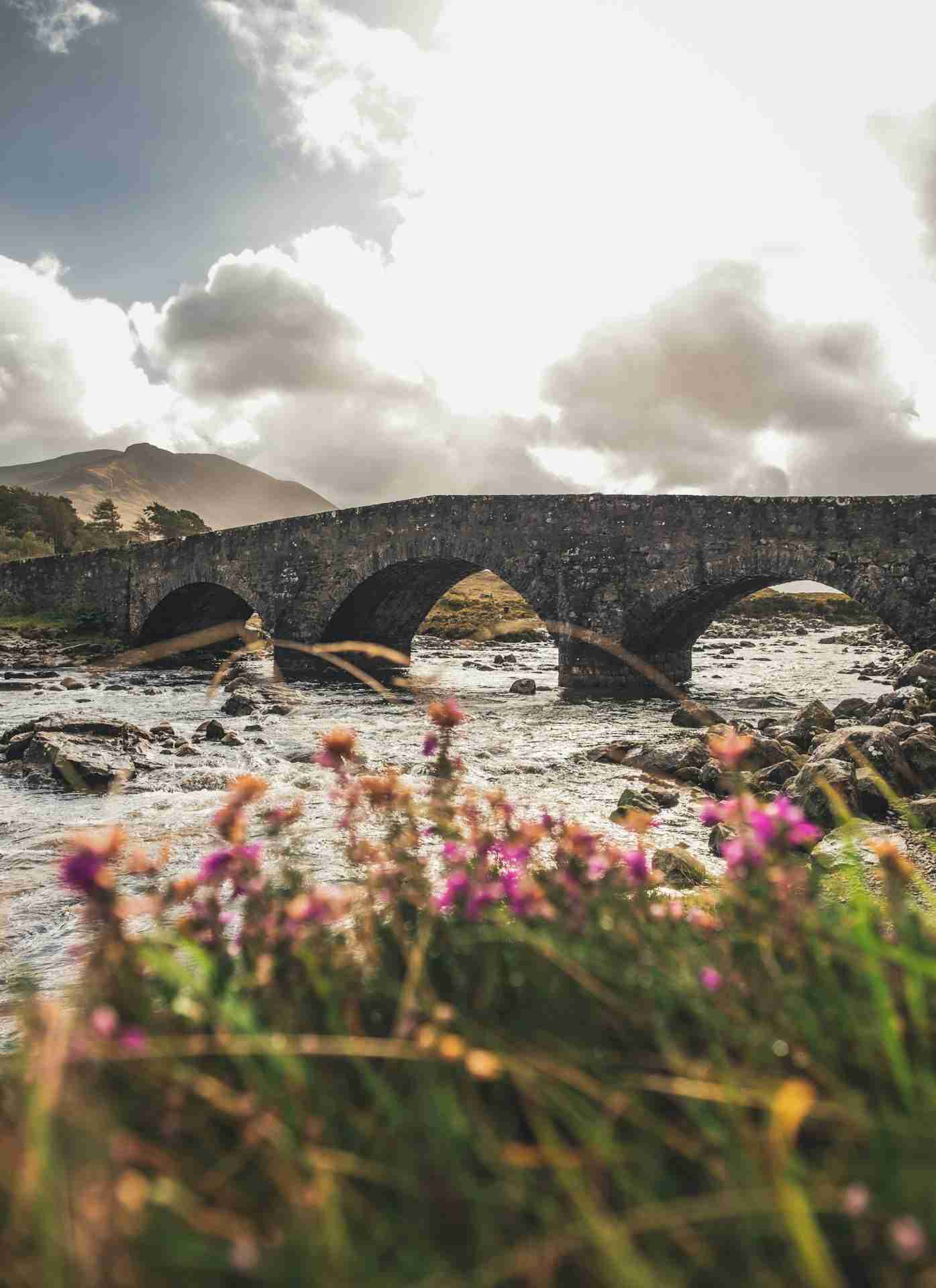
Sligachan Old Bridge, arching gracefully across the Sligachan River on Scotland's Isle of Skye, offers one of the most evocative and naturally dramatic settings for landscape photography in the Highlands. Built in the early 19th century, the triple-arched stone bridge stands amid the open, rugged terrain of the Cuillin Mountains, where brooding peaks and ever-changing skies dominate the horizon. As the river rushes beneath the bridge and cascades over glistening rocks, the surrounding moorland provides a muted, windswept contrast that enhances the timeless quality of the scene. With its combination of historic craftsmanship, moody atmosphere, and layered natural elements, Sligachan Old Bridge serves as both subject and anchor point in compositions that range from classical romanticism to raw, storm-driven minimalism.
Best Photography Opportunities
• Frontal wide-angle compositions from the riverbank
The most iconic view of the bridge is from the south side of the river, where photographers can capture the three stone arches aligned in a diagonal arc across the stream. From a low vantage point on the riverbank, use a wide-angle lens to frame the bridge, foreground rocks, and flowing water, with the Cuillin Mountains rising dramatically behind. Early morning or golden hour adds soft side light that highlights the contours of the bridge and creates dynamic reflections in the river. This composition is ideal for long exposures that blur the water into smooth textures, adding serenity and visual rhythm to the scene.
• Up-close architectural studies beneath the arches
For a more intimate approach, move closer to the base of the bridge and shoot up through the central arch. This allows the viewer to experience the texture of the weathered stone and creates natural framing of the river or landscape beyond. These shots are best captured with a mid-range zoom or fast prime to isolate details and emphasize the craftsmanship of the structure. Shooting at an angle can add depth and curvature to the stonework, especially when shadows stretch across the inner walls of the arches in low light.
• Long exposure river scenes with layered mountain backdrop
Positioning slightly downstream, photographers can create long exposure compositions that include the bridge, river, and the full expanse of the Black Cuillin in the distance. This approach works particularly well during overcast conditions or just after rainfall, when the sky is textured and the water level is high. Using a tripod and ND filters, you can capture the smooth flow of the river weaving through the rocks, leading the viewer's eye toward the moody mountain silhouettes. These images benefit from strong foreground elements such as mossy boulders or river reflections that echo the tones of the hills beyond.
• Side profile of the bridge under shifting weather
From either side of the river, but especially on the western flank, photographers can shoot a side profile of the bridge that emphasizes its length and integration into the wild landscape. This perspective captures the bridge as a human intervention shaped by and respectful of its environment. With fast-moving Highland clouds above, the composition becomes a dynamic study in contrast between permanence and change. This is an ideal setup for dramatic weather conditions, especially when mist creeps across the mountains or patches of sunlight break through dark skies to spotlight parts of the bridge or terrain.
• Twilight and blue hour silhouettes
As the sun sets behind the Cuillin, the bridge takes on a different visual identity—its arches silhouetted against the glowing sky, its structure rendered in stark contrast to the softness of the surrounding landscape. Blue hour is perfect for long exposures that retain color in the sky while drawing out the subtle glow in the water and stone. Position the bridge off-center in wide compositions to incorporate more of the mountainous background, or use it as a frame within a frame by shooting through one of its arches. These scenes are best executed with a tripod and careful metering to balance shadow and highlight.
Best Time to Visit
The lighting and mood around Sligachan Old Bridge vary dramatically with time of day and season, making timing an essential consideration for capturing its full potential. Early morning light from the east casts gentle illumination across the bridge's eastern face, enhancing texture and form while keeping shadows soft and directional. This is also the quietest time at the site, providing uninterrupted access and mirror-like reflections in the still river pools. Late afternoon light, particularly in autumn and winter, comes in low and golden from the west, highlighting the curvature of the arches and adding depth to the surrounding hills.
Golden hour delivers the most atmospheric compositions, as the sky glows behind the Cuillin Mountains and subtle warmth reflects off the river's surface. Blue hour introduces rich tones in both sky and water, creating the ideal setting for long exposure photography. The bridge remains photogenic even under cloud or rain, as moody weather enhances the scene's Highland character. Mist, wind, and shifting cloud layers can be harnessed for layered compositions full of tension and texture.
Seasonally, spring and summer bring longer days and soft morning mists, while autumn introduces rich color in the heather and foliage along the riverbanks. Winter's low sun and occasional snow on the peaks add contrast and visual clarity, with fewer visitors on site. The location is accessible year-round, but weatherproof gear and flexibility are essential for taking full advantage of changing light and conditions.
How to Get There
Sligachan Old Bridge is located on the A87 between Broadford and Portree on the Isle of Skye. From Portree, it's a 15-minute drive southwest; from Broadford, it's about 20 minutes north. The bridge is clearly signposted near the Sligachan Hotel, which serves as a local landmark and offers a car park for visitors. There is also limited roadside parking directly near the bridge entrance.
Once parked, the bridge is easily accessed via short walking paths that connect from the road and hotel. The terrain is mostly flat, but the riverbank can be uneven and slippery, especially after rain. Good footwear is essential. For those seeking more elevated views, short hill walks nearby offer broader vantage points. There are no entry fees, and the site is open and accessible at all hours, allowing for sunrise, sunset, or night photography. The hotel nearby also provides restroom facilities and a place to warm up if shooting during colder months.
Recommended Photography Gear
A wide-angle lens (16–35mm) is crucial for framing the full expanse of the bridge along with foreground river elements and the mountainous backdrop. This focal range allows for dynamic compositions from tight riverbank positions while capturing the scale of the landscape. It's particularly effective for long exposure setups, where flowing water, dramatic skies, and strong foreground lines all converge.
A mid-range zoom (24–70mm) offers versatility when working from different distances, whether shooting architectural details of the stone arches, incorporating human figures for scale, or compressing the bridge against the mountains. This lens is especially useful for shooting from across the river or at angles where distortion must be minimized.
A sturdy tripod is essential for sharp long exposures, particularly in windy or low-light conditions. ND filters (6- or 10-stop) allow for smoothing water motion and capturing dynamic skies, while a circular polarizer is useful for controlling glare off wet stones and enhancing contrast in clouds and foliage. A fast prime lens (35mm or 50mm) is a strong companion for detail shots, handheld compositions in low light, or more intimate perspectives on stonework and textures.
Weather-sealing on both gear and bags is highly recommended, as Highland weather changes rapidly and conditions are often damp. Microfiber cloths and lens hoods are helpful for managing mist and light rain. Keep gear accessible and adaptable, as changing light conditions can create sudden opportunities that require fast response.
Nearby Photography Locations
Just beyond the bridge, the Cuillin Range dominates the landscape with its jagged peaks and deep valleys. Several trailheads begin nearby, offering elevated views back toward Sligachan and expansive mountain scenes ideal for moody, layered landscape compositions.
A short walk upstream from the bridge, this quiet loch offers wide reflective surfaces, scattered boulders, and foreground grasses. It's especially photogenic at sunrise or under still, foggy conditions when the Cuillins reflect perfectly in the water.
Located a short drive south, this series of crystal-clear waterfalls and pools beneath the Black Cuillin is a favorite for long exposure photography. It offers compositions filled with water motion, turquoise tones, and dramatic stone formations.
• Old Man of Storr
Just northeast of Portree, this iconic rock formation rises above a rugged slope and offers strong sunrise compositions. It's best captured from below in the morning light or from elevated angles during changing weather.
• Eilean Donan Castle
Located just before crossing onto Skye from the mainland, this 13th-century castle sits on a tidal island and is one of Scotland's most photographed locations. It pairs well with Sligachan in a broader photographic itinerary.
Sligachan Old Bridge is more than just a picturesque landmark—it's a place where history, weather, and topography converge to form one of Skye's most expressive visual narratives. Whether capturing the soft glow of early light, the rush of river beneath the stone arches, or the distant silhouettes of the Cuillin rising like sentinels behind it, photographers will find this setting endlessly rewarding. Each visit offers something new, shaped by wind, cloud, and the timeless presence of the Highland landscape.
Comments
Loading comments…