
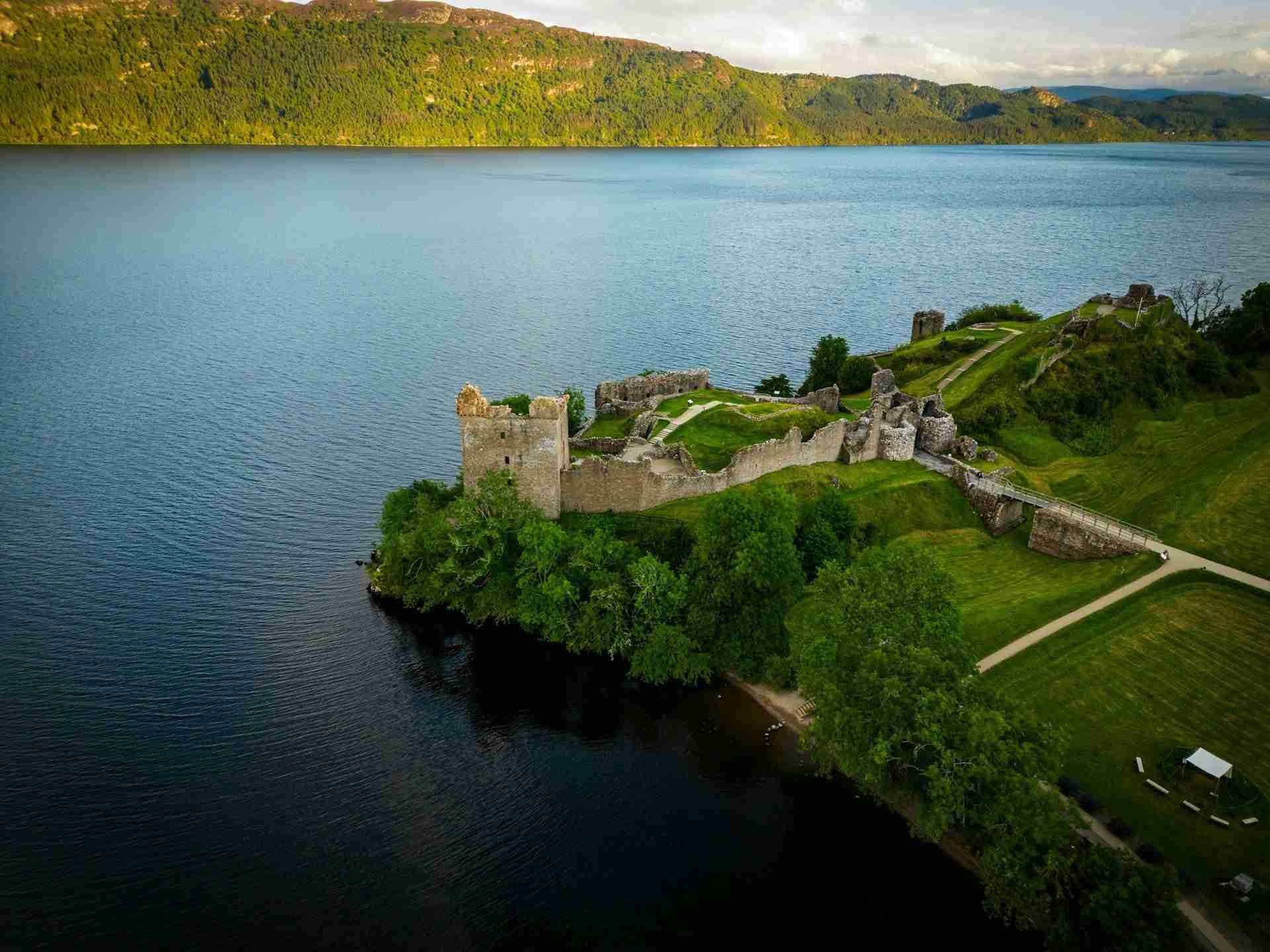
Perched dramatically on a headland overlooking the dark, mysterious waters of Loch Ness, Urquhart Castle is one of Scotland's most iconic historical sites and a magnet for landscape and documentary photographers alike. Set against the brooding backdrop of the Highlands, the castle ruins are steeped in centuries of history—from Pictish fortifications to clan feuds and Jacobite uprisings. Though only remnants of its former structure remain, the combination of ancient stonework, ever-changing Highland skies, and the mythic waters of Loch Ness creates a location rich with atmosphere and narrative potential. Whether you're seeking moody mist, golden reflections, or a study in Scottish ruggedness, Urquhart Castle delivers with timeless depth.
Best Photography Opportunities
• Clifftop Views Over Loch Ness
: The elevated vantage point of the castle grounds offers spectacular panoramic views across Loch Ness. Shooting westward toward the far hills allows you to frame the loch in sweeping, cinematic compositions—especially effective when mist lingers over the water or when soft morning light breaks through Highland clouds. Wide-angle lenses are perfect here to include the castle ruins in the foreground with the vast loch stretching beyond. The sense of scale and isolation becomes especially powerful when photographed in changing weather conditions, as the loch shifts from reflective stillness to choppy drama in minutes.
• Castle Ruins and Detail Shots
: The crumbled stone walls, arched doorways, and surviving towers of Urquhart Castle are ideal for architectural photography and atmospheric close-ups. Focus on the textures of lichen-covered stone, weathered battlements, and narrow medieval staircases. Side lighting—particularly in early morning or late afternoon—enhances the depth and age of these features, revealing the grit and grace of time-worn stone. Inside the Grant Tower, look for natural light spilling through narrow slits and windows, which creates dramatic highlights and shadows on the interior masonry.
• Reflections on Loch Ness
: On still days, Loch Ness becomes a mirror that perfectly reflects the castle ruins and surrounding hills. From the shore below or from the adjacent viewpoints along the A82, photographers can frame symmetrical or layered compositions, using reflections to double the impact of dramatic light or color in the sky. The contrast between the tranquil water and the broken ruins produces a compelling tension that's ideal for storytelling compositions or minimalist framing.
• Moody Weather and Highland Drama
: Scotland's unpredictable weather works in your favor at Urquhart. Rolling fog, storm clouds, and filtered sunbeams can turn a simple composition into a story-rich image. Capture the mood of the landscape using long exposures to smooth water or exaggerate moving skies, particularly with neutral density filters and wide dynamic range shooting. This is a perfect place to lean into atmosphere—where low cloud cover, drizzle, or even snow can enhance the gothic silhouette of the ruins against the elements.
• Evening and Blue Hour Silhouettes
: While the site is generally open during daylight hours only, nearby viewpoints offer after-hours access to silhouettes of the castle against dusk skies. Shooting from roadside pull-offs along the loch gives you a side-on view of the ruins as they darken against a glowing horizon or rising mist. These distant compositions are excellent for storytelling images that evoke solitude, mystery, and timelessness. The loch becomes inky and reflective, and the outline of the ruins gains theatrical weight in contrast to the deepening sky.
Best Time to Visit
Urquhart Castle is photogenic throughout the year, but the golden hours of early morning and late afternoon provide the most rewarding conditions. Morning light from the east gently illuminates the ruins and sparkles on the surface of Loch Ness, often accompanied by rising mist. Sunset offers deeper, richer tones and often paints the surrounding hills in warm, sculptural light.
Autumn is particularly spectacular, with the surrounding woodland and moorland shifting into amber, copper, and deep green tones—perfect for color-rich compositions. Spring provides fresh foliage and clearer air, while winter introduces stark, moody conditions that are well-suited to black-and-white or high-contrast work.
Weather can change rapidly in the Highlands, so come prepared to shoot in wind, rain, or fog—each offers a unique aesthetic. Overcast days enhance detail in the stonework and make for excellent moody shots of the castle and loch.
How to Get There
Urquhart Castle is located just off the A82, approximately 30 minutes southwest of Inverness. The route is straightforward by car and runs along the western shore of Loch Ness, offering several scenic pull-offs and lay-bys along the way.
The castle is managed by Historic Environment Scotland and includes a visitor center, café, and paid parking. Entry to the castle grounds requires an admission fee during open hours, but photography is fully permitted for personal use. The site includes staircases, uneven ground, and elevated views, so sturdy footwear and a lightweight kit are recommended.
If you're planning to photograph the castle from the opposite side of the loch or outside opening hours, there are roadside viewpoints and walking paths that offer excellent long-lens compositions without entering the site itself.
Exploring Urquhart Castle and the Surrounding Area
The surrounding area around Loch Ness is a haven for photographers seeking a mix of natural beauty, folklore, and historic architecture. From the castle grounds, you can wander the lakeshore to capture new angles or explore higher ground for expansive shots that position the castle within the larger landscape.
Nearby, the village of Drumnadrochit offers traditional Highland charm, while wooded trails and country roads provide opportunities for rustic detail shots and pastoral scenes. The loch itself, stretching over 20 miles, is a canvas of shifting light and scale, with boats, birds, and even the occasional Nessie-themed subject to add whimsy or narrative.
Nearby Photography Locations
• Loch Ness Shoreline
: Accessible at several points along the A82, the loch's edge offers clean reflections, soft morning light, and opportunities for minimalist waterline compositions. Early mornings with mist and glass-like water are ideal. Look for fallen branches, rocks, and reeds at the shore that can be used as compositional anchors in foregrounds, especially when paired with distant mountain silhouettes and soft pastel skies.
: Just west of Drumnadrochit, this stunning glen is filled with lochs, rivers, ancient pines, and mountains—perfect for layered landscapes and golden hour wilderness shots. The changing elevation along the trails allows for wide, cinematic views and close forest scenes alike. In autumn, the glen is awash with fiery foliage, while winter often brings frost or snow for high-contrast black-and-white compositions.
: Located on the quieter eastern shore of Loch Ness, this tall, dramatic waterfall plunges into a wooded gorge. Best photographed after rain, it's excellent for long-exposure work and vertical compositions. The surrounding forest is thick with moss and ferns, providing moody, textured settings that work beautifully for detail shots or more intimate landscape frames.
: This picturesque stone bridge and surrounding woodland create romantic Highland scenes with flowing water, mossy boulders, and timeless textures. The falls beneath the bridge are perfect for long-exposure shots, and the structure itself can be used as both a foreground and a frame. Visit in late afternoon to catch golden backlight through the trees and layered compositions along the riverbanks.
: A short drive north toward Inverness, this ruined 13th-century church offers quiet atmosphere, stone detail, and ancient gravestones—ideal for documentary or black-and-white work. The arches, ivy-draped walls, and gentle light filtering through broken windows give the site an introspective, poetic quality that pairs beautifully with soft-focus or fine art techniques.
Urquhart Castle is more than a ruin; it's a symbol of Highland endurance, myth, and natural beauty. Whether the loch is glowing with soft dawn light or churning under iron skies, the castle remains a steadfast presence, ready to be framed by the patient eye. For photographers, it offers both grandeur and quiet contemplation—an invitation to explore not just a view, but a sense of place rooted in centuries of story and shadow.
Comments
Loading comments…