
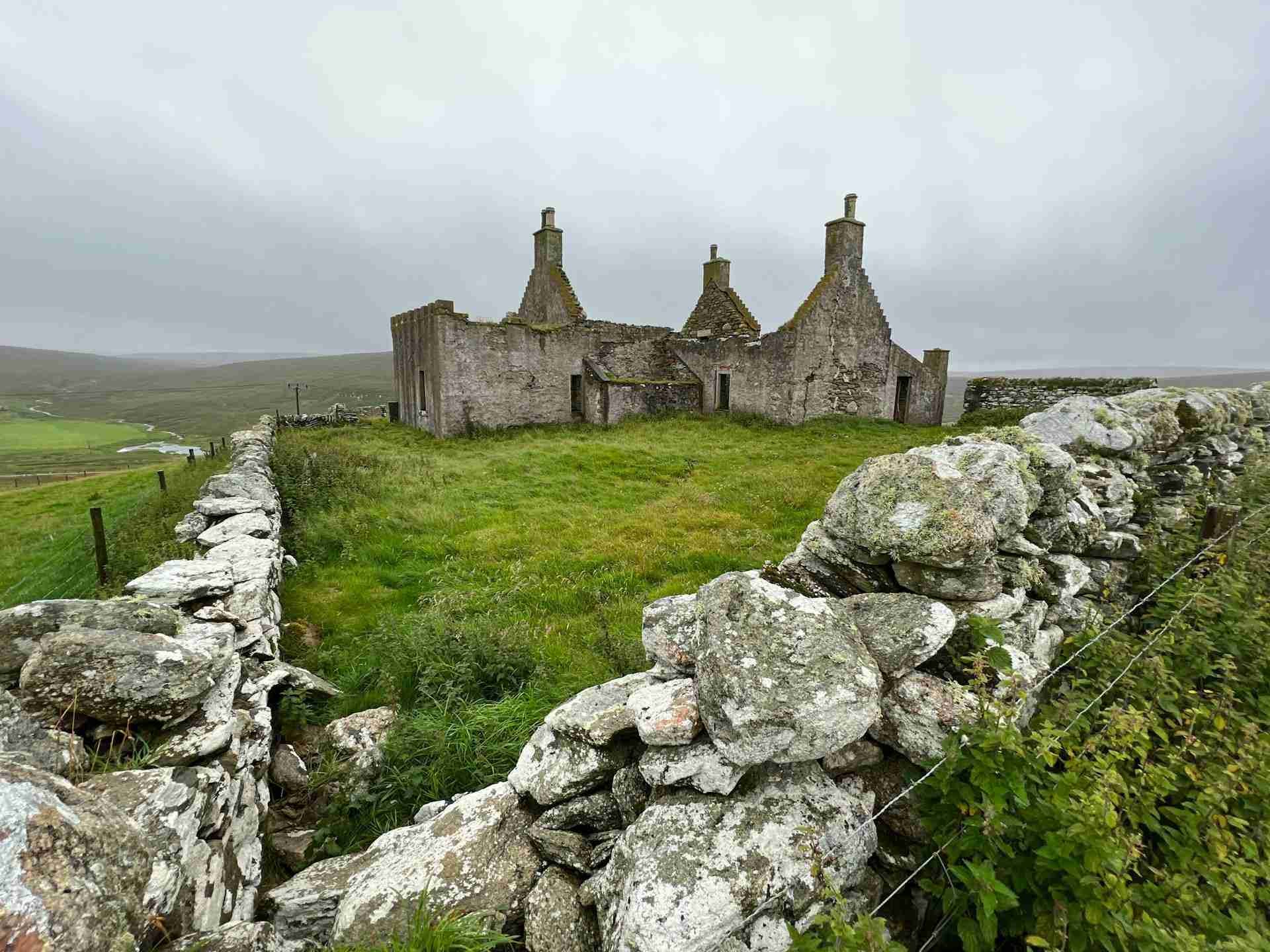
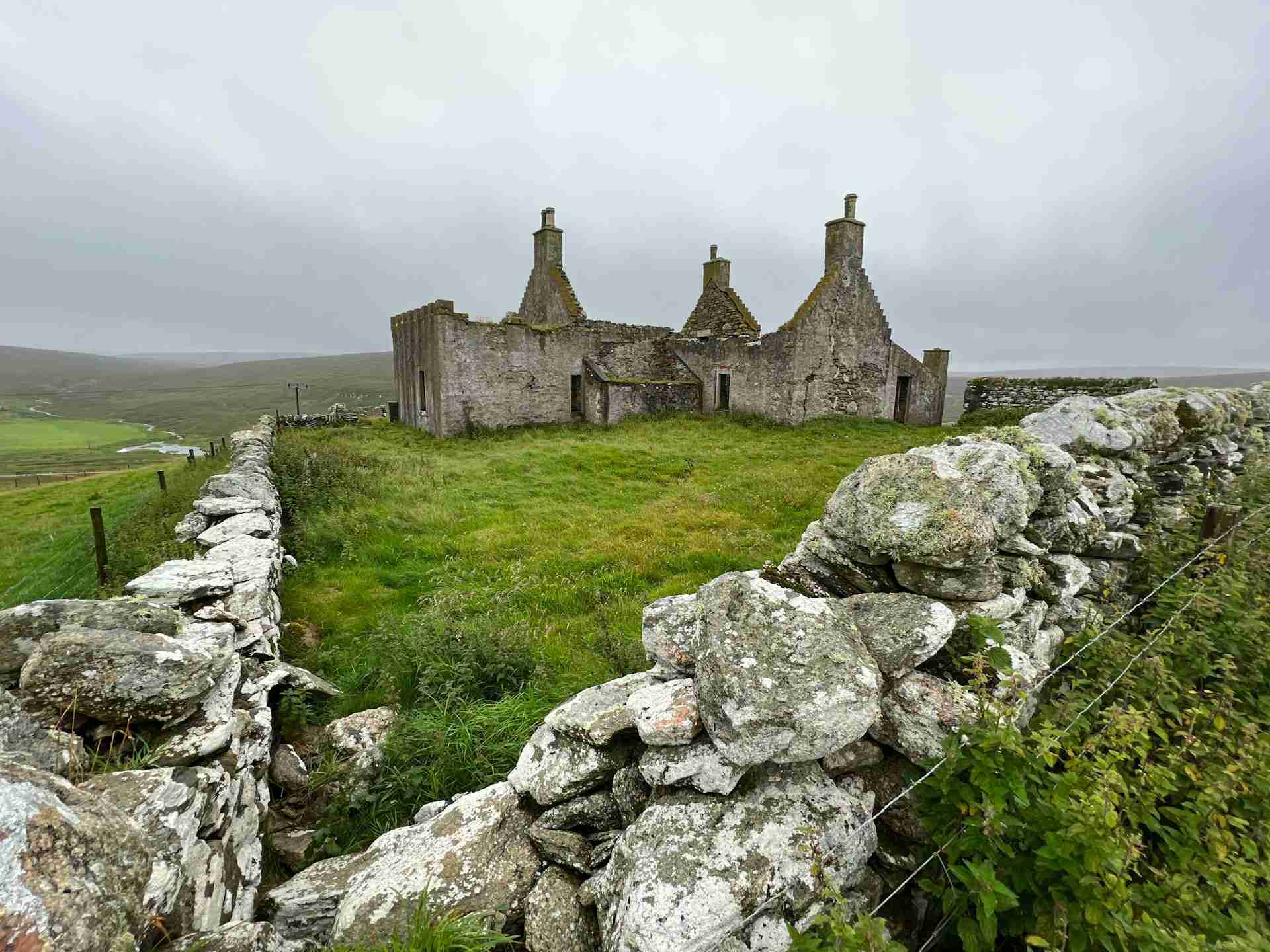
Windhouse is a partially collapsed stone manor on a hillside just outside the village of Mid Yell in the Shetland Islands. Built in the 18th century, the structure is now roofless and weathered, sitting exposed above the surrounding moorland. It's best known for its silhouette, remote setting, and the wide views over the island and Yell Sound. For photographers, the location offers a mix of strong shape, open space, and fast changing light. The building is easily accessed and works well for simple compositions, long exposures, or moody weather scenes without needing to hike or plan around crowds. It's a reliable spot to shoot at any time of year and gives plenty of options for working with stone, sky, and open terrain. Plus it has a reputation for being one of Scotland's most haunted buildings
Best Photography Opportunities
• Framing the Ruins Against the Sky
The tall gables and chimney outlines of Windhouse are its most defining features. These shapes work well against a range of skies, especially during changing weather or at sunset. Shooting with the building silhouetted or side lit helps define its shape clearly, and placing the horizon low in the frame gives the structure more presence. A wide angle lens helps when you're working close to the building, while stepping back lets you bring in more of the surrounding moorland. Even on cloudy days, the clean lines of the ruins hold up well and make it easy to build a clear frame.
• Close-Up Details of the Stonework
Windhouse is full of textured surfaces, like it's cracked lintels, moss-covered walls, and exposed brickwork. These are good subjects for tighter frames, especially when the light is soft. You can shoot handheld or with a tripod depending on how close you're working and what kind of depth of field you want. It's also a good place to focus on corners or doorways as natural framing tools.
• Landscape Shots with the Ruins in the Scene
The hill Windhouse sits on slopes down gradually in all directions, which gives you room to shoot from a distance. The structure sits cleanly in the landscape, making it easy to place as the focal point in a wider frame. These kinds of shots are often strongest when there's some movement in the sky or low light casting shadows across the ground. A long exposure can help smooth out the sky and draw more attention to the structure itself. These landscape frames work well with either a wide or short telephoto lens depending on how you want to compress the background.
• Long Exposure with Changing Weather
Yell gets a lot of fast moving weather, and Windhouse is well positioned to take advantage of that. If you're using a tripod and ND filters, you can shoot longer exposures that smooth out clouds while the structure stays sharp. These shots work best when there's some direction to the light; either side light or light breaking through the clouds. Since there's not much clutter in the scene, the final images tend to be clean and easy to process.
• Night and Low Light Photography
Because of how remote the area is, Windhouse has very little light pollution. If conditions are calm and the sky is clear, it's possible to photograph stars or shoot long exposures of the structure lit by moonlight. If you want to try light painting or using a low level light source inside the ruin, make sure to keep it subtle to avoid overexposing part of the frame. Wind and moisture are common at night, so make sure your gear is protected and stable.
Best Time to Visit
Windhouse can be photographed in any season. Summer gives the most flexibility, with long days, green grass, and better access. Mornings and evenings offer softer light and more interesting skies. In autumn and winter, conditions change more quickly, but the lower sun angle and colder air can help add contrast and drama. The site also holds up well under overcast skies, with the stonework and ground textures showing clearly even without strong light. Wind is common throughout the year and can make tripod work challenging, so low setups and extra weight help keep things steady. Rain and fog are frequent, but they can also add depth and interest to simple compositions.
How to Get There
Windhouse is located just above Mid Yell on the island of Yell in Shetland. Follow the A968 north toward Mid Yell. and just before you reach the village, the ruins will be visible on your left up on the hill. There are no gates or restrictions on access, but the structure is not maintained, so caution is needed when walking near unstable walls. No permits or fees are required.
Recommended Photography Gear
A wide angle lens is useful for working close to the building, especially when you want to fit the full structure into the frame. A standard zoom or short telephoto lens helps frame the ruins from a distance and compress the background if you're shooting from the lower slopes. A tripod is important for long exposures and low light shooting, but it needs to be stable enough for frequent wind. An ND filter helps with long exposures during the day, and a rain cover or weather sealed gear is useful in case conditions shift. If you're planning to shoot at night, bring a flashlight or headlamp and keep extra batteries dry and accessible.
Nearby Photography Locations
At the northern end of Yell, Breckon Sands is a wide, quiet beach with dunes, rock pools, and open sky. It's good for simple seascapes and low-angle work with patterns in the sand or reflections in wet areas.
A small fishing pier with boats, ropes, and dockside textures that work well in both color and black and white. The surrounding area offers views over Yell Sound and good light in the late afternoon.
This harbor village at the southern end of Yell has stone buildings, an old museum, and a mix of historic and coastal subjects. It's easy to photograph from the roadside or shoreline, especially when the light is low.
A short drive and ferry ride north to Unst brings you to Hermaness, with dramatic cliffs, sea stacks, and seabird colonies. This area is best in late spring and summer when puffins are active and the cliffs are lit from the west.
The ferry between Yell and the Shetland mainland offers surprisingly good photo opportunities, with views over the water and light falling across the hills on either side. Sunrise or sunset crossings are especially good for layered compositions.
Comments
Loading comments…